
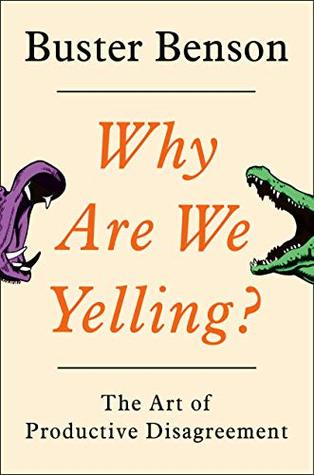
More on this book

Community


Kindle Notes & Highlights

Read between
July 15 - November 7, 2020

A mind is more like a pile of millions of little rocks than a single big boulder. To change a mind, we need to carry thousands of little rocks from one pile to another, one at a time. This is because our brains don’t know how to rewire a full belief in one big haul.
Jokes and social games are great for off-loading the work of high-anxiety cognitive dissonance. Unfortunately, ridicule, insults, and denial also reduce cognitive dissonance in the moment. Collectively, these are strategies that entangle us and make us dependent on the very communication platforms that caused the anxiety in the first place.
This entanglement may have a hand in explaining how meme culture has sprung up so quickly on these platforms. If everyone is using these networks to reduce anxiety while also increasing their chances of being exposed to it, a positive feedback loop of growth begins to develop.
People who value cool rationality make this mistake all the time—we focus on arguments in their simplest form (what is true?) when all the emotional evidence is screaming that it’s really an argument much more rooted in meaning, value, and/or purpose.
The goal here is to visualize the cognitive dissonance from both sides, even if you don’t believe both sides are reasonable.
The key to not demonizing the other side too hastily is to understand where the automatic tendency to demonize others is coming from—our internal voices—and to double-check with these internal voices that their stereotypes are accurate.
Unfair caricatures are just one of the side effects of what psychologist and economist Daniel Kahneman calls “System 1”—the fast, instinctive, emotional system of our brain that tries to make most of our decisions while requiring the least amount of energy.
It stands in contrast to System 2—the slow, more deliberative, more logical thinking system that takes a lot of energy and is what we typically think of as conscious thinking.
with practice, we can learn to step back, listen to System 1, and take its messages more as suggestions rather than orders.
If we pay more attention to how we talk to ourselves, we’ll see that the thoughts and feelings that flow naturally from the spark of anxiety are only our internal voices and not the final say on what we absolutely need to think and feel.
The four voices I’d like to call out are the voice of power, the voice of reason, the voice of avoidance, and the voice of possibility. They speak up especially loudly when there’s a spark of anxiety and cognitive dissonance happening, because they exist to help us reduce our anxiety, one way or another.
THE VOICE OF POWER “Might is right.” “Take it or leave it.” “My way or the highway.” “Do as I say.” “That’s an order!” “This isn’t a debate!” “Beggars can’t be choosers.” “Finders keepers, losers weepers.”
THE VOICE OF REASON “Why?” “Show me the evidence.” “Prove it.” “That doesn’t add up.” “What’s fair is fair.” “I didn’t make the rules.” “That’s not how it’s done.”
Once it is established in a position of power, the voice of reason can then establish a higher authority (for example, a religious or legal system) to maintain that power without having to pay the more expensive costs of constant battling that the voice of power must do.
Institutions of reason aren’t well equipped to have productive disagreements with other institutions that don’t respect their primary system of authority.
The voice of reason shines when it speaks to people who belong within the same group.
the voice of reason relies on having the voice of power to fall back on during escalations, and is best suited to disagreements with people who share respect for the higher authority, and are members of the same groups and institutions, that your reasons draw from.
White Fragility, a book by Robin DiAngelo
If we become adults who explicitly oppose racism, as do many, we often organize our identity around a denial of our racially based privileges that reinforce racist disadvantage for others. What is particularly problematic about this contradiction is that white people’s moral objection to racism increases their resistance to acknowledging their complicity with it.
What is true?
Given my socialization, it is much more likely that I am the one who doesn’t understand the issue.
What is meaningful?
What is useful?
Feedback on racism is difficult to give; how I am given the feedback is not as relevant as the feedback itself.
Discomfort is key to our growth, and desirable. Anxiety is key to our growth, and desirable.
four steps on the path toward developing honest bias.
STEP 1: Opt-in. Developing honest bias requires us first and foremost to wake up to our own blindness and to stop trying to pretend it doesn’t exist.
Step 2: Observe (beginner level). Take steps to reduce the amount of time and energy you spend trying to hide or ignore your biases and blind spots.
Step 3: Repair (intermediate level). Take steps to reduce the time and energy it takes for you to identify and begin to repair inadvertent damage caused by your biases and blind spots.
STEP 4: Normalize (advanced level). Take steps to reduce the time and energy others have to spend challenging your blind spots and recruiting you to address the damage that you’ve contributed to.
Paul Saffo, a forecasting expert and professor at Stanford University, wrote a popular essay titled “Strong Opinions Weakly Held.”
Instead of saying, “I know I’m right!” say, “I’m not seeing what you’re seeing. Can you help me get there?”
Instead of getting angry, get curious. Doing so will radically change your relationships to people, ideas, and the world by allowing new perspectives to reach you that would have otherwise been immediately dismissed.
Good faith—from the Latin bona fides—is a sincere intention to be fair, open, and honest regardless of the outcome of the interaction.
If you speak only for yourself, you’ll: End up inviting people into conversations instead of just talking about them. Improve your mental model for other people’s positions much more quickly. More accurately represent your own position to them, which means they will be less likely to misrepresent or speculate about yours.
Continue inviting people to the conversation until you have enough perspectives to talk about the issue without speculation.
The black-and-white question from the voice of reason that I didn’t ask was: “Possession can’t be real, can it?” I’m sure we disagree on the answer, but as I was slowly coming to understand, ghosts and spirits are more a language to talk about the unknown forces that influence us than a species of being that we’d invite on a talk show.
If I could entertain the mother’s mental model for a moment, I could ask much more interesting questions like “How has your relationship with your son grown?”
We know that our brains are story-making machines, and that we have a very useful (and weird) ability to turn almost anything into a face or a creature of some sort.
I’ve found that asking questions beyond “Is it real or not?” will often reveal a much more rich and meaningful conversation on the other side. “What is your relationship to the unknown? What is it like to have sensitivity to nature and spirits? What becomes easier when you tap into your own health and relationship to the environment?”
If disagreement is a tree, anxiety and cognitive dissonance would be the water and air that help the tree grow, and the fruit that we have spoken of in passing up until now is what the tree produces.
In order to shift out of battle mode, we need to remember to value different kinds of outcomes, reorienting the purpose of the conversation away from security and toward growth, connection, and enjoyment. When you do this, incidentally, security also comes along indirectly.
When you’re being attacked, the fruit of security easily takes top priority. It’s the original and primary fruit of disagreement, and the one we’re still the most obsessed with.
Within the category of pursuing security are all of the things that the voices of power, reason, and avoidance generally encourage us to do: Resolve the disagreement. Get everyone to agree.
PROS OF SEEKING SECURITY:
You gain immediate results of increased security. This strategy can be applied to any disagreement. By definition, it’s the “safe” option.
CONS OF SEEKING SECURITY: Squashing disagreements will prevent other fruits from being found. Closing down disagreements prematurely in the name of security can give a false sense of al...
This highlight has been truncated due to consecutive passage length restrictions.
The fruit of growth differs from the fruit of security because obtaining it often requires taking risks and sticking your neck out a bit.
Growth can be selfish (“THAT’S MY TRAIN!”) or it can be collaborative (“Let’s find out if that noise was a ghost or just a gust of wind”).
PROS OF SEEKING GROWTH: The spectrum of possible outcomes is wide, which is another way of saying it’s risky. By trading some security for the possibility of growth, you can potentially earn larger payoffs. Growth can compound over time, leading to more security than a straight bet on security alone would yield.
