
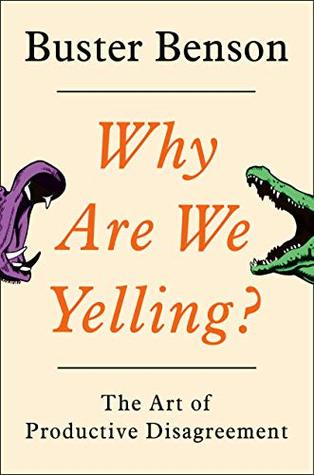
More on this book

Community


Kindle Notes & Highlights

Read between
June 28 - July 9, 2020

Once the clash between perspectives becomes unacceptable, our motivation shifts from understanding minds to changing them, and from that shift springs a world of trouble.
A mind is more like a pile of millions of little rocks than a single big boulder. To change a mind, we need to carry thousands of little rocks from one pile to another, one at a time. This is because our brains don’t know how to rewire a full belief in one big haul. New neuron paths aren’t created that quickly. You might be able to get a tiny percent of someone’s mind to rewire to a new belief in a given conversation, but minds change slowly and in unpredictable ways. You might be changing it in the wrong direction.
The easiest thing you can do to have more productive disagreements immediately is to remember to ask the other person: “Is this about what’s true, what’s meaningful, or what’s useful?”
The three realms are: anxiety about what is true (the head realm of information and science), anxiety about what is meaningful (the heart realm of preferences and values), and anxiety about what is useful (the hands realm of practicality and planning).
If you both settle on a question about what is true, you can ask: Is there a source of information we both trust that could give us the answer to this question? What qualifies as a trustworthy source? If you both settle on a question about what is meaningful, you can ask: Why is this important to us? What past experiences led to us having these preferences or values? If you both settle on a question about what is useful, you can ask: What would happen if we didn’t do anything? How confident are we in the outcome of these different proposed actions?
Unfair caricatures are just one of the side effects of what psychologist and economist Daniel Kahneman calls “System 1”—the fast, instinctive, emotional system of our brain that tries to make most of our decisions while requiring the least amount of energy. This system relies on habits of thought and quick, reliable shortcut strategies to get things done. It stands in contrast to System 2—the slow, more deliberative, more logical thinking system that takes a lot of energy and is what we typically think of as conscious thinking.
The takeaway here is that the voice of reason relies on having the voice of power to fall back on during escalations, and is best suited to disagreements with people who share respect for the higher authority, and are members of the same groups and institutions, that your reasons draw from.
ask it some questions: What’s urgent right now? What’s threatening right now? What could I be doing right now instead of this? How can I know if these answers are really serving my best interests? What would happen if I did nothing?
Biases evolved to soften the blow of information overload and uncertainty by creating well-worn paths of habitual thought that help us look, orient, and leap into action in a noisy, confusing, and often meaningless world.
Allow your intuition to guide you to a conclusion, no matter how imperfect—this is the “strong opinion” part. Then—and this is the “weakly held” part—prove yourself wrong.
If your only goal in a disagreement is to increase security, either by battling threats or by minimizing conflict within a certain environment, you will never ask wide-open questions that enlist everyone in a collaboration toward growth, connection, and enjoyment.
What formative events in your life brought you to this belief? What’s really at stake here? What’s complicated about your position here that people don’t usually notice at first? If what you believe was proven conclusively true to its staunchest opponents, what would happen? What would have to be true for you to change your mind about this? What other possibilities might we be missing that would change how we each thought about this? Imagine a world where this is no longer a problem. How did we get there?
My only measure of the strength of a question now is in the honesty and eloquence it elicits.
The voices of power and reason have trained us to believe that being right and winning are the main sources of enjoyment, especially in the world of disagreements. But the voice of possibility has another form of enjoyment in mind. Aporia is the feeling of realizing that what you thought was a path to truth actually doesn’t lead there at all.
Socrates taught that the true goal of dialogue was to reach moments of aporia—not to decide or become certain or be proven right but to realize that you don’t actually know what you’re talking about.
Look: Someone bumps into you, splashing coffee on you. They mumble something that you miss and keep walking. Orient: Is your shirt stained now? Did the coffee burn your hand? Did the person just mumble an insult at you? Does their suit imply that they think they’re fancy? Do they think you’re unimportant just because you’re wearing a T-shirt that’s seen better days? Option 1: Yes, yes, yes, yes, and yes. Option 2: Maybe, maybe, maybe, maybe, and maybe.
The reputation of uncertainty is that it feels unsatisfying because you don’t get the immediate answers that you are looking for, but when aporia is used to sidestep the need for righteous indignation and a false sense of security, it’s actually the more satisfying path to take, even in the moment.
Watch how anxiety sparks. These sparks are signposts to our own internal map of dangerous ideas. Notice the difference between big sparks and small sparks. These point to our shadow, the parts of ourselves we try to hide from. If left unaddressed, this harsh judgment will be projected uncharitably onto others. Work with it. Talk to your internal voices. Most of us have internal voices that map to the voices of power, reason, and avoidance. Get to know yours so you can recognize their suggestions as merely suggestions, not orders. Most of us also have a quiet internal voice that maps to the
...more
This highlight has been truncated due to consecutive passage length restrictions.
The biggest change I’ve noticed in myself, and which I hope readers of this book will experience as well, is the gentle lifting of the burden to fight every battle—not because you are dissociating from the world’s problems or avoiding them, but because of the slow dawning of the idea that there’s more to disagreement than who is right, and that in many cases the places we speak from are more complicated than a simple policy position or belief statement reveals. Accepting reality over certainty often feels like a more anxious position to take, but I’ve actually found the reverse. When we allow
...more
