
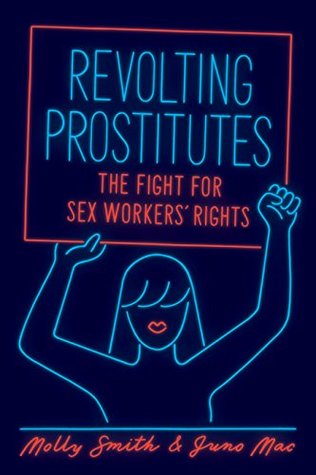
More on this book
Community


Kindle Notes & Highlights


sex positivity can be a counterproductive point from which to start a conversation about the actual conditions of the sex industry. Working class sex workers and sex workers of colour have long criticised the race and class privilege of these politics; labour rights and safety are not the same as pleasure, and those who do experience sexual gratification at work are likely to be those who already have the most control over their working conditions.40 As conversations about prostitution have rapidly widened and grown more complex in the age of the internet, sex workers have noted the way that a
...more
As a society, we obsessively valorise work as a key locus of meaning, status, and identity in our lives. At the same time, we struggle with shit jobs, falling wages, and the correct suspicion that what many of us do for money all day contributes nothing of real value to our lives or communities. Instead, we mostly just make profits for people further up the chain. In this confused and confusing context, to do what you love is deeply aspirational, a lean-in fantasy that gives an individual the illusion of control, a daydream of power in the office – and, in reality, a significant class-marker.
A massage therapist who – like a sex worker – sells time and services rather than a physical product is not doing so ‘on the premise that [a client] can do what he likes with her body in the time he has purchased’, and to make such a statement about a massage therapist would be obviously horrifying. That it can be claimed about sex workers shows how deep the belief goes that women who sell sex give up all bodily boundaries: it is a belief shared – and mutually reinforced – by those who assault us and those who imagine themselves our defenders.
Exploited people – working in the sex industry, in car washes, in hotels, or in freezing cabbage fields in Lincolnshire – are victims of problems that are systemic and largely originate from the state, rather than from individuals.
People smuggling tends to happen to less vulnerable migrants: those who have the cash to pay a smuggler upfront or have a family or community already settled in the destination country. People trafficking tends to happen to more vulnerable migrants: those who must take on a debt to the smuggler to travel and who have no community connections in their destination country. Both want to travel, however, and this is what anti-trafficking conversations largely obscure with their talk about kidnap and chains.
Both the US and UK typically tie domestic workers’ visas to a specific employer. As a result, a staggering 80 per cent of migrant domestic workers entering the US find that they have been deceived about their contract, and 78 per cent have had employers threaten them with deportation if they complain.
Homeland Security officially ban anyone who has sold sex in the previous ten years from entry into the United States, along with spies, Nazis, and terrorists.100
Uncritical use of the term trafficking is doing the ideological work required for these contradictions to ‘make sense’; it hides how anti-migrant policies produce the harm that we call trafficking, enabling anti-migrant politicians to posture as anti-trafficking heroes even as they enact their anti-migrant policies.
The history of drug prohibition has shown us that ‘problematic people’ favouring a specific substance is what renders that substance ‘problematic’, not the other way around31.
Criminalisation is a multi-pronged trap. Convictions, ASBOs, and prostitute cautions hinder sex workers’ ability to secure other jobs and lead to accumulating debts for fines, pushing them into continuing to sell sex. These fines are huge financial millstones, sometimes totalling hundreds of pounds. Prison sentences for breaches of ASBOs or pile-ups of fines mean that women lose custody of their children, that upon release they are made homeless, and that they lose any other job they may have had – again, all pushing them back into street-based sex work, where avoiding police makes them more
...more
I picked prostitutes as my victims … because they were easy to pick up without being noticed. I knew they would not be reported missing right away and might never be reported missing. I picked prostitutes because I thought I could kill as many of them as I wanted without getting caught.
But at the level of material reality, criminalisation is not just a helping hand or a slap on the wrist. Often, charges like ‘breach of parole’ (continuing to sell sex after having been previously apprehended for it) generate much harsher penalties than the crime of prostitution itself, such as time in jail rather than a fine. Jail means that, if they have children, they will likely lose custody, and that upon release they are likely to be made homeless,† will struggle to find ‘legitimate’ employment, and may be barred from some kinds of social safety net provisions, such as public housing.24
...more
It could seem paradoxical that these laws, which ostensibly aim to fight exploitation, instead make exploitation easier and more prevalent. But ultimately it is not a paradox: reducing sex workers’ ability to connect with clients always increases scarcity and makes workers more vulnerable.
Those who advocate for the Nordic model are correct that the client benefits from a huge power imbalance; what they miss is that client criminalisation worsens this power imbalance. This can seem surprising; as human rights lawyer Wendy Lyon writes, ‘The criminalisation of only one party to a transaction might intuitively be expected to benefit the other party.’23 However, this overlooks that crucial fact – which cannot be repeated enough! – that the sex worker needs to sell sex much more than the client ‘needs’ to buy it. This ‘asymmetry of need’ is essential to understanding the actual
...more
Advocates of ‘ending demand’ tend to want it both ways: they cite women’s poverty as a key driver of the sex industry, but treat poverty as trivial when it comes to thinking about the impact of their own policy ‘solutions’.
In reality, sex workers sharing an apartment is very normal. If you have ever had a housemate to cut housing costs – or to enjoy their company – you should empathise with why sex workers might want to share working flats. (There is something intensely dehumanising about the implication that sex workers are so alien that these normal, human considerations do not apply to us.) It is also an obvious safety measure – one used by many other kinds of workers.
Many people are familiar with the terms legalisation and decriminalisation, yet without realising that these words refer to distinctly different things. Under legalisation, some sex work, in some contexts, is legal. This legal sex work is heavily regulated by the state – generally not in a way that prioritises the welfare of workers. This is, in part, because a mindset that advocates for legalising sex work tends to see prostitutes not as workers but as anxiety-inducing vectors of disease or symbols of disorder who must be controlled. Often, to legalise means to implement new laws related
...more
We aren’t asking you to love the sex industry. We certainly don’t. We are asking that your disgust with the sex industry and with the men – the punters – doesn’t overtake your ability to empathise with people who sell sex. A key struggle that sex workers face in feminist spaces is trying to move people past their sense of what prostitution symbolises, to grapple with what the criminalisation of prostitution materially does to people who sell sex.
Ending violence against women requires interrogating the full extent of how it operates. Everyone can understand a loaded gun and the damage it can cause. But who has the licence to carry the gun? Who can use it with impunity? When and why were they bestowed this power? These things are just as important as the murderous intentions of the person pulling the trigger. We must tackle gender-based violence at a human level and find a different strategy for upending the systems that underpin it – and some of these solutions will overlap. It is crucial to understand the symbiotic coexistence of
...more
