
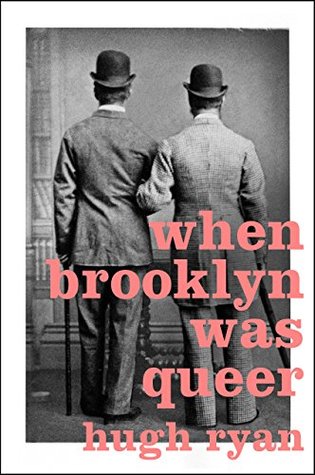
More on this book


Kindle Notes & Highlights


Brooklyn has always been the “sub” to Manhattan’s “urb,”
In his daybook, Whitman kept lists of these men, mostly single-line entries commenting on their looks, personalities, and family relationships.
Boston marriage. These relationships trouble our modern ideas of sex and sexual identity.
Paradoxically, this openness about their feelings has helped to make them invisible to modern historians, for whom queer love and shame are inseparable.
The idea of “homosexuality” had not yet emerged as a separate kind
where abandoned women barter body and soul for a present subsistence, and putrescent men initiate the unsophisticated into the mysteries and miseries of a depraved social system.
queer women married men for all kinds of reasons, ranging from economic necessity, to sexual attraction, to social pressure, to desire to form a family, to “lavender marriages” where both members were queer.
on the 21st of July, 1906, no fewer than twenty-three men copulated with [her] (immissio penis in anum), one immediately after the other, each producing ejaculation during the act; this took place in a room in Brooklyn.
Today, we function on something of a “one-drop rule” when it comes to male sexuality: any amount of sexual experience with or attraction to another man, or to a gender-nonconforming person, defines you as being queer. But in the early 1900s, that was far from a settled way of thinking.
Prohibition was enacted, with profound although unexpected long-term effects on gay bars. By making all bars illegal, and all bar patrons criminals, it leveled the playing field between queer and straight venues.
The pansy craze, which presented America with a vision of queer people as odd and unusual but also harmless and exciting, was over.
If spirit of place means anything, a case can be made for a literary line of succession that links Whitman, Wolfe, and Crane in a family of rhapsodic, visionary writers established there.
“at least a thousand and three conquests on his belt, which loosened so easily.”
In 1938, Barker was living in Lapland, trying to start a reindeer farm.
many seemed to live outside our modern idea of sexual orientation as a permanent and unwavering condition defined by the sex of the people to whom you are generally attracted.
