
Kindle Notes & Highlights
Read between
August 9 - August 12, 2017

In 2014, I assumed the role of director of excavations at Khirbet el-Maqatir.
While archaeology plays a role in apologetics, the greatest benefit to the faith community exists in the illustrative nature of the discipline. In other words, illumination of the Bible serves as the primary goal of ancient Near Eastern archaeology. By drawing out the cultural clues that are embedded in the remains of material culture, the text is set in its proper context.
Archaeology is not a science; it is a vendetta. – Mortimer Wheeler
Thus, a plausible argument can be made from Scripture for a major regional flood in the ancient world. This would potentially explain the lack of flood evidence in the archaeological record of the Levant.
For example, Finkelstein, currently excavating Tel Megiddo, dates the site’s six-chambered gate to the ninth century, the time of Ahab. At that time, he says, Israel first built monumental architecture. In his view, a tenth-century construction could not have occurred because Solomon did not exist. Solomon did not exist because no evidence in the tenth century proves his existence. So goes the circular reasoning. To be fair, Finkelstein also argues his case on the basis of ceramics and other material remains.
In the past decade or so, the deconstructionist mode of textual analysis—especially in the form of new literary criticism sketched above—has made such inroads in biblical studies that the traditional historical exegesis and criticism that have ruled for more than a century are often dismissed today as passé. If the search for “history” and for historical exegesis of texts is obsolete, the archaeology of the “biblical world” is irrelevant. That may explain why archaeology is neglected or at best misunderstood almost everywhere in biblical studies and theology today.
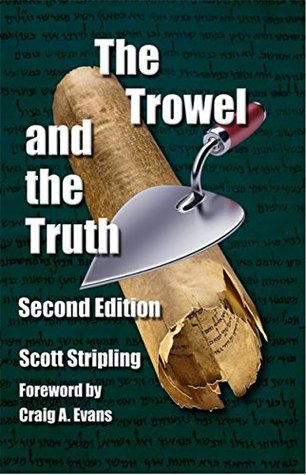
Unfortunately, very few Bible-believing colleges and universities are training students in biblical archaeology or preparing them to refute the outlandish claims of the minimalists. However, not everyone has thrown in the towel—or the trowel. Some of the leading, biblically conservative institutions continue the work of Levantine archaeology. These institutions include the following:

Is this why its important?
Absence of evidence is not evidence of absence. – Kenneth Kitchen
In 2017, my ABR colleague, Douglas Petrovich, released his groundbreaking research on ancient alphabetic script. His book demonstrates that Hebrew was the world’s first alphabetic script.
The Asiatic Hyksos imposed their might upon Egypt in the mid-seventeenth century BC and dominated the native inhabitants for 108 years, according to the Turin King List. They likely feared an Israelite confederacy with the Egyptians. Thus, the Hyksos placed the Israelites in bondage, forcing the slaves to construct major commercial centers at Pithom and Rameses, later names by which these places became known.
Those looking at the wrong time period for evidence of the conquest are certain to not find any.
The four-room house reflects the biblical concept of mišpāḥâ, the father’s house or the extended family dwelling (cf. Judges and Samuel). The four-room house may mirror the special arrangements of the tents in which the Israelites lived for forty years.53 While scholars remain divided on whether early houses reflected special arrangements carried over from nomadic living, the theory merits consideration. If the hypothesis proves true, the layout of the four-room house, which appears similar to that of the tabernacle and later the temple, may reflect an anthropological progression from tent
...more
What is the cultural significance of the four-room house? Why was the discovery of the “house of David” inscription important?
Archaeology exposes the contrast between the values of Christianity and the pagan Roman Empire. From the first century AD to the collapse of the empire in the fifth century, many Romans marked their graves with the inscription nffnsnc. Scholars eventually deciphered the Latin: non fui non sum non curo, “I was not, I was, I am not, I do not care.” Their apathetic outlook contrasts radically with the Christian epitaphs in the catacombs, which express joy in the present life and hope for eternity. Craig Evans devotes the final chapter of his book Jesus and the Remains of His Day to the stark
...more
A mikvah (plural: mikvaot) was normally carved into bedrock (living stone) and filled with running water (living water). Male and female devotees would disrobe, descended the steps (usually seven), and immerse themselves.
Two inscriptions dating to the mid-first century have been found at Cyprus. They refer to a proconsul by the name of Paulus or Sergius Paulus. Saul convinced the proconsul to convert to Christianity on his first missionary journey (Acts 13:6–12). Some interpreters suggest that Saul changed his name to Paul in honor of this man. Regardless, from Acts 13 and onward, the writer of the book refers to the apostle as Paul, a more common and acceptable name in gentile culture. The name Saul was more acceptable to Jews, and it remained as a classic Jewish name since the time of Israel’s first king.
An inscription found at Corinth in 1929 names Erastus (Acts 19:22; Rom 16:23; 2 Tim 4:20). The inscription reads as follows: Erastus in return for his aedileship [administrative position] paved it [entrance to the theater] at his own expense. The Erastus of this inscription likely corresponds to the Erastus of Acts and Paul’s letters. A separate tradition holds that Erastus was one of the seventy (or seventy-two) disciples sent out by Jesus (Luke 10:1–23). Discoveries
In the New Testament period, churches were primarily associated with houses (Rom 16:5; 1 Cor 16:19; Col 4:15; Phlm 2).
God left two great witnesses of his work of redemption in history—the Bible and the physical remains of ancient cultures. However, only a small percentage of the physical remains of the ancient world have survived (in a form recognizable to us).
In the debate over the historical reliability of the Bible, archaeology appears to be tipping the scales to the right. Those who question the reliability of the Bible would do well to examine their own presuppositions. This is not to say that we should not continue to look critically at the text of the Bible and ancient artifacts. It is only by rigorous examination that we can present to the world evidence that demands a verdict.
