
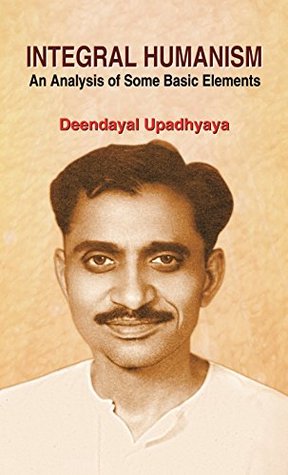
More on this book

Kindle Notes & Highlights

Read between
May 29 - July 14, 2020

Acquisition to Sacrifice/ Offering (Yajna) Some people earn so much that if they were to consume it all, they will literally self-destruct. Therefore, it is emphasized that, if we have enough for consumption, the rest should be given away to the society. Perform yajna and give, consume what remains. Five hundred from the thousand we earn should be consumed and the other five saved for giving. Create wealth and save to multiply it. Save it for others. Think of the well-being of other creatures. Give a thought to nature. After taking care of others, consume what remains. This is what is called
...more
This highlight has been truncated due to consecutive passage length restrictions.
Education, Action, Acquisition are Inter-dependent These four elements linking the individual and society actually unify the individual and the collectivity. Education flows from the Individual to the society action from the individual to the society, acquisitions and property from the individual to the society and sacrifice, giving again, from the individual to the society. The absence of a sense of sacrifice will lead to our dec...
This highlight has been truncated due to consecutive passage length restrictions.
In the absence of karma (action), or in its decline, the society is not able to create wealth. Its decline leads to the individual’s incapacity to sacrifice, which will in turn result in the society’s inability to educate and instruct. Therefore, all these elements are necessary in adequate measure. The Four Purusharthas The individual and the society cannot be separated from each other. Therefore, we have not conceived of the two as in a state of conflict or struggle. One cannot survive by destroying the other. Both will co-exist. The four purush...
This highlight has been truncated due to consecutive passage length restrictions.
The Completeness of Life Artha (wealth) and Dharma (duty), despite apparently being contraries, form each other’s basis. Dharma helps generate wealth. Artha includes state craft and agriculture. Dharma provides the basis for both production and agriculture. Dharma ceases to exist in the absence of artha (wealth). Both sustain each other. This is followed by the purushartha of Kama (desire). We can satisfy our kama (desire) through artha (wealth). But kama lies somewhere between artha and dharma. Hence the thought that on acquisition of wealth anything can be consumed is not right. What is
...more
This highlight has been truncated due to consecutive passage length restrictions.
Sometimes individual freedom has primacy, at others, it needs to be curbed. While the complete perspective remains in mind, it is the front under attack that needs to be protected. If I am asked as to which ideology I believe in, I would reply that I believe in shatapadivaad i. e. looking in all directions but remaining grounded in one’s own self. We believe in totality and remain constantly alert on all four different fronts.
we are neither individualistic, nor socialistic, we think of both the individual and the collective. We are concerned with all different dimensions. We don’t believe in any particular ideology. We believe in the whole, in the integral, in the unitary. And in all this, we believe in the conscious, the living soul. We thus think of integral life and integral consciousness. We should dedicate ourselves to our work, bearing all this in mind.
The primary duty of every free nation is to defend its freedom and consolidate it, and to give to the citizens a Government, which, while guaranteeing to them all necessities of life, would enable them to live as a happy, prosperous and purposeful community. The advent of Indian independence had roused high hopes in the people.
