
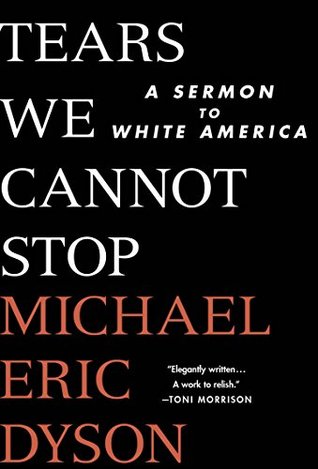
More on this book
Community


Kindle Notes & Highlights

Read between
April 1 - April 20, 2021

Do you know that a lot of the race problem grows out of the . . . need that some people have to feel superior. A need that some people have to feel . . . that their white skin ordained them to be first. —Martin Luther King, Jr.
“Even before there were large numbers of Negroes on our shores, the scar of racial hatred had already disfigured colonial society.” We are “perhaps the only nation which tried as a matter of national policy to wipe out its indigenous population.”
Whiteness is an advantage and privilege because you have made it so, not because the universe demands it.
Whiteness is slick and endlessly inventive. It is most effective when it makes itself invisible, when it appears neutral, human, American.
But the truth is that what so often passes for American history is really a record of white priorities or conquests set down as white achievement.
American history hugs colorblindness. If you can’t see race you certainly can’t see racial responsibility.
The failure to see color only benefits white America. A world without color is a world without racial debt.
Donald Trump is the literal face of white innocence without consciousness, white privilege without apology.
For so many of you, what it means to be white is what it means to be American, and vice versa; your American identity is indissolubly linked to your whiteness.
James Baldwin said it best when he wrote, “I love America more than any other country in the world, and, exactly for this reason, I insist on the right to criticize her perpetually.”
Baldwin and Kaepernick have offended you so greatly because they insisted on separating whiteness from American identity. The two are neither synonymous nor exhaustive; they neither signify all that America means, nor can they possibly radiate the full brightness of her promise.
Martin Luther King, Jr., said that charity is a poor substitute for justice.
If enough people, white and black, treat you like the nigger for long enough, you can start to see yourself that way. His life, like our father’s, was lived in reaction to that word.
