
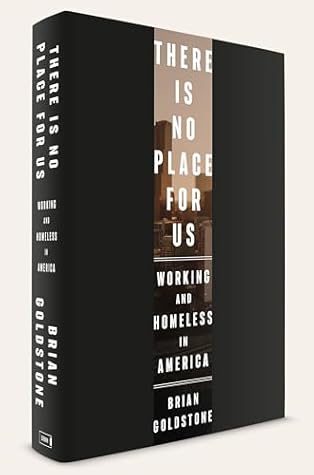
More on this book
Community


Kindle Notes & Highlights

Read between
August 13 - August 14, 2025

Yet a growing number of Americans confront a starkly different reality. Besieged by a combination of skyrocketing rents, low wages, and inadequate tenant protections, they are becoming the new face of homelessness in the United States: people whose paychecks are not enough to keep a roof over their heads.
Today there isn’t a single state, metropolitan area, or county in the United States where a full-time worker earning the local minimum wage can afford a two-bedroom apartment.
Unemployment is at a record low; corporate profits have surged; the signs of growth are everywhere. Yet the delivery drivers, daycare workers, supermarket cashiers, and home health aides who help sustain our cities are being relentlessly priced out of them—and often out of housing altogether. Unlike earlier periods of widespread immiseration, such as the recession of 2008, what we’re seeing today is an emergency born less of poverty than prosperity. Families are not “falling” into homelessness. They’re being pushed.
The problem is not so much a lack of new housing as the kind of housing that is being built.
In these places, a low-wage job is homelessness waiting to happen. The slightest setback or unanticipated expense—minor car trouble, disrupted childcare, a brief illness—can be disastrous.
Some fifty-three million Americans, or almost half of the country’s workers between the ages of eighteen and sixty-four, hold jobs that pay a median hourly wage of $10.22,
Recent research reveals that the actual number of those experiencing homelessness in the United States, factoring in those living in cars or hotel rooms or doubled up with other people, is at least six times larger than the official figure.
Vouchers were supposed to deconcentrate poverty and enable greater socioeconomic mobility for recipients. In reality, families with vouchers were often able to find homes only in poor, underserved neighborhoods where landlords had a clear financial incentive to rent to them.
that year, AHA issued 1,674 new housing vouchers; 1,055 expired before they could be used.
In 1979, welfare benefits reached eighty-two out of every one hundred families with children in poverty. When TANF was first introduced, that number dropped to sixty-eight. By 2020, a mere twenty-one out of every one hundred impoverished families managed to access this resource.
In 2020, when Michelle found herself in dire need, only 10 percent of Georgia’s TANF funds went toward cash assistance, whereas 60 percent was spent on the state’s foster care and child welfare systems—an imbalance that reflected the state’s willingness to spend money on separating children from their families but not on preventing the “neglect” or “inadequate housing” that led to that outcome.
Before she was discharged, she was informed by a nurse that Medicaid would cover only a stationary feeding tube pump. A portable pump—essential for continuing to work at the restaurant—was deemed not “medically necessary” and would cost her a copay of $450.
that the homeownership rate for white Americans was nearly 75 percent, while for Black Americans it was 44 percent; that the country’s owner-renter divide was a key driver of its racial wealth gap, with the net worth of the median white household exceeding that of the median Black household by a factor of ten.
Along with some 274,000 other adults in Georgia, Kara had fallen into Medicaid’s “coverage gap”: poor people whose annual income exceeded their state’s eligibility threshold. (In Georgia, a parent with four children had to earn less than $9,000 annually to qualify.)
Bolstered by a deluge of sensationalist media accounts, individual pathology became the dominant frame for understanding homelessness, diverting attention from structural factors like poverty or racism. Meanwhile, the fastest-growing segment of the nation’s homeless population were children under the age of six.
During the 2021–22 school year, 106,621 children enrolled in the nation’s public schools were identified as living at a hotel or motel—an increase of more than 20 percent from two years earlier.
Housing is now unaffordable for an astonishing half of all U.S. renters, according to Harvard University’s Joint Center for Housing Studies—the highest number on record.
In the richest country on earth, nobody—whether they work or have a disability or struggle with addiction or mental health challenges—should be deprived of stable shelter. Mass homelessness arose recently, within our lifetimes. It’s worth reminding ourselves of this fact, because if it hasn’t always been like this, then a different kind of future is possible.
