
More on this book
Community


Kindle Notes & Highlights

Read between
September 11 - September 20, 2018

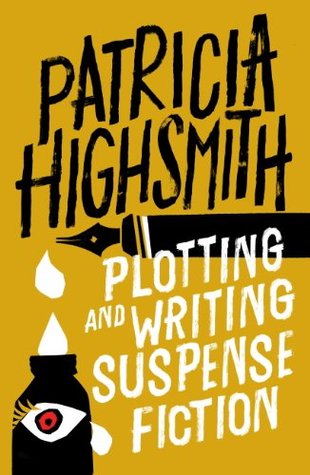
Plotting and Writing will not make anybody work harder. But it will, I hope, make people who want to write realize what is already within them.
suspense story is one in which the possibility of violent action, even death, is close all the time.
“Ideas come to me like birds that I see in the corner of my eye,” I say to journalists, “and I may try, or may not, to get a closer fix on those birds.”
One thing is certain: The public, readers, television viewers, want to be entertained, gripped by a story. They want something unusual that they can remember, shiver at, laugh with, talk about and recommend to their friends. Between the germ of an idea and a big appreciative audience lies a long road.
Consequently here, I describe economic difficulties I’ve had, physical ones, too—noise, other people—and I also speak about the publicity efforts that a writer has to make for himself, because he cannot always count on his agent to make these efforts for him. Agents, like anyone, can be lazy, especially with the clients who are not earning so much. It is often up to the writer to bestir himself and think of ways to advertise his talent. Every human being is different from the next, as handwriting and fingerprints prove. Every painter or writer or composer has consequently something different
...more
This highlight has been truncated due to consecutive passage length restrictions.
THE first person you should think of pleasing, in writing a book, is yourself. If you can amuse yourself for the length of time it takes to write a book, the publis...
This highlight has been truncated due to consecutive passage length restrictions.
A book is not a thing of one sitting, like a poem, but a longish thing which takes time and energy, and since it takes skill, too, the first effort or maybe the second may not find a market. A writer should not think he is bad, or finished, if this happens, and of course writers with real drive will not. Every failure teaches something.
The book is always better if there are first-hand and really felt experiences like these in it. It is part of the function of a notebook to hold a record of these things, emotional experiences, even if you don’t have a fiction work in mind to attach them to when you write them down.
If the writer can thicken the plot and surprise the reader, the plot is logically improved.
I can give no advice, or do not presume to give any, on the question of concentrating on character or plot in the course of developing a story idea. I have concentrated on either or both.
A plot, after all, should never be a rigid thing in the writer’s mind when he starts to work. I carry this thought one step further and believe that a plot should not even be completed. I have to think of my own entertainment, and I like surprises myself. If I know everything that is going to happen, it is not so much fun writing it. But more important is the fact that a flexible plot line lets the characters move and make decisions like living people, gives them a chance to debate with themselves, make choices, take them back, make others, as people do in real life. Rigid plots, even if
...more
I have scarcely a morning that doesn’t bring something in the post that could be called psychically disturbing.
After opening my post on many mornings, I indulge in a few minutes of anguish and muted screams, then devote the next hour or more, if necessary, to tackling the mess. When I have satisfied myself that I have done the best I can by letter and telephone, I stand up from my desk and try to pretend I am not me, that I have no problems, that the past hour or more has not really happened, because I have to think myself into a state of innocence and the absence of worries of any kind in order to work.
This is entertaining movement. We can find out more about Kimmel later, and we certainly do, but it is interesting at the start to see him in action.
A comment about first chapters in general: It is a good idea to provide lines of action in the first chapter. It may be that nothing “happens” in the first chapter; it may be that kind of story. You may want to set the scene, show the structure or pattern of relationship between two or more of the characters, introduce certain characters—and nothing more.
There should be either action or the promise of action in the first chapter of a suspense book. There is action or the promise of it in every good novel, but in suspense stories, the action is apt to be of a more violent kind. That is the only difference.
If you are trying to write while holding a job, it is important for you to have a certain length of time every day or every weekend which is sacred, and during which there are no interruptions. In a way, this is easier to arrange if you live with someone, because that person can answer a doorbell or a telephone. There must be hundreds of writers who are trying to write a novel on weekends and in the evenings. Five evenings a week of two or three hours’ work each evening, or every Saturday for eight hours, or four evenings per week of three hours—a writer must make his own schedule and stick to
...more
One need not be a monster, or feel like one, to demand two or three hours’ absolute privacy here and there. This schedule should become a habit, and the habit, like writing itself, a way of life. It should become a necessity; then one can and will always work. It is possible to think like a writer all one’s life, to want to be a writer, yet to write seldom, out of laziness or lack of habit. Such a person may write passably well when he writes—such people are known as great letter writers—and may even sell a few things, but that is doubtful. Writing is a craft and needs constant practice.
Craft without talent has no joy and no surprises, nothing original. Talent without craft—well, how can the world ever see it?
Return again to the effect you intended, and the incident or change of plot may spring to mind at once.
Writers should take every opportunity to learn about other people’s professions, what their workrooms look like, what they talk about. Varying the professions of the story’s characters is one of the hardest things for a writer to do after three or four books, when he has used up the few he knows about.
“A book can stand one or even two neurotics, but not three who are the main characters.”
It is the lonely nature of writing that these strong memories and emotions cannot be shared with anyone.
