
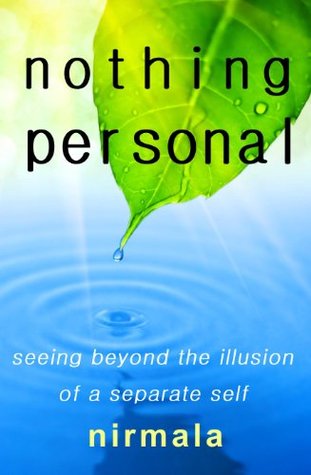
More on this book


Kindle Notes & Highlights


When you do this, you find that there is something very satisfying about the truth of every moment, whether it is a moment of struggle or ease.
there is really only one instruction: notice your experience and know that it is the right experience.
Noticing requires allowing. To really be aware of your experience as it is, you can’t be busy trying to change it. If you’re trying to change it, you are not noticing it the way it is.
Rather than trying to remember to be curious, just notice that you already are.
You can also ask the question: Do I exist in space or does all of space exist in me? Which feels truer?
When you look, you discover that your me is more like a flow than a static object. This ongoing flow is actually who we are. We are an ongoing flow of experience.
It turns out that this flow towards what is, is what you are. You can’t shut it off. So, if it really doesn’t matter whether your consciousness is expanded or contracted, then you don’t need to make an effort to either expand or contract it. If there’s no effort, then there’s no suffering.
Our suffering doesn’t come from any experience but from our resistance to the experience.
Suffering ends when our attention is flowing towards what’s actually happening, what’s true in the moment. Suffering is the distance—the gap—between what you’re oriented towards and what is. However large the gap is between what’s actually happening and what you’re putting your attention on is how much you will suffer.
It’s very simple: Our suffering is a matter of how much of our attention is flowing towards what’s not actually present, such as hopes, dreams, desires, fears, doubts, worries, ideals, and fantasies. What we’re desiring isn’t present or we wouldn’t be desiring it.
There’s nothing else but pure consciousness that is having the illusion of suffering. When you see that, then that is the end of your suffering because that’s the end of the me.
A great way to get in touch with your resistance to what is, is asking the following questions: Am I willing to have the experience I am having right now? and Am I willing to not have the experience I am having right now? If the answer is even slightly no to either of those questions, then suffering is present.
Worrying is one example of how we say no to experience. It’s like no-ing preemptively or preventively. All this rejection is simply a mental activity. As a result, it doesn’t have a lot of effect. Our worry doesn’t prevent anything from happening.
A lot happens that you do want and a lot happens that you don’t want, and yet there is all this mental yes-ing and no-ing and trying to figure out what you should be wanting and what you shouldn’t be wanting. Why so much effort for so little results?
Anytime thought is occurring, you’re experiencing something that’s not really happening.
In addition, this capacity to experience a fake now also serves us by allowing us to experience the fullness of the real now through contrast with the emptiness of a fake now.
“You can never get enough of what doesn’t really satisfy.” Hoping and desiring are like a hunger that can’t fully be satisfied.
In this moment, one of those things is happening: you’re orienting towards what is real and true or you’re orienting towards a hope or a dream.
The good news is that being present to whatever is happening not only deconstructs your hopes but also your fears.
When you begin to pay attention to the content of your mind, you notice how much of it is a hope or a fear.
when your hopes and fears become uninteresting and irrelevant, life can seem empty initially.
What’s left is reality, which is always rich and satisfying. All striving and dissatisfaction disappear in the now, and what appears is completely satisfying.
There’s much more to the now than what’s arising in the mind. Life is and always has been unfolding in incredible ways, and our desires and hopes have had very little to do with that.
Love is actually the container for everything else. It’s always present. Love is that aware, allowing space in which everything happens, so it’s present no matter what happens.
Realizing this truth ends all striving and struggle and, consequently, all suffering.
You just notice the space of allowing that has always been here.
Once you realize that love is already here and never goes away, it no longer makes sense to strive to make things be other than they are, no matter what happens, no matter what comes and what goes. Something can come into that space or leave that space and the space is still there. The love hasn’t been added to or diminished by either the coming or the going.
The perfect lover is someone who allows you to be whatever way you are. If you’re in a good mood, the perfect lover would allow that. If you’re in a bad mood, the perfect lover would allow that too. And yet, that perfect lover—that perfect love—is already here. It is already allowing everything.
What really nourishes us is simply recognizing this love—the endless giving of space to everything that happens. That allowing, or accepting, is the nature of our Being; and when we simply notice that, we can experience this limitless love.
The recognition of perfection is more about cultivating a sense of wonder than experiencing an expanded state. Without the willingness to meet everything with wonder and curiosity, you miss many parts of the perfection of this wild, strange, and mysterious thing called life.
