
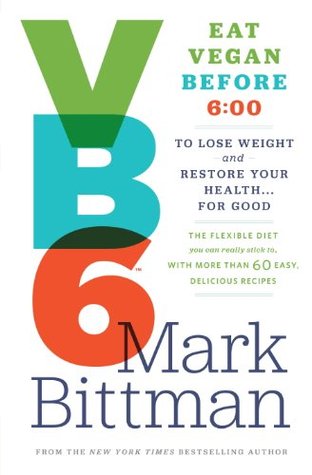
More on this book
Community


Kindle Notes & Highlights

by
Mark Bittman
Read between
July 23 - July 23, 2019

As Mark Bittman describes here, eating a vegan diet, even part-time, can have an important impact on issues like global warming, health care costs, and energy conservation. This makes our dietary choices even more meaningful and, thus, more sustainable. For example, many people are surprised to learn that animal agribusiness—eating meat—generates more greenhouse gases than all forms of transportation combined. More than half of U.S. grain and nearly 40 percent of world grain is being fed to livestock rather than being consumed directly by humans. More than 8 billion livestock are maintained in
...more
And at this point, low-fat and low-carbohydrate diets have essentially been discredited: They might help you lose weight, but they’re not effective for maintaining that loss in the long term, and they may even wreak havoc on your system.
There are no silver bullets, and over the years it’s become increasingly clear—much as none of us wants to hear it—that the most sensible diet for human health and longevity is one that’s lower in animal products and junk food and higher in vegetables, fruits, legumes, and minimally processed grains.
Our diet—our manner of eating—is not only unhealthy, as has been well documented; it’s also unnatural. And as odd as VB6 might sound to you at first, it’s based on thousands of years of tradition and reflects the way we’re meant to eat: a diet composed largely of unprocessed plants, with everything else—including meat—considered a treat. Think of the time before industrial agriculture, or even the hunter-gatherers: Humans ate largely what they found or grew, and if they could kill an animal and eat it, great. In other words, plants were the basis for sustenance, and everything else was
...more
And I wanted more than that: I wanted VB6 to bring about a real change, not just a temporary one. I wanted it to demonstrate a personal commitment to changing a broken food system, one that unnecessarily damages the environment, animals, and people. And I wanted it to be pleasurable.
But the pleasure of eating real, well-prepared food is way deeper than the pleasure of eating a corn-syrup–packed processed snack from a package.
Some facts and figures: Sweets and desserts account for 12 percent of Americans’ daily caloric intake, with soft drinks making up an additional 7 percent (we each drink about 57 gallons of soft drinks annually, or about a pint a day), and we eat an average of 46 slices (23 pounds) of pizza a year. But here’s the capper: Each year, the average American consumes more than 200 pounds of meat and poultry, something like three times the global average (and about 8 ounces a day); and 607 pounds of milk, cheese, and other dairy products. We also eat about 79 pounds of fat a year, a whopping 22 pounds
...more
We eat 20 percent fewer salads than we did twenty-five years ago, and only one in four meals contain an unprocessed vegetable. (That statistic would be even more dire if the lettuce on a hamburger were not counted as an unprocessed vegetable.) Only 49 percent of Americans ate a salad (just one!) in the last two weeks. Maybe 10 percent of our calories come from the unprocessed fruits and vegetables that should be the source of most of our calories.
But the SAD wreaks havoc on way more than health-care costs: It degrades the environment, arguably an even bigger issue than obesity-related disease. The industrial production of animal products and hyper-processed food creates devastating by-products, from greenhouse gas emissions to land degradation to polluted water supplies. It’s commonly acknowledged that livestock production is one of the top two contributors to greenhouse gas emissions, accounting for at least 20 percent (and by some estimates up to 50 percent) of dangerous gases in the atmosphere—a greater impact than even
...more
We’ll have to raise a staggering 120 billion animals a year by 2050 just to meet demand at the current levels; and this, obviously, is unsustainable. The only solution is to reduce demand and therefore production. Processed foods are also environmental culprits. Raising, manufacturing, storing, and transporting food accounts for 10 percent of all fossil-fuel use in the United States—about the same as France’s total energy consumption. Consider that a single can of soda (which offers about 150 nutrient-free calories) requires 2,200 calories of energy to produce, while the aluminum tray that
...more
Then there are moral issues: We need the “efficiency” of large-scale industrial animal factories to satisfy our current needs, and this production means we’re torturing the billions of animals we produce each year. As you probably know, animals grown in factory farms live in horrific conditions; they’re kept in cages or pens so tiny that they don’t have room to turn around, and they’re drugged, mutilated, and denied the opportunity to fulfill every natural instinct they have. Again,
the problem—largely—is hyper-processed grains, a form of food that barely existed 100 years ago. It’s the hyper-processing of grains (and, less often, but frequently enough, of fruits and vegetables) that brings us a host of ills, from soda to fries to “snacks” to fluffy white bread.
To lose weight, you’ve got to not only eat fewer calories but less of the foods that are easiest to convert to glucose and stored fat. And the best way to do that is to minimize the amount of rapidly digestible excess glucose in your bloodstream. This makes sense for another reason too: Besides being stored as fat, glucose (remember: blood sugar) stimulates the pancreas to secrete the hormone insulin. Insulin regulates blood sugar levels, making sure that the blood has enough glucose to provide energy for the body’s cells. But it also helps determine how and when the body stores fat by
...more
If you consume carbohydrates that make your glucose and insulin levels spike (processed carbohydrates will do the trick), the sudden drop in blood sugar that ensues leaves you hungry, and sometimes dizzy and anxious, just one or two hours later. (Severe hypoglycemia can make you faint or even cause a seizure.) How do you address hypoglycemia? Ironically, the easiest, most immediate way is to eat food with high levels of glucose, which is what you usually crave anyway. But if all you’re eating is highly processed carbs with high glucose levels, this cycle of ups and downs never ends.
Hunger, of course, is your body’s way of ensuring nourishment, but unfortunately this glucose-insulin spike-and-drop cycle can lead you to consume excess calories that your body has trouble processing. And if this cycle becomes chronic, you can develop insulin resistance, meaning the hormone can no longer efficiently regulate and store glucose, causing muscles and cells to “resist” the way insulin functions to control blood sugar. One way to prevent and control high glucose and insulin levels and hypoglycemia (which can become chronic and very problematic) is to rely on carbohydrates that are
...more
Meanwhile, fat cells produce and release a hormone called leptin, which also circulates in the blood. When leptin reaches high enough levels, it sends the message to your hypothalamus—a pearl-sized part of your brain—that you’ve stored enough energy. This is your body’s signal to slow or stop eating. Leptin usually decreases your appetite, limiting your food intake, reducing your insulin levels and therefore the rate at which energy is converted to fat. In the long term, leptin helps manage your weight by informing your brain how much fat is available in your body. Ghrelin, a hormone secreted
...more
This highlight has been truncated due to consecutive passage length restrictions.
Starches are carbohydrates composed of chains of sugars, and like “simple” sugars, they’re not all the same. Wheat, which we eat in many forms and which is a staple for many people around the world, is a fine example to explore. The wheat berry—the seed of the wheat plant—is a whole grain; only the chaff and stems have been removed. Each wheat berry has three layers: the outside (or bran), the middle layer (the bulk of the grain, called the endosperm), and the center (or germ). The bran and germ contain most of the nutrients, not only in wheat but in all grains. Whole grains like the wheat
...more
This highlight has been truncated due to consecutive passage length restrictions.
Commercial whole wheat flour at least contains the bran and germ, so it’s a better choice over white flour. (Though it’s not clear how much of the bran and germ are actually retained when industrial mills make “whole wheat” flour.) But the kernel is so broken down in the milling that it might be considered partially digested before you even start chewing it, making it easier for your body to convert it to glucose. And this efficiency isn’t doing you any favors; it just means more sugar available all at once—sugar that might spike insulin and/or be converted to fat. Commercially processed whole
...more
The glycemic index is a valuable way to demonstrate the difference between the effects of whole grains and refined (or “white”) grains on your body’s chemistry—to help differentiate “bad” carbs from “good.” Foods with a high GI (over 70), like instant oatmeal and white rice, can dramatically increase blood sugar and insulin levels after meals, especially when eaten frequently. Frequency is key: Foods with a high GI will always raise glucose and insulin levels, but if you eat them only once in a while, your body should be able to cope with these spikes. If, on the other hand, you eat them all
...more
In fact, the most recent evidence shows that high amounts of fat in a diet—in the range of 40 to 50 percent—aren’t necessarily linked to weight gain and disease. However, the type of fat you eat matters a lot. So although we’re eating less fat, the combination of more hyper-processed carbohydrates and the wrong fats is what’s killing us. Simply put: The fats you get from animal products, the fats you get from eating junk food (even “vegetable-based” junk food like chips), are worse for you than those found in nuts or olives or avocados—or the fats found in vegetables and grains. As with
...more
In fact, plants can provide comparable nutrition to animal protein, and without the downsides; many plants have more protein per calorie than meat. Let’s highlight some numbers from the Protein Chart: A cheeseburger contains about 0.04 grams of protein per calorie, and raw spinach has about 0.12 grams of protein per calorie—three times as much. Of course, since spinach is so low in calories you’d need to eat much more to get a comparable amount of protein, but that’s easily done—a pound of spinach cooks down to next to nothing. And in that pound of spinach, you’ll find 100 calories—and
...more
What about the essential amino acids that you can get only from meat? Turns out this well-known “fact” isn’t true: If you’re eating a well-balanced diet of any sort—including a vegan diet—you’ll get all the essential amino acids you need. Nor do you need to cover all the bases during any given meal; eating a variety of foods throughout the day will do the trick. And there are benefits to substituting plant for animal protein. This is especially true of the protein found in beans; their high levels of fiber can lower cholesterol and blood pressure and reduce the risk of diabetes, and even treat
...more
Actual satiety means feeling comfortably satisfied for a while without sugar crashes. And one key to VB6 is to rely on foods that not only fill you up but also keep you satisfied. Protein and fat—whether from animals or plants—are digested more slowly and are therefore most satisfying; minimally processed carbs (vegetables, whole grains, even fruits) come next. Not surprisingly, hyper-processed carbohydrates, with their quick-burning sugars, are generally the least satiating foods you can eat.
This principle—eat fruits and vegetables in abundance—means two things. You can eat almost all fruits and vegetables in unlimited quantities; a few, like legumes, nuts, seeds, whole grains, starchy or fatty vegetables or fruits, and oils, should be eaten more moderately.
Remember that fruits and vegetables are full of fiber and water, which is why you can eat a lot of them.
But if you start filling your fridge with a mix of leafy vegetables (lettuce, spinach, chard, collards, and kale), cruciferous vegetables (cabbage, broccoli, cauliflower, and Brussels sprouts), fruit-like vegetables (tomatoes, zucchini, eggplant, and winter squash), and root vegetables (beets, turnips, radishes, and carrots), you’re going to have plenty of options.
Some vegetables are better eaten in moderation: Starchy vegetables like white potatoes are rich in fiber and micronutrients, but they’re more akin to grains or beans in calorie density, and are quickly broken down into sugar. So not only will you want to minimize chips and fries (mostly fat anyway), but refrain from making potatoes a major contributor to your diet.
In general, green and orange vegetables are preferable, and you can eat them any time you like.
Augment fruits and vegetables with whole, unprocessed grains. Brown rice, steel-cut or rolled oats, cornmeal, quinoa, bulgur, wheat berries, hominy (posole), and other whole grains are all fair game, all day long, though in moderation.
Next on the menu are legumes: chickpeas, lentils, cannellini, kidney, black, pinto, and other beans, split peas, black-eyed peas, and all of their relatives, soybeans—and a zillion others.
FIVE STRATEGIES FOR EATING MORE PLANT FOODS 1. Buy them. It may sound silly, but the first step is to actually shop. If you’ve got your supplies lined up, you’ll turn to them instead of junk food when you get hungry. And if you load up the fridge with fruits and vegetables—whatever they are—you’ll be far more likely to eat them. If you create a detailed eating plan for breakfast, lunch, snacks, and dinner, you can make sure you have all the necessary ingredients. 2. Prep vegetables so they’re always ready to eat. When you get home from the store—or whenever you’re on the phone, watching TV, or
...more
This highlight has been truncated due to consecutive passage length restrictions.
Finally, nuts. Crunchy, nutritious, beloved, and a way better choice than snack foods like chips. Nuts are also super calorie dense, so you shouldn’t eat them with abandon, but an ounce of them buries an ounce of chips for both nutrition and satisfaction.
Eating fewer animal products is the inevitable future. There is not enough land, water, energy, or mineral resources for the earth’s billions to consume animal products at the rate we do, and the knowledge that we as individuals can take such a simple step to affect the fate of the planet is extremely empowering. For example, if we each ate the equivalent of three fewer cheeseburgers a week, we’d cancel out the effects of all the SUVs in the country. That’s the road we need to be on. There are other reasons, of course: If you believe that animals deserve decent lives relatively free of
...more
You know this already. Eating more plants and fewer animals is a critical part of VB6, but reducing—even abandoning—your consumption of hyper-processed and junk foods is just as imperative. You know what they are: Foods that are unrecognizable as coming from their source (like Pringles), contain ingredients you’ve never heard of (like energy bars), are thought of as quick meals (Hot Pockets, to name just one), are ultra high-calorie (ice cream—I know, you need it now and then, but not every night), are nutritionally useless or even damaging (soda), and so on down the list of hyper-processed
...more
It’s fairly safe to say that foods with more than five ingredients—an arbitrary number, but a decent guide—count as hyper-processed.
Read labels. Can’t say this enough: If it takes you as long to figure out what’s in the package as it does to eat it, just put it down and walk away.
Don’t obsess over the scale. It’s harder to attach your self-worth to a number when you don’t know what that number is, and by avoiding the scale you avoid that number. By not focusing on how much your weight has changed in the last two hours, it’s easier to focus on how you actually feel. Which may actually be pretty good.
UNLIMITED FOODS Fruit, most vegetables, most condiments, and all herbs and spices form the foundation of your diet. Eat freely and luxuriously from this category. VEGETABLES Vegetables are without question the healthiest and most expansive family of foods. All offer vital nutrients and the best nutrient-to-calorie ratio, most provide lots of fiber, and they come in a variety of colors, textures, and flavors to keep you interested and satisfied from one meal to the next. If you haven’t explored all of the types on this list—which is by no means exhaustive—now is your chance. And it doesn’t
...more
This highlight has been truncated due to consecutive passage length restrictions.
FRUIT
You can eat as much fruit as you’d like
Citrus: Oranges, grapefruit, lemons, limes, tangerines, mandarins, clementines, tangelos • Melons: Watermelon, cantaloupe, honeydew, casaba • Stone and tree fruit and berries: Apples, pears, peaches, nectarines, apricots, plums, cherries, figs, and all berries
Tropicals: Bananas and plantains, mango, pineapple, papaya, kiwi
CONDIMENTS AND SEASONINGS Not only do they keep other foods vibrant and interesting, the choices on this list contain no sugar and have low calorie densities. Some, especially herbs and spices, contain beneficial micronutrients not found elsewhere, but for the most part these ingredients don’t have much of anything except flavor.
Salt and pepper: I don’t fuss over these; use whatever you like. And as long as you’re cooking your own food (and don’t have high blood pressure), feel free to salt to taste. • Fresh herbs: Handfuls of chopped parsley, basil, mint, chives, or cilantro; smaller amounts of everything else. • Dried herbs: The best are oregano, marjoram, sage, thyme, and rosemary; the rest have little flavor. • Vinegars: I like them all, but sherry is my favorite. • Mustard: Coarse and Dijon-style; I use both. (Avoid those with added sugar, like honey mustard.) • Salsa (without fat): Make your own or get the good
...more
FLEXIBLE FOODS These foods provide important nutrients, but are generally more calorie dense than fruits, vegetables, condiments, and seasonings. Eat them sparingly at breakfast, lunch, or in snacks;
BEANS Beans (“legumes” is the name for this entire category) are a great source of protein, and since they’re loaded with fiber, they’re quite filling. There are so many that if you ate a different type every week, you wouldn’t get through them all in ten years. You can cook your own, or use convenient canned or frozen kinds (see How to Buy and Prepare Beans for some tips). And they’re great hot, cold, alone, or with other food. My personal favorites are white beans, lentils, and chickpeas, but I eat them all, usually daily. (Once you eat them frequently, their well-reported gas-causing
...more
WHOLE GRAINS The important distinction here is that you rely on whole grains—not their highly processed “white” counterparts. Your first choice should be whole grains in their minimally milled form
• Brown rice (all kinds) • Bulgur • Cornmeal and polenta • Oats (all kinds except instant) • Quinoa • Cracked wheat • Wheat and rye berries
• Wild rice • Buckwheat groats and kasha • Farro • Barley (hulled not pearled) • Hominy and grits • Kamut • Millet • Amaranth • Whole wheat or whole-grain bread (check the label) • Whole wheat or other whole-grain pasta • Whole wheat couscous • Whole-grain crackers (the kind that are minimally processed, with little or no fat) • Whole wheat and other whole-grain flours
FLEXIBLE FRUITS AND VEGETABLES Though still very nutritious, a few fruits and vegetables are Flexible because they’re more calorie dense than other fruits and vegetables. The list is short: • Avocados • Corn • Peas • Potatoes (all kinds) • Coconut • Tropical tubers (like yucca, cassava, and taro) • 100 percent fruit and vegetable juices
