
More on this book

Kindle Notes & Highlights


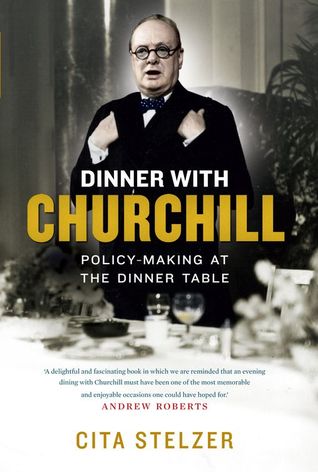
“If only I could dine with Stalin once a week, there would be no trouble at all,”10 Churchill told Field Marshal Montgomery during a picnic lunch on the Normandy beaches a few days after D-Day, one of several informal picnics that Churchill held with his military commanders.
Once, when Chartwell was closed, and Mrs. Churchill told him it would be impossible to spend the weekend there because there was no one to cook for him, he replied: “I shall cook for myself. I can boil an egg. I’ve seen it done.”
Churchill was famously an animal lover, with special affection for those he knew personally. In his affectionate squiggles to Clementine he depicted himself as a pig. He refused to eat suckling pig as he had raised pigs at Chartwell and claimed to know them. During the First World War when food was in short supply, he refused to carve a goose from his farm at Lullenden, saying: “You’ll have to carve it, Clemmie. He was my friend.”
Roosevelt took care not to down his drink after each toast. Churchill combined caution with a capacity, developed over a lifetime, to hold his alcohol. Stalin watered down his vodka. Stettinius notes: “Stalin would drink half of his glass of vodka and, when he thought no one was watching, surreptitiously pour water into his glass. I also noticed that he seemed to prefer American to Russian cigarettes.”51
Truman, who loved classical music and played the piano very competently, and as often as possible, asked Stalin to name his favourite composer. Stalin replied, “Chopin” – a Polish freedom-loving émigré who spent most of his adult life in France, and a composer who probably would have been Gulag-bound, or worse, if he had lived in Stalin’s time.
That was not the only serious business transacted at the dinner. Truman, by pre-agreement with Churchill, wisely mentioned, almost casually, to Stalin that the West had a new and more powerful weapon. Stalin did not let on that he had known all along about the existence of the bomb from German-born, British-educated Klaus Fuchs, who operated in Britain, and worked on the Manhattan Project.
During the “Black Dog” days – as Churchill called his depression – after his resignation as First Lord of the Admiralty in 1915 following the Dardanelles setback, he tried to console himself as he wrote to his brother, Jack, from Hoe Farm where the family was living: “We live very simply – but with all the essentials of life well understood and well provided for – hot baths, cold champagne, new peas and old brandy.”10
Churchill consumed what by modern standards are large quantities of alcohol. Among his list of essential provisions when, not yet 25, he set sail for South Africa in 1899 on a journalistic assignment to cover the Boer War, were some forty bottles of wine and “18 bottles of Scotch whiskey (10 years old), 12 Rose’s Old Lime Juice …” plus packing cases and the correct labelling.3
Churchill was a lifelong consumer of whisky, insisting that it be served without ice,4 and very weak indeed.
For Churchill, whisky was an acquired taste – a drink he initially “disliked intensely”
The whisky that seemed to some observers to be omnipresent was most often diluted with water or with soda, to the point where “It was really a mouthwash”, Jock Colville told Churchill’s biographer Martin Gilbert. “He used to get frightfully cross if it was too strong.”
One of Churchill’s most famous quips seems to have been true – that he had taken more out of alcohol than it had taken out of him. That, after all, is what matters.
McGowan calculates that Churchill smoked nine or so cigars a day. Smoked to the end or only partially, that is a lot of fine tobacco, even by the standards of a time in which cigar smoking was not impeded by the restrictions we live with today.9
