
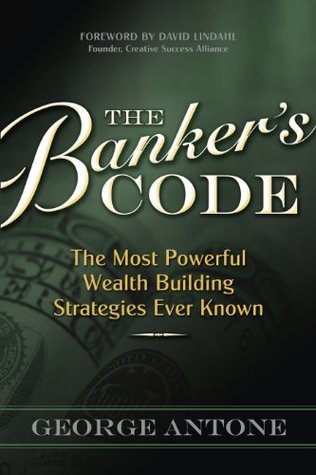
Kindle Notes & Highlights


Investors play by the banker’s rules. The bankers play by their own rules. The investor’s rules are stacked to the banker’s
advantage. Of the average American’s income, 34.5% goes towards paying interest alone; 30% goes towards taxes. That’s an indication that the average American is working two-thirds of his time for bankers and the government. This book’s primary objective is to open your eyes to the possibilities.
Cash flow is about arbitrage (creating a spread between the cost of borrowed money and
what an investment pays). Arbitrage is nothing more than a leveraged strategy.
To create an arbitrage opportunity, you need to have the following criteria (a simplified formula for passive income) in place: 1. An income-producing asset (such as an apartment building, rental property,
insurance policy, business, bonds)
2. A lender that is willing to lend against the asset as collater...
This highlight has been truncated due to consecutive passage length restrictions.
3. Income that is larger than the loan payments and expenses ...
This highlight has been truncated due to consecutive passage length restrictions.
To generate passive income, you need, at the core of it, two things: an asset and leverage (borrowed money).
This is known as hypothecation.
At a basic level, generating cash flow requires two things: an incomeproducing asset and the leverage (borrowed money) to buy
this asset.
For business owners and investors, the income-producing asset typically turns out to be a physical str...
This highlight has been truncated due to consecutive passage length restrictions.
For bankers, the income-producing asset becomes a piece of paper they print ...
This highlight has been truncated due to consecutive passage length restrictions.
The world is divided into three teams: consumers, producers, and bankers.
Consumers have to work hard all their lives to pay for the financing of goods and services. They make up the majority of the world, and without them, producers and bankers would suffer.
The best part of being the banker is that they recognize they don’t need to have money to lend out. Through a combination of using borrowed money and “printing” money, they can make money, and lots of it.
By default, people start as consumers, but producers and bankers become the rich.
Both the producer and the consumer think the banker needs to have his own money, and lots of it, to make money. Nothing could be further from the truth.
The producer’s leverage is about making money off of people.
“It’s not to say that one is any better than the other,” offered Dr. Jazz. “There are reasons why and times when it’s good to be in any of those positions.
The world is divided into three teams: consumers, producers, and bankers. The consumer is conditioned to spend. The banker finances the producer and the
consumer. Producers leverage people’s time, skills, and efforts to make money. Producers (business owners and investors) need bankers. Bankers leverage money to make more money.
By now, I hope you see that as long as Carl keeps borrowing money from Bob, he will owe more and more until the point where he will have to work for Bob.
as long as someone charges interest, this “created” money does not really exist; therefore, at some point
someone will have to work for it (or keep borrowing money unti...
This highlight has been truncated due to consecutive passage length restrictions.
Every time you charge interest as a private lender, you “create new money” that did not exist before, and someone has to pay it off by either borrowing more money or by working for it. This is the reality of the world.
In the past, a paper dollar was backed by gold or silver. Now, it’s not; it’s backed by a promise of the government.
Money is truly debt, and if there were no debt, there would be no money.
Hypothecation takes place when a borrower pledges collateral to secure a debt. When a property owner pledges property as collateral for a mortgage, that’s hypothecation. Now the bank has a loan that’s secured by the property.
They can turn around and reuse that loan (a piece of paper) and pledge it as collateral for their own loan. That’s called “rehypothecation.” And that’s precisely where banks shine, and anyone that understands that can as well.
Use leverage (OPM – other people’s money). Find borrowers. Without borrowers, they can’t make money. Do relatively safe loans secured by assets. Bankers are always about safety; they’re not in the business of taking risks.
Albert Einstein meant when he said, ‘Those who understand interest, earn it; those who don’t, pay it.’ He was talking about a banker and consumer.
Banks create new money with interest. Someone has to borrow more money or work to pay this off. The most important word in banking is “hypothecation.” From that comes another word bankers use:
“re-hypothecation.” Three things bankers do: – Use leverage – Find borrowers – Do safer and more profitable loans Private lenders are individuals that can make money just like the bank.
Financial leverage is the use of borrowed money, normally used to buy the assets that will generate your cash flow.
Arbitrage is “the spread” between the rate at which you borrow money, and the rate you gain from investing that money.
Velocity of Money is “… a term used to describe the rate at which money is exchanged from one transaction to another.
I like to think of velocity of money as the “turning of the same money.”
“A winning mindset comes from your beliefs. Your beliefs come from your childhood, and so your limiting beliefs affect your mindset. However, in this case, we are talking about the banker’s mindset.
For every dollar you have, you can earn interest on it, or you can give up the interest you would have earned on it (if, for instance, you spent it or put it under a mattress).
I’m simply letting you know that a banker
always looks at the interest everything can make them.
After all, bankers are in the money business. They are masters in understanding risk and shifting risk away from them.
Bankers also know that they need to keep the money moving. They use the velocity of money to make even more.
Remember the modern Golden Rule? “He who has the gold makes the rules.”
Here’s an updated version that applies to bankers: “He who is perceived to have the gold makes the rules.”
So to summarize, the Number 1 rule of banking is safety. They shift the risk to the borrower.
“One more thing, George. Once you decide to start doing this, and you want your spouse to listen and pay strict attention to every word you say, talk in your sleep,” he joked.
Rule No. 1: Banking is about safety. Shift the risk to the borrowers.
