

What do you think?
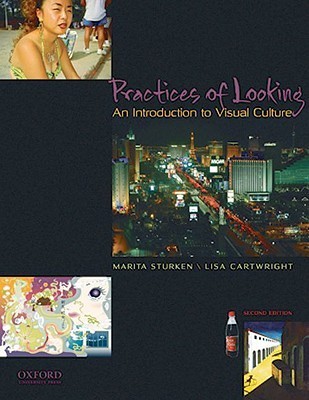
Practices of Looking: An Introduction to Visual Culture
Visual culture is central to how we communicate. Our lives are dominated by images and by visual technologies that allow for the local and global circulation of ideas, information, and politics. In this increasingly visual world, how can we best decipher and understand the many ways that our
everyday lives are organized around looking practices and the many images we encounter each day? Now in a new edition, Practices of An Introduction to Visual Culture provides a comprehensive and engaging overview of how we understand a wide array of visual media and how we use images to
express ourselves, to communicate, to play, and to learn. Marita Sturken and Lisa Cartwright--two leading scholars in the emergent and dynamic field of visual culture and communication--examine the diverse range of approaches to visual analysis and lead students through key theories and concepts.
Using clear, accessible language, vivid examples, and more than 250 full-color illustrations, the authors both explain and apply theory as they discuss how we see paintings, prints, photographs, film, television, video, advertisements, the news, the Internet, digital media, and visualization
techniques in medicine and science. This truly interdisciplinary text bridges art history, film, media, and cultural studies to investigate how images carry meaning within and between different cultural arenas in everyday life, from art and commerce to science and the law. Sturken and Cartwright
analyze images in relation to a wide spectrum of cultural and representational issues (desire, power, the gaze, bodies, sexuality, and ethnicity) and methodologies (semiotics, Marxism, psychoanalysis, feminism, and postcolonial theory).
Thoroughly updated to incorporate cutting-edge theoretical research, the second edition examines the following new the surge of new media technologies; the impact of globalization on the flow of information and media form and content; and how nationalism and security concerns have changed
our looking practices in the aftermath of 9/11. Challenging yet accessible, Practices of Looking is ideal for courses across a range of disciplines, including media and film studies, communications, art history, and photography.
Beautifully designed and now in a larger format and in full color throughout, Practices of Looking is an invaluable guide to understanding the complexities, contradictions, and pleasures of the visual world.
everyday lives are organized around looking practices and the many images we encounter each day? Now in a new edition, Practices of An Introduction to Visual Culture provides a comprehensive and engaging overview of how we understand a wide array of visual media and how we use images to
express ourselves, to communicate, to play, and to learn. Marita Sturken and Lisa Cartwright--two leading scholars in the emergent and dynamic field of visual culture and communication--examine the diverse range of approaches to visual analysis and lead students through key theories and concepts.
Using clear, accessible language, vivid examples, and more than 250 full-color illustrations, the authors both explain and apply theory as they discuss how we see paintings, prints, photographs, film, television, video, advertisements, the news, the Internet, digital media, and visualization
techniques in medicine and science. This truly interdisciplinary text bridges art history, film, media, and cultural studies to investigate how images carry meaning within and between different cultural arenas in everyday life, from art and commerce to science and the law. Sturken and Cartwright
analyze images in relation to a wide spectrum of cultural and representational issues (desire, power, the gaze, bodies, sexuality, and ethnicity) and methodologies (semiotics, Marxism, psychoanalysis, feminism, and postcolonial theory).
Thoroughly updated to incorporate cutting-edge theoretical research, the second edition examines the following new the surge of new media technologies; the impact of globalization on the flow of information and media form and content; and how nationalism and security concerns have changed
our looking practices in the aftermath of 9/11. Challenging yet accessible, Practices of Looking is ideal for courses across a range of disciplines, including media and film studies, communications, art history, and photography.
Beautifully designed and now in a larger format and in full color throughout, Practices of Looking is an invaluable guide to understanding the complexities, contradictions, and pleasures of the visual world.
496 pages, Paperback
First published January 1, 2001
About the author
Marita Sturken
27 books12 followersMarita Sturken is a professor and chair in the Department of Media, Culture, and Communication at New York University. Her work spans the fields of cultural studies, visual culture, American studies, and memory studies with an emphasis on cultural memory, national identity, consumer culture, art, and the cultural effects of technology.
Ratings & Reviews
Friends & Following
Create a free account to discover what your friends think of this book!
Community Reviews
Displaying 1 - 29 of 29 reviews

July 25, 2013
Good content, but poorly written. The sentences almost felt like imitations of academic writing rather than the real thing, lacking precision, clarity, and intent.

October 27, 2009
for a textbook, this is one is surprisingly interesting and the pictures are amazing. i'm not into the visual at all from an academic perspective, but the text is a good resource for teaching criticism and pop culture in general. there are easily accessible clarifications on the differences between modern and postmodern. i was going to sell it back, but now i think i'll keep it as a resource. the glossary is amazing and it's a good read.

March 6, 2017
Bought this book for quite some time and finally was able to finish in one shot. As a PhD researcher in Corporate Psychology which combines the notions of marketing as well as "advertising"; seldomly has someone who can point out the connotations of "looking" or simply "observation". We look but we do not see...daily...or even every seconds, we are looking things that are bombarded in front of us that make us numb, crippled. As the messages (informations) are being sent out in different ways and in evolutionary methods; some could dissect the messages deeply, and most of us living in this modernity cannot even decipher. Media, corporations have now evolved to become gigantic monsters aiming to uplift their propaganda to a whole new level. This book provides us a 360 degree on what observation, to see means in hope we can transcode what are to be sent to us in every directions.

August 17, 2015
This was the textbook for my fall class, and it's a remarkably thorough consideration of how we look at things in the 21st century. Not an easy read, by any means, and some chapters, where Foucault, Lacan, and other 20th-century theorists are swirled together to make a point make it challenging reading to those who may not be familiar with the relevant theorists. (My freshmen had their eyes spinning in their heads a couple of times.) But overall, a really substantive analysis.

November 9, 2019
I did not have to read the whole book for my Intro to Visual Culture class, but I am an artist so I thought why the hell not.
If you live in the Bay Area, if your bored, looking to expand your knowledge, looking to expand your visual vocabulary/literacy, or just have any interest in art, then I HIGHLY recommend ANY class with Carolyn Martin at Berkeley City College. Strongly recommend she is the BEST EVER and she makes art history interesting!!
If you live in the Bay Area, if your bored, looking to expand your knowledge, looking to expand your visual vocabulary/literacy, or just have any interest in art, then I HIGHLY recommend ANY class with Carolyn Martin at Berkeley City College. Strongly recommend she is the BEST EVER and she makes art history interesting!!

January 6, 2019
I suppose it could serve as an easy introductory textbook for an alien without sight or comprehension of visual culture, but for a second-year student taking a mandatory course to be presented with this reductive shallow piece was quite a humiliating slap in the face. Gets an extra star for some interesting history bits on marketing, bilboards etc. though.

June 23, 2013
Read it about two years ago and the examples they use are still stuck in my head. This is a textbook, the kind your teachers include in Must Read lists but it is so interesting and well written that it feels like a novel.

December 5, 2007
This book does a great job covering a wide range of literature on visual communication.
June 4, 2013
This is a "bible" for any visual media student.

February 21, 2017
Textbook for class. Not as repetitive as some of the other textbooks I have read.

July 13, 2026
Ik heb het boek grotendeels gelezen voor het vak beeldanalyse van de studie cultuurwetenschappen. Het is ook duidelijk geschreven als een academisch boek. Ze vatten heel goed samen wat het doel is in de intro:
Dit boek beoogt inzicht te bieden in het specifieke karakter van kijken als sociale praktijk en een scala aan benaderingen te introduceren voor het interpreteren van verschillende vormen van visualiteit en de plaats van beelden in sociale en geopolitieke machtssystemen waarin kijken ertoe doet.
We hopen dat lezers dit boek zullen gebruiken voor het maken van beelden en om te bestuderen hoe visuele beelden en visualiteit worden behandeld in uiteenlopende kaders: in de kunstgeschiedenis en kunstpraktijk; in architectuur, vormgeving en ontwerpstudies; in het werken met communicatie- en informatiesystemen; in journalistiek en sociale media; in de wetenschappelijke praktijk; in belangenbehartiging en activisme; en in alledaags maken, doen en leven.
Ze behandelen dit inderdaad heel duidelijk en het boek is prachtig vormgegeven. De manier van schrijven is echter niet behulpzaam bij studeren en de opzet nodigt niet uit tot verder lezen. De hoofdstukken voelen ook niet erg verbonden.
Het is een heel politiek geladen boek waarin ze zelf ook duidelijke keuzen hebben gemaakt wat ze wel en niet laten zien (pro diversiteit en ethische minderheden). Dit is geregeld wel storend ook al deel ik meestal hun standpunt.
Het is echt wel een prima boek als je meer wilt leren over kijken als sociale praktijk maar ik denk dat de meeste mensen dit verlangen niet zo hebben. Het helpt je maar zeer beperkt om te kijken naar kunst uit het verleden.
Dit boek beoogt inzicht te bieden in het specifieke karakter van kijken als sociale praktijk en een scala aan benaderingen te introduceren voor het interpreteren van verschillende vormen van visualiteit en de plaats van beelden in sociale en geopolitieke machtssystemen waarin kijken ertoe doet.
We hopen dat lezers dit boek zullen gebruiken voor het maken van beelden en om te bestuderen hoe visuele beelden en visualiteit worden behandeld in uiteenlopende kaders: in de kunstgeschiedenis en kunstpraktijk; in architectuur, vormgeving en ontwerpstudies; in het werken met communicatie- en informatiesystemen; in journalistiek en sociale media; in de wetenschappelijke praktijk; in belangenbehartiging en activisme; en in alledaags maken, doen en leven.
Ze behandelen dit inderdaad heel duidelijk en het boek is prachtig vormgegeven. De manier van schrijven is echter niet behulpzaam bij studeren en de opzet nodigt niet uit tot verder lezen. De hoofdstukken voelen ook niet erg verbonden.
Het is een heel politiek geladen boek waarin ze zelf ook duidelijke keuzen hebben gemaakt wat ze wel en niet laten zien (pro diversiteit en ethische minderheden). Dit is geregeld wel storend ook al deel ik meestal hun standpunt.
Het is echt wel een prima boek als je meer wilt leren over kijken als sociale praktijk maar ik denk dat de meeste mensen dit verlangen niet zo hebben. Het helpt je maar zeer beperkt om te kijken naar kunst uit het verleden.

Read
December 4, 2018comprehensive textbook. breaks down information for visual studies into bite-size, easy to understand pieces. includes various modern and postmodern scholars, academics, philosophers, and thinkers necessary to navigate graduate school (in the arts or humanities) -- even a changing world broadly speaking.
i initially rented this for a college course on visual cultures, but after having read the thing cover to cover, i feel comfortable + confident purchasing this one. definitely worth the investment.
i initially rented this for a college course on visual cultures, but after having read the thing cover to cover, i feel comfortable + confident purchasing this one. definitely worth the investment.

April 27, 2022
Přečtené kapitoly: 1, 6, 7
Nevyhovovalo mi způsob, kterým byly informace předávány. Je to napsané hodně složitě a těžko se z toho vytahují jen ty důležité informace. Obsahově jsou některé věci rozhodně zajímavé a poučné, ale hodně těžko se to čte.
Nevyhovovalo mi způsob, kterým byly informace předávány. Je to napsané hodně složitě a těžko se z toho vytahují jen ty důležité informace. Obsahově jsou některé věci rozhodně zajímavé a poučné, ale hodně těžko se to čte.

Did Not Finish
May 24, 2022I got this book originally for my Introduction to Visual Arts class at uni however it was also really useful for my Art and Its Context: Materials, Techniques, Display class and Research Essay.

September 2, 2023
Good introductory book in the context of modern visuals-heavy society with different forms of ads on every corner. I'd recommend this read for students getting into visual culture studies but also ones who'd like to understand how one is influenced by their visible surroundings.

January 27, 2021
This was the textbook for my visual rhetoric class.
This is organized fairly well and is easy to understand.
This is organized fairly well and is easy to understand.

May 18, 2021
a good, clear explained textbook for my postgrad classes in jakarta


December 1, 2022
อ่านแล้วคิดตามไม่ได้ เหมือนอธิบายแต่ละหัวข้อๆไปเรื่อยๆ ไม่มีการเลื่อมโยง

December 16, 2023
Excellent points

February 13, 2026
great introduction to learning about the politics of images.
full of examples.
full of examples.

April 30, 2026
Interesting read, I learned a lot about visual culture.
January 27, 2015
Although the book does have good information, as a student, I think it performs poorly as a textbook. Chapters are far too long, important ideas are not bolded, bulleted, or highlighted on the side of the text. Most college students don't have time to read textbooks word for word, and this text you almost have to do that so as not to miss anything. This book needs to be revised to be more student friendly. I'm really disappointed that this is the text that my professor chose for our class. I think there are probably far better ones out there.
Read
June 28, 2009Livro muito bom, bastante simples, muito util e didatico para perceber o modernismo e o pos-modernismo, neo-vanguarda e vanguarda, e cultura popular.

May 14, 2011
textbook

February 11, 2013
(0.6/5.0)

August 2, 2020
Textbook for my undergrad Visual Culture class... pretty cool. Tries to disconsider the gap between high and low culture.
December 29, 2015
good book, very inyeresting

June 1, 2018
Id give it a 3.5.. Tja, for textbook i shouldnt expect it to be that interesting to read. Its not hard but i often want to sleep after reading it for some minutes. Sorry for this review but im sure for some its definitely some good read.
Displaying 1 - 29 of 29 reviews