

What do you think?

Headless Horsemen: A Tale of Chemical Colts, Subprime Sales Agents, and the Last Kentucky Derby on Steroids
For fans concerned about the future of horse racing, "a well-told cautionary tale about greed and willful inattention" ( Kirkus ).
"An insider's stunning account of the corrupt practices that threaten both the horses and the game . . . an engrossing read." ― Minneapolis Star-Tribune
Jim Squires was in trouble. He was in the horse business, an enterprise seemingly intent on committing suicide, led over the cliff by visionless leaders. A clannish group called "the Dinnies" had long refused to share power, as vast overproduction and unbridled greed created a subprime-like bubble in the market. Overpriced animals of dubious quality and drug-enhanced performance on the track were undermining the integrity of competition and ultimately the very breed itself. With its economic model broken, its tawdry sales practices under attack, and its public image in tatters, the sport was overdue for a reckoning.
Headless Horsemen is Squires's critique of what is happening to the sport and the animals he loves, as he and a small group of unlikely heroes agitate for a return to fair dealing. For anyone who cares about the soul and survival of horse racing, this book is an impassioned call to arms.
"An insider's stunning account of the corrupt practices that threaten both the horses and the game . . . an engrossing read." ― Minneapolis Star-Tribune
Jim Squires was in trouble. He was in the horse business, an enterprise seemingly intent on committing suicide, led over the cliff by visionless leaders. A clannish group called "the Dinnies" had long refused to share power, as vast overproduction and unbridled greed created a subprime-like bubble in the market. Overpriced animals of dubious quality and drug-enhanced performance on the track were undermining the integrity of competition and ultimately the very breed itself. With its economic model broken, its tawdry sales practices under attack, and its public image in tatters, the sport was overdue for a reckoning.
Headless Horsemen is Squires's critique of what is happening to the sport and the animals he loves, as he and a small group of unlikely heroes agitate for a return to fair dealing. For anyone who cares about the soul and survival of horse racing, this book is an impassioned call to arms.
272 pages, Paperback
First published August 4, 2009
About the author
Jim Squires
10 books6 followersFormer editor of the Chicago Tribune and Orlando Sentinel, Tribune Washington Bureau chief, political and investigative reporter,city editor Nashville Tennessean. Media spokesman for Ross Perot's 1992 Presidential Campaign. Founder and owner Two Bucks Farm, Versailles, KY, breeder of 2001 Kentucky Derby winner Monarchos. Graduate Peabody College, Vanderbilt University; Nieman Fellow, Harvard University, 1970-71; Visiting Professor, Harvard Kennedy School, 1990-91.Author.
Ratings & Reviews
Friends & Following
Create a free account to discover what your friends think of this book!
Community Reviews
Displaying 1 - 23 of 23 reviews

April 28, 2012
The casual horseracing observer knows about the triple crown, and might even be familiar with some of the horses listed in the record books. The record books, however are only the tip of the iceberg. Great horses also lose – by a nostril, by a whisker – at the wire. They get bumped at the gate, boxed in at the stretch, and forced wide at the turn. Steroids can make a winner. The breeding shed can be a second proving ground. Horse-racing is a complicated business, so take another look at the record book. The jockey, trainer, and owner are listed. The missing piece of the cycle is what transpired before and after: Three Chimneys Farm and Claiborne are not famous because they owned or trained winning horses. They are famous because they are stallion farms, and that's where the story begins and ends.
Jim Squires is the owner of the modest breeding farm, Twin Bucks. His most famous connection is as the breeder of Monarchos, winner of the 2001 Kentucky Derby in a time bettered only by the great Secretariat. Squires is also former editor of the Chicago Tribune, and used to speaking his mind. What he offers here is a series of overlapping stories set mainly between 1980 and 2008 (the year of Eight Belles' tragic accident), told with insider knowledge and the kind of candor one might find among friends in a bar room. For that candor and uniquely personal viewpoint, he can be forgiven the frequent diversions, and occasionally over-worked hyperbole. This is a refreshingly irreverent look at the aristocrats of horseracing and at a business which should have seen the writing on the wall when Calumet Farms filed for bankruptcy in 1991.
One of the threads he traces is “The Rise of the Sale Horse.” The Yearling Sales have gradually moved to the role of prelude to the Second-Year sales. Some of his stories revolve around the dizzying heights top horses have fetched at the yearling auctions, fueled by the rivalry between the Irish Coolmore group, and the ruler of Dubai, and the primacy (a dubious indicator he later explains) of pedigree. Other stories trace the bargain hunting at the yearling sales in the hope of marketing a “home-run” at the 2-year old auctions. Each sale is fraught with scheming – behind the scenes deals to bid up the price of the horse, and secret whisper campaigns to lower the price a horse might fetch. Of the sanctioned secret ownership deals, Squires observes wryly: “Oh, okay, and maybe identifying the owner might violate the privacy of the horse or shame him among his friends.” It's a telling remark in that so often the welfare of the horse actually places last. Veterinarians are frequently engaged for their knowledge of steroid enhancement that falls just short of illegal (the rules vary from state to state, and detection procedures are determined by each individual lab). We are left to conclude that Rick Dutrow's troubles stem not from his unethical reliance on medicating his horses but his inability to keep his mouth shut. However, winning races is only a small part of the incentive for steroid use. A bigger factor is bulking up the appearance and speed of the horse prematurely in order to attract the highest prices at the 2-year old and any subsequent sales.
Squires' stories range far, and there are no heroes or even main characters. We meet John Gaines and Gary Biszantz, reform-minded owners, and Robert Courtney Sr., lauded for his ethics and courageous independence when he retired. Why was the compliment so enormous, Squires asks. Because “As a group, we are as herdbound as our animals and not nearly as honest,” he is told. We witness Unbridled's Song's 10-second furlong (due to the “rotary gallop”) which has nothing to do with stamina or development that will unfold in a three-year old colt, and the many successful progeny of such sires as Storm Cat and A.P. Indy.
This is a book for those interested in more than a superficial knowledge of horseracing. The gap between ethics and legality is disturbing. Drawing a parallel between the latest housing bubble and the economic woes of the horseracing industry, Squires states: “Like uniform drug rules, any restructuring of the sport's business model will have to come from a federal government mandate connected to the interstate gaming laws.” To those whose motto is greed, he warns: “My old business, newspapers, believed it was all about the money, too, and now it is too late for them.” In another time, many people might cringe; today we have learned once again where the mantra, Greed is Good, will ultimately lead. By the end of his story, we have a renewed respect for Larry Jones, trainer of the ill-fated Eight Belles, and for Squires himself, who is unafraid to speak of his attachment to his horses and of the ills that the powers that be continue to turn a blind eye at.
Jim Squires is the owner of the modest breeding farm, Twin Bucks. His most famous connection is as the breeder of Monarchos, winner of the 2001 Kentucky Derby in a time bettered only by the great Secretariat. Squires is also former editor of the Chicago Tribune, and used to speaking his mind. What he offers here is a series of overlapping stories set mainly between 1980 and 2008 (the year of Eight Belles' tragic accident), told with insider knowledge and the kind of candor one might find among friends in a bar room. For that candor and uniquely personal viewpoint, he can be forgiven the frequent diversions, and occasionally over-worked hyperbole. This is a refreshingly irreverent look at the aristocrats of horseracing and at a business which should have seen the writing on the wall when Calumet Farms filed for bankruptcy in 1991.
One of the threads he traces is “The Rise of the Sale Horse.” The Yearling Sales have gradually moved to the role of prelude to the Second-Year sales. Some of his stories revolve around the dizzying heights top horses have fetched at the yearling auctions, fueled by the rivalry between the Irish Coolmore group, and the ruler of Dubai, and the primacy (a dubious indicator he later explains) of pedigree. Other stories trace the bargain hunting at the yearling sales in the hope of marketing a “home-run” at the 2-year old auctions. Each sale is fraught with scheming – behind the scenes deals to bid up the price of the horse, and secret whisper campaigns to lower the price a horse might fetch. Of the sanctioned secret ownership deals, Squires observes wryly: “Oh, okay, and maybe identifying the owner might violate the privacy of the horse or shame him among his friends.” It's a telling remark in that so often the welfare of the horse actually places last. Veterinarians are frequently engaged for their knowledge of steroid enhancement that falls just short of illegal (the rules vary from state to state, and detection procedures are determined by each individual lab). We are left to conclude that Rick Dutrow's troubles stem not from his unethical reliance on medicating his horses but his inability to keep his mouth shut. However, winning races is only a small part of the incentive for steroid use. A bigger factor is bulking up the appearance and speed of the horse prematurely in order to attract the highest prices at the 2-year old and any subsequent sales.
Squires' stories range far, and there are no heroes or even main characters. We meet John Gaines and Gary Biszantz, reform-minded owners, and Robert Courtney Sr., lauded for his ethics and courageous independence when he retired. Why was the compliment so enormous, Squires asks. Because “As a group, we are as herdbound as our animals and not nearly as honest,” he is told. We witness Unbridled's Song's 10-second furlong (due to the “rotary gallop”) which has nothing to do with stamina or development that will unfold in a three-year old colt, and the many successful progeny of such sires as Storm Cat and A.P. Indy.
This is a book for those interested in more than a superficial knowledge of horseracing. The gap between ethics and legality is disturbing. Drawing a parallel between the latest housing bubble and the economic woes of the horseracing industry, Squires states: “Like uniform drug rules, any restructuring of the sport's business model will have to come from a federal government mandate connected to the interstate gaming laws.” To those whose motto is greed, he warns: “My old business, newspapers, believed it was all about the money, too, and now it is too late for them.” In another time, many people might cringe; today we have learned once again where the mantra, Greed is Good, will ultimately lead. By the end of his story, we have a renewed respect for Larry Jones, trainer of the ill-fated Eight Belles, and for Squires himself, who is unafraid to speak of his attachment to his horses and of the ills that the powers that be continue to turn a blind eye at.

April 24, 2010
This is Squires, a former Chicago Tribune editor's second book on the Thoroughbred industry. Squires is a longtime horseman who got into the Thoroughbred business after leaving the Trib and moving to a Kentucky horse farm. He struck luck in breeding Monarchos, a Kentucky Derby winner, and his first book told the story of this venture in a highly entertaining manner. This one though, is an expose of the use of steroids and double dealing at the sales that permeates the industry. Squires is soured on the business now, in part due to the above, particularly since his trainer and friend Larry Jones was unustly accused of drugging Eight Belles prior to her fatal breakdown in Big Brown's Derby. One guesses that another element that has caused Squires to rethink the business is the economic downturn that has drastically affected the Thoroughbred sales.Nonetheless, Squires tells it like it is, names names and has not forsaken his curmudgeonly trouble-making persona.

June 13, 2012
So someone railed against the recent articles in the NY Times about horse racing, saying that author had some vendetta because of losing or something. I found this strange because the NYT's article was written by four people and the complainer couldn't be bothered to name the person she was railing against.
It's why I hate discuss lists because you have people like that.
I think she was thinking of Jim Squires because he does seem to have an axe to grind here. Can't say I as I blame him. The racing industry does need an overhaul, more than the one that it is getting. Sadly this book is too personal (I really didn't need to hear about the kidney stones) and unlike Squires previous horse book, it doesn't work here. Still infromative and interesting.
It's why I hate discuss lists because you have people like that.
I think she was thinking of Jim Squires because he does seem to have an axe to grind here. Can't say I as I blame him. The racing industry does need an overhaul, more than the one that it is getting. Sadly this book is too personal (I really didn't need to hear about the kidney stones) and unlike Squires previous horse book, it doesn't work here. Still infromative and interesting.

July 22, 2009
Jim Squires makes you laugh and rage about a grand old sport that can't stop fighting among each other and shooting itself in the foot. He's an amiable raconteur - this is a must for horse libraries. And yes, he's a buddy of mine and writes for The Rail, but don't hold that against him.
May 23, 2020
Just finished reading this book again. A softcover edition I have held onto.
Though originally published in 2009 the book still seems relevant today. Horses are still being juiced, according to recent federal indictments. I am sure chicanery continues at the horse auctions.
I read this book caused some backlash and grief from the racing establishment, who still do not get it. Couple years ago I was banned from commenting on Paulick report for being negative...well I still think the business side of racing - breeding horses who sell for far more than many will ever earn - is weakening the breed.
The author speaks from experience...of how people have been cheated and how unscrupulous agents and dealers cheated him out of revenue because he would not allow them to skim proceeds between himself and the eventual buyer.
Today we see so many horses racing about a half dozen times with great success...then being retired immediately at age three to collect huge stud fees from breeders who enable this practice. The big name horses often do not race long enough to really develop a fan base beyond the bettors, who do not care because great horses pay low odds anyway.
Squires points out many things that is hurting the sport of racing.... which at the core it is supposed to be first. A sport.
Though originally published in 2009 the book still seems relevant today. Horses are still being juiced, according to recent federal indictments. I am sure chicanery continues at the horse auctions.
I read this book caused some backlash and grief from the racing establishment, who still do not get it. Couple years ago I was banned from commenting on Paulick report for being negative...well I still think the business side of racing - breeding horses who sell for far more than many will ever earn - is weakening the breed.
The author speaks from experience...of how people have been cheated and how unscrupulous agents and dealers cheated him out of revenue because he would not allow them to skim proceeds between himself and the eventual buyer.
Today we see so many horses racing about a half dozen times with great success...then being retired immediately at age three to collect huge stud fees from breeders who enable this practice. The big name horses often do not race long enough to really develop a fan base beyond the bettors, who do not care because great horses pay low odds anyway.
Squires points out many things that is hurting the sport of racing.... which at the core it is supposed to be first. A sport.

July 9, 2017
What a treasure to find this book at my local 'previously loved' book store. I bought it as a gift for a relative who manager for his brother, Hugo Dittfach who was top Canadian jockey in the 1950's & 60's. He also raced for the likes of Humphrey Bogart & Lauren Bacall in Hollywood.
Decided I'd give it a read before I gave it as a gift. I'm a longtime. horse addict/rider. What a fascinating story, written by a terrific journalist who also has a great sense of humour and humanity.
A great 'behind the scenes' view of the thorougbred world written by an informed source who is also a breeder of thoroughbreds (though an admitted small player in the industry). Though the book is about a specific industry he also relates it to the economics, politics and shenanigans of business from the world of professional sports to newspapers.
Well worth the read! Looking to find an earlier book writtin by him about his Derby winning horse, Monarchos.
Decided I'd give it a read before I gave it as a gift. I'm a longtime. horse addict/rider. What a fascinating story, written by a terrific journalist who also has a great sense of humour and humanity.
A great 'behind the scenes' view of the thorougbred world written by an informed source who is also a breeder of thoroughbreds (though an admitted small player in the industry). Though the book is about a specific industry he also relates it to the economics, politics and shenanigans of business from the world of professional sports to newspapers.
Well worth the read! Looking to find an earlier book writtin by him about his Derby winning horse, Monarchos.
January 6, 2022
An interesting and entertaining read. Unsure what is fact, what is speculation, and what is opinion but it is well written with a lot of head nodding (and shaking) from this reader who has been in the Thoroughbred industry for many years.

March 31, 2015
An in depth book, one that assumes the reader is familiar with the big names of thoroughbred breeding, as well as the ins and outs of how the business runs. I imagine it was a quite sharp critique of the authors horse breeding peers, as he appears to be on a first name basis with the subjects of his dissection. You need a Swiffer to clean up after all the name drops, and half of those are from horses. There were few shocking reveals due to how the book was written. It led well from topic to topic, but the author was a journalist and it definitely shows; this reads like a newspaper article above and beyond anything I've seen, from the layout to the headlines. He telegraphed his punches, as it were, although the statistics presented were well integrated, cited, and presented in a way that was unobtrusive while allowing an expansion on the reader's opinion. As someone whose horse racing experience encompasses Hillenbrand's Seabicuit, a childhood fascination with "horsies", and a family trip to Kentucky's Museum of the Horse this book was a dive into the deep end. The journalistic style made it easier to comprehend, but it was still a lot to take on. Recommendation caveat time. Would it be worth acquainting myself with the racing industry, building background on history, modern business practice, major court cases, and equine husbandry just to prepare for this one book? I would have to say no, the material is not complex enough in either research material, legality issues of drug use, or history of drugs in racing. However, as a part of a collection on the modern racing industry, particularly in addition to research on drug use in horses it would be a nice add on to get a bit of insider perspective from the people producing the animals used to fuel the industry.
August 25, 2009
Headless Horsemen is a confusing jumbled rant written by an angry self-important breeder who, despite all of the success he's achieved with his small-time operation, feels abused. When he didn't receive bids in excess of $250k for Monarchos' full sister, it was because of back room deals (the filly made only one start and was sold three years later as a broodmare prospect for $290k - the buyers, not Squires, were the big losers). When his horses didn't meet their reserve prices, it was because of the stupidity of buyers scared off by "goddamn OCDs" or small shadows on an x-ray. He applauds those who push for increased transparency but then complains about $500 for x-rays for the repository as yearling sales. He takes a stance against drugs in racing and depicts Larry Jones as a saintly cowboy despite his use of Clenbuterol (just not within 96 hours of a race). Perhaps confused by his rage, Squires jumbles important dates like Monarchos' appearance in the sales ring at Saratoga (multiple times given as '96). There is little doubt in my mind that this book was hastily put together to make a quick buck to make up for recent lackluster yearling sales. The result is part angry screed and part mean spirited gossip. Squires might have a few good ideas for the sport but I couldn't figure out what they were and his book did little to convince me of anything but the fact that he is an ass.
May 28, 2013
There are too many numbers, too many names, too many horse names.
The last couple of chapters are fine. The part where Jim Squires brags about his fighting skills is not:
"Having gone to grammar school in a rough part of Nashville, I had grown up fighting in the streets . . .. Although Indian Charlie was probably twenty years younger than me, I figured to do him a lot of damage in the five minutes before I ran out of breath. But just in case he was tougher than he looked or I got arrested in the process, I prudently decided to postpone the assault until after my unsold yearlings were safely back to Two Bucks. In retrospect, the kidney stone encounter was a lucky break for us both."
--Right. If it weren't for those kidney stones, you would've gotten him good.
Two stars: one is mandatory; two is for the authors' inside perspective.
The last couple of chapters are fine. The part where Jim Squires brags about his fighting skills is not:
"Having gone to grammar school in a rough part of Nashville, I had grown up fighting in the streets . . .. Although Indian Charlie was probably twenty years younger than me, I figured to do him a lot of damage in the five minutes before I ran out of breath. But just in case he was tougher than he looked or I got arrested in the process, I prudently decided to postpone the assault until after my unsold yearlings were safely back to Two Bucks. In retrospect, the kidney stone encounter was a lucky break for us both."
--Right. If it weren't for those kidney stones, you would've gotten him good.
Two stars: one is mandatory; two is for the authors' inside perspective.

October 8, 2011
I am a life-long horse lover and having read this book, I understand why I distrust almost everyone in the horseracing industry. Those trainers, breeders and owners who do it for the love of the horse and the sport, are few and far between. Hopefully their hard work with getting the "juice" out of the racing industry will eventually come to fruition.

August 27, 2010
Good book. I worried that it would get too involved in the author's cute little grandson stories, but it only indulges sparely. Instead it's a well written and exciting, yet honest look at the systemic problems horse racing faces. A very courageous book.
September 19, 2010
I give this a four only for horse racing fans. Some of it was a little complicated for a person out of the loop to understand but is a fascinating look at some of the more "crooked" practices in the industry.
May 29, 2011
The writing was a bit dry, but the story is fascinating for anyone who follows horseracing, the coporate takeover of sports in general, the foibles of the rich, or animal welfare.
Thoroughbreds have a great history and heritage, and it's being taken apart, one crop of foals at a time.
Thoroughbreds have a great history and heritage, and it's being taken apart, one crop of foals at a time.

October 1, 2014
Horrible. A thoroughbred breeder and pissed-off newspaper writer tries in vain to justify the cruelty of thoroughbred horse racing in the United States through whining. Unorganized, rambling narration and complete ignorance of horse welfare.
November 12, 2014
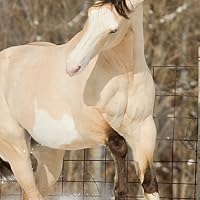
The headless horsemen is a book about mysteries/ goose bumps/ chillers/ and scary myths. It's about headless horsemen on Halloween who basically haunt/ follow/ or even murder/ harm people. They scare people to death, giving them heart attacks and such others...
Read
July 27, 2009This is a serious book about the abuses in the horse racing industry, but the best part about it is Jim Squires. He is a warm, and very funny guide to a world I knew little about.
September 15, 2009
Has its flaws, but still a great look inside racing and breeding. Definitely shines a light on some of the shady activities that I, as an outsider, had only heard rumors about.

September 21, 2009
horse racing did it to itself. not a whole lot of sympathy for those guys.
April 1, 2010
Many interesting tidbits, but it's repetitious and meandering. I also wondered if he had an axe to grind.
August 25, 2010
Good book on the current state of the Thoroughbred industry. Great read for anyone interested in getting into the biz.

January 17, 2013
Facts were very interesting but for being a newspaper editor I thought it was very poorly written.

May 12, 2017
Finally someone who tells the truth about the two year old in training sales, and in a very entertaining way.
Displaying 1 - 23 of 23 reviews