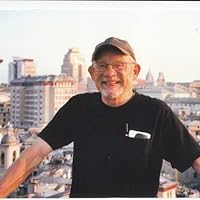
Polish-American writer Sholem Asch (also written Shalom Ash, Yiddish: שלום אַש, Polish: Szalom Asz) sought to reconcile Judaism and Christianity in his controversial novels, such as The Nazarene (1939). Sholem Asch composed dramas and essays in the Yiddish language.
Frajda Malka bore Asch and nine other children to Moszek Asz, a cattle-dealer and innkeeper. Asch received a traditional Hasidic eduction and later obtained a more liberal education at Włocławek, where he supported himself by writing letters for the illiterate townspeople. He moved to Warsaw and met and married Mathilde Shapiro, the daughter of Menahem Mendel Shapiro.
The Haskalah or Hebrew enlightenment initially influenced Asch. His earliest writing was in Hebrew, but Isaac Leib Peretz convinced him to switch to Yiddish. The plot of God of Vengeance, his drama of 1907. features a lesbian relationship in a brothel. He traveled to Palestine in 1908 and to the United States in 1910, finally emigrating to the latter in 1914. He sat out World War I in the United States and was naturalized as a citizen in 1920.
His Kiddush ha-Shem (1919), one of the earliest historical novels in modern Yiddish literature, concerns the anti-Semitic uprising of Khmelnytsky in mid-17th century Ukraine. In 1920, in honor of his 40th birthday, a committee of his fans published a 12-volume set of his collected works (up to that time).
When his play God of Vengeance was performed on Broadway in 1923, authorities arrested and successfully prosecuted the entire cast on obscenity charges. (However, the convictions were overturned on appeal.) But in Europe, the play was popular was popular enough to be translated into German, Polish, Russian, Hebrew, Italian, Czech, Romanian, and Norwegian.
His trilogy Farn Mabul or Before the Flood, translated into English as Three Cities 1929-31), describes early 20th century Jewish life in Saint Petersburg, Warsaw, and Moscow. In 1932, the republic of Poland awarded him the decoration of Polonia Restituta, and in the same year he was elected honorary president of the Yiddish PEN Club.
He later moved to France and visited Palestine again in 1936. His Dos Gezang fun Tol (The Song of the Valley), about the halutzim or Zionist pioneers in Palestine, reflects that visit. His next work, Bayrn Opgrunt (1937), translated into English as The Precipice, is set in Germany during the hyperinflation of the 1920s. In 1939, he returned to the United States.
His trilogy The Apostle (1939), The Nazarene (1943) and Mary (1949), which dealt with figures from the New Testament, offended many Jews. The Forward, the leading Yiddish language newspaper of New York, dropped him as a writer and openly attacked him for supposedly promoting Christianity.
Asch spent most his last two years in Bat Yam near Tel Aviv, Israel but died in London. His house in Bat Yam now houses his namesake museum. Yale University holds the bulk of his library, which contains rare books and manuscripts, including some of his own works.
Polish-born Jewish writer Sholem Asch (1880-1957) could arguably be claimed as an American author; he immigrated to the U.S. in 1914, and became an American citizen in 1920. But from a very early point in his career, he chose to do his writing in Yiddish, the German dialect which was the vernacular of the Ashkenazi Jews of Eastern and Central Europe. As a result, he's not studied in high school and college American Literature courses, because these are part of the broad discipline of English, and so concern themselves only with American literature written in English (just as he's not classified by the Library of Congress in its PS "American Literature" category, which is strictly limited to Anglophone literature). That's in some ways a shame, because East River is one of the most accomplished and perceptive novels penned in the U.S. in the first five decades of the 20th century (and I've read enough of the fiction of that period to fairly make that assessment!), and perhaps of the entire 20th century.
Raised in a Hasidic family, Asch's Jewish faith was important to him (though his writings sometimes aroused the ire of significant segments of the Jewish community). He was particularly influenced by the Kabbalistic tradition of medieval Jewish mysticism, which had been incorporated into the Hasidic form of Judaism when the latter took shape in 18th-century Poland (and which included belief in reincarnation, which plays an important part in his 1939 novel The Nazarene). Building bridges between Judaism and Christianity was a significant interest of his, and he had a good understanding of Christian beliefs. His Judaism was also the basis for his passionate concern with social justice, grounded in the prophetic tradition of the Old Testament (though he wasn't a Communist, in the early 1950s he wrote articles critical of capitalism's abuses for a Yiddish-language Communist paper, leading to his questioning by the House Committee on Un-American Activities in the McCarthy era).
All of this background is reflected in this novel, set in New York City's Manhattan Island (and particularly the poor neighborhoods of the East Side) beginning in the summer of 1910 and extending until possibly sometime in the early 1920s. No exact dates are given, but the vivid description of the horrific Triangle Shirtwaist Factory fire on March 25, 1911 (https://en.wikipedia.org/wiki/Triangl... ), which killed 146 garment industry workers, a tragedy which elementary common sense and concern for fire safety could have prevented, provides a chronological anchor, as do allusions to World War I, etc. Asch's style has been characterized as blending Romanticism and Realism, and he brings the New York City of that day --especially the NYC of the poorer classes, and particularly the Jewish community-- to vivid life, with the eye of an actual observer. Against the backdrop of an eventual interfaith marriage and its attendant challenges, Jewish-Gentile antagonism, the exploitation of the workers and the fight for unionization in the East Side's dominant garment industry, and the timeless struggle in human hearts between religious faith and unbelief, he introduces us to at least five dynamic major characters (mostly Jewish, but including Irish-descended cradle Catholic Mary McCarthy) who make significant moral decisions. He cares passionately about each of these characters; and he makes us care abundantly, too. This is a novel that transcends time and place, to achieve true universality.
EAST RIVER by the great Sholem Asch is one of the most engrossing, satisfying novels I’ve read in a long time. Filled with rich, complex characters maneuvering and often struggling through a changing world, the story brings to life the multi-ethnic neighborhoods on the East Side of New York City in the first decades of the twentieth century. The writing is beautiful and vivid without calling attention to itself.
Each of the many characters tries to do the right thing, for himself or herself, but also for others and for the society around them, but the circumstances in which they live and struggle frequently betray them. As the world they’re in changes, they change, themselves, so their views of that the world, other people, and of themselves also must alter.
EAST RIVER is a refreshing change from so many stories and novels today in which under-developed characters mope around doing nothing, as if it’s vulgar for literary fiction to show any energy or color—or emotional and mental complexity. This novel shows how rewarding on many levels a work of serious fiction can be and, although there were no murders, vampires, or explosions within its 400 pages, I could scarcely put it down until the end. Highly recommended.
Set in a mixed immigrant neighborhood of Jews and Christians in early 20th century New York City, this reads like a style of novel now completely unfashionable. Its purpose is to explore questions of the right ethical/religious way of living, specifically in this case in the new world of America in which emigrants from the Old World, Jew and Christian, are thrown together and everything, it seems, is now in question. In this great melting pot, how much particularity should be melted away, and what needs to be retained? How should Jew and Christian order their relations, both within and between their communities?
It is not a novel concerned with psychological realism. Characters change their convictions quickly, without showing their work to the reader, so to speak, even when adopting the exact opposite position to what they had previously believed. When Asch wants his characters to arrive at an ethical/religious truth, they often arrive there very suddenly and decisively. This makes them seem less like psychologically real individuals than philosophical playthings. It can feel very unconvincing, but interiority is not his interest, the moral is.
Personally I found the novel too long, at about 450 pages, to sustain a high level of interest in how he works in this mode, often densely. I would have liked characters that felt more real. Asch was a pioneer in translated Yiddish to English literature in America, but for the Jewish immigrant novel I would much more recommend Abraham Cahan.
I can’t fault the author for the energy it took to write this book. One thing he is really good at is analyzing the thought processes of characters. I admire him for being able to bring a character from one position to another hint some kind of logical display of thoughts. Sometimes I see inconsistencies in things that the characters do such as when Mary does not bring a crucifix into her father-in-law‘s house and then a sentence later it says that she brought a crucifix into the house. This may be the fault of the translator. I see this more than once this is the example that I remember the best. She brought a cross into the house and then later on he says she brought a crucifix in to the house. Since the father-in-law is Jewish this is definitely something that would not be desired by him. The book gets a little tedious because it constantly tells us how the character got to the point where an action can take place. But there is a lot of non-action that goes on. Now I know that mother authors are cut to write more their books. I can’t fault him using modern standards. However, in this instance when I wasn’t quite sure where this book was taking me I found it it disconcerting because I didn’t quite know why all those details were there. Once again I found myself wondering where he got the energy to write all of this. But frankly I was glad when the book was over. I thought he did a much better job dealing with characters like Jesus and Mary in his other books. But he also did a great job with characters in this book when he didn’t get cut up in detail. I have never read and action description of The triangle waist fire that helped create better working conditions. That was a very good description. Now, if he would have written more like that. :-) But I will read more of his work even knowing that he gets cut up in details rather than action. It may be that his short story writing is much more designed for this style.
Written in 1946 and translated from Yiddish by A.H. Gross. Situated on E. 48th St. on the last block between the East River and 1st Ave. Many Jews and a few gentiles make up the myriad characters of this charming but none too subtle novel. A Catholic girl, Mary, marries Irving Davidowsky, causing his father to sit shiva for him. Irving is making his fortune running a garment business. Includes much of the author philosophizing about religion, labor, socialism. Asch remains essentially Jewish, while having an open mind and a certain curiosity about Christianity.
Originally written in Yiddish as "Ist River," this is a sweeping historical novel of New York at the beginning of the 20th Century. This draws on Asch's own immigration to these shores in 1910 and his views on social equality, capitalism, religion and multi-culturism. There are many themes in this book including: 1. The exploitation of immigrant labor by the needle trades. This was epitomized by the Triangle Shirtwaist Factory Fire of 1911 and the distribution of piecemeal "bundles" of clothing to home workers (including underage children) in order to thwart the fledgling power of organized labor. In order to supply Americans with cheap clothing, this system, unfortunately continues in Third World countries. 2. New York as a melting pot of many ethnicities and religions. Unfortunately many stereotypes of portrayed including the ruthless Jewish businessman and the Irish alcoholic. With a deep background in Judaism and well-read in Christian sources, Asch appears to be the high priest of universal religion. According the Asch, why can't we forget our particularistic rituals and love God and one another. The hero of the novel, in my opinion, is Mosh Wolf, a pious orthodox Jew who learns to accept his Irish Catholic daughter-in-law and his baptized grandson. 3. There also seems to be a Jacob and Esau theme going on here. One Onbrother is a man of the world, a man of action. The other brother is more studious and limited physically. One brother is close to the father and the other close to the mother. One brother upholds the "birthright" of social responsibility; the other brother sells out for the most money. There is even a young woman who believes who believes in trickery and the power of clothes and cosmetics to get her way. It is no wonder that East River remaind on the New York Times best seller list for many weeks.
Praise goes to Sholem Asch! This was a great book, and I haven’t read a great book like this in a long time. Asch has a way of making each character come alive. He has a way of revealing how religious traditions/morals and practical living can butt heads, and at the end of the day, love seems to get ahold of each one of us.
Fascinating meditation on immigrant New York in the 1910s. Concludes with the most beautiful literary descriptions of Jewish worship I’ve read; includes a lot of interesting thinking about religion and social justice.
Soft shadows of light, pearly radiance bound by limitations of reality into a single, ethereal softness and hardships of Jewish immigrants adjusting to American life in early 1900s New York City.
New York City. A revolutionary zeal in sound and fury; a paradise for man and beast.
3.5 stars rounded up for that ending! Read this for a class but I can easily understand why it was such a bestseller! was a bit slow to get into but gave some great things to think about. (also apparently this is one of my dad's favorite authors?! who knew?!) anyways. slay yiddish writers.