

What do you think?
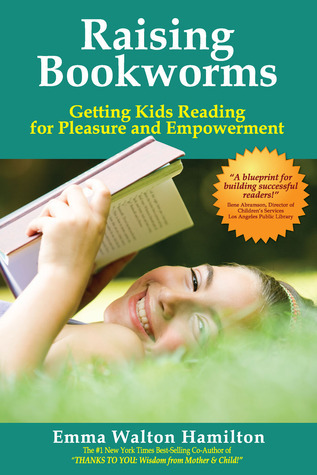
Raising Bookworms: Getting Kids Reading for Pleasure and Empowerment
This book offers creative strategies, tips, and activities to help young people discover - or rediscover - the joy and empowerment of reading.
208 pages, Paperback
First published October 15, 2008
About the author
Emma Walton Hamilton
56 books29 followersEmma Walton Hamilton is a British-American children's book author, theatrical director, and actress. She is an instructor in the MFA program at Stony Brook Southampton, where she serves as Director of the Southampton Children's Literature Fellows program and the Young Artists and Writers Project (YAWP). She is the daughter of singer, actress and author Julie Andrews and set/costume designer Tony Walton.
Ratings & Reviews
Friends & Following
Create a free account to discover what your friends think of this book!
Community Reviews
Displaying 1 - 30 of 48 reviews

October 3, 2019
Growing up I read countless books on subjects that interested me including tornadoes, insects, wildlife, and of course, fictional fairy tales and other stories I could get lost in. After having children of my own, something I knew for certain was that I wanted them to be readers too--not just for school, but to actually develop a love for reading and learning for life. It couldn't be more of a challenge, especially now in a world full of electronic competition.
In this book the author demonstrates how parents and teachers can guide children toward reading, and help establish a love for reading beginning as early as baby hood. She shares strategies for different age groups and some eye-opening statistics. There are also recommended book lists for each age group, and a resource section which includes recommended books and other publications, organizations, and websites for parents and educators.
One of my favorite aspects of the book were the quotes shared for each chapter...
"Properly, we should read for power. Man reading should be man intensely alive. The book should be a ball of light in one's hand." --Ezra Pound, Poet
The book does seem repetitive throughout, but the way it's organized is what makes it feel that way. Each section covers a different age range and some suggestions for early elementary-aged children also pertain to middle-grade readers; for example, "keep books everywhere" is a suggestion for all age groups. If you're reading it from front to back, the book might seem monotonous, but one who just focuses on their child's age will get exactly what they're looking for.
A big question I had before reading this book was: "Should I still be reading aloud to my middle-graders?" The answer is a resounding yes!
"Keep reading with your child. Really. Continue reading aloud to your older child, wherever and whenever possible. It isn't until around eighth grade that young people's reading abilities and listening skills converge--meaning that until that point, children can understand a great deal more of what is read to them than they are able to read themselves, both in terms of vocabulary and ideas. This alone should be incentive enough to continue reading aloud with kids through middle-school. But there's also the fact that continuing to read together through the middle school years keeps the connection between reading and pleasure alive, as well as helping young people to become better readers themselves and discover what kinds of stories and authors inspire them. Plus, it provides important opportunities for you to explore social and moral issues together."
I was full of positivity after learning that because reading together is something we still enjoy doing (even though they're perfectly capable of reading on their own), and to know it's beneficial is comforting. After reading through this book, it's apparent that I've done much of what I can, but there's certainly still room for improvement as well.
Overall, this is a book I recommend for parents, teachers, or anyone who has a chance in helping a child establish the connection between reading and pleasure. There's a wealth of information here and it's a great book to have for reference.
4****
In this book the author demonstrates how parents and teachers can guide children toward reading, and help establish a love for reading beginning as early as baby hood. She shares strategies for different age groups and some eye-opening statistics. There are also recommended book lists for each age group, and a resource section which includes recommended books and other publications, organizations, and websites for parents and educators.
One of my favorite aspects of the book were the quotes shared for each chapter...
"Properly, we should read for power. Man reading should be man intensely alive. The book should be a ball of light in one's hand." --Ezra Pound, Poet
The book does seem repetitive throughout, but the way it's organized is what makes it feel that way. Each section covers a different age range and some suggestions for early elementary-aged children also pertain to middle-grade readers; for example, "keep books everywhere" is a suggestion for all age groups. If you're reading it from front to back, the book might seem monotonous, but one who just focuses on their child's age will get exactly what they're looking for.
A big question I had before reading this book was: "Should I still be reading aloud to my middle-graders?" The answer is a resounding yes!
"Keep reading with your child. Really. Continue reading aloud to your older child, wherever and whenever possible. It isn't until around eighth grade that young people's reading abilities and listening skills converge--meaning that until that point, children can understand a great deal more of what is read to them than they are able to read themselves, both in terms of vocabulary and ideas. This alone should be incentive enough to continue reading aloud with kids through middle-school. But there's also the fact that continuing to read together through the middle school years keeps the connection between reading and pleasure alive, as well as helping young people to become better readers themselves and discover what kinds of stories and authors inspire them. Plus, it provides important opportunities for you to explore social and moral issues together."
I was full of positivity after learning that because reading together is something we still enjoy doing (even though they're perfectly capable of reading on their own), and to know it's beneficial is comforting. After reading through this book, it's apparent that I've done much of what I can, but there's certainly still room for improvement as well.
Overall, this is a book I recommend for parents, teachers, or anyone who has a chance in helping a child establish the connection between reading and pleasure. There's a wealth of information here and it's a great book to have for reference.
4****

September 26, 2017
Very repetitive but a quick study. The most valuable part is the references to books by age and other works to help support your child's literary endeavors.

May 19, 2018
The author has lots of good resources.
July 8, 2021
Lots of very good suggestions on books to read for various ages, how to read them, and activities to go along with reading to expand the fun and impact. Also very good reasons why you should be doing this with and for your kids in the first place! It's never to late to get started. You and your kids will be glad you did.
February 19, 2009
The glowing recommendations from librarians on the cover raised my expectations for this book, and they were not fully met. I enjoyed hearing her interview on NPR and very much enjoyed the portions of the book when she was on her "soapbox." I wish there had been more of her commentary on those issues (TV, "dark" books for children) and a lot less repetition.
Having checked this out from the library, I read it as a book, when I think it is best used as a reference. She repeats the strategies for making reading a joyful experience for each age group, so you see the same thing four times. I almost returned it after reading the baby chapter where her helpful ideas were use board books, animal books, rhyming books, ABC books, and make your own photo albums - uh, duh! Thankfully, the suggestions got better in the older age groups (time capsules, family trees, cooking projects) and I'll definitely use the lists of recommended books.
I remain shocked by the statistics she shares. "Eighty percent of US families did not buy or read a book last year. Seventy percent of US adults have not been in a bookstore in the past 5 years. Forty-two percent of college graduates never read another book once they have graduated." I really can't fathom any of these and wish she had spent more time discussing them and making an action plan instead of telling us to make a cozy reading nook four times.
Having checked this out from the library, I read it as a book, when I think it is best used as a reference. She repeats the strategies for making reading a joyful experience for each age group, so you see the same thing four times. I almost returned it after reading the baby chapter where her helpful ideas were use board books, animal books, rhyming books, ABC books, and make your own photo albums - uh, duh! Thankfully, the suggestions got better in the older age groups (time capsules, family trees, cooking projects) and I'll definitely use the lists of recommended books.
I remain shocked by the statistics she shares. "Eighty percent of US families did not buy or read a book last year. Seventy percent of US adults have not been in a bookstore in the past 5 years. Forty-two percent of college graduates never read another book once they have graduated." I really can't fathom any of these and wish she had spent more time discussing them and making an action plan instead of telling us to make a cozy reading nook four times.

September 18, 2009
I believe in everything Hamilton says in this book about the importance of associating reading with pleasure and how reading aloud to kids OF ALL AGES helps facilitate this goal. It wasn't a great book though. I learned about several useful reading websites, but besides that, I found this book a repetitive (she repeats the same suggestions for each age group) and lacking in new information. Hamilton is the daughter of Julie Andrews, and at several points she mentions the connection between reading aloud and performance. I wish she would have taken this a bit further, making this a more unique book that would actually add some new ideas. Instead, I would highly recommend Trelease's Read Aloud Handbook over this one!
September 6, 2026
Nonfiction | Parenting | Children’s Literacy
Core Concept:
Encouraging children to develop a lifelong love of reading by connecting books with pleasure, imagination, empowerment, and everyday life.
• Plot:
Raising Bookworms: Getting Kids Reading for Pleasure and Empowerment is basically a guide for parents and people who work with children on how to get kids interested in reading. It talks about reading for pleasure. It goes through different age groups, starting with babies and toddlers and going all the way to middle school and beyond. Hamilton also gives lists of books for each age group and explains a little bit about what each book is about.
• What I Liked:
I liked that the main idea is reading for pleasure. She talks about making books feel like something fun and positive by giving books as gifts, reading aloud with a lot of expression, telling your own stories, encouraging kids to have favorite books, playing word games, and even watching movies that are based on books.
I looked forward to seeing the book lists. That was honestly one of the main reasons I wanted to read this book. A lot of the books she mentions are ones I've already heard of or have seen before, like Harry Potter and Twilight, but there were a few that I hadn't heard of. I don't have kids, but I thought it would be interesting to see what kinds of books she recommends for different ages, and maybe find some books that I would want to read myself or recommend to someone else who have kids.
The formatting is also really easy to look through. There are quotes, bullet points, little design elements, and separate sections, so it's easy to skim and find the parts you're actually interested in.
• What Didn’t Work for Me:
Some of the advice gets repetitive. She repeats a lot of the same ideas in the different age sections. I understand why she does it because someone could just go to the section for their child's age and get all the information they need without reading the whole book, but since I was reading through the entire thing, I noticed the repetition.
I also thought some of her ideas about reading and civic involvement were a little too broad. She talks about how people who read are more likely to vote, volunteer, participate in the community, go to museums, attend cultural events, and be involved in politics. I can see the connection, especially with being informed, but I don't think it's quite that simple. Someone can read very little literature and still be involved in their community. People are also reading all the time online, like social media posts, comments, articles, and other things. That reading might not always be as nourishing as literature, but it is still reading.
• Themes / Ideas:
The biggest idea is that reading should be connected to joy. Hamilton wants children to find books that they actually enjoy so that reading becomes something they want to continue doing as they get older.
She also talks about reading as a way to become more confident and informed. She believes that having strong reading skills can help people participate more in society and understand the world around them. There are also ideas about imagination, storytelling, empathy, altruism, and using books to help children work through problems.
I liked the idea that you can give a child a book when they're dealing with something difficult and let them see someone in a story going through something similar. It makes a book more than just entertainment.
• Who I’d Recommend It To:
I'd recommend this mostly to parents, teachers, librarians, and anyone who works with children and wants ideas for getting kids interested in books. I'd also recommend it to adults who are interested in children's literature or who want to see what kinds of books they might have missed growing up.
• Overall Thoughts:
I found this book for free in a Little Free Library, which is probably why I was willing to pick up something I normally wouldn't have gone looking for. I don't have kids, so I wasn't reading it because I needed parenting advice. I was more interested in seeing what kinds of books she would recommend for different ages and what she had to say about why reading is important.
The book is easy to look through. Most of the titles were books I've come across before for the suggested reading list, but again, there were a few I hadn't heard of, so I might look into those.
I did think some of the advice was repetitive, but I can understand why the author structured it that way. Overall, I liked the idea behind the book: you don't just want children to learn how to read. You want them to actually enjoy reading and want to keep doing it throughout their lives by making it a part of their lives as they grow, if they don't naturally gravitate to it, as most people who pick up the book do.
One of my favorite quotes in the book was from Ralph Waldo Emerson:
“In the highest civilization, the book is still the highest delight. He who has once known its satisfactions is provided with a resource against calamity.”
I really like that idea. A book can become something you can always come back to for entertainment, comfort, knowledge, or just to escape into another world for a while. That's probably the part of Hamilton's argument that I connected with the most.
Core Concept:
Encouraging children to develop a lifelong love of reading by connecting books with pleasure, imagination, empowerment, and everyday life.
• Plot:
Raising Bookworms: Getting Kids Reading for Pleasure and Empowerment is basically a guide for parents and people who work with children on how to get kids interested in reading. It talks about reading for pleasure. It goes through different age groups, starting with babies and toddlers and going all the way to middle school and beyond. Hamilton also gives lists of books for each age group and explains a little bit about what each book is about.
• What I Liked:
I liked that the main idea is reading for pleasure. She talks about making books feel like something fun and positive by giving books as gifts, reading aloud with a lot of expression, telling your own stories, encouraging kids to have favorite books, playing word games, and even watching movies that are based on books.
I looked forward to seeing the book lists. That was honestly one of the main reasons I wanted to read this book. A lot of the books she mentions are ones I've already heard of or have seen before, like Harry Potter and Twilight, but there were a few that I hadn't heard of. I don't have kids, but I thought it would be interesting to see what kinds of books she recommends for different ages, and maybe find some books that I would want to read myself or recommend to someone else who have kids.
The formatting is also really easy to look through. There are quotes, bullet points, little design elements, and separate sections, so it's easy to skim and find the parts you're actually interested in.
• What Didn’t Work for Me:
Some of the advice gets repetitive. She repeats a lot of the same ideas in the different age sections. I understand why she does it because someone could just go to the section for their child's age and get all the information they need without reading the whole book, but since I was reading through the entire thing, I noticed the repetition.
I also thought some of her ideas about reading and civic involvement were a little too broad. She talks about how people who read are more likely to vote, volunteer, participate in the community, go to museums, attend cultural events, and be involved in politics. I can see the connection, especially with being informed, but I don't think it's quite that simple. Someone can read very little literature and still be involved in their community. People are also reading all the time online, like social media posts, comments, articles, and other things. That reading might not always be as nourishing as literature, but it is still reading.
• Themes / Ideas:
The biggest idea is that reading should be connected to joy. Hamilton wants children to find books that they actually enjoy so that reading becomes something they want to continue doing as they get older.
She also talks about reading as a way to become more confident and informed. She believes that having strong reading skills can help people participate more in society and understand the world around them. There are also ideas about imagination, storytelling, empathy, altruism, and using books to help children work through problems.
I liked the idea that you can give a child a book when they're dealing with something difficult and let them see someone in a story going through something similar. It makes a book more than just entertainment.
• Who I’d Recommend It To:
I'd recommend this mostly to parents, teachers, librarians, and anyone who works with children and wants ideas for getting kids interested in books. I'd also recommend it to adults who are interested in children's literature or who want to see what kinds of books they might have missed growing up.
• Overall Thoughts:
I found this book for free in a Little Free Library, which is probably why I was willing to pick up something I normally wouldn't have gone looking for. I don't have kids, so I wasn't reading it because I needed parenting advice. I was more interested in seeing what kinds of books she would recommend for different ages and what she had to say about why reading is important.
The book is easy to look through. Most of the titles were books I've come across before for the suggested reading list, but again, there were a few I hadn't heard of, so I might look into those.
I did think some of the advice was repetitive, but I can understand why the author structured it that way. Overall, I liked the idea behind the book: you don't just want children to learn how to read. You want them to actually enjoy reading and want to keep doing it throughout their lives by making it a part of their lives as they grow, if they don't naturally gravitate to it, as most people who pick up the book do.
One of my favorite quotes in the book was from Ralph Waldo Emerson:
“In the highest civilization, the book is still the highest delight. He who has once known its satisfactions is provided with a resource against calamity.”
I really like that idea. A book can become something you can always come back to for entertainment, comfort, knowledge, or just to escape into another world for a while. That's probably the part of Hamilton's argument that I connected with the most.
September 29, 2025
Repetitive content, but the tip about reading to older kids made it worthwhile:
"Keep reading with your child. Really. Continue reading aloud to your older child, wherever and whenever possible. It isn't until around eighth grade that young people's reading abilities and listening skills converge--meaning that until that point, children can understand a great deal more of what is read to them than they are able to read themselves, both in terms of vocabulary and ideas."
"Keep reading with your child. Really. Continue reading aloud to your older child, wherever and whenever possible. It isn't until around eighth grade that young people's reading abilities and listening skills converge--meaning that until that point, children can understand a great deal more of what is read to them than they are able to read themselves, both in terms of vocabulary and ideas."

January 2, 2017
I really wanted to like this book, and it is full of important information for parents to help support a love of reading. But it was also very repetitive. This outline would make for a great interactive website and the focus on what adults can do to connect reading to pleasure is so important (we don't have to kill the joy of reading with endless comprehension questions!).
December 2, 2018
I see lots of repetitions in thus book. However it’s useful for readers who want their kids to be a bibliophile. The wonderful part is the detailed list of age appropriate books. A must read for all readers.

July 16, 2020
A pretty handy reference for how to instill a love of reading in your children. I had a number of take-always and things I’ll approach differently. I especially like the end of each child development phase having some recommended reading.
June 24, 2023
Great emphasis on why to read-aloud to kids, even as they age into middle school. Lots of recommendations of books. Repetitive information, but that only highlights the importance of those aspects of reading for cultivating an enjoyment for and interest in reading.

February 14, 2019
There was a lot of great information in this book. My only issue is that it was very repetitive. It's definitely worth the read though.
July 3, 2019
Wonderful ideas!

December 10, 2020
Practical advice for parents looking to raise readers.

June 10, 2021
Super quick read as it’s almost like the author copy and pasted much of the info at later parts in the book. All in all, the nuggets pulled out were worth the redundancy
July 20, 2022
A good book on how to establish a culture of reading in the home.
Read
October 23, 2011Lists for ideas and books to read for each age group
Try Julie Andrew books and more Emma Walton Hamilton books
P.138 Readers are more likely to...do well in school, communicate effectively, have confidence, be productive,concentrate well,be life long learners,seek out and develop new idea ,get ahead in their chosen career, cope well with life's challenges, and much more!...travel in time and places through books
www.thebestkidsbooksite.com
bookhooks.com
guysread.com motivating boys to read
lightupyourbrain.com/audio-stories-fo...
www.ReadWriteThink.org
Appendix P.153
Strategies for each age group and ideas beyond just reading
Try Julie Andrew books and more Emma Walton Hamilton books
P.138 Readers are more likely to...do well in school, communicate effectively, have confidence, be productive,concentrate well,be life long learners,seek out and develop new idea ,get ahead in their chosen career, cope well with life's challenges, and much more!...travel in time and places through books
www.thebestkidsbooksite.com
bookhooks.com
guysread.com motivating boys to read
lightupyourbrain.com/audio-stories-fo...
www.ReadWriteThink.org
Appendix P.153
Strategies for each age group and ideas beyond just reading

February 17, 2009
I really enjoyed this book. I actually read it in a day because there is a lot of repetition. I enjoyed the age-by-age recommendations the most. Her premise is that we can get our kids reading by building associations of warmth/cuddling/joy with reading. I love that she encourages us to have our kids read in bed (one of my fondest memories of reading as a child). This is a book I would recommend to any parents and teachers. I will be recommending it to the parents of my students as well. The author includes plenty of extra resources for parents.

February 1, 2010
Well, it's not rocket science but I did find this book very helpful. The primary message is simply to make reading fun for kids, and it offers some specific suggestions and ideas for how to do that. There is a quite a bit of repetition since the book is broken primarily by age group and lots of the same suggestions are applicable for multiple age groups, but that didn't really bug me. She also offers some great suggested reading lists and website for more information and ideas. Certainly worth picking up and paging through!

September 7, 2009
If you are looking for a book that will give a great detailed list of benefits and statistics for reading, this is a decent place to start. But really, who wants decent when great and phenomenal are available? I truly believe a better choice for the whys and hows of reading would be Paul Kropp's "How to Make Your Child a Reader for Life." I also thought Esme Raji Codell's "How to Get Your Child to Love Reading" had much better booklists and unique ideas.
June 26, 2010
This book is written by the daughter of Julie Andrews! Chapter 7 lists great resources that you won't want to miss (such as websites, magazines, organizations, and recommended reading programs). Includes suggestions for techniques and activities to encourage reading at each age level as well as lists of reading suggestions. Hamilton is an active member of NEA (National Endowment of the Arts and refers to their recent landmark publications on literacy.

December 8, 2008
I put this book on my Goodreads list ages ago, before I had a bookworm (which now I most certainly do). I was interested in her suggested books for different ages. The activities she suggests are good, but if you have a "reading" household, chances are you are already doing most of them. I did take away a few ideas that I will try.
December 8, 2008
This book does not contain very much useful information/guidance beyond common sense. I think it is intended for families who don't read that much. (Not heavy Goodreads users.) I did like looking over the lists of recommended books for each age group, but those kinds of lists can be found all over, so the book really isn't essential.

January 31, 2009
This book is very easy to read and has very specific ideas that any one can use to promote reading in children. I found the recommended resources very plentiful and very helpful in my job as a youth services librarian. I highly recommend this book for teachers, librarians, parents, and any other individual interested in passing on their love of reading.

April 6, 2009
I confess that I did not read every word of this book; someone else was waiting to read it at my library. However, I read the whole chapter on middle school-aged people and skimmed the rest. The advice is good and the book itself is easy to read. I copied several of the inspirational quote boxes into my own quotes file, too.

October 6, 2010
I liked the premise of this book about associating pleasure with reading and then keeping that association alive, but I didn't learn much that was new. This book wouldn't be a bad place to start for parents overwhelmed by helping their children to read because it is short, clear, and lists a lot of ideas. But, it is not my favorite text on this subject.

January 28, 2012
I didn't enjoy this nearly as much as I thought I would. Mostly because this is the same exact advice I give to all my parents at programs. Very little of this was new or enlightening. I could have WRITTEN this book! Also, I thought some of the recommendations for certain books at certain ages skewed a little young.

May 26, 2012
How do you help your child become a lifelong reader? Why should they read? Why should you read? If you are a parent, or a teacher...read this book! Hamilton provides strategies, tips, book recommendations for varying ages, and resources to help you raise lifelong readers. It was also a quick and fun read.

August 19, 2014
A helpful book with lots of ideas for helping children to enjoy reading. Also full of suggested books to read with different age groups.
A little repetitive in parts but it's designed so that you can pick it up and jump straight to the chapters most relevant to your children's ages without necessarily reading it from cover to cover.
A little repetitive in parts but it's designed so that you can pick it up and jump straight to the chapters most relevant to your children's ages without necessarily reading it from cover to cover.
Displaying 1 - 30 of 48 reviews