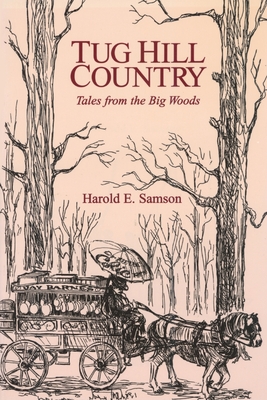
This magnificent area of hardwood ridges, stands of evergreen, rock-strewn pasture land, sliced every so often by the gorge of a roaring stream, has a mind of its own - as do the people who call it home. These rugged individualists return to amuse and amaze in this interesting collection of Tug Hill history.
The Tug Hill Plateau is a massive land mass in north central New York state, covering hundred of square miles in parts of four counties and mostly known for its substantial annual snow fall and sparse population. Historically it’s home to family farms and logging operations. This collection of short stories centering, mostly, on the logging industry is one a good example of oral history and families stories put to paper and published by small, local presses.
Tall tales mingle with quaintly written but interesting local history and color in this collection of vignettes from a lifelong resident of the vast, rugged, sparsely populated region just west of the Adirondacks and just east of Lake Ontario in north-central New York State. Originally published in the 1970s, these stories invoke long-ago incidents and memorable, mostly sympathetic local characters who once logged the woods, traveled the rivers, or worked and planted the family farms scattered across more than 2,100 square miles of rugged upland known as Tug Hill*.
Traces of those settlements and people can now be detected mainly in the names of local roads and hamlets, as unpaved crossroads in the wilderness that surrounds the small but distinctive towns and villages that dot the "Hill"'s perimeter, or in the occasional historical markers and small, specialized museums that might catch one's attention on a journey through the area. The book is most likely of interest to visitors, local residents, and anyone who wants to learn more about the area's 2+ centuries of US history, lumbering and woodsmen lore, or small-town and backcountry life in late 19th through mid-20th century northern New York.
*Geological note: Tug Hill is not technically a hill but a rock formation called a "cuesta", similar to a tilted plateau, which rises gradually from Lake Ontario and the beginning of the St. Lawrence River to over 2000 feet, then drops more abruptly on the east into the Black River valley, which separates it from the Adirondacks.
This book was very enjoyable for me. Partly because I grew up in the area and was familiar with many of the locations mentioned in the various chapters. The book covers the history and tall tales of the area in an engaging fashion. This is a must read for anyone who grew up in the area of upstate New York known as Tug Hill.
Our family had a cabin near Osceola in the Tug Hill Plateau, so it was great fun to read these stories. Reminiscent of the stories my Dad would tell me of woodsmen in the Adirondacks.