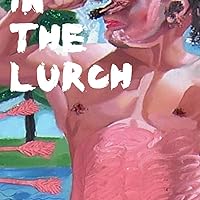
Ben Hughes is a corrupt Boston Vice Detective and bagman for the Southie Mob.
Already desperately struggling with obsessive compulsions and memories of a traumatic childhood, his world begins to fall apart at the seams, triggered by the photograph of a missing child in the newspaper and the anniversary of his father’s death twenty years earlier.
I’LL PRAY WHEN I’M DYING IS THE STORY OF A BAD MAN BECOMING WORSE…
What a book.. It’s classic noir, with a poetic prose that you can’t rush, you need to take your time and let the words (and story), just wash over you, certainly not one you can fly through.
Incredible novel. Golds words come at you like a scatter gun, and when you're wrapped up in the story, you're living the frenetic anger and hopeless weight of another day with these characters.
I'll Pray When I'm Dying is historical noir that primarily takes place in 1940s Boston, with flashbacks to 1920s London, and it's calamitous time if you're down in the gutter like corrupt cop Ben Hughes. It's an alleyway odyssey when Ben goes after a case of missing children. Golds jars you with Ben's POV, but it's an immersive, bloody ride into ruin.
A third novel from an extremely talented writer that needs no introduction on the indie crime scene. Stephen J. Golds get better with every new book, affirming further a strong and original voice we all love and envy, his plot even more intricate, his premise even braver. A dark, deep and challenging must read.
Ben Hughes is an OCD corrupt Boston detective struggling to crawl from under a legacy handed down from his London bobby father. Ben's an exposed nerve of a character flailing against the crumbling strands of his comfortable reality.
Golds is one of my favourite writers on the scene just now and his raw, searing poetic style meshes brilliantly with his no-holds-barred noir plotting. This one contains some of his best writing yet and he has a knack for making even tertiary characters memorable without the need to delve into their whole backstory. Case in point would be chapter three where we are introduced to Ben's friends and rivals within the Southie gang he is a part of.
Golds takes us on a journey beyond the heart of darkness and straight to the pit of its stomach in an unforgettable noir spiral.
About 7/8 months ago I had never even heard of the author Stephen J Golds but in that short timespan I’ve now read all three of his novels, his collections of poems and short stories and got another collection on order. ‘I’ll Pray When I’m Dying’ is his third novel and is set in post war Boston, where we meet protagonist Ben Hughes who is a Boston PD cop and also a bagman for the Irish Mob. Ben suffers from OCD among other things and during the course of the novel he finds his world is rapidly falling apart at the seams. Steve, his mob boss has dementia, Li Yu his girlfriend may not be all she makes out, the Italians are gunning for him and his Police career is going down the pan. However Ben sees a chance of redemption, if he can solve the case of the missing children who are being snatched from Boston’s streets. The story culminates in a violent, bloody and fatal climax at a Salt Lake City hotel where Ben is moonlighting on a security detail, guarding Joe Kennedy. This is another brilliant novel, where Golds, as he explains in the afterword, writes about a protagonist who is essentially a bad man. In the novel Golds also tells the story of Ben’s father who was also violent and an abusive father and whose behaviour basically shaped Ben into what he ultimately becomes. Golds, an OCD suffer himself also details Ben’s behaviour, so that the reader gains a greater understanding of this illness instead of the tired cliches which are normally used to portray suffers. I also love Gold’s prose and I particularly like the way he can move from beautifully descriptive writing to extreme bloody violence in one fell swoop and I love the way these two elements are juxtaposed to great effect. I’ve said before that his writing is pretty unique but possibly the closest comparison I can think of is James Ellroy but more for the timeframe of the novel’s setting and also the type of characters portrayed in the story rather than the actual writing style. The author has been extremely prolific over the last few months and at the same time the writing has been brilliant and I look forward to reading ‘Cut Throat and Tongue Tied, Bullet Riddled etc.’ which is my next Golds read !
First lemme say Im BIASED for this author. Butt U kno Y? Becuz THE MAN kan write!! And as a rule I only interview AUTHORS I kno Im going to give 5 STIZZARS/Stars to. And STEPHEN J. GOLDS is one, baby. Peep this story: A MENTALLY DISTURBED/OCD Cop hoo is Korrupt. Butt he can't help it. His DADDY was also korrupt. Shit runs in the FAM, ya digg?? Saying a COP is korrupt is like saying WATER is WET. And the Main Man: BEN HUGHES is rite on time to continue the LEGACY as he wilds away in Boston as a Detective. BUTT he aint the only FLAWED muthafucka in this novel. His GIRLFRIEND is BENT n hiding shit. His MAFIA Boss he ENFORCES For is a Psyche Job/Losing his mind .... and on it goes. YET: Ben got a thang for CHILDREN: hoo keep cumming up MISSING--and this is damn near causing him sleepless nights & worriment as he attempts to FIND OUT WHY?? So maybe he aint a total Human Loss--as this forms the background to his other PROBLEMS. And thats the thang about Brotha GOLDS. He writes these stories in which extremely FLAWED peeple sumhow have at least SUMPEN you kan appreciate. Butt what GOLDS does is NOT give U a neatly wrapped book in which its a HAPPY ENDING. Instead he gives U real life. In other werds: THANGS may werk out/or they may not. That DENOUEMENT tho. Just like wit his first book I read: SAY GOOD-BYE WHEN IM GONE--life is VIOLENT n BLOODY as hell. Then U DIE a FOOL or WISE UP, baby. U jes never know when the PEN is in the hands of one of the RAWEST/most innovative writers slangin werds in the PULP/CRIME NOIR Game today. Thats hoo STEPHEN J. GOLDS Is, man. And U should WISE UP and read every book he puts out!! I guarantee U will leave his books a changed Person or Pronoun.
Awesome cover. Funny bar arguing, sayings, slurs. ‘40s setting w/o being stuffy. Boston w/o overkill on the accent or stereotypes. The lucky 7 is also a motif in his noir poetry: Half-Empty Doorways. Kinda funny to have a character sorta named after himself and use the OCD to go into how clean he kills over people being gross and sniffly. Breh, the descriptive nose-picking, lol. Dude will shoot for anything.
Opium and falling in love with a Chinatown prostitute. Clever, the continual callbacks to childhood and bugs. Crooked cops and a potential power vaccum in the Italian vs Irish mafia. European flashbacks. A Kennedy?? Didn’t see that coming.
Though this relates to other books in the series, I don’t feel I missed anything reading practically stand-alone. Nor do I find the not so often POV shifts jarring. This author and Russell Thayer should team up (besides how they both were in Filth It Shall Be Found) since they like ‘40s crime so much.
When I first read Golds, I never heard of someone write on OCD. Seems he was a first-mover since just a few months later and now it’s become a trend I constantly see mentioned on GoodReads, EdelWeiss, NetGalley and top fresh releases. Same with the villain being the sympathetic character, à la the serial killer & vigilante true crime girlie phenomenon.
Yet one day I’d like to read a book where the MC in a historical book isn’t the convenient racial progressive for mod audiences. It’d be more informative, unique, and likely. Not that anyone in this book isn’t bad, criminal or otherwise. Anyway, this seems Golds’ most widely appealing release. Very classic, a traditionally professional weaving of noir.
Okay, I’m going to start off on a tangent. But I promise it will be relevant to my appreciation of what Stephen J. Golds has done in his masterful novel, I’ll Pray When I’m Dying.
As I’m sure many of you know, the term Noir was coined shortly after WWII by French movie critics who were a wee bit surprised at what a dark turn Hollywood films had taken during the four years-or-so of the German occupation. Film historians often use terms like “post-war existential nihilism” to describe the cynical societal undercurrent that resulted in such films. It’s difficult for us to watch Double Indemnity, Out of the Past, or The Killing and really see existential nihilism, per se. They seem campy to us, almost to the point of being funny in some ways. But that’s because we can’t view them through the same lens as movie goers seventy-odd years ago. We are too inured by the constant bombardment of blood, guts, and cynicism that permeates arts and entertainment of our time. Now that contemporary TV shows and movie franchises killing off characters is di rigueur, it takes something extraordinary to move the needle with us. What does any of this have to do with I’ll Pray When I’m Dying? Well, what Stephen J. Golds does in general (I’ve now read two of his novels) and here specifically, is to move the needle and allow us to experience Noir the same way they did in the post-war decade. The novel is uncompromising in its bleakness. The same as movie-goers saw, for the first time, Walter Neff be inexorably lured by Phyllis Dietrichson into the doomed-to-fail plot to kill her husband, we watch Ben Hughes, Golds’ protagonist, being drawn down an increasingly dead-end path, largely for the love of a woman. It is existentially nihilistic AF.
Ben Hughes, as a character, is multilayered and complex. Golds does an incredible job of making the reader feel the unease of a character who suffers from OCD. More than that, we know, especially by the end of the book, that there are a multitude of extenuating circumstances, that when thrown onto the Nature v. Nurture scale, may not exonerate his behavior and violence, but might at least help us to root for him a bit. As he searches for some small bit of redemption, we hope he finds it.
And, so as not to get too artsy, there’s a lot of cool, gangster stuff in the book – entertaining in its own right.
It might not be everyone’s cup of tea. But if you like some dark cynicism in your crime fiction, you gotta pick this one up.
I was offered an ARC copy of this novel, which I freely chose to review. I read a review Always the Dead by Stephen J. Golds a few months ago, loved it, and when I shared my review on my blog quite a few people were intrigued and interested. Unfortunately, there were problems with that particular edition of the book, and it was removed from sale, but that didn’t diminish my interest and enthusiasm. Quite the opposite. Evidently, when I was given the opportunity to review a new novel by the same author, I couldn’t resist. And let me tell you, wow!
Many of my comments about the previous novel apply here as well. This novel is darker than noir, harder than hard-boiled, and the characters are true bad-asses, but they are far deeper and better drawn than most bad characters are in novels. I have said, more than once, that I don’t need the protagonist of the books I read to be good to feel engaged and to be able to root for them, and I have always had a bit of a soft spot for anti-heroes and unusual main characters. We might not like to be reminded that we all have a dark side, and that we can do bad things as well (sometimes with the best of intentions, sometimes not so much), but as long as the characters’ behaviour can be understood at a certain level, and we can follow their journey and understand their motivations, no matter how little I like what they do, I’m happy to read about them. In the author’s note, at the end of the book, he explains that he decided to write this book because bad characters are always the antagonists, and very often we never get to understand why they do what they do; they are simply there as a foil to test the hero, a difficulty to be overcome, and he felt they should be given a chance. Although the main protagonist of the novel is Ben Hughes, a British man who emigrated to the US (Boston) with his mother when he was quite young, the book also tells the story of his father, William, who was in the Met police, in London, and who, like his son, had survived a war but had been badly affected by it. The action and the setting is split into two time lines, separated by twenty years, as the father’s story takes place in 1926 and the son’s in 1946, in the days coming up to the 20th anniversary of his father’s death. There are many similarities in the behaviour of the two characters (Ben is a detective working for the Boston Police Department, but he has other fairly illegal occupations, and, in fact, he uses his job as a cover for the least pleasant aspects of his personality), and violence, corruption, threats, blackmail... are ways of life for both. But while we get much more of an insight into Ben’s motivations and traumas (growing up with a father like his was incredibly tough, and we get a first-row seat into some of his experiences through his memories and flashbacks of his childhood abuse), we don’t get to know that much about William. We don’t know anything about his life before the war, although we learn about a French woman’s betrayal and about the way the war seems to have dehumanised him, as he perceives violence now as an expedient way to get whatever he wants (because at least he is using it now in his own benefit, rather than for free at the behest of others). His alcohol consumption doesn’t help matters either, and he is unrepentant. His son, Ben, suffers from Obsessive Compulsive Disorder (OCD), and, as a psychiatrist and a reader, I must say I have never come across such a vivid and accurate depiction of the condition. The author explains that he feels this illness is always trivialized in popular media, and many aspects of it are never mentioned or delved upon, and he is absolutely right. I am sure many of us can bring to mind characters in books and movies who are supposed to suffer from OCD, but in most cases it is only anecdotal, a minor hindrance, not something central to the character’s life. Although the story is told in the third person, Golds immerses us into the minds of the protagonists (we also get the point of view of some minor characters at times, but these are brief scenes, not quite as powerful or in depth, although I particularly enjoyed meeting again a character from the other novel), and, in the case of Ben, that makes for a very uncomfortable experience. Beyond his actions (that yes, are extreme and hard, to say the least), we are locked inside a mind that is forever trying to fight repetitive thoughts (of contamination, paranoid thoughts, suspicions, guilt...), compulsions, engaging in routines (counting, repeating a poem) to guard against evil and doom, trapped by magical thinking... It is not surprising that his mind unravels as more and more of the things and people who moored him into his precarious existence fail him, and he cannot retain any sense of balance or equilibrium. The writing style, the repetitions, the interruptions, the combination of short, sharp, and quick sentences combined with beautifully observed (even when ugly) descriptions of people and places, recreate the workings of the main character’s mind, and reminded me somewhat of stream of consciousness, a writing technique often used by modernist writers. Although there is plenty of action, a plot thick with events and characters (from the lowest of the low to the highest echelons of society), this is not an easy linear read. The story follows a chronological order, alternating the chapters set in the 1920s and the 1940s, but there are many intrusions and flashbacks that can be disorienting and make the readers empathise (if not sympathise, as that is more difficult) with Ben. He is not good, as I said, and nobody could easily condone his actions, but he is trying to hold on to his soul and wants to help a child to make amends, as he wishes someone would have helped him all those years back. Even though the psychological insight into the protagonist’s psyche is one of the strongest points of the novel, the author also captures beautifully the atmosphere of both periods, the interactions between the characters, the way the gangs and tribes communicate, and the struggle for power (both inside and outside of the law). I recommend people thinking of reading it to check a sample of the book, but I strongly advise giving it a good chance and not reading only a few lines, as it wouldn’t give them a fair idea of what the experience is like. Despite my recommendation, I had to share a few lines with you: Here, Ben describes how he feels when he sees a picture of a missing boy: Something like a bullet in the back. A blade across the throat. A headache like a hammer blow to his skull and the start of a fever boiling underneath his clothes. Distorted images passing through his head like the headlights of a speeding hearse down a black street. And here, one of Ben’s routines: He counted his steps in groups of seven. He reached the bakery in four sets. Four was an unlucky number. He turned around and walked back seven spaces, turned and walked back. Cancelling out the bad. Creating order..... He counted the steps up to her door. Twelve. Went back over two steps to make it fourteen. Two sets of seven. Felt relief.
As I had warned in my previous review, this is a novel that would fit perfectly in the publishing world of the era the main action is set in (the late 1940s), but not so much now. I had warned about possible triggers there, and here we have them all as well: brutal violence, corruption, alcohol abuse, drug abuse, child abuse, domestic violence, sexual assault... and anybody who might feel offended or upset by any of these subjects or preferring to read a book that fits into current political correctness sensibilities should be advised to stay away. This is a hard book, not without its moments of humour (very, very dark), and it deals in serious subjects, which, unfortunately, no matter how much the language we use has changed, are still present and as disturbing and ugly as ever. If you dare dig deep into the mind of a bad man and are not worried about, perhaps, getting to understand him and feel sorry for him, go on and read. Luckily, I have another one of Golds’ books waiting for me.
The third and most intense of Stephen J. Golds's noir trio (Say Goodbye When I'm Gone, Always The Dead) is a harrowing trip inside the minds of two brutal, evil men. Perhaps more than any contemporary crime author, Golds recalls not only James M. Cain and Derek Raymond but Greek and Jacobean tragedy, his ruthless characters bound by blood, fate, and obsession.
I’ve been wanting to read I’ll Pray When I’m Dying before it even came out, so when the author offered me a review copy, I happily took him up on that offer, massive thanks to Stephen J. Golds! In the meantime I’ve also treated myself to the paperback copy. I’ve become quite a fan of Stephen J. Golds this year. Say Goodbye When I’m Gone was my first five-star read of the year, and a few month later I thoroughly enjoyed his short story / poem collection Like Bleeding Out with an Empty Gun in Your Hand. In terms of literary format, he is one of the most prolific authors out there with novels, poetry and short stories under his belt, in terms of genre and style he sticks to what he does best: crime noir of the pitch-black kind. I’ll Pray When I’m Dying sports a dual timeline and two narrators: William in London, 1926 and Ben in Boston, 1946. They are father and son, and one thing they clearly have in common is a very short fuse and a knack for violence. They are both authority figures, one a police sergeant, one a detective, yet the law seems to be open to interpretation for them. Twenty years and an ocean apart but the sins of the father are kept alive in the son. If you’re looking for loveable characters, move right along, neither William nor Ben are particularly likeable, let alone loveable. Father and son are hardboiled criminal men, scary men, there are no good guys in this story. Still, although part of me nigh on despised Ben, part of me also felt for him. How can he be “normal” – insofar as that’s an actual thing – when he has both his genes and his upbringing against him? A word here too about OCD, which Ben suffers from and which has, to the best of my knowledge, been aptly depicted by the author. The lucky and unlucky numbers, the counting to ward off bad luck, the checking and repeating certain actions and thoughts over and over again, … Obsessive Compulsive Disorder is a trying mental illness and it’s one of the factors that allowed me to root for Ben, even though he is anything but a good guy. I’ll Pray When I’m Dying is not very long but it does pack quite a punch. It’s not one to race through, it’s one to savour in all its poetic grittiness. Cos yes, it is gritty. It is gritty and grimy and violent and ugly and so very dark you feel like you need to turn on a lamp even when you’re reading in broad daylight. But. There’s also a certain poetic quality to the writing, something hard to define but it somehow makes the violence easier to digest, it allows you to find beauty in ugliness. I’ll Pray When I’m Dying crept up on me and ended up hitting me hard. It will most likely not become the general public’s sweetheart, and I don’t even think it was written and published to that end, but if you have a single crime noir bone in your body, this is definitely one for you.
As I am sitting here writing this little review, I don't even remember how I found this book. At some stage I'd marked it as want to read and listed it amongst the books in my TBR, but how I found it, or when I even marked it as want to read remains a mystery to me. If it wasn't for my TBR Lucky Dip I probably wouldn't have even picked it up anytime soon.
I am breaking away from my normal Likes and Dislikes format for this one because, quite frankly, I did not like this book at all. I did not enjoy it. It just was not for me. The writing was so jarring and disjointed that, at times, it was just painful for me to read. I am a very anxious person by nature and having to read from the two main perspectives in this book put me so badly on edge. I have never read anything like this before and, to be honest, I hope I don't again anytime soon.
Now, all that being said, I can appreciate what the author did here. Writing in the way that he did was clearly intentional given the psychological states of the main characters. To make me so uncomfortable is clearly a testament to his abilities as a writer. So, while I can appreciate the craft, I still cannot get past how much I did not enjoy it. I can understand why people do praise this novel and it's author, but it's clear to me that this particular type of crime/noir story and this particular author are just not for me.
Stephen J. Golds has become one of my favorite authors and revitalized my love for Crime fiction. After reading Always the Dead I could not wait for his newest novel and it did not disappoint. Set in post-War Boston I'll Pray When I'm Dying is a dark, gritty, and captivating novel that will have you racing through the pages. Ben Hughes the tortured protagonist takes you on a journey through the dark underbelly of Boston as well as his life through a series of shocking flashbacks as he tried to solve a crime for some sort of redemption. The character's OCD, traits, and ticks are portrayed to perfection and you can feel the anguish as Ben tries to combat and control them. Another fiver start novel for Golds, I cannot wait to see what he has in store for us next.
I've made no secret of the fact that I am a huge Stephen J. Golds fan and his latest novel, I'll Pray When I'm Dying, is an outstanding addition to his already stunning back catalogue. I marvel every single time at Stephen J. Golds' amazing ability to write novels with such a vintage feel that it's like a black and white film transferred from screen to page.
With a dual timeline set 20 years and many miles apart, we read the stories of William and Ben Hughes, father and son respectively. Ben has followed his father into the police force but has left London and is now a detective in Boston and an agent for the Irish mob. Ben is ruthless and violent but he also suffers with OCD and it's heartbreaking to see how debilitating this is. Yes, that's me feeling sorry for a baddie!
Throughout the prose there are flashbacks to Ben's childhood as he struggles with episodes of OCD and this built my empathy further as his trauma was laid bare. When a report of a missing child sends Ben into a spiral of despair, he is obsessed with saving the boy as nobody ever saved him. I've never felt such empathy for a violent protagonist but that's the magic of Stephen J. Golds' writing.
I'll Pray When I'm Dying is beautifully written, and somehow the prose is lyrical even when it's brutal. Perfectly crafted with not a word out of place, it's dark, disturbing, haunting and compelling. Completely unforgettable and I'll definitely be reading it again in the future to fully appreciate its brilliance. Stephen J. Golds' star continues to rise and he once again scoops the full five stars from me.
Many thanks to Stephen J. Golds for sending me a digital ARC to read and review. This is my honest and unbiased opinion.
I’ll pray when I’m dying is an excellent book. Ben Hughes is a detective and it’s fair to say he has done some very bad things. He is not a very likeable character but the book shows he did not have the best start in life and explains how he got to where he is now. By the end of the book I was rooting for him as he wholeheartedly tries to do the right thing.
S J Gold’s writing in this book is superb. At times the writing borders on poetry as he gets inside the minds of the main character. These parts of the book are stunning.
This book is better than anything you will find in the ‘Top 50’ in a mainstream bookshop. I urge you to read it now.
I’LL PRAY WHEN I’M DYING was recently released in a limited hardcover edition with two others in the series, which I would have jumped on had I not already owned them. But it was the hardcover edition that caused me to realize I never rated or reviewed this one, my favorite of the 3. I’m a fan of Golds' writing overall and each new thing he does somehow surpasses the last, even when it doesn’t seem possible.
In this one, crooked Boston detective Ben Hughes, plagued by OCD, reminds me a bit of DEA agent Norman Stansfield from Luc Besson’s 1994 masterpiece, The Professional. A character skillfully played by Gary Oldman that I had always wished would get his own story. Through Hughes and his father, William, Golds skillfully examines every cell of the abuse we humans, especially some of the very worst, pass down through generations: “as though it were the color of the eyes or the tint on the hair.” Yes, this story would be categorized as noir or crime, but for me the star of the show is the portrayal of OCD, which Golds miraculously, amid all the violence, often treats with a deep tenderness I rarely find in crime/noir. But don’t get too comfortable. As soon as Golds gets the hooks in you he rips them right back out. Just as I’m feeling for him, Hughes shoots a guy, which he prefers to do so in the chest because a headshot has more blowback, creating blood aerosols that he doesn’t want to breathe in. Even while committing murder, Hughes needs to feed the OCD demons. The whole story has a hold your breath kind of tension. And the way Golds imbues everything with social commentary isn’t overbearing or preachy. It’s just there for anyone willing to receive it. If not, well, who cares? You’re in for one hell of a trip either way.
So yes, as I said, this is currently my favorite novel of his, but I highly recommend anything with Stephen’s name on it. Golds is a composer whose symphonies, concertos, and sonatas just happen to take the form of poetry, short stories, novels and even reviews that exude a kind of proto punk cadence. Mesmerizing rhythms. He can do it all. For those who can stomach the graphic violence, you will be rewarded and find some of the most beautiful writing noir has ever seen. If you can wade through the knee high blood and guts and the ugliest parts of the human condition, you will get some of the most valuable craft lessons a writer can find. Golds is like the datura flower that blooms in darkness.
I feel there are lots of great writers of every genre cropping up in indie lit these days, too many to count, but it takes an unusually talented writer to be able to cause a reader to easily relate to a fictional character who, by all accounts, is an unredeemable murdering piece of shit. Maybe because the same potential, regardless of how it manifests, is in a lot of us.
Broken people in a broken system. Could describe us all. Each of us are damaged goods in some way. Definitely sums up the cast of characters in the historical, noir-injected book, “I’ll Pray When I’m Dying,” the latest from author Stephen J. Golds. “Broken” is a word that deftly describes our lead protagonists, Ben Hughes and his father, William–two compelling and dark people. Ben’s a detective with the Boston Police Department circa 1940s and not the kind of cop you’d want to stick a medal on. He suffers from a profound case of obsessive-compulsive-disorder (OCD) and won’t shy off from putting a bullet in a sucker’s head. He works vice and, on the sly, moonlights for the local Boston mob. Through Ben’s father, readers learn how Ben became so broken. Kidnapped kids, however, provide a chance for Ben to prove he can, perhaps, fix himself. I’ll Pray When I’m Dying can be read as an engaging, and violent, standalone novel or as part of a trilogy of books that include “Always the Dead” and “Say Goodbye When I’m Gone.” While the characters may be a bit busted up, there’s a beauty in their lives and an elegance to the prose. Nothing needs fixed there. It’s damn well worth the time.
Wonderfully Horrifying & Unforgettable Finally got the opportunity to check out this read by Stephen J. Golds over the summer. I wanted to dip my toes into the literally fiction pool and boy, was this the story to scratch that itch. This novel is part of a trilogy of books that include “Always the Dead” and “Say Goodbye When I'm Gone”, though it's perfectly self-sustaining. The principal figure, Ben Hughes, while a far cry from righteous, is a proficient portrayal of a man’s downward spiral to destruction. The characters stay with you long after you’ve closed the book. Whether you connect with Ben and his father or not, you will undoubtedly root for the bad guy because you’re forced to empathize with Ben. Recalling a memory from Ben’s youth and the Beetle Man, was a straight throat punch; my reaction was visceral, knocked my head back and I was entirely breathless. This novel is a fitting denouement to an epic and memorable trip into the depths of a seemingly bottomless chasm. I envy the next lucky reader; It’s a novel that reads like the work of an author who has published many books over many years. Well done.
Deep, dark, intensely disturbing. It's Dennis Lehane on Opium. The main character in a book is always the good guy, right? Well, there are no good guys here.
It's set between 1926 Lonfon and 1946 Boston set in Southie and The North End. Corruption at its finest has always been a hallmark of Boston and Stephen Golds takes no prisoners on who he names and for what. My jaw dropped at a big name which I won't reveal as to give the next reader the same quick intake of breath. And before you think it's not possible, there have been rumors for decades. A lot was well known. The storyline is impeccable and I've never had a book read so seamlessly between two different time periods. This book is not for the weak hearted but reality is not always pretty.
I not only recommend this book very highly but other books by Mr. Gold. He's an absolute writing genius.
I'll Pray When I'm Dying is the third novel by Golds and is definitely one of my favourites. The cover is simply beautiful and a great work of art on its own. The best looking book of 2021 no doubt! I'll Pray When I'm Dying is a story of a villainous, corrupt Boston detective living in his old mans shadow who strugles daily with OCD and life in general. Once again, Golds creates a cast of characters that lead us through a gritty, crime riddled world that only he has the ability to build. It's noir at its absolute finest that has everything you'd expect from such a talented writer.
Masterful character study of a disturbed man, doomed from birth, plunging into his own private hell. An intimate look inside the twisted mind of a monster. We might not sympathize, but we can't help but empathize.
Obsessive Compulsive Disorder plays a featured role in this book, and Golds does an impressive job of focusing on the mental processes behind the outward behavior. It’s an inside look from the point-of-view of the person suffering from OCD that we almost never see in fiction.
The character study develops within a great story involving rival criminal gangs, a corrupt police department, and the protagonist’s attempt to find redemption by solving the mystery of a missing child. Plus cameos by Joe Kennedy and a thinly disguised J. Edgar Hoover. I highly recommend this book to those who can handle extreme noir.
Yeah, this is one of the most hardcore books I have ever read, which is completely amazing even after Hammett, with a protagonist so depraved it takes the internal monologue beyond the actual logical functioning mind of a psychopath (normally quite austere) into a new space between the idiot quick burn of a gas station holdup man and the stupid scream of the dude that tips the toaster off the rim of the tub into his own last bath. Incessant, cruel fiction. Well done.
Solid noir novel. Plenty of grit and grime with a cast of memorable characters. Golds submerges the reader into the main character's head quite often that a feeling of drowning in his thoughts occurs. I mean this in the most roughly pleasant way. Four stars.
From the first line, Golds once again packs a punch of pulp/noir goodness. Really, should we expect anything less from his works at this point? His work is not for the faint of heart, but if you're looking for a story unapologetically gritty that lives up to the description of "ballad for the bad guy," you won't be disappointed.