

What do you think?
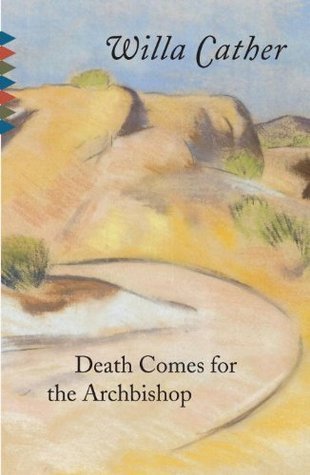
Death Comes for the Archbishop
Willa Cather's best known novel is an epic--almost mythic--story of a single human life lived simply in the silence of the southwestern desert. In 1851 Father Jean Marie Latour comes to serve as the Apostolic Vicar to New Mexico. What he finds is a vast territory of red hills and tortuous arroyos, American by law but Mexican and Indian in custom and belief. In the almost forty years that follow, Latour spreads his faith in the only way he knows--gently, all the while contending with an unforgiving landscape, derelict and sometimes openly rebellious priests, and his own loneliness. Out of these events, Cather gives us an indelible vision of life unfolding in a place where time itself seems suspended.
297 pages, Paperback
First published January 1, 1927
About the author
Willa Cather
1,083 books3,014 followersWilella Sibert Cather was born in Back Creek Valley (Gore), Virginia, in December 7, 1873.
She grew up in Virginia and Nebraska. She then attended the University of Nebraska, initially planning to become a physician, but after writing an article for the Nebraska State Journal, she became a regular contributor to this journal. Because of this, she changed her major and graduated with a bachelor's degree in English.
After graduation in 1894, she worked in Pittsburgh as writer for various publications and as a school teacher for approximately 13 years, thereafter moving to New York City for the remainder of her life.
Her novels on frontier life brought her to national recognition. In 1923 she was awarded the Pulitzer Prize for her novel, 'One of Ours' (1922), set during World War I. She travelled widely and often spent summers in New Brunswick, Canada. In later life, she experienced much negative criticism for her conservative politics and became reclusive, burning some of her letters and personal papers, including her last manuscript.
She was elected a Fellow of the American Academy of Arts and Sciences in 1943. In 1944, Cather received the gold medal for fiction from the National Institute of Arts and Letters, an award given once a decade for an author's total accomplishments.
She died of a cerebral haemorrhage at the age of 73 in New York City.
She grew up in Virginia and Nebraska. She then attended the University of Nebraska, initially planning to become a physician, but after writing an article for the Nebraska State Journal, she became a regular contributor to this journal. Because of this, she changed her major and graduated with a bachelor's degree in English.
After graduation in 1894, she worked in Pittsburgh as writer for various publications and as a school teacher for approximately 13 years, thereafter moving to New York City for the remainder of her life.
Her novels on frontier life brought her to national recognition. In 1923 she was awarded the Pulitzer Prize for her novel, 'One of Ours' (1922), set during World War I. She travelled widely and often spent summers in New Brunswick, Canada. In later life, she experienced much negative criticism for her conservative politics and became reclusive, burning some of her letters and personal papers, including her last manuscript.
She was elected a Fellow of the American Academy of Arts and Sciences in 1943. In 1944, Cather received the gold medal for fiction from the National Institute of Arts and Letters, an award given once a decade for an author's total accomplishments.
She died of a cerebral haemorrhage at the age of 73 in New York City.
Ratings & Reviews
Friends & Following
Create a free account to discover what your friends think of this book!
Community Reviews
Displaying 1 - 30 of 5,124 reviews

October 22, 2012
Oh... my... God. This is beautiful. I'm only halfway through it but I don't care how it ends; every chapter is so complete in itself, every word such unmitigated pleasure that I would be stunned – absolutely floored – if Cather somehow fumbled the ball in the next 150 pages. This is it. The work of a writer with nothing to prove. A writer so humble, her words so transparent, that she seems to disappear behind the curtain of the text, her elegant shadow barely visible in its folds. At age twenty, hearing Nina Simone sing 'Black is the Colour of My True True Love's Hair', I felt my heart couldn't contain that song; it must consume me. Now I feel the same about Death Comes For the Archbishop. It's bigger than me. Will I ever comprehend it? Will I ever be wise enough, my heart big enough, my life lived enough? Also in my twenties, I read I Heard the Owl Call My Name with wonder; now I find that book is like a single episode in this one. Cather's prose is so sensual, her transmitting of physical experience so direct, that I feel I have just returned from a New Mexico all gold and orange and green and baking in stark sunlight as I ride my mule towards shelter behind cool cloister walls. Some books resist analysis, the smart review, the quick response. Many years from now I will still be groping for a sober word to say about this. Out and out love is all I can give it right now. An absolute masterpiece. You ask me, she's second only to Poe in the Great American Writer stakes.

June 14, 2017
But in the Old World he found himself homesick for the New. It was a feeling he could not explain; a feeling that old age did not weigh so heavily upon a man in New Mexico as in the Puy-de Dome. ...In New Mexico he always awoke a young man; not until he rose and began to shave did he realize that he was growing older. His first consciousness was a sense of the light dry wind blowing in through the windows, with the fragrance of hot sun and sage-brush and sweet clover; a wind that made one's body feel light and one's heart cry 'Today, today', like a child's....
What a wonderful, beautiful book... I'm lost for words right now.
More in the days to follow. Beautifully written book. A slow read, take it all in.... the language, the content....
Can't believe I hadn't heard from this author yet, but thanks to Goodreads I have, will certainly explore her works, as recommended to me by the good Goodreads friends here, thanks!
Already an interesting detail: I read Blood Meridian of McCarthy recently which is staged in the same time and area as this book. Both books beautiful. While McCarthy's book is dark and full of blood, this book is full of thought and quiet beauty..... I just realized I read these two books shortly after each other... food for thought as well.
More to follow definitely. Just need to sleep on it, the beauty and stillness of this story... Highly recommended!
What a wonderful, beautiful book... I'm lost for words right now.
More in the days to follow. Beautifully written book. A slow read, take it all in.... the language, the content....
Can't believe I hadn't heard from this author yet, but thanks to Goodreads I have, will certainly explore her works, as recommended to me by the good Goodreads friends here, thanks!
Already an interesting detail: I read Blood Meridian of McCarthy recently which is staged in the same time and area as this book. Both books beautiful. While McCarthy's book is dark and full of blood, this book is full of thought and quiet beauty..... I just realized I read these two books shortly after each other... food for thought as well.
More to follow definitely. Just need to sleep on it, the beauty and stillness of this story... Highly recommended!

April 5, 2021
“Father Vaillant began pacing restlessly up and down as he spoke, and the Bishop watched him, musing. It was just this in his friend that was dear to him. ‘Where there is great love there are always miracles,’ he said at length. ‘One might almost say that an apparition is human vision corrected by divine love. I do not see you as you really are, Joseph; I see you through my affection for you. The Miracles of the Church seem to me to rest not so much upon faces or voices or healing power coming suddenly near to us from afar off, but upon our perceptions being made finer, so that for a moment our eyes can see and our ears can hear what is there about us always…’”
- Willa Cather, Death Comes for the Archbishop
There are times – rare enough, I admit – when I ask my books to do more by doing less. There are times when I do not want to read about tumult or strife, violence or disruption, or even anything resembling dramatic conflict. Sometimes, I simply want quiet, peace, and meditation. Sometimes, I just want stillness, existence, and being.
Death Comes for the Archbishop is one of those quiet books. Despite its title – which makes it sound like the Grim Reaper is stalking the lead character – it is nothing more than an unassuming account of a humble man’s span on earth. There is nothing to quicken the pulse. No tension. No cliffhangers. It is – for lack of a better word – oddly soothing.
For whatever reason, Willa Cather does not have the name recognition and ubiquity of other great American authors, a list of which she is surely a part. I have no evidence to back this up, but I suppose some of this has to do with the fact that her most famous novels take place in Nebraska. Though the howling plains have their charms, they do not have the cachet of coastal or European settings.
In Death Comes for the Archbishop, Cather leaves the Cornhusker State for mid-19th century New Mexico. Though the scenery changes, her ability to describe it does not. Among the charms of this slim book is its evocation of the land, and its ability to find the beauty even in the harshest of terrains.
The main characters here are two French priests: Bishop Jean Marie Latour and his vicar, Father Joseph Vaillant. Having grown up together in France, Latour and Vaillant had been stationed in Sandusky, Ohio before being sent to the American southwest.
Essentially plotless, Cather’s book consists of a prologue (set in Rome) and nine chapters. The chapters are mainly episodic, often containing their own miniature story arcs. One chapter focuses solely on a priest of whom Bishop Latour disapproves. Another spins the yarn of Dona Isabella, who must be convinced to reveal her true age – she claims to be in her early forties, and has been for years – in order to win a high-stakes will contest.
While disconnected, these small sections – the entire novel is a hair less than three hundred pages – stand on their own. For instance, there is an early set piece in which Latour and Vaillant are riding their missionary circuit. Looking for shelter for the night, they come upon a solitary American homestead, that immediately gives them the creeps. Cather’s literary abilities are on full display as she describes the man who meets them:
As in her best-known works, O Pioneers! and My Antonia, Cather traverses a pretty lengthy timeline with spareness and efficiency. The years fly past, captured in small moments. Real life events and characters, such as a complexly drawn Kit Carson, are interwoven into the proceedings.
One of the surprising things about Death Comes for the Archbishop is that it is tenaciously unconcerned with a narrative through-line. One of Bishop Latour’s major projects is to build a cathedral in Santa Fe. While this endeavor is periodically referenced throughout the novel (and is the reason that Dona Isabel’s probate case is so important to him), Cather never makes it the focus of her tale. As Ken Follett fans know, the construction of a cathedral would have been a perfectly serviceable framework. But Cather avoids this obvious route, and the building of Bishop Latour’s lifelong dream remains in the background, mostly taking place off the page.
Both Bishop Latour and Father Vaillant are decent men, committed to their callings. Unlike other priests that we encounter, they are not greedy, they are not arrogant, and they take their vows seriously. They believe in what they are doing, which is serving God by serving people. Their focus is on the poor and the dispossessed, including the Navajo Indians, whose tragic “Long Walk” is referenced by Cather.
If this book was written today, I imagine it would be executed quite differently. After all, the reputation of the scandal-ridden Roman Catholic Church could not get much lower. Bishop Latour and Father Vaillant would – at best – be made into complicated anti-heroes. They would struggle with their faith, with temptations, with giving into their basest impulses. At worst, of course, they would be made into outright villains: hypocrites who chose mammon over God; predators or charlatans; cultural imperialists. Thus, there is certainly an old-fashioned feel to Death Comes for the Archbishop, which is not surprising as it was first published in 1927.
Despite the charming simplicity of the storytelling, the New Mexico that Cather describes is, in fact, quite tangled. It is situated at the borderlands of many different cultures, including those of various American Indian tribes, the former empires of Spain and Mexico, and the emerging continental empire of America. Notwithstanding the complications created by so many points of friction, Bishop Latour and Father Vaillant are resoundingly transparent in their motivations and actions. They are good, nothing more or less, and though fiction often treats goodness as a boring trait, it is all the more refreshing for that reason. Death Comes for the Archbishop was a nice change of pace, short and beautiful and profound; it does not achieve its impact by way of its vaulting ambition, but for its celebration of a modest, virtuous life.
- Willa Cather, Death Comes for the Archbishop
There are times – rare enough, I admit – when I ask my books to do more by doing less. There are times when I do not want to read about tumult or strife, violence or disruption, or even anything resembling dramatic conflict. Sometimes, I simply want quiet, peace, and meditation. Sometimes, I just want stillness, existence, and being.
Death Comes for the Archbishop is one of those quiet books. Despite its title – which makes it sound like the Grim Reaper is stalking the lead character – it is nothing more than an unassuming account of a humble man’s span on earth. There is nothing to quicken the pulse. No tension. No cliffhangers. It is – for lack of a better word – oddly soothing.
For whatever reason, Willa Cather does not have the name recognition and ubiquity of other great American authors, a list of which she is surely a part. I have no evidence to back this up, but I suppose some of this has to do with the fact that her most famous novels take place in Nebraska. Though the howling plains have their charms, they do not have the cachet of coastal or European settings.
In Death Comes for the Archbishop, Cather leaves the Cornhusker State for mid-19th century New Mexico. Though the scenery changes, her ability to describe it does not. Among the charms of this slim book is its evocation of the land, and its ability to find the beauty even in the harshest of terrains.
The main characters here are two French priests: Bishop Jean Marie Latour and his vicar, Father Joseph Vaillant. Having grown up together in France, Latour and Vaillant had been stationed in Sandusky, Ohio before being sent to the American southwest.
Essentially plotless, Cather’s book consists of a prologue (set in Rome) and nine chapters. The chapters are mainly episodic, often containing their own miniature story arcs. One chapter focuses solely on a priest of whom Bishop Latour disapproves. Another spins the yarn of Dona Isabella, who must be convinced to reveal her true age – she claims to be in her early forties, and has been for years – in order to win a high-stakes will contest.
While disconnected, these small sections – the entire novel is a hair less than three hundred pages – stand on their own. For instance, there is an early set piece in which Latour and Vaillant are riding their missionary circuit. Looking for shelter for the night, they come upon a solitary American homestead, that immediately gives them the creeps. Cather’s literary abilities are on full display as she describes the man who meets them:
As they rode up to the door, a man came out, bareheaded, and they saw to their surprise that he was not a Mexican, but an American…He spoke to them in some drawling dialect they could scarcely understand and asked if they wanted to stay the night. During the few words they exchanged with him, Father Latour felt a growing reluctance to remain even for a few hours under the roof of this ugly, evil-looking fellow. He was tall, gaunt and ill-formed, with a snake-like neck, terminating in a small, bony head. Under his close-clipped hair this repellant head showed a number of thick ridges, as if the skull joinings were overgrown by layers of superfluous bone. With its small, rudimentary ears, this head had a positively malignant look. The man seemed not more than half human, but he was the only householder on the lonely road to Mora…
As in her best-known works, O Pioneers! and My Antonia, Cather traverses a pretty lengthy timeline with spareness and efficiency. The years fly past, captured in small moments. Real life events and characters, such as a complexly drawn Kit Carson, are interwoven into the proceedings.
One of the surprising things about Death Comes for the Archbishop is that it is tenaciously unconcerned with a narrative through-line. One of Bishop Latour’s major projects is to build a cathedral in Santa Fe. While this endeavor is periodically referenced throughout the novel (and is the reason that Dona Isabel’s probate case is so important to him), Cather never makes it the focus of her tale. As Ken Follett fans know, the construction of a cathedral would have been a perfectly serviceable framework. But Cather avoids this obvious route, and the building of Bishop Latour’s lifelong dream remains in the background, mostly taking place off the page.
Both Bishop Latour and Father Vaillant are decent men, committed to their callings. Unlike other priests that we encounter, they are not greedy, they are not arrogant, and they take their vows seriously. They believe in what they are doing, which is serving God by serving people. Their focus is on the poor and the dispossessed, including the Navajo Indians, whose tragic “Long Walk” is referenced by Cather.
If this book was written today, I imagine it would be executed quite differently. After all, the reputation of the scandal-ridden Roman Catholic Church could not get much lower. Bishop Latour and Father Vaillant would – at best – be made into complicated anti-heroes. They would struggle with their faith, with temptations, with giving into their basest impulses. At worst, of course, they would be made into outright villains: hypocrites who chose mammon over God; predators or charlatans; cultural imperialists. Thus, there is certainly an old-fashioned feel to Death Comes for the Archbishop, which is not surprising as it was first published in 1927.
Despite the charming simplicity of the storytelling, the New Mexico that Cather describes is, in fact, quite tangled. It is situated at the borderlands of many different cultures, including those of various American Indian tribes, the former empires of Spain and Mexico, and the emerging continental empire of America. Notwithstanding the complications created by so many points of friction, Bishop Latour and Father Vaillant are resoundingly transparent in their motivations and actions. They are good, nothing more or less, and though fiction often treats goodness as a boring trait, it is all the more refreshing for that reason. Death Comes for the Archbishop was a nice change of pace, short and beautiful and profound; it does not achieve its impact by way of its vaulting ambition, but for its celebration of a modest, virtuous life.

July 1, 2017
Two young French priests newly out of the seminary in France, where they first met, ( destined to become bishops of the Catholic Church, in the New World , one an Archbishop ) became close friends until death struck. Jean Marie Latour ( Jean -Baptiste Lamy the original Archbishop of Santa Fe, New Mexico ) and Joseph Vaillant ( Joseph Projectus Machebeuf, Denver, Colorado's, first bishop) recruited by the Irish born bishop from Cincinnati, Ohio, for missionary work in America where only a relatively few Catholics lived , while still in their native land. They sneak away from the families too painful to say goodbye, it will cease to be home soon. The men are quite different Jean well- educate, tall, healthy good- looking , feels comfortable with his "superiors" both civilian and clergy. While Joseph a small human rather ugly by prevailing standards, sickly too, the opposite of his friend... not as intelligent, but a drive to save souls that is second to none, the poor people flock to the unpretentious priest. These simple facts strangely are mostly true...names have been changed not to protect anyone but to make this story if not 100 % accurate, close enough, more entertaining. Willa Cather brings her considerable talent, to this book and gives poignancy to what could have been a rather dry , dull story of these dedicated, brave, tireless clergymen working for God. Later both are sent to the primitive New Mexican frontier town of Santa Fe the capital, Jean as its bishop and Joseph the Vicar, where the hostile inhabitants despise the new rulers, yet the mainly French priests there are well respected... Constant lonely journeys through blazing deserts, snowy mountains, treacherous grounds, fierce storms of sand or rain or fiercer Indian tribes in the 1850's, the U.S.'s unknown southwestern territory, little populated and recently conquered from Mexico. This is the isolated almost empty of vegetation , gigantic diocese... the entire terrain they try to administer ...compromising someday the states of New Mexico, Arizona, Colorado and Utah , many years before they join the Union. The Vatican has given them very wide authority...thousands of miles of roads to travel...the clergymen spend few days in the shabby homes they occupy in Santa Fe. On top of mules is their real homes, going from one poverty stricken Pueblo or scattered settlement to another, performing happy marriages and baptisms or sad funerals , building churches and saying Mass in distant places, numerous times for fifty years...almost perishing repeatedly, in this unforgiving country of Indians with their own religion, devout Mexicans and Protestant Americans, somehow they will try to live in Peace. The Archbishop has a fantastic dream...to build a beautiful yet unassuming cathedral in the small, destitute town of Santa Fe. An appealing saga of men who can never surrender ...in the endless struggle to reach the goal of salvation, not for themselves but for the people. I needn't have to say again, an inspiring book for believers and a touching narrative for everyone else...I was...superb.

September 19, 2020
Reading Road Trip 2020
Current location: New Mexico
Ah, he thought—the Image, the physical form of Love!
As I arrived at the last chapter of this book (also titled “Death Comes for the Archbishop”), I was struck with a melancholia worthy of a Brontë sister.
No spoiler alerts here. The title, after all, is Death Comes for the Archbishop. It was coming for him all along, just like it's coming for you and it's coming for me.
I had to take a mental break before I tackled the ending of this stunning little novel, so I decided to wash some dishes while distracting myself with music. What came on was Coldplay singing Elton John's “We All Fall In Love Sometimes.” Damn it. It was the opposite of a distraction.
Do you know this song? (Wise men say. . . It looks like rain today).
Next thing I knew, I wasn't washing dishes anymore (cue the collective sigh from the family in the background), and, instead, I cried at the kitchen counter. Yes, we all fall in love sometimes, but it is so very rare, and even far less so for Father Jean Latour (a.k.a the “Archbishop”).
And then I knew it. . . I had fallen in love with a fictional priest:

Well, that's far more useful than washing dishes, isn't it?
But, the thing is, Father Latour isn't in love with me; he's in love with God and perhaps Father Vaillant, but he can't have anything but sand and rocks. (T.S. Eliot is demanding to interject here: Lips that would kiss. . . Form prayers to broken stone).

Father Latour suffers, as we all suffer, as he quite literally crosses the deserts (over and over again) that most of us only cross figuratively, in our lives. We see him in his weakest moments, pining for something more, and we see him in his strongest moments, his faith completely restored by the Holy Spirit.
I adored this brilliantly written novel. It is, in my opinion, one of the greatest love letters that was ever written to the American West, and one of the greatest fictional tributes to a life spent in devotion to God.
If hereafter we have stars in our crowns, yours will be a constellation.
Current location: New Mexico
Ah, he thought—the Image, the physical form of Love!
As I arrived at the last chapter of this book (also titled “Death Comes for the Archbishop”), I was struck with a melancholia worthy of a Brontë sister.
No spoiler alerts here. The title, after all, is Death Comes for the Archbishop. It was coming for him all along, just like it's coming for you and it's coming for me.
I had to take a mental break before I tackled the ending of this stunning little novel, so I decided to wash some dishes while distracting myself with music. What came on was Coldplay singing Elton John's “We All Fall In Love Sometimes.” Damn it. It was the opposite of a distraction.
Do you know this song? (Wise men say. . . It looks like rain today).
Next thing I knew, I wasn't washing dishes anymore (cue the collective sigh from the family in the background), and, instead, I cried at the kitchen counter. Yes, we all fall in love sometimes, but it is so very rare, and even far less so for Father Jean Latour (a.k.a the “Archbishop”).
And then I knew it. . . I had fallen in love with a fictional priest:
Well, that's far more useful than washing dishes, isn't it?
But, the thing is, Father Latour isn't in love with me; he's in love with God and perhaps Father Vaillant, but he can't have anything but sand and rocks. (T.S. Eliot is demanding to interject here: Lips that would kiss. . . Form prayers to broken stone).
Father Latour suffers, as we all suffer, as he quite literally crosses the deserts (over and over again) that most of us only cross figuratively, in our lives. We see him in his weakest moments, pining for something more, and we see him in his strongest moments, his faith completely restored by the Holy Spirit.
I adored this brilliantly written novel. It is, in my opinion, one of the greatest love letters that was ever written to the American West, and one of the greatest fictional tributes to a life spent in devotion to God.
If hereafter we have stars in our crowns, yours will be a constellation.

July 19, 2019
This book is a real monument, we are not talking only of Faith, but of friendship, of love for people, for a land, that is the New Mexico. I read this book deliberately slowly, because in parallel I have turned to research the history of Old Mexico and the new Mexico... every historical event reported or references to precise geographical areas, was for me a real and historical discovery that Willa Cather makes us to know.
The story of these two priests, Father Latour and Father Valillant, who little more than seventeen years old will enter the seminary together in France; and then find themselves living the Mission together, one Bishop and the other his vicar, with an immense love for what God will ask to them, not locked in the diocese to pray from morning up to the night.... but visiting people, new reserves,old missions and parishes unattainable and distant areas... from Durango up to Taos, living for and with the men they met... who could be Spanish, Indian or American.
The faith that is made alive in the industrious destiny of men, not something embellished and set aside for the functions, but a daily work for the people to meet.
The friendship between the two priests, which Cather was able to give us, is wonderful, melancholic and at the same time respectful of the will and emotional feeling of each other...
The facts, the pains and the 70-year-long history that you will find in the book will not lash out of a single grain the underlying and supporting motif of their working together.... to the point of embracing nothing else the concept of Mission which is a " I am Lord what you make of me".
Cather has a huge gift, knowing how to tell with such clarity, that your eyes will see and enjoy the landscapes and descriptions of every place and shift narrated....
Do not be fooled by those who claim that this is "A Catholic Book only" yes, it is, but it is so much more... the history of the people who lived in those harsh lands of New Mexico, the history of the settlers who arrived in the mid-19th century escaping from Colorado and Wyoming, especially the history of the Indian people (Navajo, Apache, Algochine and Tesuque) of their movements and the tragedy they had to suffer, of the very first Missionaries of the 17th century, catapulted to a dry and uninhabitable lands...
I do not have much to add because I am full in the heart of this reading and I struggle, when I happen to find books so meaningful, to put in writing what I emotionally experienced during reading. Do not miss this rare pearl, this rare friendship and relationship, that nothing else you will ask to taste in life.

Santa Fe territories
Questo libro è un vero monumento, non stiamo parlando unicamente di Fede, ma di amicizia, di amore per i popoli, per una terra, quella del New Mexico. Ho letto volutamente adagio questo libro, perchè in parallelo ho volto andare a ricercare la storia del Mexico e del nuovo Mexico... ogni avvenimento storico riportato o riferimenti a precise zone geografiche è stata per me una scoperta vera e storica che la Cather ci fa conoscere.
La storia di questi due pretini, Padre Latour e Padre Valillant, che poco piu' che diciassettenni entreranno insieme in Seminario in Francia per poi ritrovarsi a vivere la Missione insieme, l'uno Vescovo e l'altro il suo vicario, con un amore immenso per ciò che Dio chiederà loro, non rinchiusi nella diocesi a pregare da mattina sera..... ma visitando i popoli, nuove riserve,vecchie missioni e parrocchie irraggiungibili e zone lontane... da Durango sino su a Taos, vivendo per e con gli uomini che incontravano... che potevano essere spagnoli, indiani o americani..
La fede che si fa viva nella sorte operosa degli uomini, non qualcosa imbellettata e messa da parte per le funzioni, ma un quotidiano operare per il prossimo..
L'amicizia fra i due preti, che la Cather è riuscita a donarci, è meravigliosa, malinconica e nello stesso tempo rispettosa del volere e del sentire emotivo l'uno dell'altro....
I fatti, i dolori e la storia lunga 70 anni che troverete nel libro non sferzeranno ne piegheranno di un solo granello il motivo fondante e portante del loro operare insieme.... sino ad arrivare ad abbracciare niente altro il concetto di Missione che è un " io sono Signore ciò che tu fai di me".
La Cather ha un dono enorme, saper raccontare con una limpidezza tale, che i tuoi occhi vedranno e godranno dei paesaggi e delle descrizioni di ogni luogo e spostamento narrato.....
Non fatevi ingannare da chi sostiene che questo sia "Un libro cattolico" si, lo è, ma è tantissimo altro.... la storia dei popoli che hanno vissuto in quelle aspre terre del Nuovo Mexico,la storia dei coloni che arrivarono nella metà dell' 800 scappando dal Colorado e Wyoming, soprattutto la storia del popolo indiano (Navajo, Apache, Algochine e Tesuque) dei loro spostamenti e della tragedia che dovettero subire, dei primissimi Missionari del 600 catapultati in un luogo arido e inabitabile...
Non ho molto da aggiungere perchè sono piena nel cuore di questa lettura e faccio fatica, quando mi capita di trovare libri così significativi, a mettere per iscritto ciò che emotivamente ho vissuto durante la lettura. Non fatevi scappare questa perla rara, questo rapportarsi nell' amicizia, che niente altro chiederete di assaporare nella vita.
The story of these two priests, Father Latour and Father Valillant, who little more than seventeen years old will enter the seminary together in France; and then find themselves living the Mission together, one Bishop and the other his vicar, with an immense love for what God will ask to them, not locked in the diocese to pray from morning up to the night.... but visiting people, new reserves,old missions and parishes unattainable and distant areas... from Durango up to Taos, living for and with the men they met... who could be Spanish, Indian or American.
The faith that is made alive in the industrious destiny of men, not something embellished and set aside for the functions, but a daily work for the people to meet.
The friendship between the two priests, which Cather was able to give us, is wonderful, melancholic and at the same time respectful of the will and emotional feeling of each other...
The facts, the pains and the 70-year-long history that you will find in the book will not lash out of a single grain the underlying and supporting motif of their working together.... to the point of embracing nothing else the concept of Mission which is a " I am Lord what you make of me".
Cather has a huge gift, knowing how to tell with such clarity, that your eyes will see and enjoy the landscapes and descriptions of every place and shift narrated....
Do not be fooled by those who claim that this is "A Catholic Book only" yes, it is, but it is so much more... the history of the people who lived in those harsh lands of New Mexico, the history of the settlers who arrived in the mid-19th century escaping from Colorado and Wyoming, especially the history of the Indian people (Navajo, Apache, Algochine and Tesuque) of their movements and the tragedy they had to suffer, of the very first Missionaries of the 17th century, catapulted to a dry and uninhabitable lands...
I do not have much to add because I am full in the heart of this reading and I struggle, when I happen to find books so meaningful, to put in writing what I emotionally experienced during reading. Do not miss this rare pearl, this rare friendship and relationship, that nothing else you will ask to taste in life.
Santa Fe territories
Questo libro è un vero monumento, non stiamo parlando unicamente di Fede, ma di amicizia, di amore per i popoli, per una terra, quella del New Mexico. Ho letto volutamente adagio questo libro, perchè in parallelo ho volto andare a ricercare la storia del Mexico e del nuovo Mexico... ogni avvenimento storico riportato o riferimenti a precise zone geografiche è stata per me una scoperta vera e storica che la Cather ci fa conoscere.
La storia di questi due pretini, Padre Latour e Padre Valillant, che poco piu' che diciassettenni entreranno insieme in Seminario in Francia per poi ritrovarsi a vivere la Missione insieme, l'uno Vescovo e l'altro il suo vicario, con un amore immenso per ciò che Dio chiederà loro, non rinchiusi nella diocesi a pregare da mattina sera..... ma visitando i popoli, nuove riserve,vecchie missioni e parrocchie irraggiungibili e zone lontane... da Durango sino su a Taos, vivendo per e con gli uomini che incontravano... che potevano essere spagnoli, indiani o americani..
La fede che si fa viva nella sorte operosa degli uomini, non qualcosa imbellettata e messa da parte per le funzioni, ma un quotidiano operare per il prossimo..
L'amicizia fra i due preti, che la Cather è riuscita a donarci, è meravigliosa, malinconica e nello stesso tempo rispettosa del volere e del sentire emotivo l'uno dell'altro....
I fatti, i dolori e la storia lunga 70 anni che troverete nel libro non sferzeranno ne piegheranno di un solo granello il motivo fondante e portante del loro operare insieme.... sino ad arrivare ad abbracciare niente altro il concetto di Missione che è un " io sono Signore ciò che tu fai di me".
La Cather ha un dono enorme, saper raccontare con una limpidezza tale, che i tuoi occhi vedranno e godranno dei paesaggi e delle descrizioni di ogni luogo e spostamento narrato.....
Non fatevi ingannare da chi sostiene che questo sia "Un libro cattolico" si, lo è, ma è tantissimo altro.... la storia dei popoli che hanno vissuto in quelle aspre terre del Nuovo Mexico,la storia dei coloni che arrivarono nella metà dell' 800 scappando dal Colorado e Wyoming, soprattutto la storia del popolo indiano (Navajo, Apache, Algochine e Tesuque) dei loro spostamenti e della tragedia che dovettero subire, dei primissimi Missionari del 600 catapultati in un luogo arido e inabitabile...
Non ho molto da aggiungere perchè sono piena nel cuore di questa lettura e faccio fatica, quando mi capita di trovare libri così significativi, a mettere per iscritto ciò che emotivamente ho vissuto durante la lettura. Non fatevi scappare questa perla rara, questo rapportarsi nell' amicizia, che niente altro chiederete di assaporare nella vita.

April 1, 2022
This book was a very pleasant surprise! Not that I was expecting I wouldn’t like it, I just never know with classics on must read lists. Often it is hard for me to determine what about the book gets people excited about it or what exactly made it a classic. With Death Comes for the Archbishop, it was not difficult to see the appeal at all!
I listened to this book in its entirety in one sitting on the road coming back from Spring Break. The storytelling and the characters were a great way to pass the time and end a fantastic vacation. I wish all books I try as “road books” ended up being this good because I have encountered some that try their best to put me to sleep!
The structure of the plot is a series of short stories all taking place in the world of missionaries in the American Southwest during the expansion of the country. The story is influenced by a lot of real-life circumstances involving cultural clashes, native people, cowboys/frontiersmen, and old religion vs new religion. The characters you meet along the way are extremely interesting and extremely fascinating to follow on their journey.
One thing I think I appreciated the most about this book is that it is quick and too the point. Often it seems like these classics drag things out unnecessarily and it starts to get kind of bloated and boring. Cather sticks to what is important and keeps the story moving along which is I think is much better than overdoing it with excess exposition.
You should give this one a try – I hope you will be pleasantly surprised as well!
I listened to this book in its entirety in one sitting on the road coming back from Spring Break. The storytelling and the characters were a great way to pass the time and end a fantastic vacation. I wish all books I try as “road books” ended up being this good because I have encountered some that try their best to put me to sleep!
The structure of the plot is a series of short stories all taking place in the world of missionaries in the American Southwest during the expansion of the country. The story is influenced by a lot of real-life circumstances involving cultural clashes, native people, cowboys/frontiersmen, and old religion vs new religion. The characters you meet along the way are extremely interesting and extremely fascinating to follow on their journey.
One thing I think I appreciated the most about this book is that it is quick and too the point. Often it seems like these classics drag things out unnecessarily and it starts to get kind of bloated and boring. Cather sticks to what is important and keeps the story moving along which is I think is much better than overdoing it with excess exposition.
You should give this one a try – I hope you will be pleasantly surprised as well!

June 18, 2009
Highlight here is the incredible depiction of two missionaries who undertake the megaharsh task of converting the Navajos of New Mexico to Catholicism. It describes what happens when a new policy, or way of life, is instilled into people who are far away from the Old World. There are little vignettes of savagery, of holy manifestation (including a very succinct telling of San Diego and his visitation from the Virgin Mary), of hypocrites (of course!!!), etc. It is a vivid book, full of life & imagination.
Though it's not classified as anything but a classic, it is part Western, part fauxbiography. Yeah, the Archbishop of the title could have lived, & probably did. Willa Cather never visited the world she so valiantly and expertly writes about in such poetic demeanor. That she gives her work an authentic sense of wonder is evidence of an active mind & an inspired pen.
Though it's not classified as anything but a classic, it is part Western, part fauxbiography. Yeah, the Archbishop of the title could have lived, & probably did. Willa Cather never visited the world she so valiantly and expertly writes about in such poetic demeanor. That she gives her work an authentic sense of wonder is evidence of an active mind & an inspired pen.

March 26, 2009
I'm glad I didn't know Kit Carson would be a character in Death Comes for the Archbishop; if I had, I might never have opened the book. Indeed, a weight of glumness descended on me as I realized the entire narrative would take place in New Mexico Territory, between the years 1851-1888. I foresaw dust, and tumbleweed clumps, unrestrainedly tumbling through bleak moonlike terrain. These things hold little allure for me; they're why I don't watch westerns. And it's true, the novel is filled with descriptions of mesas, canyons and arroyos, junipers and whitewashed pueblos, sedges and piñon trees, mules named Contento. The main subject is the missionary and diocesan work of the Catholic Church among Mexicans and Indian tribes. But the writing won me over, slowly, with sentences like
Wherever the footing was treacherous, it was helped out by little hand-holds, ground into the stone like smooth mittens.
Smooth mittens. And a Spaniard speaking English in a "thick felty voice." There's a purity and simplicity to Cather's writing, yet it's not exactly lean and spare. It's full of adjectives and similes but it's never overdone. Cather will pause amid a fairly prosaic recounting of what some people are doing somewhere to spend 200 words on a grove of cottonwood trees, and every word belongs there. Every once in awhile the elegance will shock you:
Elsewhere the sky is the roof of the world; but here the earth was the floor of the sky.
Travelling with Eusabio [a Navajo:] was like travelling with the landscape made human.
The novel advances slowly and steadily, which is how it should be read. (I think it would be an enjoyable audiobook; not all books are.) It's a novel of accretions, fittingly like the geological formations in the landscape Cather repeatedly describes. The accretions are vignettes in the missionary life of Bishop Jean Marie Latour. Nothing astonishing or jolting happens, really, from a narrative standpoint. It's not until the end of the novel that we realize the depth of friendship between the handsome introvert Bishop Latour and the homely extrovert Father Vaillant (no, it's not what you think).
Ultimately this is such a pure novel - pure of heart, pure of intent, pure of sentence - that it's impossible to imagine it being written today - or if it were, being taken seriously by reviewers.
Wherever the footing was treacherous, it was helped out by little hand-holds, ground into the stone like smooth mittens.
Smooth mittens. And a Spaniard speaking English in a "thick felty voice." There's a purity and simplicity to Cather's writing, yet it's not exactly lean and spare. It's full of adjectives and similes but it's never overdone. Cather will pause amid a fairly prosaic recounting of what some people are doing somewhere to spend 200 words on a grove of cottonwood trees, and every word belongs there. Every once in awhile the elegance will shock you:
Elsewhere the sky is the roof of the world; but here the earth was the floor of the sky.
Travelling with Eusabio [a Navajo:] was like travelling with the landscape made human.
The novel advances slowly and steadily, which is how it should be read. (I think it would be an enjoyable audiobook; not all books are.) It's a novel of accretions, fittingly like the geological formations in the landscape Cather repeatedly describes. The accretions are vignettes in the missionary life of Bishop Jean Marie Latour. Nothing astonishing or jolting happens, really, from a narrative standpoint. It's not until the end of the novel that we realize the depth of friendship between the handsome introvert Bishop Latour and the homely extrovert Father Vaillant (no, it's not what you think).
Ultimately this is such a pure novel - pure of heart, pure of intent, pure of sentence - that it's impossible to imagine it being written today - or if it were, being taken seriously by reviewers.

August 14, 2017
Coming to the end of this book was like a sad farewell to some very good friends. Father Joseph, Father Letour, their many friends and acquaintances who built solid and strong relationships with them over the years, and their country. Oh my. Their beautiful country.
Father Joseph and Father Letour, both originally from France, were sent to the land of New Mexico shortly after it had been annexed. They were young men whose mission was to bring spiritual counsel and comfort to the people of this New World, and to build and expand their congregations where possible. Their lives were dedicated to this purpose and this book describes the many adventures and successes and setbacks that they encountered over the years. Although the characters are fictional in this book, the life of Father Letour who became a Bishop and then Archbishop closely parallels the timeline highlights of Father Jean Baptiste Lamy, the real-life priest who became the first Bishop of New Mexico and later, the Archbishop.
This story is captured in some of the most picturesque and beautiful prose I have read. The descriptions of the people and of their lives and lifestyles are in-depth and as vivid as being there. Where Willa Cather’s poetic prose shines even brighter is her descriptions of the land and the flora and fauna of this amazing part of the world. Her words painted landscapes in my mind that were so alive I could smell the air and breathe the sky.
This is not a book to rush through – it is atmospheric and slow, like riding out among the mesas on mules and conserving energy for the journey ahead. I love a book with a pace that makes me adjust to its timing, that makes me sit back and pay attention, to take notice, to take the time to appreciate its story and visual wonders.
This book has all of those qualities and I am impressed beyond measure. These qualities may not be right for everyone, but for me, at this particular time, it was perfect.
Father Joseph and Father Letour, both originally from France, were sent to the land of New Mexico shortly after it had been annexed. They were young men whose mission was to bring spiritual counsel and comfort to the people of this New World, and to build and expand their congregations where possible. Their lives were dedicated to this purpose and this book describes the many adventures and successes and setbacks that they encountered over the years. Although the characters are fictional in this book, the life of Father Letour who became a Bishop and then Archbishop closely parallels the timeline highlights of Father Jean Baptiste Lamy, the real-life priest who became the first Bishop of New Mexico and later, the Archbishop.
This story is captured in some of the most picturesque and beautiful prose I have read. The descriptions of the people and of their lives and lifestyles are in-depth and as vivid as being there. Where Willa Cather’s poetic prose shines even brighter is her descriptions of the land and the flora and fauna of this amazing part of the world. Her words painted landscapes in my mind that were so alive I could smell the air and breathe the sky.
This is not a book to rush through – it is atmospheric and slow, like riding out among the mesas on mules and conserving energy for the journey ahead. I love a book with a pace that makes me adjust to its timing, that makes me sit back and pay attention, to take notice, to take the time to appreciate its story and visual wonders.
This book has all of those qualities and I am impressed beyond measure. These qualities may not be right for everyone, but for me, at this particular time, it was perfect.

July 10, 2017
My only previous experience of reading Cather was last year, when I enjoyed My Ántonia. This book is very different, but shares the same frontier spirit and once again allows Cather the space to indulge her descriptive talents.
This one is largely a factual story, although she changed the names of her leading characters. The Archbishop of the title Jean Latour can only be Jean-Baptiste Lamy, the first Bishop of New Mexico, and his vicar (and later Bishop in Colorado) Joseph Vaillant can only be Joseph Macheboeuf.
The introduction by A.S. Byatt makes her debt to writings both by and about these men clear, but the book is still an extraordinary evocation of a lost world.
My only criticism is that the characterisation is a little too black and white - a more modern writer would probably have been more critical of the Church and less willing to accept descriptions of miracles at face value. Cather's sympathy for the plight of the local native Americans does demonstrate a modern progressive attitude, and many of the stories she relates are extraordinary and vividly described without showiness or melodrama.
This one is largely a factual story, although she changed the names of her leading characters. The Archbishop of the title Jean Latour can only be Jean-Baptiste Lamy, the first Bishop of New Mexico, and his vicar (and later Bishop in Colorado) Joseph Vaillant can only be Joseph Macheboeuf.
The introduction by A.S. Byatt makes her debt to writings both by and about these men clear, but the book is still an extraordinary evocation of a lost world.
My only criticism is that the characterisation is a little too black and white - a more modern writer would probably have been more critical of the Church and less willing to accept descriptions of miracles at face value. Cather's sympathy for the plight of the local native Americans does demonstrate a modern progressive attitude, and many of the stories she relates are extraordinary and vividly described without showiness or melodrama.

October 12, 2020
[2.9] A plotless, meandering novel with stunning descriptions of the New Mexican landscape in the mid 1800s. Cather punctuates her lavish verbal paintings with anecdotes about two well intentioned French priests who attempt to root out the corruption practiced by fellow clergy and civilize the "natives." Considered by many to be Cather's masterpiece, it is my least favorite novel of hers and I was mostly bored.

May 10, 2014
Late 1800's and The Catholic Church sends two priests to reawaken the lessening faith in New Mexico and eventually other territories. Every chapter tackles a new story, a different priest, and the lives they are living in the different missions. Some had quite an opulent lifestyle, some had children and some had amassed a great deal of money. The descriptions of the landscape are masterfully done, and the distance between them that the Bishop had to travel was awe inspiring, especially on mule. A few brief appearances by Kit Carson, who was portrayed as respected by many was a welcome treat.
Love Cather's writing, she always has such a firm grasp of time and place and this short book did not disappoint.
Love Cather's writing, she always has such a firm grasp of time and place and this short book did not disappoint.
October 1, 2024
🌵 Published in 1927. Almost 100 years ago. Yet empathetic beyond its time. Priests connect with Mexicans and tribal nations like the Navajo in 19th century New Mexico and for once we get to read about mutual love and respect and warmth. We go with the novel’s characters from youth to old age and death and experience a hundred emotions. Always there is the land and a god known not just to priests but the indigenous as well. This brought a great deal rushing back to me from my years in New Mexico. The writing is round and full and rich and a pleasure to sink into. Recommended. I will turn now to several of her other novels.
audiobook ✅
audiobook ✅

March 13, 2023
This is a quiet story with gorgeous prose that evokes the rugged beauty of the mid-19th century American Southwest. Two French priests are called away from their missions in the Great Lakes of Ohio to start a new diocese in the newly acquired area of the United States called New Mexico. They are sent to Santa Fe with nothing but their love of God to guide them. The landscape and natural world they encounter is nothing like anything they have ever seen. The people are just as foreign to them and Father Latour and Father Vailant experience firsthand the differing cultures and traditions and ways of life of the Indian groups and Mexicans. Their influence upon the people here is widespread. We witness their hand of authority as well as their hand of grace and mercy.
as far as he could see, on every side, the landscape was heaped up into monotonous red sand-hills…
they were so exactly like one another that he seemed to be wandering in some geometrical nightmare…
This mesa plain had an appearance of great antiquity, and of incompleteness, as if, with all the materials for world-making assembled, the Creator had desisted, gone away and left everything on the point of being brought together, on the eve of being arranged into mountain, plain, plateau. The country was still waiting to be made into a landscape.
This is really an episodic novel in which readers experience various encounters along with the priests throughout their travels in the region. The chapters are not really connected in the sense of a narrative novel with a plot to follow. One part I enjoyed about the novel was getting to know their inner contemplations and yearnings as they lead their simple life in their mission field among the Indians, Mexicans and Spanish settlers. At one point Father Latour reflects on the people he has encountered and affected realizing how each has become a valued part of himself:
Observing them thus in repose, in the act of reflection, Father Latour was thinking how each of these men not only had a story, but seemed to have become his story.
These were men who did not judge or accuse. They made worthy decisions and lead commendable and praiseworthy lives while making an impact upon this uncharted place they came to spend the majority of their lives. I found this to be a soothing read and one that I would highly recommend. My favorite Cather still remains My, Antonia.
*correction: I had said O! Pioneers was my favorite but I was incorrect.
as far as he could see, on every side, the landscape was heaped up into monotonous red sand-hills…
they were so exactly like one another that he seemed to be wandering in some geometrical nightmare…
This mesa plain had an appearance of great antiquity, and of incompleteness, as if, with all the materials for world-making assembled, the Creator had desisted, gone away and left everything on the point of being brought together, on the eve of being arranged into mountain, plain, plateau. The country was still waiting to be made into a landscape.
This is really an episodic novel in which readers experience various encounters along with the priests throughout their travels in the region. The chapters are not really connected in the sense of a narrative novel with a plot to follow. One part I enjoyed about the novel was getting to know their inner contemplations and yearnings as they lead their simple life in their mission field among the Indians, Mexicans and Spanish settlers. At one point Father Latour reflects on the people he has encountered and affected realizing how each has become a valued part of himself:
Observing them thus in repose, in the act of reflection, Father Latour was thinking how each of these men not only had a story, but seemed to have become his story.
These were men who did not judge or accuse. They made worthy decisions and lead commendable and praiseworthy lives while making an impact upon this uncharted place they came to spend the majority of their lives. I found this to be a soothing read and one that I would highly recommend. My favorite Cather still remains My, Antonia.
*correction: I had said O! Pioneers was my favorite but I was incorrect.

January 27, 2018
What can I say about this book? It was beautiful, it was peaceful, it was perfect. A book I will re-read periodically, when I need to leave the world behind.
There is no real plot other than the lives of two French priests who come to Santa Fe in 1850 to create a Catholic mission to serve the Indians and Mexicans. Father LaTour and Father Vaillant will be riding their mules in my head forever, spreading kindness.
Beautiful, peaceful, perfect.
There is no real plot other than the lives of two French priests who come to Santa Fe in 1850 to create a Catholic mission to serve the Indians and Mexicans. Father LaTour and Father Vaillant will be riding their mules in my head forever, spreading kindness.
Beautiful, peaceful, perfect.

December 18, 2018
As an adolescent, I took this book off the library shelf (I was looking through the C’s after already having made my way through the A’s and B’s), read the inner flap, thought it sounded boring and didn’t read any Cather until about five years ago. It’s a good thing I reshelved the book then, as my younger self absolutely would’ve found this boring and maybe I would never have read any Cather after that. That would’ve been a pity. For some reason, though, I still remember the look and feel of the book and the long shelf that seems dimly lit in my memory though it was next to the windowed door that led outside to the sunshine.
Though my memory isn’t an elegiac one, elegiac memory is what Cather seems to do best. Her beautiful prose—the amazing descriptions of the land; the churches set amidst the landscape; the sky; the way it used to be—captured me from the beginning as the priest rides his thirsty horse through an arid country of frightening sameness, knowing a miracle will occur to help his lost self.
I didn’t realize this would be a novel of vignettes. There is much more action in the jam-packed stories the characters know and tell each other than there is in the so-called plot. The style brought to mind "My Antonia", but I liked the handling of the narration here more.
Cather got into the mind of a Catholic priest of the time period perfectly, or so it seemed to me. I felt the same about how perfectly she got into the head of the title character of The Professor's House, and I thought of that professor as the (Arch)bishop laid dying—and thinking. I don't know why Cather named the novel after its last section. I haven't come up with anything satisfactory, unless she’s emphasizing Death coming for all, even for the greatest among us, the ones that deserve her elegy.
Though my memory isn’t an elegiac one, elegiac memory is what Cather seems to do best. Her beautiful prose—the amazing descriptions of the land; the churches set amidst the landscape; the sky; the way it used to be—captured me from the beginning as the priest rides his thirsty horse through an arid country of frightening sameness, knowing a miracle will occur to help his lost self.
I didn’t realize this would be a novel of vignettes. There is much more action in the jam-packed stories the characters know and tell each other than there is in the so-called plot. The style brought to mind "My Antonia", but I liked the handling of the narration here more.
Cather got into the mind of a Catholic priest of the time period perfectly, or so it seemed to me. I felt the same about how perfectly she got into the head of the title character of The Professor's House, and I thought of that professor as the (Arch)bishop laid dying—and thinking. I don't know why Cather named the novel after its last section. I haven't come up with anything satisfactory, unless she’s emphasizing Death coming for all, even for the greatest among us, the ones that deserve her elegy.

April 16, 2019
Willa Cather captures the atmosphere and beauty of the American Southwest. It is for this reason alone one should read this book.
It is a book of historical fiction about Archbishop Jean-Baptiste Lamy (1814-1888), the first Archbishop of Santa Fe, and his vicar, Joseph Projectus Machebeuf (1815-1889), who would become the first Bishop of Denver. The missionaries were both from France and both Roman Catholic. Different in personality, yet they worked well together and came to have a deep affection for each other. In this novel they go by the names Bishop Jean Marie Latour and Vicar Joseph Vaillant, respectively. The story is peppered with historical figures—Kit Carson and his wife, Manuel Antonio Chaves, Mexican priest Antonio José Martinez, Pope Gregory XVI and others. The problem is that Cather changes some names and not others, adds fictional characters and in some instances alters history. I had difficulty knowing what was true and what was not! I am still glad to have learned something about the missionaries, their opening up of the Southwest and the history behind the erection of the Saint Francis Cathedral of Santa Fe.
The book speaks with accuracy of the traditions, customs, beliefs and historical events of Pueblo, Navajo and Hopi people. Their similarities and differences, their respective housing, diet and celebrations. Chalk this up as another reason to read the book.
It is interesting to note that Willa Cather was raised as a Baptist, became Episcopalian and was never Roman Catholic. She observes; she does not proselytize.
I must repeat, the primary reason why the book must be read is for its prose and superb drawing of the American Southwest. The book gives a stunning depiction of a time and place.
I will close with three quotes:
“Elsewhere the sky is the roof of the world; but here the earth was the floor of the sky.”
“It was the Indian manner to vanish into the landscape, not to stand out against it. The Hopi villages that were set upon rock mesas were made to look like the rock on which they sat, were imperceptible at a distance.”
“He domesticated and developed the native wild flowers. He had one hill-side solidly clad with that low-growing purple verbena which mats over the hills of New Mexico. It was like a great violet velvet mantle thrown down in the sun; all the shades that the dyers and weavers of Italy and France strove for through centuries, the violet that is full of rose color and is yet not lavender; the blue that becomes almost pink and then retreats again into sea-dark purple—the true Episcopal color and countless variations of it.”
The audiobook is narrated by David Acroyd. His French pronunciation is rather feeble, but otherwise its is fine. The performance is good, so three stars for the narration.
**********************
My Ántonia 5 stars
Death Comes for the Archbishop 4 stars
One of Ours 4 stars
O Pioneers! 3 stars
Sapphira and the Slave Girl 2 stars
A Lost Lady 2 stars
It is a book of historical fiction about Archbishop Jean-Baptiste Lamy (1814-1888), the first Archbishop of Santa Fe, and his vicar, Joseph Projectus Machebeuf (1815-1889), who would become the first Bishop of Denver. The missionaries were both from France and both Roman Catholic. Different in personality, yet they worked well together and came to have a deep affection for each other. In this novel they go by the names Bishop Jean Marie Latour and Vicar Joseph Vaillant, respectively. The story is peppered with historical figures—Kit Carson and his wife, Manuel Antonio Chaves, Mexican priest Antonio José Martinez, Pope Gregory XVI and others. The problem is that Cather changes some names and not others, adds fictional characters and in some instances alters history. I had difficulty knowing what was true and what was not! I am still glad to have learned something about the missionaries, their opening up of the Southwest and the history behind the erection of the Saint Francis Cathedral of Santa Fe.
The book speaks with accuracy of the traditions, customs, beliefs and historical events of Pueblo, Navajo and Hopi people. Their similarities and differences, their respective housing, diet and celebrations. Chalk this up as another reason to read the book.
It is interesting to note that Willa Cather was raised as a Baptist, became Episcopalian and was never Roman Catholic. She observes; she does not proselytize.
I must repeat, the primary reason why the book must be read is for its prose and superb drawing of the American Southwest. The book gives a stunning depiction of a time and place.
I will close with three quotes:
“Elsewhere the sky is the roof of the world; but here the earth was the floor of the sky.”
“It was the Indian manner to vanish into the landscape, not to stand out against it. The Hopi villages that were set upon rock mesas were made to look like the rock on which they sat, were imperceptible at a distance.”
“He domesticated and developed the native wild flowers. He had one hill-side solidly clad with that low-growing purple verbena which mats over the hills of New Mexico. It was like a great violet velvet mantle thrown down in the sun; all the shades that the dyers and weavers of Italy and France strove for through centuries, the violet that is full of rose color and is yet not lavender; the blue that becomes almost pink and then retreats again into sea-dark purple—the true Episcopal color and countless variations of it.”
The audiobook is narrated by David Acroyd. His French pronunciation is rather feeble, but otherwise its is fine. The performance is good, so three stars for the narration.
**********************
My Ántonia 5 stars
Death Comes for the Archbishop 4 stars
One of Ours 4 stars
O Pioneers! 3 stars
Sapphira and the Slave Girl 2 stars
A Lost Lady 2 stars

April 26, 2010
Although I have read this book before, that was long enough ago that this was essentially like reading the book for the first time.
I believe this is the fifth of Cather's books that I have read (this both the first and the most recent) and confirms my appreciation for her skills in presenting the landscapes of the American West, the developing American way of life as it pushes west, and the varying and various peoples who lived on and from the land. Cather had mentioned the canyons of the Southwest in The Song of the Lark while otherwise describing the development of the plains.
Here, everything is devoted to the vast desert territory of the Southwest, land that has been newly added to the nation. The titular character is sent to Santa Fe to establish an American bishopric and we live the following decades with him.
It had been nearly a year after he had embarked
upon the Mississippi that the young Bishop, at about
the sunset hour of an afternoon, at last beheld the old
settlement toward which he had been journeying so long:
...Across the level, Father Latour could distinguish
low brown shapes, like earthworks, lying at the base of
wrinkled green mountains with bare tops,--wave like
mountains, resembling billows beaten up from a flat
sea by a heavy gale; and their green was of two colors
--aspen and evergreen, not intermingled but lying in
solid areas of light and dark. (p 21)
This was to be Latour's home for the rest of his life.
He came to know the countryside, the Mexicans, the various Pueblos and their customs. Cather describes the beliefs and ways of all quite carefully. There are aspects that are dated but there are parts that are amazingly current. In describing Latour's trip through the desert with a Mexican friend and their Indian guide, Cather writes:
When they left the rock or tree or sand dune
that had sheltered them for the night, the Navajo was
careful to obliterate every trace of their temporary
occupation....Father Latour judged that, as it was the
white man's way to assert himself in any landscape, to
change it, to make it over a little (or at least leave
some mark of memorial of his sojourn), it was the
Indian's way to pass through a country without
disturbing anything; to pass and leave no trace, like
fish through the water, or birds through the air.
It was the Indian manner to vanish into the land-
scape, not to stand out against it....It was as if the
great country were asleep and they wished to carry on
lives without awakening it... (pp 233-234)
There is much history in this novel, history of the settlement of the Southwest since the arrival of the Spanish, history of the Catholic Church in America by way of this Bishop's life in Santa Fe, reflections on the often sad past in Indian Country and the new changes with continued western expansion.
In one last selection from the novel I will give a sample of the descriptive prose Cather does so well. In other novels she describes the Plains. Here it is Acoma Pueblo:
Ever afterward the Bishop remembered his first
ride to Acoma as his introduction to the mesa country.
One thing which struck him at once was that every
mesa was duplicated by a cloud mesa, like a reflection,
which lay motionless above it or moved slowly up from
behind it. These cloud formations seemed to be always
there, however hot and blue the sky. Sometimes they
were flat terraces, ledges of vapour; sometimes they
were dome-shaped, or fantastic, like the tops of
silvery pagodas, rising one above another, as if an
oriental city lay directly behind the rock. (p 95)
I strongly recommend this novel to those wishing to delve into American classics.
I believe this is the fifth of Cather's books that I have read (this both the first and the most recent) and confirms my appreciation for her skills in presenting the landscapes of the American West, the developing American way of life as it pushes west, and the varying and various peoples who lived on and from the land. Cather had mentioned the canyons of the Southwest in The Song of the Lark while otherwise describing the development of the plains.
Here, everything is devoted to the vast desert territory of the Southwest, land that has been newly added to the nation. The titular character is sent to Santa Fe to establish an American bishopric and we live the following decades with him.
It had been nearly a year after he had embarked
upon the Mississippi that the young Bishop, at about
the sunset hour of an afternoon, at last beheld the old
settlement toward which he had been journeying so long:
...Across the level, Father Latour could distinguish
low brown shapes, like earthworks, lying at the base of
wrinkled green mountains with bare tops,--wave like
mountains, resembling billows beaten up from a flat
sea by a heavy gale; and their green was of two colors
--aspen and evergreen, not intermingled but lying in
solid areas of light and dark. (p 21)
This was to be Latour's home for the rest of his life.
He came to know the countryside, the Mexicans, the various Pueblos and their customs. Cather describes the beliefs and ways of all quite carefully. There are aspects that are dated but there are parts that are amazingly current. In describing Latour's trip through the desert with a Mexican friend and their Indian guide, Cather writes:
When they left the rock or tree or sand dune
that had sheltered them for the night, the Navajo was
careful to obliterate every trace of their temporary
occupation....Father Latour judged that, as it was the
white man's way to assert himself in any landscape, to
change it, to make it over a little (or at least leave
some mark of memorial of his sojourn), it was the
Indian's way to pass through a country without
disturbing anything; to pass and leave no trace, like
fish through the water, or birds through the air.
It was the Indian manner to vanish into the land-
scape, not to stand out against it....It was as if the
great country were asleep and they wished to carry on
lives without awakening it... (pp 233-234)
There is much history in this novel, history of the settlement of the Southwest since the arrival of the Spanish, history of the Catholic Church in America by way of this Bishop's life in Santa Fe, reflections on the often sad past in Indian Country and the new changes with continued western expansion.
In one last selection from the novel I will give a sample of the descriptive prose Cather does so well. In other novels she describes the Plains. Here it is Acoma Pueblo:
Ever afterward the Bishop remembered his first
ride to Acoma as his introduction to the mesa country.
One thing which struck him at once was that every
mesa was duplicated by a cloud mesa, like a reflection,
which lay motionless above it or moved slowly up from
behind it. These cloud formations seemed to be always
there, however hot and blue the sky. Sometimes they
were flat terraces, ledges of vapour; sometimes they
were dome-shaped, or fantastic, like the tops of
silvery pagodas, rising one above another, as if an
oriental city lay directly behind the rock. (p 95)
I strongly recommend this novel to those wishing to delve into American classics.

November 8, 2016
Rating: 5* of five
This book is a survivor. Closing in on 90 years after its initial appearance, it's still on must-read lists. For a good reason: It's a neither-fish-not-fowl book. As a history, it's a good novel; as a novel, it's fascinating history. Enough fiction was larded onto the flesh of New Mexico's post-annexation history to make this a tasty roast.
Like a roast, it's served in slices, as the stories of Latour/Lamy's progress in creating the Archdiocese of New Mexico are too numerous to tell each effectively. The storytelling mode makes the book feel less like an indigestible wodge of starchy glop, the unhappy fate of THE SONG OF BERNADETTE. Religious subjects of novels are more often in the Bernadette mode, sadly, since there is little in dramatic storytelling more engrossing than the journey inward to spiritual revelation.
The events from the factual Archbishop Lamy's life that Cather chose to dramatize are among the best: The horrors committed in religion's name at Acoma stand out for me. There was an oppressive theocracy in place at Acoma, run for the sole benefit of a greedy priest whose cruelty was shielded by his isolation in the vastness of the Sonoran desert. The ending of that tale is very satisfying.
If you haven't ever read this book, please do, it's a beaut.
This book is a survivor. Closing in on 90 years after its initial appearance, it's still on must-read lists. For a good reason: It's a neither-fish-not-fowl book. As a history, it's a good novel; as a novel, it's fascinating history. Enough fiction was larded onto the flesh of New Mexico's post-annexation history to make this a tasty roast.
Like a roast, it's served in slices, as the stories of Latour/Lamy's progress in creating the Archdiocese of New Mexico are too numerous to tell each effectively. The storytelling mode makes the book feel less like an indigestible wodge of starchy glop, the unhappy fate of
THE SONG OF BERNADETTE. Religious subjects of novels are more often in the Bernadette mode, sadly, since there is little in dramatic storytelling more engrossing than the journey inward to spiritual revelation.The events from the factual Archbishop Lamy's life that Cather chose to dramatize are among the best: The horrors committed in religion's name at Acoma stand out for me. There was an oppressive theocracy in place at Acoma, run for the sole benefit of a greedy priest whose cruelty was shielded by his isolation in the vastness of the Sonoran desert. The ending of that tale is very satisfying.
If you haven't ever read this book, please do, it's a beaut.

March 6, 2023
So when are we getting an edition of this book illustrated with the New Mexico paintings of Georgia O'Keeffe? I honestly can't think of a more perfect combination. Some of the places Cather describes are as fantastic as something dreamed up by Ursula le Guin, only in this case they are real, e.g. the Pueblo of Acoma. Built on top of a 367-foot mesa, it houses a 17th century church and was inaccessible by road until the 1950s. The book is set in the mid to late nineteenth century--the United States is rapidly expanding westward--and like Shadows on the Rock, the only other Cather book I've read, it has a feel-good, soothing gentleness to it. It isn't that it lacks brutality--there's plenty of murder and executions to go around--but isn't gritty or gratuitous. The plot is highly episodic--Jean Marie Lathour, the (Arch)bishop of the title, is present throughout--and in more than one way the book is reminiscent of The Bridge of San Luis Rey. It is no spoiler to say that death comes as the end, and only then does the writing become a little too introspective/scattered, resulting in the weakest of the nine episodes when this should arguably have been one of the strongest. Perhaps I simply lack the faith to swallow fanciful tales of miracles quite as easily as Father Latour does.
'I shall not die of a cold, my son. I shall die of having lived.'

August 12, 2008
October 15, 2023: Experienced this incredible book again driving across New Mexico. This time, we listened to it, rather than to me trying to read it, so I know I got more out of it. Wedged between the chapters of the story were a visit to beautifully preserved San Xavier Del Bac in Tucson, Holy Mass at historic Santa Cruz (Holy Cross) Catholic Church in Española, New Mexico and finally, our pilgrimage destination nearby, world-famous El Santuario De Chimayo, or the Holy Sanctuary of Chimayo, the shrine of the "Holy Dirt".
These places were mentioned in passing, as well as so many others, but wonderful as they are, they were almost secondary to the 'characters' of the rough landscape, kindly gentle souls, rich smells, hardy plants and endless skies described in Cather's book. I could move to this part of New Mexico; it takes my breath away.
More when time permits....
June 28, 2006: My favorite by Cather; read this aloud when we did our family Grand Circle trip, especially the part in New Mexico. Such a gentle, quiet story. I know that my children were not touched by it as I am/was, but I'm still glad they know about it. It is a fictionalized account of the real life of the first archbishop of the western territory, a simple, saintly man who lived his faith without fuss or fanfare. The book is actually soothing to read, but I think it takes a certain maturity to fully appreciate it.
These places were mentioned in passing, as well as so many others, but wonderful as they are, they were almost secondary to the 'characters' of the rough landscape, kindly gentle souls, rich smells, hardy plants and endless skies described in Cather's book. I could move to this part of New Mexico; it takes my breath away.
More when time permits....
June 28, 2006: My favorite by Cather; read this aloud when we did our family Grand Circle trip, especially the part in New Mexico. Such a gentle, quiet story. I know that my children were not touched by it as I am/was, but I'm still glad they know about it. It is a fictionalized account of the real life of the first archbishop of the western territory, a simple, saintly man who lived his faith without fuss or fanfare. The book is actually soothing to read, but I think it takes a certain maturity to fully appreciate it.

June 28, 2019
Beautiful surroundings, the society of learned men, the charm of noble women, the graces of art, could not make up to him for the loss of those light-hearted mornings of the desert, for that wind that made one a boy again.
These are the thoughts of a man who is deciding upon whether to retire to live in the country of his birth, France, or remain in New Mexico.
This is the most perfect and exquisite book that I have ever read. I actually don’t know however why I purchased it in the first place. The title was enough to discourage me and the blurb that mentioned two French priests going to New Mexico in 1851 to reawaken its slumbering Catholicism was not that exciting. Well when I finished page 1, I was well and truly hooked and became more captivated as I finished each page.
The writing style was all that I could wish for. The novel, actually more of a narration, is multi-faceted with its descriptions of the mountains and deserts, especially with the different colours in the landscape, situations with the local population, whether they be Indian, Mexican or American, and religious and spiritual aspects but it all nevertheless coalesced into one. The interesting fact is that most of the Indian practices were unknown to people outside the tribes.
The two priests, Father [Jean Marie] Latour, consecrated Vicar Apostolic of New Mexico and Bishop of Agathonica in partibus and Father [Joseph] Vaillant had known each other for many years in France and in the States. But what a difference in their personalities. Father Latour was an academic and looked one with a refined facial expression and elegant behaviour; and also a book lover. Whereas Father Vaillant, who spent a great deal of time, in a huge parish, visiting everyone on horseback to try and convert them, and though eventually highly liked, was extremely ugly with a wart on the end of his nose, short and bow-legged. He was also of a sickly disposition and several times in the book it looked as if “his number was up” but survived. He was known as “trompe-la-mort” – literally death cheater. This in fact happened several times when he was travelling in New Mexico and the only way he could be reached, normally in isolated places, was of course by horseback.
Over nearly forty years, the two friends leave converts and enemies, crosses and occasionally ecstasy in their wake.
The case with ecstasy was wonderfully portrayed in that of a Mexican slave to an American family, who kept a very close eye on her as they were concerned she would try and escape back to her family. Because of this she was not allowed to go to church. Father Latour then finds this old woman outside the door to his church in the middle of the night. He gently leads her into the church and the tears of joy and the look of ecstasy of her face of being in a church for the first time in nineteen years quite overwhelms him.
Father Latour, who spent most of his life in Santa Fe, was eventually made an archbishop, whilst Father Vaillant, latterly an archbishop, spent most of his time in the saddle firstly in Albuquerque and latterly in Colorado. Certainly extremes between the two regions with the earlier region greatly preferred.
In that period of the 19th century with the two priests, especially Father Vaillant, spending most of their time on horseback to visit their “parishioners”, it was not until the arrival of stage coaches (the first regular stage service for New Mexico was not inaugurated until 1850. In July of that year, a coach left Independence, Mo., for Santa Fe) but I guess they were insufficient for the two priests’ needs and requirements, as well as the train, of which the official arrival celebration was held 22 April 1880, were indeed two greatly welcome changes in their already enriched lives.
The tales that the local priests tell Father Latour and Father Vaillant are fascinating to say the least, especially that of Friar Baltazar at some time in the very early years of seventeen hundred, nearly after the great Indian uprising, in which all the missionaries and all the Spaniards in northern New Mexico were either driven out or murdered, after the country had been reconquered and new missionaries had come to take the place of the martyrs, a certain Friar Baltazar Montoya was priest at Arcoma.
He was ambitious and exacting and ruled the puebla of Acoma. The Indians there had to more or less put up with him until one fine day he accidentally killed an Indian boy working in his house. And what a delicious and yet incredible ending to that spectacular tale!
I could go on ad infinitum about this book and have already started a second reading. So I had better close here.
These are the thoughts of a man who is deciding upon whether to retire to live in the country of his birth, France, or remain in New Mexico.
This is the most perfect and exquisite book that I have ever read. I actually don’t know however why I purchased it in the first place. The title was enough to discourage me and the blurb that mentioned two French priests going to New Mexico in 1851 to reawaken its slumbering Catholicism was not that exciting. Well when I finished page 1, I was well and truly hooked and became more captivated as I finished each page.
The writing style was all that I could wish for. The novel, actually more of a narration, is multi-faceted with its descriptions of the mountains and deserts, especially with the different colours in the landscape, situations with the local population, whether they be Indian, Mexican or American, and religious and spiritual aspects but it all nevertheless coalesced into one. The interesting fact is that most of the Indian practices were unknown to people outside the tribes.
The two priests, Father [Jean Marie] Latour, consecrated Vicar Apostolic of New Mexico and Bishop of Agathonica in partibus and Father [Joseph] Vaillant had known each other for many years in France and in the States. But what a difference in their personalities. Father Latour was an academic and looked one with a refined facial expression and elegant behaviour; and also a book lover. Whereas Father Vaillant, who spent a great deal of time, in a huge parish, visiting everyone on horseback to try and convert them, and though eventually highly liked, was extremely ugly with a wart on the end of his nose, short and bow-legged. He was also of a sickly disposition and several times in the book it looked as if “his number was up” but survived. He was known as “trompe-la-mort” – literally death cheater. This in fact happened several times when he was travelling in New Mexico and the only way he could be reached, normally in isolated places, was of course by horseback.
Over nearly forty years, the two friends leave converts and enemies, crosses and occasionally ecstasy in their wake.
The case with ecstasy was wonderfully portrayed in that of a Mexican slave to an American family, who kept a very close eye on her as they were concerned she would try and escape back to her family. Because of this she was not allowed to go to church. Father Latour then finds this old woman outside the door to his church in the middle of the night. He gently leads her into the church and the tears of joy and the look of ecstasy of her face of being in a church for the first time in nineteen years quite overwhelms him.
Father Latour, who spent most of his life in Santa Fe, was eventually made an archbishop, whilst Father Vaillant, latterly an archbishop, spent most of his time in the saddle firstly in Albuquerque and latterly in Colorado. Certainly extremes between the two regions with the earlier region greatly preferred.
In that period of the 19th century with the two priests, especially Father Vaillant, spending most of their time on horseback to visit their “parishioners”, it was not until the arrival of stage coaches (the first regular stage service for New Mexico was not inaugurated until 1850. In July of that year, a coach left Independence, Mo., for Santa Fe) but I guess they were insufficient for the two priests’ needs and requirements, as well as the train, of which the official arrival celebration was held 22 April 1880, were indeed two greatly welcome changes in their already enriched lives.
The tales that the local priests tell Father Latour and Father Vaillant are fascinating to say the least, especially that of Friar Baltazar at some time in the very early years of seventeen hundred, nearly after the great Indian uprising, in which all the missionaries and all the Spaniards in northern New Mexico were either driven out or murdered, after the country had been reconquered and new missionaries had come to take the place of the martyrs, a certain Friar Baltazar Montoya was priest at Arcoma.
He was ambitious and exacting and ruled the puebla of Acoma. The Indians there had to more or less put up with him until one fine day he accidentally killed an Indian boy working in his house. And what a delicious and yet incredible ending to that spectacular tale!
I could go on ad infinitum about this book and have already started a second reading. So I had better close here.

February 20, 2018
This book was so amazing well written-Willa Cather is at her best here. Each chapter was more like a painting than just words on a page. Beautiful and evocative setting of the southwest. The relationship between Bishop Latour and Father Vaillant, beginning when they were young men headed to seminary, slowly evolves along with their faith in God (Catholicism is beside the point here) until death comes for them both. The Mexican peoples and native American tribes are wonderfully portrayed, one aches at the brutality of forcing the Navaho from their land, which was thankfully restored to them.
August 21, 2026
This book surprised me with its descriptions of the natural world, the desert of the territory of New Mexico in the early west especially. It is the story of a young Bishop who is sent by the Pope to this far away post as a missionary. He brings with him a trusted friend/monk and together they traverse this untamed land and learn of the people who live there.
This is a surprisingly gentle book. It often felt like linked short stories that cover the Bishop's arrival, than all the years of his life and finally his death in this land. The desert can be harsh and a struggle to live in but Father Jean Marie Latour finds mostly wonderful ranchers, farmers and loving families in his travels around Santa Fe. And so often he takes the time to learn from them and appreciate how the land has shaped them. There is much history and lore of the Spanish explorers who first settled the area woven into these stories. I found this a wonderful read with great writing and beautiful scenery throughout. A classic that is well worth the time. The audio is read by David Ackroyd and he does a fantastic job. of just letting the story unfold rather than trying to add to it with his voice. A five star read all the way.
I got the print at my libary and the audio on Libby.
P.S. on a personal note. During covid I spent most of the year of the lock down days taking care of my mother who lives in the desert. I never liked the desert as I felt it was too barren and held little of interest. Every day I got relief from care duties for a couple hours and began to explore the desert area that was all around my mother's home. In that year's time which I thought would be without delights and during which I had much anxiety about health matters and the heavy responsibility i felt I learned to love and feel the beauty of the desert in a way I'd never appreciated before. There is something very special about the desert and this book brought back all the wonder I discovered in my daily walks.
This is a surprisingly gentle book. It often felt like linked short stories that cover the Bishop's arrival, than all the years of his life and finally his death in this land. The desert can be harsh and a struggle to live in but Father Jean Marie Latour finds mostly wonderful ranchers, farmers and loving families in his travels around Santa Fe. And so often he takes the time to learn from them and appreciate how the land has shaped them. There is much history and lore of the Spanish explorers who first settled the area woven into these stories. I found this a wonderful read with great writing and beautiful scenery throughout. A classic that is well worth the time. The audio is read by David Ackroyd and he does a fantastic job. of just letting the story unfold rather than trying to add to it with his voice. A five star read all the way.
I got the print at my libary and the audio on Libby.
P.S. on a personal note. During covid I spent most of the year of the lock down days taking care of my mother who lives in the desert. I never liked the desert as I felt it was too barren and held little of interest. Every day I got relief from care duties for a couple hours and began to explore the desert area that was all around my mother's home. In that year's time which I thought would be without delights and during which I had much anxiety about health matters and the heavy responsibility i felt I learned to love and feel the beauty of the desert in a way I'd never appreciated before. There is something very special about the desert and this book brought back all the wonder I discovered in my daily walks.

March 18, 2019
Read this in 2019 and wrote the first review below. Then just re-read it - see appended 2020 review at the end. I've increased the rating from 4 to 5 stars.
14. Death Comes for the Archbishop by Willa Cather
published: 1927
format: 300 page Vintage paperback from 1971
acquired: from my in-laws, who probably bought it in 1971
read: Feb 19-26, 2019
time reading: 6 hr 51 min, 1.4 min/page
rating: 4
My Listy review: My first Cather hits all sorts of uncomfortable spots - missionaries, superiority of the religious and of western European culture. But Cather won me over because she was a great writer, humbled to the historical facts and to the landscape. She captures New Mexico, centered on Santa Fe, both in its 19th-century isolation and its natural timelessness. Will read more by her.
Cather writes about two French Jesuit missionaries coming to New Mexico after it was taken from Mexico by the US in the 1848 Mexican-American war. The new Archbishop, originally from France, comes from Ohio to fill-in for the now foreign Mexican archbishop in Durango. Told in a series of stories, our bishop is notable for his melancholy, his diplomatic restraint and his sensitive adjustment to his people, who he observes and respects in a sincere kind of way - his people are Mexicans and natives, all Catholic. The natives are notable for some violence against their own priests. His assistant, also French, makes a different kind of heroic character, adds a bit of humor, and paves over a lot problems for the archbishop.
Cather keeps to the factual oddities of 1850's New Mexico, especially in the landscape. She presents them as if a discovery, and describes what was essentially a wild isolated territory, with priests that have children, get very wealthy and otherwise abuse their role, or break Catholic priest behavior, and yet have the respect of their Mexican followers, and some tense cooperation with their native followers. It's a vivid picture of a place and time.
The subtext drove me crazy. And the contrast between my discomfort with it, this "charming" of the French Jesuit missionaries, and my appreciation of the actual text really affected my reading and confuses this review. I thought about it the whole time I was reading, but I wish I could have worried about it less. In hindsight I think she had a real integrity. I suspect she wasn’t really aware of this unspoken dark side from the perspective we have now, and that she really meant to show everything as it was. But, of course, it's still there.
I did really like Cather and plan to read more.
Below is Acoma, an isolated native settlement, and a natural and essentially impervious fortress that protected the small tribe from attack. It was my favorite place described in the book.

-----------------------------------------------
25. Death Comes for the Archbishop by Willa Cather
read: Apr 16 – May 8, 2020
time reading: 7 hr 34 min, 1.5 min/page
rating: 5
locations: Santa Fe, NM and around
about the author American, born near Winchester, VA, later raised in Red Cloud, NE. December 7, 1873 – April 24, 1947
The latest in the Litsy cather buddy-read.
The first time I read this I dwelled on Cather playing with religion and cultural superiorities, most of which turned out to be not something to worry about. First of all, Cather isn't Catholic. But, anyway, this time I could relax and read it without my guard up, and just enjoy what she's doing. So, I was able to embrace the other-worldly feel she immediately provides the reader (after a preface), putting us not so much in New Mexico in the 1850's, and in all its abrasive cultural complexities, but somewhere both quite beautiful and detached from all normal concerns. And I got a lot more out of the book this time. But it's a difficult book to capture, or to define exactly what she's doing. A lot of this is the way her writing has evolved and the way she can do things to the reader without our awareness.
On Litsy I posted:
14. Death Comes for the Archbishop by Willa Cather
published: 1927
format: 300 page Vintage paperback from 1971
acquired: from my in-laws, who probably bought it in 1971
read: Feb 19-26, 2019
time reading: 6 hr 51 min, 1.4 min/page
rating: 4
My Listy review: My first Cather hits all sorts of uncomfortable spots - missionaries, superiority of the religious and of western European culture. But Cather won me over because she was a great writer, humbled to the historical facts and to the landscape. She captures New Mexico, centered on Santa Fe, both in its 19th-century isolation and its natural timelessness. Will read more by her.
Cather writes about two French Jesuit missionaries coming to New Mexico after it was taken from Mexico by the US in the 1848 Mexican-American war. The new Archbishop, originally from France, comes from Ohio to fill-in for the now foreign Mexican archbishop in Durango. Told in a series of stories, our bishop is notable for his melancholy, his diplomatic restraint and his sensitive adjustment to his people, who he observes and respects in a sincere kind of way - his people are Mexicans and natives, all Catholic. The natives are notable for some violence against their own priests. His assistant, also French, makes a different kind of heroic character, adds a bit of humor, and paves over a lot problems for the archbishop.
Cather keeps to the factual oddities of 1850's New Mexico, especially in the landscape. She presents them as if a discovery, and describes what was essentially a wild isolated territory, with priests that have children, get very wealthy and otherwise abuse their role, or break Catholic priest behavior, and yet have the respect of their Mexican followers, and some tense cooperation with their native followers. It's a vivid picture of a place and time.
The subtext drove me crazy. And the contrast between my discomfort with it, this "charming" of the French Jesuit missionaries, and my appreciation of the actual text really affected my reading and confuses this review. I thought about it the whole time I was reading, but I wish I could have worried about it less. In hindsight I think she had a real integrity. I suspect she wasn’t really aware of this unspoken dark side from the perspective we have now, and that she really meant to show everything as it was. But, of course, it's still there.
I did really like Cather and plan to read more.
Below is Acoma, an isolated native settlement, and a natural and essentially impervious fortress that protected the small tribe from attack. It was my favorite place described in the book.
-----------------------------------------------
25. Death Comes for the Archbishop by Willa Cather
read: Apr 16 – May 8, 2020
time reading: 7 hr 34 min, 1.5 min/page
rating: 5
locations: Santa Fe, NM and around
about the author American, born near Winchester, VA, later raised in Red Cloud, NE. December 7, 1873 – April 24, 1947
The latest in the Litsy cather buddy-read.
The first time I read this I dwelled on Cather playing with religion and cultural superiorities, most of which turned out to be not something to worry about. First of all, Cather isn't Catholic. But, anyway, this time I could relax and read it without my guard up, and just enjoy what she's doing. So, I was able to embrace the other-worldly feel she immediately provides the reader (after a preface), putting us not so much in New Mexico in the 1850's, and in all its abrasive cultural complexities, but somewhere both quite beautiful and detached from all normal concerns. And I got a lot more out of the book this time. But it's a difficult book to capture, or to define exactly what she's doing. A lot of this is the way her writing has evolved and the way she can do things to the reader without our awareness.
On Litsy I posted:
"While I‘m in the midst of this, I think it‘s Cather‘s best - reflective (perfect for now), and so subtly, magnificently complex and simple at once. A living look at landscape and gently fraught spirituality. Having finished, I find it a very hard book to mentally categorize. It‘s both like and completely unlike all Cather‘s other works. Recommended."

March 10, 2019
This is the most perfect 145 pages of writing that I have ever read. On the surface is a story of the glorious US southwest landscape. Underneath, is a meshing of the beauty and level of friendships, the importance of gardening, the vanity of aging, the harmonious Indian/nature culture, and the melding of architecture and nature.
I will slowly re-read this just to savor the magical Indian village on the Mesa and to chuckle at the symbiotic relationship between two “donkeys”.
Highly recommended.
I will slowly re-read this just to savor the magical Indian village on the Mesa and to chuckle at the symbiotic relationship between two “donkeys”.
Highly recommended.
August 11, 2013
3.5/5
The childhood experience is Brian Jacques' Redwall series, and the key binding factor is the wealth of sense that strongly flows without ever overwhelming. There are other, stronger similarities, the most obvious being the religious setting of Redwall Abbey and its far more orthodox counterpart the Catholic Church, but that is only surface tension. I may have missed whatever theological imports Jacques slipped in with his mouse friars and novices, but it was far from the weighty bearing Catholicism had on every aspect of far more adult book. What was planted then and sprouted now is my love for rich simplicity, lofty in its appreciation of landscape imagery and earthily enthusiastic over the descriptions of food both gourmet and plucked.
I would like to leave that precious feeling at that, but I must say that my issues with the book can be summed up with this:
Despite that, I truly did enjoy the book, and want to accord it a rating that matches that enjoyment. So, 4.5 stars for the pleasure, minus 1.5 stars for the contentious issues, and another half star awarded for the absolute beauty of the front cover.
Once before he had been carried out of the body thus to a place far away. He had turned a corner and come upon an old woman with a basket of yellow flowers; sprays of yellow sending out a honey-sweet perfume. Mimosa - but before he could think of the name he was overcome by a feeling of place, was dropped, cassock and all, into a garden in the south of France where he had been sent one winter in his childhood...It's rare these days in reading that I'll come across a childhood thought or form, especially during my customary long bouts of first reads rarely broken by a revisit. These rediscoveries are not even guaranteed to be pleasant, for there is so much more to be aware of these days in terms of the lies youth is bred upon and only shamefully realized much later in time. So it was a marvel, then, that I found this pulsepoint of evocation in not one, but two pleasant forms, first in the synopsis and second in the cover illustration of my eventually happened upon edition. I am now determined to keep the name Sally Mara Sturman in mind for reasons of artistic acquisition, as well as a far off dream of a book of my own that needs favorable presenting to the world.
The childhood experience is Brian Jacques' Redwall series, and the key binding factor is the wealth of sense that strongly flows without ever overwhelming. There are other, stronger similarities, the most obvious being the religious setting of Redwall Abbey and its far more orthodox counterpart the Catholic Church, but that is only surface tension. I may have missed whatever theological imports Jacques slipped in with his mouse friars and novices, but it was far from the weighty bearing Catholicism had on every aspect of far more adult book. What was planted then and sprouted now is my love for rich simplicity, lofty in its appreciation of landscape imagery and earthily enthusiastic over the descriptions of food both gourmet and plucked.
I would like to leave that precious feeling at that, but I must say that my issues with the book can be summed up with this:
"No matter, Father. I see your redskins through Fenimore Cooper, and I like them so.Cather followed through with this in lavishing all of her attention on her Bishops and Priests and cutting every other category of character short, whether Mexican or Native American or female. The two main characters themselves may have been well intentioned and marvelously appreciative of their aesthetic surroundings, but there was far too much romanticization of one culture imposing itself on all the other for my tastes, whether it was the US clearing out land of its original inhabitants or missionaries seeing the unconverted as 'childish' and 'out of date' and converting them accordingly. I'm especially amazed at how unfavorably Cather treated her female characters; I don't expect authors to be especially able at crafting fictional personas based on amount of shared characteristics, but I've read male authors who were less misogynistic in their treatment.
Despite that, I truly did enjoy the book, and want to accord it a rating that matches that enjoyment. So, 4.5 stars for the pleasure, minus 1.5 stars for the contentious issues, and another half star awarded for the absolute beauty of the front cover.
...the violet that is full of rose colour and is yet not lavender; the blue that becomes almost pink and then retreats again into sea-dark purple...

December 6, 2013
The Verdict:
It is an excellent piece of literature. Instantly, it has become one of my personal favourites meaning it would be read by me for many more times in the future. In short, I will carry it with me as long as I have the ability and sanity to read and understand.
An Introduction:
This book is about two ‘pioneering French missionaries’ and their missions in New Mexico. The novel is based on the true life stories of Archbishop Jean Baptiste Lamy, the first Archbishop of Santa Fe and his companion, Joseph Projectus Machebeuf and their mission among the Mexicans and the Indians of New Mexico in the 19th century. So, this novel is about two Catholic priests and their missions.
When the novel was published the critics never claimed that it was a novel in its classical sense. Willa Cather responded saying: “Why bother? Many more reviewers assert vehemently that it is not a novel. Myself, I prefer to call it a narrative.”
And so, it is a Narrative. And she is right. The ‘novel’ is divided into nine episodes excepting the prologue. And each episode is purposefully divided into short chapters. Each chapter is a valuable literary artistically well cut out with much care and love. Each chapter and each episode shines brightly to outshine the other chapters and the episodes. Willa Cather, the master craftsman delights the reader right at the beginning with a precious gem and in the following chapters maintains the wonder and the reverence of the reader with the equally perfect writing without a moment of slack or dullness.
The Treasure Trove:
1. The Landscape:
The descriptions are evocative. With the missionaries we too can feel travelling the hard sand and rocky trail of New Mexico on the horse backs. We, readers too can climb with the missionaries on one of the mesas of the Indians; we participate in some of the Indian rituals; we are made to live in an adobe house; etc. Along with the landscapes; some revealing reflections accompany us – I specially loved the one in which the Bishop compares Indian way of living in the nature and the modern people’s way of living in the nature.
A worthy long quote:
2. The Spiritual Reflections:
I found this book to be a spiritual treasure trove as well. There are passages that can lead you to contemplative arrest, that is, after reading those passages or the reflections one will not be able to read further without stopping over to mull over the message/to stay in a contemplative mood. The Eighth Episode (The Great Diocese) is one such example.
A Quote:
Willa Cather has made some splendid observations on the Catholic Church and has splattered the novel with some fantastic Catholic reflections. And the fact to be noted specially here in this context is that Willa Cather was not a Catholic.
3. Character Studies:
The characters of both the Bishop and his Vicar are easily perceptible – Bishop is quiet, meditative, ideal, courteous and gentle and the Vicar is active, impulsive, practical, joy loving and easy to form a relationship. Reading these characters working together in a mission is narrated in an interesting manner. The differences, in fact, keep them together. And the reader can feel that in the writings.
The missionary priest’s longing for the home, his own people, his own language, his own food is also aptly mentioned. The Catholic priest’s solitary life at times accompanied by loving thoughts of a life surrounded by family also gets mentioned.
Finally:
It is about a person who in his last days could claim thus: “I shall not die of a cold, my son. I shall die of having lived.”
At the End: I loved everything of this edition (Virago Modern Classics) right from the cover design, the introduction by A. S. Byatt and the presentation of the book.
It is an excellent piece of literature. Instantly, it has become one of my personal favourites meaning it would be read by me for many more times in the future. In short, I will carry it with me as long as I have the ability and sanity to read and understand.
An Introduction:
This book is about two ‘pioneering French missionaries’ and their missions in New Mexico. The novel is based on the true life stories of Archbishop Jean Baptiste Lamy, the first Archbishop of Santa Fe and his companion, Joseph Projectus Machebeuf and their mission among the Mexicans and the Indians of New Mexico in the 19th century. So, this novel is about two Catholic priests and their missions.
When the novel was published the critics never claimed that it was a novel in its classical sense. Willa Cather responded saying: “Why bother? Many more reviewers assert vehemently that it is not a novel. Myself, I prefer to call it a narrative.”
And so, it is a Narrative. And she is right. The ‘novel’ is divided into nine episodes excepting the prologue. And each episode is purposefully divided into short chapters. Each chapter is a valuable literary artistically well cut out with much care and love. Each chapter and each episode shines brightly to outshine the other chapters and the episodes. Willa Cather, the master craftsman delights the reader right at the beginning with a precious gem and in the following chapters maintains the wonder and the reverence of the reader with the equally perfect writing without a moment of slack or dullness.
The Treasure Trove:
1. The Landscape:
The descriptions are evocative. With the missionaries we too can feel travelling the hard sand and rocky trail of New Mexico on the horse backs. We, readers too can climb with the missionaries on one of the mesas of the Indians; we participate in some of the Indian rituals; we are made to live in an adobe house; etc. Along with the landscapes; some revealing reflections accompany us – I specially loved the one in which the Bishop compares Indian way of living in the nature and the modern people’s way of living in the nature.
A worthy long quote:
It was the Indian manner to vanish into the landscape, not to stand out against it. The Hopi villages that were set upon rock mesas were made to look like the rock on which they sat, were imperceptible at a distance. The Navajo hogans, among the sand and willows, were made of sand and willows. None of the pueblos would at that time admit glass windows into their dwellings. The reflection of the sun on the glazing was to them ugly and unnatural even dangerous. …..They seemed to have none of the European’s desire to ‘master’ nature, to arrange and re-create. They spent their ingenuity in the other direction, in accommodating themselves to the scene in which they found themselves. This was not so much from indolence, the Bishop thought, as from an inherited caution and respect. It was as if the great country were asleep, and they wished to carry on their lives without awakening it; or as if the spirits of the earth and air and water were things not to antagonize and arouse….The land and all that it bore they treated with consideration; not attempting to improve it, they never desecrated it.
2. The Spiritual Reflections:
I found this book to be a spiritual treasure trove as well. There are passages that can lead you to contemplative arrest, that is, after reading those passages or the reflections one will not be able to read further without stopping over to mull over the message/to stay in a contemplative mood. The Eighth Episode (The Great Diocese) is one such example.
A Quote:
“Where there is great love there are always miracles,” he said at length. “One might almost stay that an apparition is human vision corrected by divine love. I do not see you as you really are, Joseph; I see you through my affection for you. The Miracles of the Church seem to me to rest not so much upon faces or voices or healing power coming suddenly near to us from afar off, but upon our perceptions being made finer, so that for a moment our eyes can see and our ears can hear what is there about us always.”
Willa Cather has made some splendid observations on the Catholic Church and has splattered the novel with some fantastic Catholic reflections. And the fact to be noted specially here in this context is that Willa Cather was not a Catholic.
3. Character Studies:
The characters of both the Bishop and his Vicar are easily perceptible – Bishop is quiet, meditative, ideal, courteous and gentle and the Vicar is active, impulsive, practical, joy loving and easy to form a relationship. Reading these characters working together in a mission is narrated in an interesting manner. The differences, in fact, keep them together. And the reader can feel that in the writings.
The missionary priest’s longing for the home, his own people, his own language, his own food is also aptly mentioned. The Catholic priest’s solitary life at times accompanied by loving thoughts of a life surrounded by family also gets mentioned.
Finally:
It is about a person who in his last days could claim thus: “I shall not die of a cold, my son. I shall die of having lived.”
At the End: I loved everything of this edition (Virago Modern Classics) right from the cover design, the introduction by A. S. Byatt and the presentation of the book.

August 28, 2012
“The old man smiled. 'I shall not die of a cold, my son. I shall die of having lived.’”
I decided to read something vastly different than the comics and thrillers I had been reading and saw a friend’s rave review of this book so reread what many have seen as Willa Cather’s masterpiece, The Death of the Archbishop (1927), historical fiction based on the story of two priests that moved to establish the New Mexican diocese in the late nineteenth-century, Jean-Baptiste Lamy and Joseph Projectus Machebeuf, renamed Father Latour, the Apostolic Vicar to New Mexico and the younger but devoted Father Valillant, (whose goal was to build a great cathedral--as they are often built--in the midst of great poverty, and of course by those very poor people).
In 1851 Father Jean Marie Latour comes to New Mexico, and dies in 1988. The novel would seem to have various purposes for the Protestant prairie writer depicting two Roman Catholics playing their small part in the "expansionist" (or colonialist) drive to conquer the West. I think it’s an elegantly simple hymn of praise, a tribute to faith , even as it attempts to show the complexities of bringing one cultural view to a place with another view of the world, the Spanish view that meets the Mexican and Indigenous residents there. Cather admits the faults of this enterprise even as she affirms the sweetness and goodness of LaTour, who in her story tried to navigate this terrain with grace and thoughtfulness.
La Tour sees the Indigenous respect for the environment even as tries to develop a European style garden: “They ravaged neither the rivers nor the forest, and if they irrigated, they took as little water as would serve their needs. The land and all that it bore they treated with consideration; not attempting to improve it, they never desecrated it.”
Cather (in 1927, note) constructs a subtle, gentle, and perhaps somewhat romanticized view of LaTour’s missionary work even as the settlers remake this area in some ways into a westernized image. LaTour respects native peoples, their language and culture. But others there, exemplified by among others, Kit Carson, are more brutal representatives of settler colonialism, of course, killing and pillaging the area. The atrocities at Acoma are mentioned here very clearly, too. More aligned with Cormac McCarthy’s Blood Meridian, let’s say. I appreciated Cather's honesty based on her research into the history.
The language of this book is often shimmering, incandescent, reminding me of The Bridge at Sun Luis Rey by Wilder and some of Steinbeck’s moral allegorical novels such as The Pearl. Lovely language throughout that honors the land and spirit and interdependence and cultural diversity even as it advances an impossible goal. Whose land is it?
“The sky was as full of motion and change as the desert beneath it was monotonous and still, — and there was so much sky, more than at sea, more than anywhere else in the world. The plain was there, under one’s feet, but what one saw when one looked about was that brilliant blue world of stinging air and moving cloud. Even the mountains were mere ant-hills under it. Elsewhere the sky is the roof of the world; but here the earth was the floor of the sky. The landscape one longed for when one was away, the thing all about one, the world one actually lived in, was the sky, the sky!”
In the end, the good archbishop is buried in the Cathedral Basilica of St. Francis in Santa Fe, which many readers will read with great sorrow, but it's a mixed message for me at best. I’m an agnostic, raised in the Dutch (Calvinist) Christian Reformed Church in western Michigan. I have a “complicated” history with missionaries, having family members I love who did this work in parts of the world, and my church raised money for missionary work in the Philippines as I grew up. Still, I read it with an eye to Cather’s lovely prose, and an appreciation of her attempt to balance spiritual commitment with an admission of moral compromise.
I decided to read something vastly different than the comics and thrillers I had been reading and saw a friend’s rave review of this book so reread what many have seen as Willa Cather’s masterpiece, The Death of the Archbishop (1927), historical fiction based on the story of two priests that moved to establish the New Mexican diocese in the late nineteenth-century, Jean-Baptiste Lamy and Joseph Projectus Machebeuf, renamed Father Latour, the Apostolic Vicar to New Mexico and the younger but devoted Father Valillant, (whose goal was to build a great cathedral--as they are often built--in the midst of great poverty, and of course by those very poor people).
In 1851 Father Jean Marie Latour comes to New Mexico, and dies in 1988. The novel would seem to have various purposes for the Protestant prairie writer depicting two Roman Catholics playing their small part in the "expansionist" (or colonialist) drive to conquer the West. I think it’s an elegantly simple hymn of praise, a tribute to faith , even as it attempts to show the complexities of bringing one cultural view to a place with another view of the world, the Spanish view that meets the Mexican and Indigenous residents there. Cather admits the faults of this enterprise even as she affirms the sweetness and goodness of LaTour, who in her story tried to navigate this terrain with grace and thoughtfulness.
La Tour sees the Indigenous respect for the environment even as tries to develop a European style garden: “They ravaged neither the rivers nor the forest, and if they irrigated, they took as little water as would serve their needs. The land and all that it bore they treated with consideration; not attempting to improve it, they never desecrated it.”
Cather (in 1927, note) constructs a subtle, gentle, and perhaps somewhat romanticized view of LaTour’s missionary work even as the settlers remake this area in some ways into a westernized image. LaTour respects native peoples, their language and culture. But others there, exemplified by among others, Kit Carson, are more brutal representatives of settler colonialism, of course, killing and pillaging the area. The atrocities at Acoma are mentioned here very clearly, too. More aligned with Cormac McCarthy’s Blood Meridian, let’s say. I appreciated Cather's honesty based on her research into the history.
The language of this book is often shimmering, incandescent, reminding me of The Bridge at Sun Luis Rey by Wilder and some of Steinbeck’s moral allegorical novels such as The Pearl. Lovely language throughout that honors the land and spirit and interdependence and cultural diversity even as it advances an impossible goal. Whose land is it?
“The sky was as full of motion and change as the desert beneath it was monotonous and still, — and there was so much sky, more than at sea, more than anywhere else in the world. The plain was there, under one’s feet, but what one saw when one looked about was that brilliant blue world of stinging air and moving cloud. Even the mountains were mere ant-hills under it. Elsewhere the sky is the roof of the world; but here the earth was the floor of the sky. The landscape one longed for when one was away, the thing all about one, the world one actually lived in, was the sky, the sky!”
In the end, the good archbishop is buried in the Cathedral Basilica of St. Francis in Santa Fe, which many readers will read with great sorrow, but it's a mixed message for me at best. I’m an agnostic, raised in the Dutch (Calvinist) Christian Reformed Church in western Michigan. I have a “complicated” history with missionaries, having family members I love who did this work in parts of the world, and my church raised money for missionary work in the Philippines as I grew up. Still, I read it with an eye to Cather’s lovely prose, and an appreciation of her attempt to balance spiritual commitment with an admission of moral compromise.
Displaying 1 - 30 of 5,124 reviews