

What do you think?
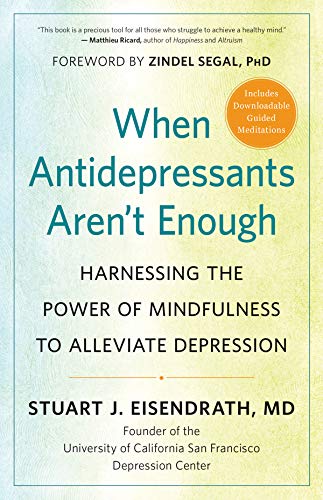
When Antidepressants Aren’t Enough: Harnessing the Power of Mindfulness to Alleviate Depression
For nearly two decades, Dr. Stuart Eisendrath has been researching and teaching the therapeutic effects of mindfulness-based cognitive therapy (MBCT) with people experiencing clinical depression. By helping them recognize that they can find relief by changing how they relate to their thoughts, Eisendrath has seen dramatic improvements in people’s quality of life, as well as actual, measurable brain changes. Easily practiced breath exercises, meditations, and innovative visualizations release readers from what can often feel like the tyranny of their thoughts. Freedom of thought, feeling, and action is the life-altering result.
224 pages, paperback
Published October 1, 2019
Ratings & Reviews
Friends & Following
Create a free account to discover what your friends think of this book!
Community Reviews
Displaying 1 - 9 of 9 reviews

February 24, 2021
I started this book in January 2020, read 25 pages, and then put it down for a year. Why? Probably depression :) After a tough year and medication problems, I decided to take a different approach in addressing my life-long clinical depression: after 15 years of medication use with only moderate positive results and numerous negative effects, I decided to go med free. I set up a plan and discussed it with my therapist and psychiatrist and therapist friend and another friend and my husband and they were all very supportive and encouraging. I have this 'team' in place if things go south, too.
So, the ideas discussed in this book went right along with my plan. Mindfulness and meditation have empirical evidence showing their positive affects on depression. My psychiatrist suggested that my 'plan' would be my new 'medication': something to be used diligently everyday. I am still working on it, but improving my 'practice.'
The book itself is straightforward and I would think it would be helpful to someone with no real experience in mindfulness meditation. I have explored mindfulness meditation off and on for a number of years, so it wasn't new to me. There is a mix of descriptions and definitions and examples, clinical and everyday life. He also gives suggestions of where to go for additional information.
My only 'problem' with the book was a bit of repetitiveness, which is understandable, and his set of thoughts and feelings associated with depression. This is tricky territory because every person is different, but there are things about depression that are fairly similar across the board. And there are differences in situational depression and clinical depression. I kept thinking, "That's not how my thoughts generally run" or some variation of that. And then I would wonder if I was just unaware of what I often think? Um, after 40+ years, I'm actually pretty aware of how my depressed brain works. And then I realized I didn't need to get hung up on the actual words he was using because the principle is what mattered and it applied no matter what the words/thoughts were.
So, I recommend for anyone looking for another avenue or additional help in living well with depression.
July 2023 I decided to put an update here as far as my ‘no medication’ plan - by May of 2022, things were bad and I was back on meds and spent a week in a behavioral health hospital in June of that year. The think about depression - and I forgot about in my excitement of trying a different path than meditation - is that depression makes it extraordinarily difficult to follow through on actions like what I had in place. This book is still beneficial and provides guidance for more tools in living with clinical depression
So, the ideas discussed in this book went right along with my plan. Mindfulness and meditation have empirical evidence showing their positive affects on depression. My psychiatrist suggested that my 'plan' would be my new 'medication': something to be used diligently everyday. I am still working on it, but improving my 'practice.'
The book itself is straightforward and I would think it would be helpful to someone with no real experience in mindfulness meditation. I have explored mindfulness meditation off and on for a number of years, so it wasn't new to me. There is a mix of descriptions and definitions and examples, clinical and everyday life. He also gives suggestions of where to go for additional information.
My only 'problem' with the book was a bit of repetitiveness, which is understandable, and his set of thoughts and feelings associated with depression. This is tricky territory because every person is different, but there are things about depression that are fairly similar across the board. And there are differences in situational depression and clinical depression. I kept thinking, "That's not how my thoughts generally run" or some variation of that. And then I would wonder if I was just unaware of what I often think? Um, after 40+ years, I'm actually pretty aware of how my depressed brain works. And then I realized I didn't need to get hung up on the actual words he was using because the principle is what mattered and it applied no matter what the words/thoughts were.
So, I recommend for anyone looking for another avenue or additional help in living well with depression.
July 2023 I decided to put an update here as far as my ‘no medication’ plan - by May of 2022, things were bad and I was back on meds and spent a week in a behavioral health hospital in June of that year. The think about depression - and I forgot about in my excitement of trying a different path than meditation - is that depression makes it extraordinarily difficult to follow through on actions like what I had in place. This book is still beneficial and provides guidance for more tools in living with clinical depression

February 19, 2020
This book was excellent, and I highly recommend it to anyone who struggles with depression. Meditation and mindfulness have literally saved my life, so I can’t say enough positive things about this book.

June 17, 2020
Listened to audio. Well written book that offers evidence and examples of how mindfulness practice makes a difference. Several practices that make it easy to start using the approach.

October 15, 2019
Endorsements:
“Stuart Eisendrath was the first to bring mindfulness to people with treatment-resistant depression and show that it can be of major benefit. The key point is that through regular practice, you can transform your relationship with your thoughts and emotions and with unwanted and painful experiences rather than forcing them to go away, which they will not. This realization, when enacted, is life-changing in little ways that aren’t so little. Indeed, it can be profoundly liberating.”
— Jon Kabat-Zinn, PhD, founder of mindfulness-based stress reduction (MBSR) and author of Falling Awake: How to Practice Mindfulness in Everyday Life and The Healing Power of Mindfulness: A New Way of Being
“This authoritative guide from a world-class expert is warm, supportive, and chock-full of practical help. With many simple exercises and lots of down-to-earth suggestions, it’s also grounded in cutting-edge brain science. If you struggle with depression or know someone who does, this is a phenomenal resource.”
— Rick Hanson, PhD, author of Hardwiring Happiness: The New Brain Science of Contentment, Calm, and Confidence
“This book is a gift to people with depression who are looking for ways to ease their pain. By combining the wisdom of mindfulness and self-compassion practice with more standard therapeutic approaches, this book offers an empirically supported pathway out of depression that works and that has the power to change your life.”
— Kristin Neff, PhD, author of Self-Compassion: The Proven Power of Being Kind to Yourself and associate professor of educational psychology at the University of Texas, Austin
“Our mind can be our best friend or our worst enemy. In this deeply humane and compassionate book based on his lifelong professional experience, Stuart Eisendrath distills the most insightful ways to approach depression, regain freedom from the fetters of our own mind, and learn to appreciate every moment of life. This book is a precious tool for all those who struggle to achieve a healthy mind.”
— Matthieu Ricard, author of Altruism: The Power of Compassion to Change Yourself and the World
“This inspiring book makes the best case yet for mindfulness as a treatment of depression. With wisdom and compassion, Dr. Eisendrath shows the reader precisely how nonjudgmental awareness goes to the roots of depression and transforms it for the better. The author has dedicated his career to researching and treating depression. His message is realistic and crystal clear, offering new hope to anyone who suffers from this all-too-common condition.”
— Christopher K. Germer, PhD, lecturer on psychiatry at Harvard Medical School, author of The Mindful Path to Self-Compassion: Freeing Yourself from Destructive Thoughts and Emotions, and codeveloper of mindful self-compassion (MSC)
“Based on pioneering neuroscience and solid clinical research, Stuart Eisendrath’s When Antidepressants Aren’t Enough provides a wealth of practical exercises that help shift our relationship to our thoughts. They can bring about changes in the experience of depression that are immediate and long-lasting. This is a significant contribution to the wise understanding of treatment and recovery from seemingly intractable depression. A gift.”
— Linda Graham, MFT, author of Bouncing Back: Rewiring Your Brain for Maximum Resilience and Well-Being and Resilience: Powerful Practices for Bouncing Back from Disappointment, Difficulty, and Even Disaster
“When Antidepressants Aren’t Enough is a must read for anyone with mood or anxiety issues — and their loved ones too. Dr. Eisendrath will teach you how to change your relationship to depression and lift yourself out of negative or anxious moods.”
— Louann Brizendine, MD, neuropsychiatrist and author of The Female Brain and The Male Brain
“Living well with depression may sound like an oxymoron, but it is the heart and soul of Professor Stuart Eisendrath’s new book, When Antidepressants Aren’t Enough. With encouragement and compassion, Dr. Eisendrath guides the reader through the process of developing a mindfulness practice that shapes and nurtures a new relationship with the thoughts that fuel depression — a relationship filled with self-acceptance, self-compassion, and peaceful coexistence with our minds.”
— Michael A. Tompkins, PhD, ABPP, codirector of the San Francisco Bay Area Center for Cognitive Therapy, assistant clinical professor of psychology at the University of California, Berkeley, and author of Anxiety and Avoidance: A Universal Treatment for Anxiety, Panic, and Fear
“The title of this book is very apt. As a faculty member at the UCSF Depression Center, I have seen patients in my clinical and teaching practices respond beautifully to Dr. Eisendrath’s mindfulness-based cognitive therapy for depression, even those who did not respond to or could not tolerate antidepressant medication. I have become a staunch believer, and I am so glad that this book will bring Dr. Eisendrath’s techniques and approaches to a much larger audience of clinicians and patients alike.”
— Owen Wolkowitz, MD, professor of psychiatry and codirector of the UCSF Depression Center, University of California, San Francisco
“Stuart Eisendrath was the first to bring mindfulness to people with treatment-resistant depression and show that it can be of major benefit. The key point is that through regular practice, you can transform your relationship with your thoughts and emotions and with unwanted and painful experiences rather than forcing them to go away, which they will not. This realization, when enacted, is life-changing in little ways that aren’t so little. Indeed, it can be profoundly liberating.”
— Jon Kabat-Zinn, PhD, founder of mindfulness-based stress reduction (MBSR) and author of Falling Awake: How to Practice Mindfulness in Everyday Life and The Healing Power of Mindfulness: A New Way of Being
“This authoritative guide from a world-class expert is warm, supportive, and chock-full of practical help. With many simple exercises and lots of down-to-earth suggestions, it’s also grounded in cutting-edge brain science. If you struggle with depression or know someone who does, this is a phenomenal resource.”
— Rick Hanson, PhD, author of Hardwiring Happiness: The New Brain Science of Contentment, Calm, and Confidence
“This book is a gift to people with depression who are looking for ways to ease their pain. By combining the wisdom of mindfulness and self-compassion practice with more standard therapeutic approaches, this book offers an empirically supported pathway out of depression that works and that has the power to change your life.”
— Kristin Neff, PhD, author of Self-Compassion: The Proven Power of Being Kind to Yourself and associate professor of educational psychology at the University of Texas, Austin
“Our mind can be our best friend or our worst enemy. In this deeply humane and compassionate book based on his lifelong professional experience, Stuart Eisendrath distills the most insightful ways to approach depression, regain freedom from the fetters of our own mind, and learn to appreciate every moment of life. This book is a precious tool for all those who struggle to achieve a healthy mind.”
— Matthieu Ricard, author of Altruism: The Power of Compassion to Change Yourself and the World
“This inspiring book makes the best case yet for mindfulness as a treatment of depression. With wisdom and compassion, Dr. Eisendrath shows the reader precisely how nonjudgmental awareness goes to the roots of depression and transforms it for the better. The author has dedicated his career to researching and treating depression. His message is realistic and crystal clear, offering new hope to anyone who suffers from this all-too-common condition.”
— Christopher K. Germer, PhD, lecturer on psychiatry at Harvard Medical School, author of The Mindful Path to Self-Compassion: Freeing Yourself from Destructive Thoughts and Emotions, and codeveloper of mindful self-compassion (MSC)
“Based on pioneering neuroscience and solid clinical research, Stuart Eisendrath’s When Antidepressants Aren’t Enough provides a wealth of practical exercises that help shift our relationship to our thoughts. They can bring about changes in the experience of depression that are immediate and long-lasting. This is a significant contribution to the wise understanding of treatment and recovery from seemingly intractable depression. A gift.”
— Linda Graham, MFT, author of Bouncing Back: Rewiring Your Brain for Maximum Resilience and Well-Being and Resilience: Powerful Practices for Bouncing Back from Disappointment, Difficulty, and Even Disaster
“When Antidepressants Aren’t Enough is a must read for anyone with mood or anxiety issues — and their loved ones too. Dr. Eisendrath will teach you how to change your relationship to depression and lift yourself out of negative or anxious moods.”
— Louann Brizendine, MD, neuropsychiatrist and author of The Female Brain and The Male Brain
“Living well with depression may sound like an oxymoron, but it is the heart and soul of Professor Stuart Eisendrath’s new book, When Antidepressants Aren’t Enough. With encouragement and compassion, Dr. Eisendrath guides the reader through the process of developing a mindfulness practice that shapes and nurtures a new relationship with the thoughts that fuel depression — a relationship filled with self-acceptance, self-compassion, and peaceful coexistence with our minds.”
— Michael A. Tompkins, PhD, ABPP, codirector of the San Francisco Bay Area Center for Cognitive Therapy, assistant clinical professor of psychology at the University of California, Berkeley, and author of Anxiety and Avoidance: A Universal Treatment for Anxiety, Panic, and Fear
“The title of this book is very apt. As a faculty member at the UCSF Depression Center, I have seen patients in my clinical and teaching practices respond beautifully to Dr. Eisendrath’s mindfulness-based cognitive therapy for depression, even those who did not respond to or could not tolerate antidepressant medication. I have become a staunch believer, and I am so glad that this book will bring Dr. Eisendrath’s techniques and approaches to a much larger audience of clinicians and patients alike.”
— Owen Wolkowitz, MD, professor of psychiatry and codirector of the UCSF Depression Center, University of California, San Francisco

July 15, 2021
What a helpful book! It teaches a perspective of depression and anxiety that I haven't yet been exposed to. Mindfulness based cognitive therapy (MBCT) is going to be a new tool for me in dealing with my own ruminations, anxieties, and depressive thoughts. I'm recommending this book for anybody who wants to have a deeper understanding of any mental illness or strategies for coping.

April 7, 2023
I was hoping to get more out of this book & I didn't. Sometimes the words on the page don't speak to you. There are some ways that things will work to help w/ depression & other times, they just don't. Depends on the individual of course. Some people might think this book is helpful. So I guess you have to decide that for yourself.

October 25, 2025
Best therapy book I've read! Desperately resisting the impulse to buy copies for everyone I know! I am all in on the secularization of "mindfulness"!

August 7, 2026
Some helpful information and exercises.

December 30, 2025
Read for my senior thesis at CCS.
Displaying 1 - 9 of 9 reviews