Tyler Truman Julian's debut collection of poetry, The Next Question to Ask (to Answer), takes you up and down Wyoming's highways and back and forth across a state obsessed with legacy and the reality that within its borders everyone dies younger. Across these linked poems, Julian introduces you to a story wrestling with questions of both past and present, a family trying to survive, and a speaker seeking to define what it means to be an individual in the least populated state in the rapidly changing American West.
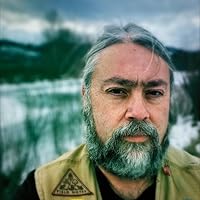
Tyler Truman Julian lives with his wife in Sheridan, Wyoming, where he writes, edits, and teaches. He recently graduated with an MFA in fiction from New Mexico State University and serves as Review Editor for The Shore. He is the author of Wyoming: The Next Question to Ask (to Answer) (Finishing Line Press, 2019), from which work has been nominated for the Pushcart Prize. His work has been published or is forthcoming in Burnt Pine Magazine, Barren Magazine, High Plains Register, Tupelo Quarterly, EcoTheo Review, South Dakota Quarterly, and other journals.
A powerful love letter to a land and its people. The hardships and conflicts that Julian writes about aren't unfamiliar to me, with my roots in Montana, so the words echo in the best kind of way. The love for an unforgiving place and its often exasperating people, the isolation—both welcome and unwelcome—and how these experiences shade one's interaction with the world "out there" are a big part of what we carry through life with us. It's good to read about a place like this from the perspective of someone who has lived it, rather than from someone who drops in for a couple years and thinks they have it all figured out. Outstanding work.
I was lucky enough to win this in a Goodreads giveaway and now I swear I’m buying everything this author writes. I got it in the mail this evening and read it in a single sitting. The writing is beautiful and gripping. I’ve never read poetry that resonated with me so deeply until this collection. I’m about to read it again!
“One might ask, naturally: Who does leave this place and why?” .
Tyler Julian’s incredible debut book of poetry calls upon readers to take this landscape (and any landscape), desolate as it may seem, and measure it; measure its touch, its tender company, its haunting weight, its grip on your spirit. Measure its memory, its questions that beg to be answered, its fertility—your humanity is its harvest and these poems are its bounty.
Eloquently detailed and artfully composed, this book of poems is a memorable companion that begs to be read again and again.
Isolation is a two-sided coin, bringing out our fear and anxiety, as well as our wonderment and strength. Julian explores both sides— the beauty and the pain— in his stunning collection of poems. His words are visceral, lyrical, and raw. His knowledge of his subject is impressive without feeling exclusive. He welcomes the reader in to his world, but holds no punches once we’re there. Brilliant.
I’m not from Wyoming, nor do I traditionally read poetic collections as my go-to genre. However, after reading the first page I was hooked and couldn’t put this poetic masterpiece down. Tyler Julian does an incredible job using imagery to captivate unfamiliar audiences to the point where in some parts you actually feel like you’re in Wyoming. Whether you’re from there or not, it’s easy to relate to this work especially if you happen to be raised any small town, or isolated area in America. Tyler’s work truly showcases his ability to engage his readers in understanding his perspective given the setting, given cyclical patterns of life, and as we all do, questioning the themes of chance, risk and decision-making along the way. This work is a powerful testament of Julian’s genius and I know you will find it enjoyable to read as well as thought-provoking and inspiring.
“Wyoming is one big small town/ with really long roads,/ geometric,/ an easy roadmap” (10).
Wyoming has always been a distant state to me, an unknown land filled with unknown people. But after reading this book of haunting poetry, you will grow to love Wyoming as I do, come to recognize its harsh climate, isolated land, and people running away (or perhaps running toward) legacies. The unforgettable imagery invites you to make a home between the stanzas, the lines, to drink whiskey as you stare into a fire, to contemplate what it means to live and work and love.
When you read WYOMING, you will ask (and be asked) questions. Take a moment to pause, reflect, to wonder—as I know you will. Then, you’ll demand for the answers.
A beautiful meditative exploration of a singular location — an informative and deeply poetic interrogation of living in a rural landscape. A great book!
WYOMING gives you its knitty-gritty sufferings of the freezing climate, fearful isolation, and fickle people. Tyler Truman Julian threatens you to stay away, yet I still want to risk it. I want to be engulfed by the climate, the people, and the small town sensations. I want to experience the tribulations that Wyoming has to offer and not go home because I fell in love with all that it gives. The land gives you what it is to be human and forces you to react with its tense soil and tells you to breathe. It warns you that yes, it might not be a welcoming place to outsiders, but that's what will ask you to stay.
This book of poetry really brought back my memories of Wyoming and my family that lives there. Mr. Julian brings forth a unique collection of memories, understanding and down home Americana in this book. It is no wonder my aunt and cousins have found Wyoming so alluring. I look forward to reading more of his work to come.
Tyler Truman Julian’s debut collection of poetry, Wyoming: The Next Question to Ask (to Answer), takes you up and down Wyoming’s highways and back and forth across a state obsessed with legacy and the reality that within its borders everyone dies younger. Across these linked poems, Julian introduces you to a story wrestling with questions of both past and present, a family trying to survive, and a speaker seeking to define what it means to be an individual in the least populated state in the rapidly changing American West.