

What do you think?

The Golden Mare, the Firebird, and the Magic Ring
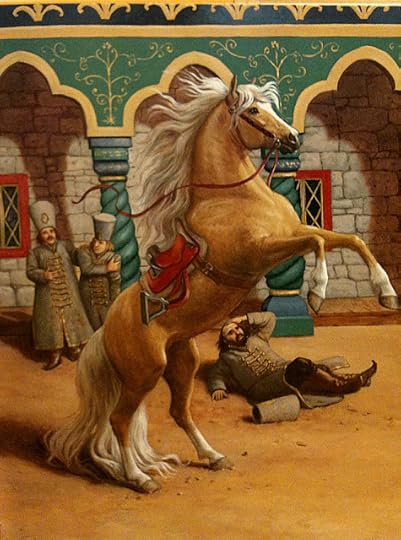
A young huntsman named Alexi is helped by a golden mare when he tries to perform the seemingly impossible feats commanded by the Tsar, in a story based on a classic Russian folktale. 10,000 first printing.
32 pages, Hardcover
First published April 1, 2001
Ratings & Reviews
Friends & Following
Create a free account to discover what your friends think of this book!
Community Reviews
Displaying 1 - 30 of 49 reviews

November 27, 2020
Sadly, the story isn't new to me.
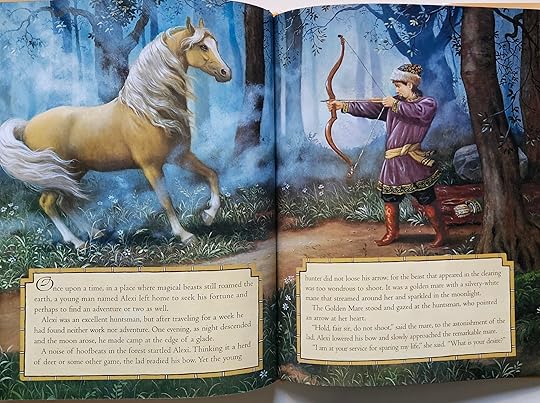
I like the beautiful illustrations and the writing is good.
I like the beautiful illustrations and the writing is good.

March 26, 2024
A nice twist on the comeuppance story. Lovely illustrations as always--it is Sanderson, after all!

November 30, 2022
Just the illustrations are good, the story.. not so much.

October 10, 2019
I didn't care much for the illustrations but I do like the Russian tale of the tsar's hunter and the herculean tasks he is charged with.

August 29, 2022
Great story and illustrations!

December 1, 2025
It's a strange fairytale about a huntsman named Alexi, who works for the tsar after befriending a wild mare. I found the story at first upsetting, but by the end, it made me smile. It's beautiful and smart.

May 14, 2019
Please note that this review is written for my use as a librarian and may not appeal directly to readers. Please review at your own risk.
Accelerated Reader has this book listed as being for lower grades, or readers in K to 3rd grade. They also have listed that this read is worth 0.5 AR points.
Not only is this book a Texas Bluebonnet Award winner, but it is a Russian fairytale. I happen to love Russian fairy tales, so I might be a little bit biased here. This picture book has beautiful illustrations and is a great example of a well-written fairy tale story. I think it would be good for most young readers. It could be good for an ethnic story time, but it is a little long and would need to be read to slightly older kids.
Summary:
-Do not read past this point if you would like to avoid spoilers-
In this Russian fairytale, a young hunter meets a beautiful horse who takes him on an adventure as a thank you for sparing her life. He attempts to go and work for the Tsar of the land, but he turns out to be a jealous and evil man. He sends the young hunter, Alexi, on many tasks that end up making Alexi regret ever coming to him in the first place. In the end, Alexi and a beautiful maiden that he captured for the Tsar trick the Tsar and end up taking his throne.
Accelerated Reader has this book listed as being for lower grades, or readers in K to 3rd grade. They also have listed that this read is worth 0.5 AR points.
Not only is this book a Texas Bluebonnet Award winner, but it is a Russian fairytale. I happen to love Russian fairy tales, so I might be a little bit biased here. This picture book has beautiful illustrations and is a great example of a well-written fairy tale story. I think it would be good for most young readers. It could be good for an ethnic story time, but it is a little long and would need to be read to slightly older kids.
Summary:
-Do not read past this point if you would like to avoid spoilers-
In this Russian fairytale, a young hunter meets a beautiful horse who takes him on an adventure as a thank you for sparing her life. He attempts to go and work for the Tsar of the land, but he turns out to be a jealous and evil man. He sends the young hunter, Alexi, on many tasks that end up making Alexi regret ever coming to him in the first place. In the end, Alexi and a beautiful maiden that he captured for the Tsar trick the Tsar and end up taking his throne.

March 4, 2010
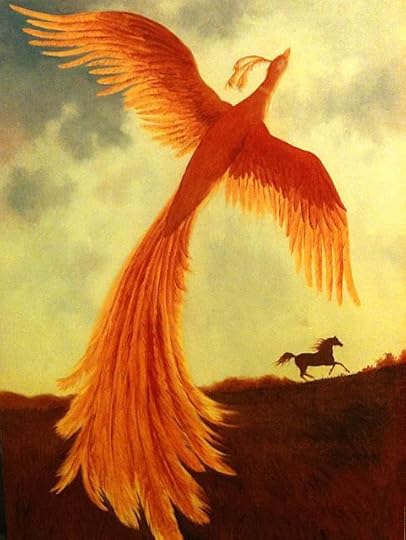
One day Alexi was out in the woods when he saw a golden mare, since he did not kill the mare he now would day Alexi saw a firebird feather and gave it to the Tsar but he seeked the entire bird. Alexi set a trap for the bird and soon caught him returned him to the Tsar, but sadly the bird was stuck into a cramped cage. Next the Tsar ordered Alexi to get Yelena the fair so the Tsar may marry her. Alexi tricked her to going but soon regretted it. Will Yelena the fair have to marry the Tsar?
I thought this book was good.
I wouldd recommend this book it was okay some parts were boring.
I thought this book was good.
I wouldd recommend this book it was okay some parts were boring.

April 1, 2019
Beautiful illustrations and a story that I've never read or heard before. Also, I truly believe that horses are some of the most beautiful animals when it comes to art and illustration. I love picture books that have horses in them.

September 25, 2025
Ruth Sanderson (one of my favorite equine artists) blends a few Russian folk tales into this fantasy of a poor young Russian who accidentally nearly kills a golden colored mare -- and the fun begins. Russian folk tales are practically the same in flavor as European folk tales, so this does have a predictable ending.
The real unanswered question is -- what color is The Golden Mare? Well, palomino, certainly -- although Sanderson draws her with a conformation like a Polish or Shagya Arabian, who often have straight profiles instead of the dished profile of the most popular type of Arabian, the Egyptian Arabian. However, the dun gene that helps causes the palomino coloration is not found in Arabians.
But, if you look in Google or even some old horse books, you find horses labelled "palomino Arabians." What gives? It's possible the breed of horses were mislabeled, but there is a shade of chestnut with a very pale mane and tail that looks so much like a palomino that you need a DNA test to know for sure which color.
And yeah -- she's a magical horse, so it's possible that the magic genes are color linked but I guess that has to be in another book. Often, the magical horse in folk tales is white, black or dapple grey, so it's nice to see a palomino pop up. Perhaps she was the ancestor of Mr. Ed.
This book is currently available at the Internet Archive, but not under the correct title. For some reason, it was saved under the title of Golden Mare, the Firebird. The fastest way of finding this book is to go to Text, then American Libraries, and THEN search under "Sanderson, Ruth".
The real unanswered question is -- what color is The Golden Mare? Well, palomino, certainly -- although Sanderson draws her with a conformation like a Polish or Shagya Arabian, who often have straight profiles instead of the dished profile of the most popular type of Arabian, the Egyptian Arabian. However, the dun gene that helps causes the palomino coloration is not found in Arabians.
But, if you look in Google or even some old horse books, you find horses labelled "palomino Arabians." What gives? It's possible the breed of horses were mislabeled, but there is a shade of chestnut with a very pale mane and tail that looks so much like a palomino that you need a DNA test to know for sure which color.
And yeah -- she's a magical horse, so it's possible that the magic genes are color linked but I guess that has to be in another book. Often, the magical horse in folk tales is white, black or dapple grey, so it's nice to see a palomino pop up. Perhaps she was the ancestor of Mr. Ed.
This book is currently available at the Internet Archive, but not under the correct title. For some reason, it was saved under the title of Golden Mare, the Firebird. The fastest way of finding this book is to go to Text, then American Libraries, and THEN search under "Sanderson, Ruth".
March 28, 2020
This is a review from my 7 year old son: The pictures have so much detail to them. It is incredible! I have never seen a book like it before. My favorite part is the at the end when Yelena the Fair tricks the Tsar. I would recommend this book to anyone who likes fairy tales and beautiful artwork. The book we read was a library book, but we are now buying our own copy. It is seriously good!!!!!!!!!! We will be finding other books by this author.

December 31, 2024
I had my mythology students read a version of this at the beginning of the year, only the version I gave them was very different from what I myself remembered! But all the versions I could find online were similar. I decided to go back to this book to check, since I loved this book as a child, and lo and behold, the story in this book is a retelling of the fairytale & indeed very different from the story I used in class. Love the art as always.

April 26, 2025
With Ruth Sanderson visiting my library soon for an event, I had to reacquaint myself with some of her work! The art is beautiful to an insane level, and the way she blends multiple fairytales together into one seamless retelling never fails to amaze. Truly an artist.

January 15, 2026
The Golden Mare, the Firebird, and the Magic Ring by Ruth Sanderson – This lushly illustrated Russian fairy tale is better for a little reader who can sit still for longer, but it is a fabulous story! Happy Reading!

July 2, 2017
MY FAVORITE CHILDREN'S BOOK i don't remember it at all but it was gorgeous
September 26, 2017
Gorgeous illustrations, of course, but workmanlike tale until the end, which earned the book a bonus star, imo.

October 25, 2017
Meh, the illustrations are very colorful but the story is lacking. The writing is very basic and the characters unlikable, except for the mare I suppose.
July 30, 2018
How do you read the 📘📙📗📚📑📕📒📓📖📰📔

September 30, 2018
A retelling of a classic fairy tale, if less known nowadays, with a few tweaks. Alexi acquires a magical golden horse who gives him good advice, but the tsar resents the only Alexi can ride her. When Alexi finds a firebird's feather and gives the tsar it, the tsar starts with demanding the firebird itself.
Gloriously illustrated.
Gloriously illustrated.

January 30, 2019
This is not my favorite versionof the story, but the illustrations are stunning

September 15, 2019
Beautifully illustrated and I love this Russian tale!
Read
April 18, 2021the truth will always come out.
changing someone is difficult
changing someone is difficult

December 16, 2021
Beautifully illustrated.

November 22, 2022
Beautiful art and an interesting fairy tale.
May 29, 2023
I liked the ending a lot! The illustrations are Beautiful too!

June 17, 2023
A beautifully illustrated folktale.

July 18, 2023
The illustrations were just beautiful!

December 3, 2015
Genre: Traditional Literature
Award: 2003 Texas Bluebonnet Award
Grade Levels: 3-5
Recommendation: While the tale is intriguing and the illustrations are beautiful, this is not a fairy tale I would recommend to teachers. Since it is a mixture of Russian traditional literature, I would imagine that simply reading the tale to a class would be enjoyable. However, explaining the Russian words used in the tale and understanding the moral of the story might be more complicated for even older students. I suppose students could take elements from favorite fairy tales and mix them up, but since this story is unfamiliar in Western culture, it would be harder to explain some of the concepts.
Review: Zaleski, J., Roback, D., Brown, J. M., & Britton, J. (2001). [Review of The golden mare, the firebird, and the magic ring]. Publishers Weekly, 248(15), 74.
Sanderson (The Crystal Mountain) draws from several Russian fairy tales to fashion a clever story about a well-intentioned young horseman, his magical mare and a greedy czar. The sumptuous oil paintings take immediate command of the double-page spreads, the sometimes breathtaking scenes distinguished by lustrous hues and intricate particulars. On a quest to seek his fortune "and perhaps to find an adventure or two as well," Alexi encounters a magnificent mare who pledges to serve the lad if he spares her life. The horse leads her new master to the palace of the czar, who hires Alexi as his horseman, yet is bitter that he cannot claim Alexi's imposing horse as his own. Disgruntled, the czar demands of the lad seemingly impossible tasks, among them capturing the elusive firebird and fetching a maiden from "a distant eastern land" to be the ruler's bride. The wise equine is the true hero of the story, valiantly coming to Alexi's rescue in each episode end eventually bringing about the not unexpected happy-ever-after denouement. Sanderson's narrative has a lush, lyrical quality, and her renderings of lavish architectural detail, elaborate period dress and an unsullied natural world will bring youngsters back for repeat readings. Her dramatically lit firebird is nothing short of resplendent. Ages 8-up. (Apr.)
Award: 2003 Texas Bluebonnet Award
Grade Levels: 3-5
Recommendation: While the tale is intriguing and the illustrations are beautiful, this is not a fairy tale I would recommend to teachers. Since it is a mixture of Russian traditional literature, I would imagine that simply reading the tale to a class would be enjoyable. However, explaining the Russian words used in the tale and understanding the moral of the story might be more complicated for even older students. I suppose students could take elements from favorite fairy tales and mix them up, but since this story is unfamiliar in Western culture, it would be harder to explain some of the concepts.
Review: Zaleski, J., Roback, D., Brown, J. M., & Britton, J. (2001). [Review of The golden mare, the firebird, and the magic ring]. Publishers Weekly, 248(15), 74.
Sanderson (The Crystal Mountain) draws from several Russian fairy tales to fashion a clever story about a well-intentioned young horseman, his magical mare and a greedy czar. The sumptuous oil paintings take immediate command of the double-page spreads, the sometimes breathtaking scenes distinguished by lustrous hues and intricate particulars. On a quest to seek his fortune "and perhaps to find an adventure or two as well," Alexi encounters a magnificent mare who pledges to serve the lad if he spares her life. The horse leads her new master to the palace of the czar, who hires Alexi as his horseman, yet is bitter that he cannot claim Alexi's imposing horse as his own. Disgruntled, the czar demands of the lad seemingly impossible tasks, among them capturing the elusive firebird and fetching a maiden from "a distant eastern land" to be the ruler's bride. The wise equine is the true hero of the story, valiantly coming to Alexi's rescue in each episode end eventually bringing about the not unexpected happy-ever-after denouement. Sanderson's narrative has a lush, lyrical quality, and her renderings of lavish architectural detail, elaborate period dress and an unsullied natural world will bring youngsters back for repeat readings. Her dramatically lit firebird is nothing short of resplendent. Ages 8-up. (Apr.)

March 20, 2008
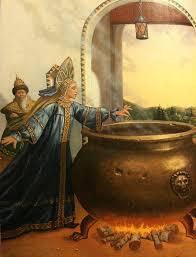
When Alexi spares the life of a mysterious horse, he is rewarded for his kindness. The Golden Mare promises to help the young man become a huntsman for the Tsar. But the greedy ruler wants more than Alexi’s services; he wants the Golden Mare. The Tsar demands that Alexi capture the elusive Firebird, bring Yelena the Fair to his palace, and find her ring so that she will marry. Each time the Golden Mare saves Alexi, until the young man and Yelena trick the Tsar into jumping into a cauldron of boiling water. He changes from an old man to a baby, and is adopted by the new Tsar, Alexi, and his queen, Yelena.
Both Sanderson’s story and artwork are rich and detailed. The illustrations are oil on canvas on double-page spreads. The feathers of the firebird glow, the czar’s jewels sparkle, and the waters of the Lake of the Sun reflect back the beauty of Sanderson’s landscapes. The text is unobtrusive and often decorated with intricate borders. Readers may find the story somewhat long – according to the author’s note, this book is a retelling of four different Russian fairy tales – but will be encouraged by the illustrations and exciting plot. As with most fairy tales, the characters are somewhat two-dimensional, though Alexi ponders issues of freedom and captivity.
Both Sanderson’s story and artwork are rich and detailed. The illustrations are oil on canvas on double-page spreads. The feathers of the firebird glow, the czar’s jewels sparkle, and the waters of the Lake of the Sun reflect back the beauty of Sanderson’s landscapes. The text is unobtrusive and often decorated with intricate borders. Readers may find the story somewhat long – according to the author’s note, this book is a retelling of four different Russian fairy tales – but will be encouraged by the illustrations and exciting plot. As with most fairy tales, the characters are somewhat two-dimensional, though Alexi ponders issues of freedom and captivity.
This entire review has been hidden because of spoilers.

October 19, 2012
I picked this up at the library, while browsing the fairy/folktale section looking for books for my son. The story is based off a number of Russian fairy tales, including "The Firebird." A young man named Alexi meets a talking Golden Mare and the man goes to work as a huntsman for the Tsar, a cruel man who is used to getting everything he wants. When he is not able to procure the mare, he sends Alexi off on dangerous missions, like capturing the Firebird, so that he can be killed. Next the Tsar demands the hand of the most beautiful maiden in the land and she in turn says the Tsar must get her wedding ring first, so he sends Alexi after it. The Golden Mare has helped her master in all his adventures and this task is no exception. Yelena the maiden tries to trick the Tsar by getting him to jump into the cauldron of boiling water, but he makes Alexi go in first, and after he sees that the young man is not harmed, he jumps in too but is changed back into an infant. Alexi ends up marrying Yelena and they adopt the Tsar as their child. Honestly I would give this book five stars for the illustration alone, but the storytelling is really well done as well. Highly recommended for ages 5-10, 5 stars.
This entire review has been hidden because of spoilers.
Displaying 1 - 30 of 49 reviews