

What do you think?
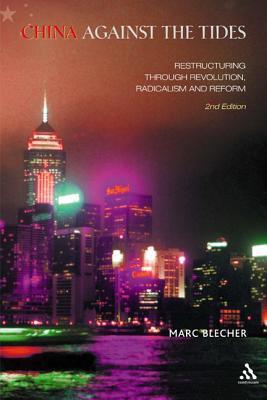
China Against the Tides: Restructuring through Revolution, Radicalism and Reform
This new edition argues that, in both Mao and Deng periods, China has evolved in ways quite different from the Soviet model and from other developing countries. Like its predecessor, the book's approach is interdisciplinary and comparative. Professor Blecher analyzes China by introducing appropriate theories and concepts from historical and political sociology, economic development and political science. He explores China from two comparative perspectives: developing countries (including the newly industrializing countries of East Asia) and historical state socialist regimes. The book's chapters cover: imperial collapse, republican failure and communist triumph; a chronological overview since 1949; the state and politics; socialism and society; rural political economy; urban political economy; China and the Pacific Rim; the crisis of reform; and the future of Chinese economic development and politics. From PETRA: Blecher's new edition will revise and update the first, adding a new section on international economic factors to the political economy chapters - to include the WTO, gloablization, foreign investment etc. It will address new policy problems such as the spread of AIDS in China and will look at Hong Kong and Macau's return, and at the relationship with Taiwan. The Chinese diaspora is also covered.
- GenresChina
256 pages, Hardcover
First published April 1, 1997
Ratings & Reviews
Friends & Following
Create a free account to discover what your friends think of this book!
Community Reviews
Displaying 1 - 3 of 3 reviews

April 15, 2025
A fantastic introduction to China and its recent history, politics, and economy. I highly recommend it to anyone seeking an insightful and balanced assessment of the country.

July 20, 2021
Worth reading for a really quick and objective perspective on the differences in politics, political economy, and history of the Mao and Deng periods in China.

December 28, 2007
this books is more academic and less directly anti-china than the books i like to read about china, but it's definately good. the author is an amazing guy, too, and he definately knows his stuff!
Displaying 1 - 3 of 3 reviews