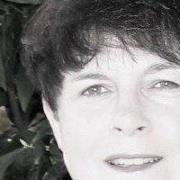
National Book Council award-winner Olga Masters' powerful first novel is set in a tiny farming township south of Sydney shortly after World War I. Two lively young women, Una and Enid Herbert, keep house for their father and brothers. Enid, her father's favourite, tends the house and garden with loving care while the artistic and restless Una escapes the farm whenever possible. Family matters fill both their lives until the reverend Colin Edwards moves into the district. Hungry for love, both women are drawn to him, and he to them, in a rapidly-developing triangle of love and tension. Olga Masters recreates the atmosphere of the time and place with great skill, yet the novel goes further is exploring the intense sensual and emotional lives of its characters. Moving on the level of desire, frustration and disappointment, it is a remarkable story of the nature and power of love. (From the dust-jacket of the First Edition, published in 1984 by UQP.)
Olga Masters née Lawler (28 May 1919 – 27 September 1986) was an Australian journalist, novelist and short story writer.
Masters wrote as a journalist for most of her life, and supplemented the family income by writing for local newspapers in the towns she lived in with her husband. On their return to Sydney, she wrote for papers such as The Manly Daily and The Sydney Morning Herald.
While she wanted to write fiction from an early age, she was not published as a writer of fiction until the late 1970s. During this decade she wrote several radio plays, receiving many rejections, but on 29 April 1977, her radio play The Penny Ha-penny Stamp was broadcast. However with the publication of her short story, Call me Pinkie, in The Sydney Morning Herald in 1978, she moved from writing drama to prose fiction. Between 1979 and 1980, she won nine awards for her short stories. She wrote fiction full-time from 1982, after the publication of The Home Girls.
Due to her late start and her relatively early death, Masters' published output is small but her impact was disproportionate in that her style and writings about writing inspired many others to take up the craft.
In prosperous, comfortable, complacent 21st century Australia, it’s somewhat chastening to read this first novel from Olga Masters (1919-1986). Set in a small farming community south of Sydney after The Great War, it’s a window on a different kind of life, one where there would be no bread on the table if a woman did not bake it every second day or so, and no hot water for tea if she did not light and tend the fire for the stove. A life where women made all their clothes themselves and the household linen too. A life so pinched with poverty that the Reverend Colin Edwards struggles to mask his anxiety about the cost of a phone call, and feels wasteful over the cost of a stamp when a letter home to his mother in England is merely one page long.
It’s also a life that is strictly gendered. If the shortage of men during the war created new opportunities for women, those opportunities had mostly contracted afterwards although Rachel still runs the post office. For Jack Herbert’s daughters Enid and Una, the future is either marriage and motherhood, or spinsterhood. (The word ‘spinster’ itself has gone out of contemporary usage!) Jack (see a Sensational Snippet featuring Jack here) feels no compunction in wishing a life of spinsterhood for Enid because she is the better housekeeper and since the death of his wife Nellie, he wants Enid to keep making the pickles and jams and have dinner on the table when he wants it, as if by instinct. Olga Masters does not shy from suggesting that, ominously, he is also attracted to Enid in other ways.
In 1813 Jane Austen published a book about an eligible bachelor arriving in an English village. In 1984 Olga Masters published a book about an eligible bachelor arriving in a small Australian country town. Nearly 200 years later, the question is the same: which girl will win the man? But "Loving Daughters" is a much bolder, sadder and more disturbing book. The epigraph, from Coleridge’s "Christabel", points to the two Herbert sisters and the dream of their "own betrothed knight", but the young man, the Reverend Colin Edwards, is not just the prize. He’s a complex, powerfully-realised character. A minister because he hoped to please his parents (his father is a minister in a fashionable English parish), he’s always been overshadowed by his dashing brother James. James died in the Great War, and Colin is miserably aware that he’ll never matter to his parents as much as James did. Obediently but unwillingly he accepts a posting to Australia and ends up in the tiny town of Wyndham. Edwards is terribly out of place, and emotionally adrift, longing for a womanly warmth he’s never had even as a young child. Is it any wonder that he’s entranced by the two Herbert girls? For quite a while he’s equally in love with both of them, the calm, deeply-feeling Enid and the childish free spirit Una. And he’s sex-starved: he’s obsessed by the white blouses swelling over the breasts of the Herbert girls and their “beautiful little bums”. Even the swellings on a young apple tree remind him of breasts.
Sex is close beneath the surface. The book starts with the death in childbirth of young Henry Herbert’s wife; his brother George is dopily in love with Violet, the wife of another brother, Ned. Violet is bitterly contemptuous of her husband for his unmanliness – Ned, the only Herbert to go to the war, has returned shell-shocked, virtually mute and with one eye shot out. Violet thinks he’s a fool to “wallow in self-pity”. Jack Herbert, the widowed father of the family, merges the image of his lost wife with his daughter Enid in a way that borders on the incestuous. And under the ladylike behaviour of all the women he meets is a covert interest in Colin Edwards’ groin:
"Sometimes he sat with his hands on his thighs and the thumbs made deep dents in the black cloth of his trousers. She thought of her thumbs there…"
"Mrs Palmer’s attention was caught and rivetted to his thighs…."
Perhaps it’s possible for us to have an easier merging of love and sex nowadays, but in this society both love and sex are weighed down and entangled by convention, ignorance and the unequal consequences of sex for men and women. Many of the married women in this book are looking forward to the day when the Herbert sisters are brought low by motherhood. Though women want and need to be married, they have a low opinion of men. Here’s the fearsome Violet with Small Henry, the baby left behind by the death of Henry’s wife:
“ 'You’re one of them too!' she shouted to Small Henry above his new protesting squeal. She lathered his head and face with soap so that he looked like a small, angry Santa Claus. “You’ll grow up just like them! No better! Give me a world without men! Free of the burden they bring, the worries they lay at your feet!'
She rinsed Small Henry as if he were a newly peeled potato and dried and dressed him…" (151)
But even the bitter Violet does feel something for Small Henry, from time to time. The baby becomes a focus of affection for men and women alike, passed around like a comforting little puppy, offering snatches of tenderness they can’t find anywhere else.
Colin marries one of the Herbert sisters – I won’t tell you which. Who he chooses, why, and the consequences, are what the book is all about. But it’s also about the loneliness of men and women, the misunderstandings, the thwarted abilities, the terrible power of social mores, especially in a small community.
"Loving Daughters" was Olga Masters’ first novel, published when she was 65 (she died only two years later). Working as a journalist from the age of 15, she only came to notice in her late fifties when a radio play was broadcast and she won the first of many prizes for her short stories. She published several volumes of short stories before "Loving Daughters" came out. Short-story writers don’t always make the transition to a novel so smoothly; this one can hardly be faulted.
Perhaps an Australian Cold Comfort Farm. Omniscient third person narrator even reveals horses' perspectives. Also reveals Id of most characters unmediated by superego. Quirky but only fleetingly engaging. No sympathetic characters as all human beings are flawed. Many vignettes and character depictions ring true but plot weak. Perhaps this is deliberate as Masters aims for verisimilitude rather than a satisfying, yet contrived, narrative structure.