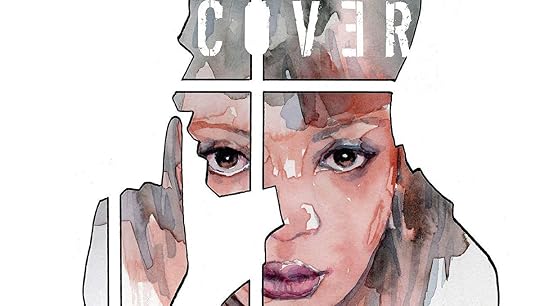
Based on a true story, the intelligence community figures out that the traveling band of social misfits who make comic books are an exact match to the profiles of candidates recruited for intelligence and counterintelligence gathering. Bestselling creators Brian Michael Bendis and David Mack bring this incredible espionage epic to Jinxworld in Cover Vol. 1!
A very well-known comics creator is recruited by the agency to live a double life as a spy. And convention season is upon us. With a nod to films like Confessions of a Dangerous Mind and The In-Laws, this comic celebrates comics, comic creators, readers and of course, spies!
Cover is the blockbuster new series from critically acclaimed team of Brian Michael Bendis (Action Comics, Superman) and David Mack (Kabuki, Jessica Jones) as they reunite for the first time since their work on their renowned run on Marvel's Daredevil. Collects Cover #1-6
A comic book writer and erstwhile artist. He has won critical acclaim (including five Eisner Awards) and is one of the most successful writers working in mainstream comics. For over eight years Bendis’s books have consistently sat in the top five best sellers on the nationwide comic and graphic novel sales charts.
Though he started as a writer and artist of independent noir fiction series, he shot to stardom as a writer of Marvel Comics' superhero books, particularly Ultimate Spider-Man.
Bendis first entered the comic world with the "Jinx" line of crime comics in 1995. This line has spawned the graphic novels Goldfish, Fire, Jinx, Torso (with Marc Andreyko), and Total Sell Out. Bendis is writing the film version of Jinx for Universal Pictures with Oscar-winner Charlize Theron attached to star and produce.
Bendis’s other projects include the Harvey, Eisner, and Eagle Award-nominated Powers (with Michael Avon Oeming) originally from Image Comics, now published by Marvel's new creator-owned imprint Icon Comics, and the Hollywood tell-all Fortune and Glory from Oni Press, both of which received an "A" from Entertainment Weekly.
Bendis is one of the premiere architects of Marvel's "Ultimate" line: comics specifically created for the new generation of comic readers. He has written every issue of Ultimate Spider-Man since its best-selling launch, and has also written for Ultimate Fantastic Four and Ultimate X-Men, as well as every issue of Ultimate Marvel Team-Up, Ultimate Origin and Ultimate Six.
Brian is currently helming a renaissance for Marvel’s AVENGERS franchise by writing both New Avengers and Mighty Avengers along with the successful ‘event’ projects House Of M, Secret War, and this summer’s Secret Invasion.
He has also previously done work on Daredevil, Alias, and The Pulse.
Comic book conventions used as cover for espionage! Creators turned into spies by CIA handlers! This is an artistic masterpiece, with some great dialogue, but the overall story isn't very compelling. I am presuming it is the art, actual page layouts, concepts and covers that have made this mini-series so crtitically acclaimed. 8 out of 12
Comics creator Max Field is recruited by CIA operative Julia to be a spy – and that’s the “plot” of Cover! Because Brian Bendis’ characters are as overly chatty as ever, like in titles such as New Avengers, Guardians of the Galaxy and All-New X-Men: waffle, waffle, waffle, oh shit, the book’s over and I forgot to add a story – classic Bendis!
And what’s worse is that quite a bit of the dialogue, in addition to being largely pointless (WAY too much on Jack Kirby – I get it, you’re a fan!), reads like writing as well as a lot of stream of consciousness. I get the impression Bendis doesn’t get much editorial interference over at DC. The lack of any real story only highlights how repetitive the structure of the book is: Max is at a comics convention, Julia chats him up, change the unimportant location and repeat.
The one part of the book that actually plays like a conventional spy thriller – Max tied to a chair getting whaled on by a thug for information – fizzles into nothingness. He passes out and is somehow rescued by Julia – no clue how. Did she kill or injure his torturer? No, because the torturer shows up later without a scratch! Wha happen…?
All of which sounds like I’m coming down on Cover – and actually I really enjoyed it! The dialogue is abundant but most of it is amusing and, because it’s mostly about the comics biz, something Bendis is extremely familiar with being one of comics’ top creators – at this point, of all time – a lot wisdom gets dropped on the subject of writing, creating, comics, and much more. A lot of it is inspiring and motivating for wannabe comics writers in much the same way as Stephen King’s On Writing is for aspiring novelists.
Max’s comic, Ninja Sword Odyssey, is very clearly a thinly veiled reflection of the main story running in parallel but it’s also entertaining in itself – David Mack wrote these parts of the book so hats off to him. And even though it’s not clear why comics creators are being used as geopolitical pawns in the first place (which does feel like Bendis/Mack being full of themselves – “let’s make the coolest people in the world comics creators – just like us!”) – I mean, are they really ideal candidates? – but it is an original setup and the end result is breezy and fun.
David Mack is such an accomplished artist and this book wonderfully showcases his skill and vision. His spare and elegant brushes for the comic within a comic, Ninja Sword Odyssey, are beautiful and I liked how he switched up his style for the childhood flashback sequence into unexpectedly avant-garde figures. The majority of the book is drawn in a more conventional – but no less impressive – way full of stunning painted art, and the layouts are imaginative and effective – I always love Mack’s art and, as expected, had no complaints with the visuals of Cover. Bill Sienkiewicz and Michael Avon Oeming also contribute pages for the other comics creators’ fictional comics and their art is excellent too.
Mack writes in his introduction that he’s been friends with Bendis since 1993 and they always intended to create their own comic one day. After Bendis nearly died at the end of 2017 without this happening, they decided to fast track the project after his recovery and Cover is the end result. 26 years in the making and I’d say it was worth it!
It might annoy more plot-driven readers, but I found Cover, Volume 1 to be an interesting, engaging and visually glorious book. Along with Scarlet, Bendis is doing his best work these days on his Jinxworld titles.
Well, it's hard to know what I think about this comics series. It's supposedly based on a true story of a comics writer who doubles a spy. So that's what happens: A well known comics writers get recruited to work for the FBI as a spy. So he's a spy whose cover is comics. And comics guys actually illustrate covers of comics, haw! At first it is just little things he's asked to do, initially, but the stakes seem to get higher as things proceed, and things get more and more ridiculous to the point where the FBI actually stages its now comics convention for no really good reason.
How does this all get started? Well, supposedly a fan who works for the agency approaches this guy periodically and asks him to do stuff. He doesn't know why he is being asked to do stuff, we don't really get why, either, and we don't know why he actually agrees to do it, but it's potentially interesting. There's vague, rambling conversations that lead to the agreement each time. Since it's a guy comics writer and a lady FBI agent, there may be some undercurrent of sexual intrigue, too, though this is also vague at this point.
The promise seems kinda fun, something Darwyn Cooke might have had fun with, but the illustration vibe is mysterious, ethereal David Mack-style alternative/art comics work that calls a lot of attention to itself and doesn't seem to mesh well with the story. Different illustrative styles, actually, one connecting to he comics conventions and camaraderie, one to the spy stuff, another to the artist's history with his father and something about a sword versus a pen.
I dunno, this is unique, but very strange. It's like the duo is trying to take extremely seriously a kind of goofy premise, that the FBI would actually approach comics guys at Comics Cons and ask them to do spy work. Reminded me of Ed Brubaker's Criminal arc, Bad Weekend, where comics guys write about comics guys also in a noir-ish was, but Brubaker and Phillips are so much better at it, and they have more fun with it. But I like the Jessica Jones/Alias work of Bendis, basically any indie work her does, so I will read on.
I have to say I was disappointed in this. Bendis and Mack haven't worked since Daredevil and I was excited to see them team up again. Throw in a subject, they should know a lot about, comic book conventions, add in spies, and this was a no brainer that it would be great. But Goddamn, those monologues drone on forever with no point. Bendis really could have used an editor here. The story is very disjointed with all the important pieces missing. You're left with the picked over fragmented bones of a story. Mack's art ranges from gorgeous watercolors to squiggles on the page. It made me wonder if there was a second artist doing backgrounds and less important pages for Mack.
This is one of the oddest ideas ever, yet it worked out pretty damn well.
So this is a lot about comic conventions. I've been to them as just a viewer/buyer, and also as someone who set up shop to try and sell my comic. They're both fun and stressful at times. People look past you to buy cheap shit, and garbage, instead of giving the time of day to view hard working comics people make with blood sweat and tears. This story gives some spotlight on that but quickly turns into a spy mission. Our main character is approach by a woman who buys a lot of his stuff and then uses him to go undercover to get information from another artist that'll help save the world.
It's a interesting idea and a lot of it works. It's both interesting and funny. Bendis does his signature back and forth but it actually works for the majority of the plot. It's told through context of doing these conventions. Also, the art is great. Mack does an amazing job of giving multiple styles in one book and you got to love it. The stories does drag at one or two points in issue 4 and 5 but the ending wraps it up nice.
If want something different I'd strongly recommend this. A 4 out of 5.
Full disclosure: whenever I see David Mack's art I pee my pants a little.
With that said...Five-stars alone for the pretty pictures.
I mean, yes, there is an awkward comic dude that becomes a spy and some great interactions with him and his comic pals at comic conventions and there is a lot of shit that made me LOL and Bendis writes it all up in a completely entertaining way that he makes look so effortless...
A brash and sexy CIA agent recruits Max Field, a nerdy comic book artist who looks a lot like David Mack and draws a book with Japanese themes like Kabuki, to be a freelance field operative who uses the cover of regularly traveling to comic book conventions around the world for minor ops and intel gathering. Field quickly finds himself in over his head and constantly questioning every choice he is making.
It maybe peters out a little toward the end and never really has much by way of action scenes, but its a fun and humorous ride most of the way.
Beautiful art, with a story that seems horribly impressed with itself, radiating a smug tongue-in-cheekness that got in the way of me making any real connection to the work.
A virtuoso performance by the two authors (writer and artist), long time friends. Jaw-dropping art in at least 10 different styles. So beautiful to look at, especially those unbelievable watercolor pages with the mini and the autumn trees in the background.
Unfortunately, the plot is really, really thin, and the tone of the dialogue is often mismatched with the tone of the drawings.
The drawings will be dramatic and emotional, a bit abstract, while the dialogue will be peppered with snark and jokes, and - at least for my taste - that contrast did not work.
Also, I found the narration not always clear. It takes a long while to understand what’s going on with the little kid and his sword / brush and how that has anything to do with the story.
Despite all this, still 4 stars overall, because of the unbelievable quality of the art.
I wanted to like this, but considering what actually transpires over the course of 6 issues it just felt padded, and the art style, while pretty, was not a great match. The cerebral parts, talking about the comics industry, creation and such, were fine, but then the espionage stuff was just flat. One of the covers called this a spy thriller and not once was any of this exciting or thrilling. Sometimes meditative, occasionally funny (though more through recognition/reference than actual humor). I also feel like Bendis' style as a writer, and how too many of his characters all talk too similarly, can hinder him. Tonally it can be confusing because there's a sequence of torture peppered with jokes and the problem becomes, well, I can't really take this scene emotionally. The torture is undercut with the jokes, and the jokes aren't that great anyway. I'm reminded of Guardians of the Galaxy Vol. 2 where the most emotional part of the film (SPOILER), where Quill learns the truth about his dad, gets undercut by the glitch appearance of David Hasselhoff. Don't sell your emotional beats short! It shows you have no confidence in it to begin with.
I usually like dialogue-heavy things, but this was nothing I would read with passion, I couldn't enjoy the story, couldn't like characters and I quite got bored at the end of this. The artwork was awesome though..
Great beginning to a series - intrigued to see the next issue and the unfolding of the story. I liked the story within a story mold, and the artwork is fantastic.
A comic book creator is unwittingly and mostly unknowingly recruited into service by a secret government agency. His handler, a beautiful mysterious woman pushes his buttons, keeps him in the dark and uses his lack of knowledge and his travelling to comic book conventions as "cover" for darker covert actions.
I am a huge fan of everything written by Brian Michael Bendis so it's no suprise that I became instantly enamored with Cover. This is an exciting, fast-paced story with stunning artwork by David Mack that should be hanging in a gallery somewhere. Great dialogue, the right notes of humour and realistic characters with real-life reactions to these incredible events make this a must read.
I love Vol. 1 and can't wait to see what happens next.
The Bendis to Dc move has been a bit underwhelming (and seems to be the only new books I am picking up. Shame on me), but I don't want to be unclear. I have been a Bendis fan for twenty-plus years. I was there from pretty close to the beginning with Jinx and AKA Goldfish. With someone as prolific as Bendis, highs and lows are to be expected. He ended his Marvel run with some titles that weren't his best (and yet, he had spread some gems even in those last transitional issues).
We are getting a bunch of mixture of Jinxworld titles now- some brand new and some continuation- and its a lot to take in.
Cover comes with a fairly nondescript title (After you read the comic, it actually is perfect) and a pretty nondescript cover.
I took to this with not really any idea of what the title was even about.
In any case, I will cut to the quick. This is fantastic.
I knew having David Mack as artist would mean good things. Mack's art for cover is very interesting. It's very nontraditional for comics (which you probably already know), but it works really, really well in bringing this story to life.
I am sure some will hate it, but others like me will love it. For the cliche, it gives it a dreamlike quality, but with the minimal characters, it's never confusing, and well focused when it needs to be. It is also (as it always was) a perfect compliment to Bendis since the action is really dialogue not movement.
All of the reasons you loved Bendis in the first place are here. It seems like a simple plot, but there are a lot of layers here. They are easy to follow and they stay with you after you put the book down. There's mystery building. The dialogue moves the mystery along in a classic Bendis vein- which means a lot of reading- but it is snappy like the cliche Mamet or Tarantino film comparison that inevitably comes up with Bendis.
I was beginning to wonder when we would get the next Jinxworld hit and figured it might take time for it to settle in, but this definitely is it. This is very much what I used to expect in the heyday of Jinxworld.
I will end my review there if you want to be like me and come in with no expectations - or if you want the mildest of Spoilers-keep reading.
So, this is in the blurbs, so it's no secret, but if you didn't know- the plot is about intelligence work (like much of Bendis's other work) but how logical it might be for comic book writers who go from this Fest to that Comic Convention to be spys. It's Confessions of a Dangerous Mind with Bendis instead of Chuck Barris.
That sounds horrible in theory, but it works well in execution. I think it will also give Bendis to throw in a bunch of insider jokes and references as well, which will make it very readable. Bendis has hinted at this in the past and did Fortune and Glory, but it is a well of content we haven't seen him dip into for awhile.
I am really excited about this, as I think it will be very much in Bendis's wheelhouse and dually feels familiar and feels brand new.
Look, this is a fun -- and quite funny -- comic. Good dialogue, clever enough idea.
But the ART is the best of it. Different art and we'd have a mildly amusing tale about a comic writer turned spy.
The art is what makes this amazing reading. At least six distinct styles -- maybe seven? All gorgeous. All adding to the humor or drama or confusion of a scene. This art does more than capture a moment... any one panel would be beautiful on my living room wall.
But it goes beyond the panels. Every frame, every page, every transition. They're just... gorgeous. And communicative. The handling of time and space and focus.
Okay, I get it that I sound like the mysterious fangirl in this book, but without any of the mystery. It's just...
David Mack. My next three months' book budget is probably going to David Mack.
'Cover' somehow brings together all of the elements I appreciate in a good comic book. Or really, in any creative storytelling medium - comics just happen to be one of the very few that can do this many things at once this well.
The characters are rich and relatable, brought to life by sharp and witty dialogue. The art style is evocative and even beautiful when it needs to be, mixing different styles together in a way that makes sense and stirs the senses. The story is smart, unconventional, inventive, and self-aware in a way that one rarely sees in comics...or, again, in any medium.
Not bad for a story about an independent comic book creator who finds himself rather unexpectedly becoming an international spy.
'Cover' could have been one of a hundred easily forgettable and overblown graphic novels. It could have been a disaster, memorable mainly for its failings. Instead, Brian Michael Bendis and David Mack pulled off a minor miracle - an intelligent, well-crafted, narratively-rich and rewarding story told in the only medium it could probably work.
In a field of massive crossover events, superheroes, and reboots, 'Cover' is that rarest of things - it's simply a great comic.
An up-and-coming graphic novel writer/illustrator is recruited as a freelance CIA operative. Before long he's tied to a chair getting punched by a foreign agent, who also happens to be a comics writer and one of his personal heroes.
What an odd story. There's virtually no action. There's no crisis to be solved, no impending catastrophe to be averted, no vital MacGuffin to acquire or achieve. It's all about personalities and conversations, the lifestyles of comics creators, and the unusual concept of creative professionals being enlisted by the government to do low-level spy stuff. How would that feel, what would it bode for one's personal future, what effect would it have on one's worldview. After a bemusing start, this turned out to be surprisingly interesting.
The illustration is stellar. Bendis and Mack take advantage of the cast of artist characters to experiment, each having a dramatically different style, interest, level of abstraction. The art is never straightforward, and that works remarkably well. This is a skillful team. (Fortunately David Mack is a FAR better illustrator than he is an intro-writer. Cough.)
Only reason Cover didn't hit five stars for me is its narrative aimlessness. While I love Bendis' unique conversational style of writing, I found myself wanting some sense of urgency, of direction. It doesn't need to be yet another save-the-world situation, but...something. Anything. Cover comes very close to being a home run.
An unimpressive story from two great storytellers. The concept was intriguing byt the execution fell flat. David Mack's art shines only in the book within book (the samurai tale) but otherwise seems rushed and uninteresting. The dialog is a standard Bendis fair with people sounding like all other Bendis characters.
Beautiful watercolour art and a good mix of art styles used to tell the different parts of the story. Spies, autobio, comics within comics and comic book conventions.
Mack's art is utterly beautiful. Writing reminds me of DMZ and the matching of panels and styles to the content of the story reminds me of Asterios Polyp.
First story I've read by either Bendis or Mack and will definitely be working though the back catalogues of both.
If you love Brian Michael Bendis comics and/or David Mack's art, you'll probably love this. Both are playing to their talents. Bendis with his dialogue, Mack using some of his disparate styles to jar you from one scene to the next.
The reason I'm giving this three stars is entirely personal preference. I tend not to like poems about poets, comics about comic creators, paintings about paintings, dances about dancing, etc.
This story is about a comic book creator who gets mixed up in espionage at the bequest of a fan. It happens at Bendis speed: quickly, even though there are paragraphs of dialogue on every page.
While I love it as an art book, I just couldn't get into the story.
It's creator-owned Bendis, so you can take it as read that he's not going to stick the landing and may never even get around to publishing one. But in an era where long-term plans are a mug's game, better to appreciate it on its own merits, which are not negligible. The high concept is appealing, and based on artist David Mack's own experience working for the US State Department, with a comic artist recruited by the CIA because his career means he's forever flying around the world to conventions (ah, the before times), sometimes meeting useful people into the bargain. Of course, because he's in comics, he's also used to meeting nutters and flakes, so at first he has no particular reason to believe his handler isn't just a fantasist. Which is probably a contributory factor when, inevitably, it all goes horribly wrong. Whatever Mack's shortcomings as a writer, his art has always been a delight, moving effortlessly between modes as the story requires, and so it proves here, from gorgeously painted pages of the comic within the comic, to an indie sketchiness for the scenes of comics types shooting the breeze together, into a Saul Bass vibe once the spy game ramps up. And similarly, while Bendis was never a great artist*, his snappy dialogue used to be a joy before it got overexposed and deployed on too many inappropriate comics. Here, though, after I've not read any for a while and back in his noir ballpark, the fun was back too, for me at least: "It's crazy out there lately. You noticed that?" "What?" "That the world is a little extra crazy lately?" 'Well, yeah." "But I mean, even more than usual." "I don't really keep up with – I listen to a lot of UFO conspiracy podcasts, I'm not sure why." "Well... It is. It's a mess. And that's just the news *you* get." "There's more?"
It's funny, and gossipy, and occasionally terrifying because while films tend to make it look thrilling for amateurs to get caught up in spy shit, in real life it would be horrific, wouldn't it? On top of which, there's that tantalising sense of being let in on bits of comic creator gossip when the characters are hanging backstage. Granted, there's a key element of the plot which betrays absolute ignorance of current discourse**, but fuck it, when the discourse is so dispiriting, even that has a certain odd escapist appeal.
*It's at once hilarious and scary to learn from the introduction that there was an alternate timeline where Bendis was going to illustrate Mack comics, instead of the other way around. Makes you wonder how many comparable wastes of talent are underway on how many other comics.
**SPOILER: The protagonist gets captured by another comics creator who is also a spy, working for an as-yet-unclear other side. Our guy then makes his captor pause, in the middle of beating him up, by bonding over Kirby, and pointing out that Kirby only beat up Nazis. As if the guy will then automatically have a 'Wait - are we the bad guys?' moment. Compare and contrast the Internet, where plenty of people who aren't even being paid for it, or getting to beat anyone up, would say 'Yeah - and America is the Nazis', before proceeding to defend or at least equivocate on behalf of literally any murderous tyrant on the planet, just so long as they're not aligned with the US. And that's just for the USA in general, never mind the bloody CIA, where the riposte would even tempt me.
Este cómic combina historia e ilustraciones de una manera magistral. La trama es envolvente y el ritmo trepidante. Mi única objeción es que la conclusión busca tender un puente pensando en futuras entregas pero llega a ser mas bien un poco anticlimático. De todo modos, he disfrutado mucho de esta serie, que es un tributo a los artistas y a los lectores de cómics. Recomendado 100%.
Cover is yet another new series by Brian Bendis (I think that brings us up to three?). I’m glad he’s been given a bit more free reign, though if I’m being honest I haven’t fallen in love with any of the new series yet. Then again, my favorite series by him (Jessica Jones) probably took about 2-3 issues before I was really into it. So I’m willing to give all of these a fair try. Cover is kind of a story within a story, at least at times. It’s all about a comic book artist named Max Field. He has an obsessive fan, who may or may not be what she appears to be. She’s rather blunt in what she claims to be, but she hasn’t exactly given Max any reason to believe her (even if she has spent a fortune on buying his artwork). Seeing the situation from the outside, I have a few theories on what is actually happening here, and the biggest one correlates with the title, so I think that’s likely the case. The artwork took a few panels to get used to, but once I did I absolutely fell in love with it. You don’t normally see muted colors in comics, and these ones almost felt like water colors. But it really works, and to be honest, it really brought the artwork to a whole new level. Multiple art styles are shown in this issue, due to Max having his own series and styles within them. It’s all very impressive.
I wasn't a fan of Bendis' original Jinxworld books, but this is something different, much more akin to the wordy, thoughtful work that he did on books like New Avengers and Alias.
The premise of Cover is that a comic book writer is tapped by the CIA as an asset, with his attendance at comic conventions providing "cover". The comic side of things is great: the business of comics, the business of conventions, and the fact that Bendis intermixes pages from various comics to highlight and counterpoint his themes. Dave Mack, who provided the real-world inspiration for this story(!), also provides awesome, yet very varied artwork.
The espionage side of things is weaker, primarily because the protagonist is a really small cog in a big machine, who doesn't really know what's going on, and so neither do we. I'm not convinced that we can really have a fulfilling long-term narrative unless our protagonist notably "levels up".
For now though, this was a fun look at the world of comics, with a neat twist.
I mean, come on, a comic book about a comic book writer who is recruited by the CIA? Masturbatory much? Cover works better than you'd expect, but not that much better. Brian Michael Bendis churns out acres of dialogue, most of it decent. David Mack produces art, though it's the kind you'd find in a museum, not the kind you'd find in a comic book. I didn't like it, but I appreciated the gutsiness of it.
Let's face it: Cover is an ugly book about a pretty dull subject. Not even Bendis can make the far-fetched plot feel grounded, despite his obvious best efforts. Mack writes in the intro that Cover is sort of based on his real-world experiences teaching youths about creativity in war-torn countries. Um, that certainly sounds like a more plausible "recruited by the CIA" position. Why not just go with that? There's a line somewhere in Cover that explains why comic conventions are the perfect place for spying and I'm pretty sure I laughed out loud at the absurdity of it.
Whoaaaa. This is it! This is the one from these Jinx stories that Bendis truly pours his heart into. Teaming up with the amazing David Mack, Bendis weaves a chaotic but very honest tale of some comic creator who turns into a spy or something. The plot is not that important, so it’s more about the unraveling of the story.
I especially loved the jumping back and forth between the actual story and the new work that our protagonist is writing. There’s also some great art where the colors and images fade away to tell the story, I believe in issue 3. Incredible usage of the comic format, especially coming from DC Comics. I’m glad they brought Bendis onboard to ramp up the depth a bit. I’m als glad Bendis is able to be so creatively free instead of cranking out Miles, X-Men, and whatever else he’s done at Marvel recently.
I wanted to like this more than I did. Bendis, Mack, comic creator spies? What's not to like, especially after the heart-tugging forward to the trade paperback about Bendis and Mack coming together to finally create another story after near-death experiences.
However, the story seemed light and disjointed, even ignoring the fact that Bendis and Mack (I'm pretty sure) in intentionally let themselves nerd out on the pages while depicting comic creators conversations and cons. The story lacks momentum, and while I enjoyed seeing David Mack's art, the style-switching was only sometimes impactful/relevant. Other times it made the story seem choppy just because Mack felt like using another style, with or without a valid side story to use it on.