
What do you think?

A Short History of Scotland
A Short History of Scotland is a work on the history of Scotland by the famous author and scholar Andrew Lang. The book is a short history and covers quite a bit of material in a short time. This book is a great way to start
ODIN’S LIBRARY CLASSICS
Odin’s Library Classics is dedicated to bringing the world the best of humankind’s literature from throughout the ages. Carefully selected, each work is unabridged from classic works of fiction, nonfiction, poetry, or drama.
ODIN’S LIBRARY CLASSICS
Odin’s Library Classics is dedicated to bringing the world the best of humankind’s literature from throughout the ages. Carefully selected, each work is unabridged from classic works of fiction, nonfiction, poetry, or drama.
126 pages, Paperback
First published June 15, 2005
About the author
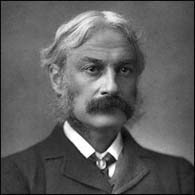
Andrew Lang
3,021 books585 followersTales of the Scottish writer and anthropologist Andrew Lang include
The Blue Fairy Book
(1889).
Andrew Gabriel Lang, a prolific Scotsman of letters, contributed poetry, novels, literary criticism, and collected now best folklore.
The Young Scholar and Journalist
Andrew Gabriel Lang, the son of the town clerk and the eldest of eight children, lived in Selkirk in the Scottish borderlands. The wild and beautiful landscape of childhood greatly affected the youth and inspired a lifelong love of the outdoors and a fascination with local folklore and history. Charles Edward Stuart and Robert I the Bruce surrounded him in the borders, a rich area in history. He later achieved his literary Short History of Scotland .
A gifted student and avid reader, Lang went to the prestigious Saint Andrews University, which now holds a lecture series in his honor every few years, and then to Balliol College, Oxford. He later published Oxford: Brief Historical and Descriptive Notes about the city in 1880.
Moving to London at the age of 31 years in 1875 as an already published poet, he started working as a journalist. His dry sense of humor, style, and huge array of interests made him a popular editor and columnist quickly for The Daily Post, Time magazine and Fortnightly Review. Whilst working in London, he met and married Leonora Blanche Alleyne Lang, his wife.
Interest in myths and folklore continued as he and Leonora traveled through France and Italy to hear local legends, from which came the most famous The Rainbow Fairy Books . In the late 19th century, interest in the native stories declined and very few persons recounting them for young readers. In fact, some educationalists attacked harmful magical stories in general to children. To challenge this notion, Lang first began collecting stories for the first of his colored volumes.
Lang gathered already recorded stories, while other folklorists collected stories directly from source. He used his time to collect a much greater breadth over the world from Jacob Grimm, his brother, Madame d'Aulnoy, and other less well sources.
Lang also worked as the editor, often credited as its sole creator for his work despite the essential support of his wife, who transcribed and organised the translation of the text, to the success.
He published to wide acclaim. The beautiful illustrations and magic captivated the minds of children and adults alike. The success first allowed Lang and Leonora to carry on their research and in 1890 to publish a much larger print run of The Red Fairy Book , which drew on even more sources. Between 1889 and 1910, they published twelve collections, which, each with a different colored binding, collected, edited and translated a total of 437 stories. Lang, credited with reviving interest in folklore, more importantly revolutionized the Victorian view and inspired generations of parents to begin reading them to children once more.
Last Works
Lang produced and at the same time continued a wide assortment of novels, literary criticism, articles, and poetry. As Anita Silvey, literary critic, however, noted, "The irony of Lang's life and work is that although he wrote for a profession... he is best recognized for the works he did not write," the folk stories that he collected.
He finished not the last Highways and Byways of the Border but died.
Andrew Gabriel Lang, a prolific Scotsman of letters, contributed poetry, novels, literary criticism, and collected now best folklore.
The Young Scholar and Journalist
Andrew Gabriel Lang, the son of the town clerk and the eldest of eight children, lived in Selkirk in the Scottish borderlands. The wild and beautiful landscape of childhood greatly affected the youth and inspired a lifelong love of the outdoors and a fascination with local folklore and history. Charles Edward Stuart and Robert I the Bruce surrounded him in the borders, a rich area in history. He later achieved his literary Short History of Scotland .
A gifted student and avid reader, Lang went to the prestigious Saint Andrews University, which now holds a lecture series in his honor every few years, and then to Balliol College, Oxford. He later published Oxford: Brief Historical and Descriptive Notes about the city in 1880.
Moving to London at the age of 31 years in 1875 as an already published poet, he started working as a journalist. His dry sense of humor, style, and huge array of interests made him a popular editor and columnist quickly for The Daily Post, Time magazine and Fortnightly Review. Whilst working in London, he met and married Leonora Blanche Alleyne Lang, his wife.
Interest in myths and folklore continued as he and Leonora traveled through France and Italy to hear local legends, from which came the most famous The Rainbow Fairy Books . In the late 19th century, interest in the native stories declined and very few persons recounting them for young readers. In fact, some educationalists attacked harmful magical stories in general to children. To challenge this notion, Lang first began collecting stories for the first of his colored volumes.
Lang gathered already recorded stories, while other folklorists collected stories directly from source. He used his time to collect a much greater breadth over the world from Jacob Grimm, his brother, Madame d'Aulnoy, and other less well sources.
Lang also worked as the editor, often credited as its sole creator for his work despite the essential support of his wife, who transcribed and organised the translation of the text, to the success.
He published to wide acclaim. The beautiful illustrations and magic captivated the minds of children and adults alike. The success first allowed Lang and Leonora to carry on their research and in 1890 to publish a much larger print run of The Red Fairy Book , which drew on even more sources. Between 1889 and 1910, they published twelve collections, which, each with a different colored binding, collected, edited and translated a total of 437 stories. Lang, credited with reviving interest in folklore, more importantly revolutionized the Victorian view and inspired generations of parents to begin reading them to children once more.
Last Works
Lang produced and at the same time continued a wide assortment of novels, literary criticism, articles, and poetry. As Anita Silvey, literary critic, however, noted, "The irony of Lang's life and work is that although he wrote for a profession... he is best recognized for the works he did not write," the folk stories that he collected.
He finished not the last Highways and Byways of the Border but died.
Ratings & Reviews
Friends & Following
Create a free account to discover what your friends think of this book!
Community Reviews
Displaying 1 - 29 of 29 reviews

July 19, 2020
This book is free on LibriVox meaning its old enough to be in the public domain, but it’s problematic, at one point it even says and the English left Scotland taking with them their love of soap and water and distaste for burning witches.
It’s also endless description of the dry boring bits of history and gives me no insight into anything. Who cares who was on the flanks in a battle? If you care about poor descriptions of battles and half a dozen rich people, then this is a great book, its cut out all the bits about common people, ideas, society, innovation, daily life, clans, or really anything that could give me an idea to what this country was like at a particular moment in time.
It’s also endless description of the dry boring bits of history and gives me no insight into anything. Who cares who was on the flanks in a battle? If you care about poor descriptions of battles and half a dozen rich people, then this is a great book, its cut out all the bits about common people, ideas, society, innovation, daily life, clans, or really anything that could give me an idea to what this country was like at a particular moment in time.
August 10, 2016
I listened to this book, not read it. It served its purpose of keeping me awake at work while also being an interesting snapshot of Scottish history. It's a good place to start, and I would be delving more into certain topics the book discussed.

February 23, 2013
Timeline and Family Trees Required
November 29, 2021
Grief I started this book weeks ago and although I like reading several books at the same time, (I change around when I feel the need for a change!), I have only just finished it. It is an extremely long complicated book, well the history of scotland seems very complicated and is very much intertwined with the history of england (that book is still to be read!). I have to take issue with the author of this book as he says it is a "short" history of scotland, goodness knows how long a "long" history of scotland would be then, this was a very long book! And, I'm not even sure how much knowledge I've retained as it must have been written during the victorian reign and the language is not easy to either read or understand, but at least I've finally reached the end, not sure I would pass an exam in this though!!

June 5, 2023
DNF’ing at 40%.
This history is VERY short on the ancient history, and in comparison way too long on the minutiae of the Middle Ages.
The narration isn’t helping, either.
It’s a volunteer reading this, for the public domain. And she’s not terrible. But not at all engaging. Or Scottish 🤷🏻♀️. You kinda think you’re gonna hear a Scottish accent when you pick a book on the history of Scotland. Nope.
This history is VERY short on the ancient history, and in comparison way too long on the minutiae of the Middle Ages.
The narration isn’t helping, either.
It’s a volunteer reading this, for the public domain. And she’s not terrible. But not at all engaging. Or Scottish 🤷🏻♀️. You kinda think you’re gonna hear a Scottish accent when you pick a book on the history of Scotland. Nope.
March 27, 2020
Hard work
Written in contemporary prose, assumes a lot of knowledge on the part of the reader which no doubt was more commonly held at the time but ultimately worth the perseverance.
Written in contemporary prose, assumes a lot of knowledge on the part of the reader which no doubt was more commonly held at the time but ultimately worth the perseverance.

July 1, 2017
Hard to enjoy because I had no connection with the people, places, names, etc.

September 24, 2018
I enjoyed this. Good facts. Not more than facts. It seems like some others who have reviewed this were looking for a historical fiction or a historical commentary not the historical facts

March 24, 2019
Some parts interesting but I felt written in too much a ‘list’ format and in many cases hard to read.
July 20, 2019
Very summarized book, difficult to follow the events.

January 13, 2023
I know history can be droll but this just ran on like someone’s thoughts put to paper.
Not my fave.
Not my fave.

August 12, 2023
loved this one 😍
October 5, 2023
Great book, I listened to the audiobook version on YouTube. I will leave the link below so that everyone can enjoy it! https://www.youtube.com/watch?v=6r3BM...

July 27, 2024
It is short, but requires one to already have working knowledge of Scottish history. Best read if one is already from Scotland or just needs a review of Scottish history.

October 4, 2024
It is a short history
A decent intro to Scottish history that hopefully will induce readers to seek more in-depth information about the history of Scotland
A decent intro to Scottish history that hopefully will induce readers to seek more in-depth information about the history of Scotland
January 21, 2025
Easy read

Read
July 5, 2025For a short history this felt like a long one. The author obviously knows his history - but unlike the history of Ireland I once read, this was hard-going..
August 13, 2025
Who is what!?
It was a lot of names to bandy about. I'm not at all familiar with Scottish history, so most of it is lost on me.
It was a lot of names to bandy about. I'm not at all familiar with Scottish history, so most of it is lost on me.

October 21, 2024
Read this in preparation for my trip to Scotland. I found the chapters on Mary Queen of Scots particularly fascinating.
February 5, 2014
What it says on the tin...
Although the content of this "short history" is as-advertised, my prevailing thought while slogging my way through it was "This is why so many people hate history". I generally find history compelling and fascinating, and have a particular interest in Scotland, but this history - entirely focused around the military, religious, and royal leadership of the country with only hints of the socio-cultural evolution - had none of the humanizing anecdotes or interesting tidbits that save a history from snooze-festdom. Only a slight hint of editorial tone here and there saved the recitation of names and dates from being utterly bone dry.
All in all, it is a very concise summary and high-level snapshot of Scottish history - if you can manage to pay attention long enough to get anything out of it.
Although the content of this "short history" is as-advertised, my prevailing thought while slogging my way through it was "This is why so many people hate history". I generally find history compelling and fascinating, and have a particular interest in Scotland, but this history - entirely focused around the military, religious, and royal leadership of the country with only hints of the socio-cultural evolution - had none of the humanizing anecdotes or interesting tidbits that save a history from snooze-festdom. Only a slight hint of editorial tone here and there saved the recitation of names and dates from being utterly bone dry.
All in all, it is a very concise summary and high-level snapshot of Scottish history - if you can manage to pay attention long enough to get anything out of it.

July 31, 2014
Fact after fact with no style and only determination got me through it. It did help that I had just been to Edinburgh--to Holyrood, to St. Giles, to Greyfriars, to the castle. Many other place names were familiar because of my trip. I also just read the first two books in the Outlander series, so I have a theme going. Of note, I did not realize the extremism that was caused by the Presbyterians. Beginning with John Knox, the Scots essentially lived under or were perpetrators of religious terrorism--the Kirk, the Covenanters, the Episcopals literally terrorized and tortured one another. The history ended with a short concluding chapter after the Battle of Culloden, 1746.
January 1, 2012
Very detailed. The abundance of names and titles per person makes and the book does not follow a strick chronological order making it somewhat confusing. Editorial comments abounded added some humor. Not a modern read, but informative and interesting nontheless.The author gives great recognition to the women of Scotland for making the men go to war. An interesting thought.

Read
August 24, 2012This 1911 work is a solid overview of Scottish history from the olden times to the last of the Jacobite uprisings. It is a concise history, which I imagine is perhaps a condensed version of Lang's own four-volume "A History of Scotland: From the Roman Occupation," which was published from 1900-1907.

May 6, 2014
I cried and bled my way through this book. OK, maybe not bled. But it felt like an school essay, full of names, dates and places, with little story of processes and causes. For a person familiar with history of Scotland it might be a great book - for me it was overwhelming. Too much information.

August 23, 2012
An average history, although well read in the librivox edition
Well read, but not quite well enough written to get more stars. Good, but not particularly good compared to other histories.
Well read, but not quite well enough written to get more stars. Good, but not particularly good compared to other histories.

May 29, 2013
Straight forward history accounting. Lots of recounting of facts, dates, etc.
November 13, 2016
I didn't actually finish this book, I found it too confusing and hard to follow, although it did give a thorough history of the struggle for independence in Scotland.
February 16, 2015
This ‘short history’ took me over a month to read. The history of Scotland – from the Romans to ‘The 45’ – was bloody and complicated. It didn’t help at all that they only seemed to have a dozen or so names to go around, e.g. all the women were called either Mary or Margaret!

May 15, 2017
I found this unfortunate because Andrew Lang's fairy tales are so beautifully done. This history was as dry as dust. We were heading to Scotland and not going to finish the history we were reading in time. This book is definitely compressed down to the rote facts. If it were a little more lively, we may have finished it, but as it was, it was so dull...
Now that we are back from the trip, we are going back to the original history we were reading (History of Scotland by Magnus Magnusson), since time isn't an issue.
Now that we are back from the trip, we are going back to the original history we were reading (History of Scotland by Magnus Magnusson), since time isn't an issue.
Displaying 1 - 29 of 29 reviews