

What do you think?

How Democracies Die: What History Reveals About Our Future
Donald Trump's presidency has raised a question that many of us never thought we'd be asking: Is our democracy in danger? Harvard professors Steven Levitsky and Daniel Ziblatt have spent more than twenty years studying the breakdown of democracies in Europe and Latin America, and they believe the answer is yes. Democracy no longer ends with a bang--in a revolution or military coup--but with a whimper: the slow, steady weakening of critical institutions, such as the judiciary and the press, and the gradual erosion of long-standing political norms. The good news is that there are several exit ramps on the road to authoritarianism. The bad news is that, by electing Trump, we have already passed the first one.
Drawing on decades of research and a wide range of historical and global examples, from 1930s Europe to contemporary Hungary, Turkey, and Venezuela, to the American South during Jim Crow, Levitsky and Ziblatt show how democracies die--and how ours can be saved.
Drawing on decades of research and a wide range of historical and global examples, from 1930s Europe to contemporary Hungary, Turkey, and Venezuela, to the American South during Jim Crow, Levitsky and Ziblatt show how democracies die--and how ours can be saved.
320 pages, Hardcover
First published January 16, 2018
About the author
Steven Levitsky
19 books607 followersSteven Levitsky is an American political scientist and Professor of Government at Harvard University. A comparative political scientist, his research interests focus on Latin America and include political parties and party systems, authoritarianism and democratization, and weak and informal institutions.
Ratings & Reviews
Friends & Following
Create a free account to discover what your friends think of this book!
Community Reviews
Displaying 1 - 30 of 4,252 reviews

January 18, 2018
I have not read Fire and Fury and doubt that I will. It seems too much like gossip to me, and too similar to the truckload of OBAMA IS DESTROYING AMERICA books that occurred during the last administration. But I bought How Democracy Dies the first day it came out, and read it in an evening because it gives exactly the kind of historical analysis that, I think, we need to understand in 2018. Levitsky and Ziblatt are genuine scholars (at Harvard even) who have done substantial research in the way that countries transition from democratic to authoritarian regimes. They have studied transitions in (among others) Argentina, Ecuador, Hungry, Peru, Poland, Russia, Turkey, and Venezuela. And they have isolated some of the clear signals.
First, though, I have to acknowledge that this is not just a historical analysis. They have a contemporary agenda, which, I think, is the right one: they want to convince us that the election of 2016 brought the United States closer to authoritarian rule than we have been at any time since the Civil War. That is a stark thesis. And I think that they prove it. Here are some of the ways that they do.
The authors show fairly clearly that most democracies do not end by the standard-issue military coup, where the general parks a tank on the public square and removes the democratically elected president in chains. This does happen--it happened in Chile in 1973--but it is not the rule.
Democracies die when demagogues--individuals who enjoy widespread popular support and come from outside of the normal political establishment--come to power through democratic means and then gradually subvert the written and unwritten rules of democracy. These leaders usually exhibit four characteristics:
1. They reject the established rules of democracy. They attack laws and constitutions, or they attempt to undermine the legitimacy of elections, or they attempt to use extra-constitutional measures to change things that have been designed to check their power.
2. They deny the legitimacy of political opponents. They accuse their opponents of treason or criminal activity, jail them or advocate that they be jailed (i.e. chant "lock her up" at rallies, even after they have won). They try to find ways to delegitimize their opponents and prevent them from participating in the democratic process.
3. They tolerate or encourage violence. They encourage--subtly at first and then openly--their followers to use, or threaten violence. They "praise, or refuse to condemn, other significant acts of political violence either in the past or elsewhere in the world."
4. They move to curtail the civil liberties of their opponents, including opposition parties, media outlets, or critics.
After setting out these criteria and giving examples from the last 50 years or so of world politics, the authors spend most of the rest of the book trying to answer the question, "Why has American democracy worked reasonably well (though not entirely perfectly) since the end of the Civil War?" they explain all of the formal measures (separation of powers, checks and balances, etc.), but argue that these have limited effectiveness by themselves. America's success (such as it is) is primarily due to two unwritten norms that are not codified anywhere, but that have been reasonably well observed for the last 150 years or so.
NORM 1: MUTUAL TOLERATION: The first norm is the simple fact that different political factions in the United States have recognized each other's right to exist. This was not always true. It was not true in 1800, and it was certainly not true in 1860. But, since the end of the Civil War, Americans have generally agreed that the people who disagree with them politically are still "decent, patriotic, law-abiding citizens--that they love our country and respect the Constitution just as we do." We are not, in other words, mortal enemies trying to destroy each other (as we were during the Civil War).
NORM 2: INSTITUTIONAL RESTRAINT: The second norm that holds us together is that different parts of government don't always exercise the full extent of their powers as they fight partisan battles. There are some things that they don't do even though the Constitution would permit them to. Senates usually confirm a president's cabinet and court appointees, even though they could refuse to--even when the president is of a different party. President's usually don't override legislation with executive orders. Courts defer to legislative intent. Presidents enforce Supreme Court rulings and legislative actions that they disagree with. We do not have a government of all against all. If every branch of government used every possible Constitutional power at its disposal, it would be impossible to govern. And when it is impossible to govern, executives often become authoritarian.
The authors suggest that these norms held, unevenly but noticeably--from 1865 until around the end of the 20th century. Then they began to slip. Parties began to speak of their opponents as enemies and traitors more and more often. Individuals became more and more willing to describe people who disagreed with them as fundamentally flawed--crazy, stupid, or evil. Senates became less willing to defer to presidential appointments. More executive orders got issued. More stuff got filibustered. And so on. As a result, the unwritten norms have been collapsing and some of the guardrails of our democracy are starting to fail.
In 2016, the authors say, two things happened that have the potential to accelerate the collapse of the guardrails: 1) the Senate, for the first time since the 1866, the Senate refused to allow a president of the opposite party to fill a Supreme Court vacancy. This decision largely collapsed one of the norms that has stabilized our democracy for more than 150 years. And it will very likely result in future reprisals that will weaken it even more.
The second thing that happened is that Donald Trump--a classic populist demagogue who meets all four of the standard criteria--was elected president. And since becoming president, he has fired officials who tried to hold him accountable, relentlessly attacked the free press, continued to advocate for the criminal prosecution of his opponent, praised or refused to condemn acts of political violence, and consistently denigrated anybody who challenges him as "an enemy of the people."
Levitsky and Ziblatt do not say that the American democracy is dead. The authors are not quite that dramatic. But they do argue, and I think argue convincingly, that many of the things that have made democracy reasonably stable in America since the end of the Civil War have been undermined by recent events--and that we need to pay attention to this fact and do something about it.
First, though, I have to acknowledge that this is not just a historical analysis. They have a contemporary agenda, which, I think, is the right one: they want to convince us that the election of 2016 brought the United States closer to authoritarian rule than we have been at any time since the Civil War. That is a stark thesis. And I think that they prove it. Here are some of the ways that they do.
The authors show fairly clearly that most democracies do not end by the standard-issue military coup, where the general parks a tank on the public square and removes the democratically elected president in chains. This does happen--it happened in Chile in 1973--but it is not the rule.
Democracies die when demagogues--individuals who enjoy widespread popular support and come from outside of the normal political establishment--come to power through democratic means and then gradually subvert the written and unwritten rules of democracy. These leaders usually exhibit four characteristics:
1. They reject the established rules of democracy. They attack laws and constitutions, or they attempt to undermine the legitimacy of elections, or they attempt to use extra-constitutional measures to change things that have been designed to check their power.
2. They deny the legitimacy of political opponents. They accuse their opponents of treason or criminal activity, jail them or advocate that they be jailed (i.e. chant "lock her up" at rallies, even after they have won). They try to find ways to delegitimize their opponents and prevent them from participating in the democratic process.
3. They tolerate or encourage violence. They encourage--subtly at first and then openly--their followers to use, or threaten violence. They "praise, or refuse to condemn, other significant acts of political violence either in the past or elsewhere in the world."
4. They move to curtail the civil liberties of their opponents, including opposition parties, media outlets, or critics.
After setting out these criteria and giving examples from the last 50 years or so of world politics, the authors spend most of the rest of the book trying to answer the question, "Why has American democracy worked reasonably well (though not entirely perfectly) since the end of the Civil War?" they explain all of the formal measures (separation of powers, checks and balances, etc.), but argue that these have limited effectiveness by themselves. America's success (such as it is) is primarily due to two unwritten norms that are not codified anywhere, but that have been reasonably well observed for the last 150 years or so.
NORM 1: MUTUAL TOLERATION: The first norm is the simple fact that different political factions in the United States have recognized each other's right to exist. This was not always true. It was not true in 1800, and it was certainly not true in 1860. But, since the end of the Civil War, Americans have generally agreed that the people who disagree with them politically are still "decent, patriotic, law-abiding citizens--that they love our country and respect the Constitution just as we do." We are not, in other words, mortal enemies trying to destroy each other (as we were during the Civil War).
NORM 2: INSTITUTIONAL RESTRAINT: The second norm that holds us together is that different parts of government don't always exercise the full extent of their powers as they fight partisan battles. There are some things that they don't do even though the Constitution would permit them to. Senates usually confirm a president's cabinet and court appointees, even though they could refuse to--even when the president is of a different party. President's usually don't override legislation with executive orders. Courts defer to legislative intent. Presidents enforce Supreme Court rulings and legislative actions that they disagree with. We do not have a government of all against all. If every branch of government used every possible Constitutional power at its disposal, it would be impossible to govern. And when it is impossible to govern, executives often become authoritarian.
The authors suggest that these norms held, unevenly but noticeably--from 1865 until around the end of the 20th century. Then they began to slip. Parties began to speak of their opponents as enemies and traitors more and more often. Individuals became more and more willing to describe people who disagreed with them as fundamentally flawed--crazy, stupid, or evil. Senates became less willing to defer to presidential appointments. More executive orders got issued. More stuff got filibustered. And so on. As a result, the unwritten norms have been collapsing and some of the guardrails of our democracy are starting to fail.
In 2016, the authors say, two things happened that have the potential to accelerate the collapse of the guardrails: 1) the Senate, for the first time since the 1866, the Senate refused to allow a president of the opposite party to fill a Supreme Court vacancy. This decision largely collapsed one of the norms that has stabilized our democracy for more than 150 years. And it will very likely result in future reprisals that will weaken it even more.
The second thing that happened is that Donald Trump--a classic populist demagogue who meets all four of the standard criteria--was elected president. And since becoming president, he has fired officials who tried to hold him accountable, relentlessly attacked the free press, continued to advocate for the criminal prosecution of his opponent, praised or refused to condemn acts of political violence, and consistently denigrated anybody who challenges him as "an enemy of the people."
Levitsky and Ziblatt do not say that the American democracy is dead. The authors are not quite that dramatic. But they do argue, and I think argue convincingly, that many of the things that have made democracy reasonably stable in America since the end of the Civil War have been undermined by recent events--and that we need to pay attention to this fact and do something about it.

January 30, 2018
This is a well-researched analysis of the factors leading to the death of democracies, the signs of the rise of authoritarianism and the threats to the checks and balances that were supposed to prevent the election of demagogues. It outlines strategies employed by elected authoritarians to consolidate their control: "capture the referees, sideline the key players and rewrite the rules to tilt the playing field". The authors demonstrate how Trump has attempted to employ each of these tactics. The fact that we have tolerated this is evidence that we have "defined deviancy down" and accepted the unpardonable, a "fundamental erosion of norms".
The book was informative about the fall of democracies in other countries and would have been merely interesting to read were it not for the Trump election. Now it's not just interesting, it's painful to read. This wasn't supposed to be able to happen here. Frankly, I have little hope for us when one party is controlled by self-dealing, unprincipled, greedy, hypocritical, xenophobic, short-sighted, anti intellectual, cowardly, mean-spirited, racist and win-at-all costs members. (I could add more adjectives, but you get the idea.) It's a party of people making their last stand as the ruling class and I don't see them compromising, even if it means destroying democracy in the process. The breakdown of democracy is gradual and can still be prevented. However, even if the authoritarian slide doesn't totally destroy democracy the authors (and I) fear that it will leave it severely weakened. Also, there is the danger that we are just one security crisis away from having no checks applied to Trump at all. At least the authors do suggest some solutions.
The book was informative about the fall of democracies in other countries and would have been merely interesting to read were it not for the Trump election. Now it's not just interesting, it's painful to read. This wasn't supposed to be able to happen here. Frankly, I have little hope for us when one party is controlled by self-dealing, unprincipled, greedy, hypocritical, xenophobic, short-sighted, anti intellectual, cowardly, mean-spirited, racist and win-at-all costs members. (I could add more adjectives, but you get the idea.) It's a party of people making their last stand as the ruling class and I don't see them compromising, even if it means destroying democracy in the process. The breakdown of democracy is gradual and can still be prevented. However, even if the authoritarian slide doesn't totally destroy democracy the authors (and I) fear that it will leave it severely weakened. Also, there is the danger that we are just one security crisis away from having no checks applied to Trump at all. At least the authors do suggest some solutions.

November 1, 2018
"Two basic norms have preserved America’s checks and balances in ways we have come to take for granted: mutual toleration, or the understanding that competing parties accept one another as legitimate rivals, and forbearance, or the idea that politicians should exercise restraint in deploying their institutional prerogatives."
Well, there is a reason for the use of present perfect in that sentence. Mutual toleration and forbearance have become rare qualities in the political world of today, and particularly in the United States, the case study at hand. Using evidence from various historical eras and different countries, the authors show the inherent difficulties and threats that modern democracies face. They list the strengths and weaknesses, and the unwritten rules that make democratic leaders keep within certain limits that the constitution may have left open to interpretation.
Following the different examples of the empowering of authoritarian rulers in Europe, Asia and Latin America throughout the 20th century, and then zooming in to look into the 200 years of democratic leadership in the United States, they offer a perspective that makes perfect sense, even though that doesn't make it less scary.
In a chain reaction of undermining the political norms, which leads to division, anger and fear, which in turns leads to more polarisation, America slides further and further into politics that resemble the beginning stages of authoritarian, Machiavellian power models. When the opposition is not perceived as an equal rival, but rather as a mortal enemy, anything is justified to keep power, including undermining the judiciary, changing voting systems, challenging the credibility of political opponents, spreading false rumours, gaslighting, even openly threatening violence.
What made democracies die in other times and places? The unwillingness of political establishment to ignore ideological differences to save democratic processes. So one can conclude in reverse that saving democracy means dipolarising the political dialogue across party lines. Is that possible still?
There are solutions. Any takers?
This is a thorough and wellwritten book based on historical and political research, and it is refreshingly different from other highly personal and vindictive accounts of American politics in 2018 - as it focuses on what made Trump happen, not on Trump himself and his endless, almost boring scandals. For after all, he is a symptom of a democratic system in decay, and without understanding what caused the election 2016, removing him from office would hardly heal the institutions he exploits. In a sane political environment, he would never have been able to rise within the Republican Party. He would not have appealed to so many people (). He would not have got away with normalising outrageously insulting language. He would not have been able to gather supporters among the people who will lose most from his divisive actions.
Understanding the democratic process is key to re-establishing America's reputation as a democratic country. Democracy is not like running a business. It requires compromise, politeness and acceptance of simultaneous and diverse voices, speaking for different groups. That is why business and military leaders get so frustrated when they try their luck in politics: they are not used to the basic ideas of democracy.
Recommended for those who want to read an intelligent account of what happened and why, without any foul language, vulgar celebrity gossip or stupid bullying or narcissism. This is not a "me-against-trump" book, it is a political evaluation of the status quo - but it is also a warning. To be taken all the more seriously because it shows what we have really lost.
Well, there is a reason for the use of present perfect in that sentence. Mutual toleration and forbearance have become rare qualities in the political world of today, and particularly in the United States, the case study at hand. Using evidence from various historical eras and different countries, the authors show the inherent difficulties and threats that modern democracies face. They list the strengths and weaknesses, and the unwritten rules that make democratic leaders keep within certain limits that the constitution may have left open to interpretation.
Following the different examples of the empowering of authoritarian rulers in Europe, Asia and Latin America throughout the 20th century, and then zooming in to look into the 200 years of democratic leadership in the United States, they offer a perspective that makes perfect sense, even though that doesn't make it less scary.
In a chain reaction of undermining the political norms, which leads to division, anger and fear, which in turns leads to more polarisation, America slides further and further into politics that resemble the beginning stages of authoritarian, Machiavellian power models. When the opposition is not perceived as an equal rival, but rather as a mortal enemy, anything is justified to keep power, including undermining the judiciary, changing voting systems, challenging the credibility of political opponents, spreading false rumours, gaslighting, even openly threatening violence.
What made democracies die in other times and places? The unwillingness of political establishment to ignore ideological differences to save democratic processes. So one can conclude in reverse that saving democracy means dipolarising the political dialogue across party lines. Is that possible still?
There are solutions. Any takers?
This is a thorough and wellwritten book based on historical and political research, and it is refreshingly different from other highly personal and vindictive accounts of American politics in 2018 - as it focuses on what made Trump happen, not on Trump himself and his endless, almost boring scandals. For after all, he is a symptom of a democratic system in decay, and without understanding what caused the election 2016, removing him from office would hardly heal the institutions he exploits. In a sane political environment, he would never have been able to rise within the Republican Party. He would not have appealed to so many people (). He would not have got away with normalising outrageously insulting language. He would not have been able to gather supporters among the people who will lose most from his divisive actions.
Understanding the democratic process is key to re-establishing America's reputation as a democratic country. Democracy is not like running a business. It requires compromise, politeness and acceptance of simultaneous and diverse voices, speaking for different groups. That is why business and military leaders get so frustrated when they try their luck in politics: they are not used to the basic ideas of democracy.
Recommended for those who want to read an intelligent account of what happened and why, without any foul language, vulgar celebrity gossip or stupid bullying or narcissism. This is not a "me-against-trump" book, it is a political evaluation of the status quo - but it is also a warning. To be taken all the more seriously because it shows what we have really lost.

January 4, 2018
This book delivers autopsies of various democracies from 30,000 feet. Hitler, Hugo Chavez, Pinochet, Trump somehow all get blended into this survey. So the bulk of the book works as an introductory history course. That's fine, but the rise of Hitler, for example, is old information. What I am looking for at this point is what to do to save democracy.
I was disappointed by what the authors eventually conclude. For example, they have a long list of things that the leaders of the Republican Party "must" do to weed out Trumpish candidates. I don't know how "must do" lists for leaders change anything and I don't even know if I agree with the prescription. Registered Republicans wanted Trump and they got Trump, so the democratic system worked as far as that goes. Do the authors condone the shady shenanigans of the Democratic Party leadership in 2016 when it was taken over by Hillary Clinton long before she won the primaries? See: Hacks: The Inside Story of the Break-ins and Breakdowns that Put Donald Trump in the White House
Trump is just a symptom of a syndrome that this autopsy is missing. The following offer better diagnoses of the deeper disorder: Detroit: An American Autopsy
Affluenza: The All-Consuming Epidemic


For a more illuminating book about the current political mess: Dark Money: The Hidden History of the Billionaires Behind the Rise of the Radical Right
 .
.
For digging into Hitler, I still like: The Rise and Fall of the Third Reich: A History of Nazi Germany

For a better factual understanding of what is going right in the world in the present: Factfulness: Ten Reasons We're Wrong About the World – and Why Things Are Better Than You Think

I was disappointed by what the authors eventually conclude. For example, they have a long list of things that the leaders of the Republican Party "must" do to weed out Trumpish candidates. I don't know how "must do" lists for leaders change anything and I don't even know if I agree with the prescription. Registered Republicans wanted Trump and they got Trump, so the democratic system worked as far as that goes. Do the authors condone the shady shenanigans of the Democratic Party leadership in 2016 when it was taken over by Hillary Clinton long before she won the primaries? See: Hacks: The Inside Story of the Break-ins and Breakdowns that Put Donald Trump in the White House
Trump is just a symptom of a syndrome that this autopsy is missing. The following offer better diagnoses of the deeper disorder: Detroit: An American Autopsy
Affluenza: The All-Consuming Epidemic
For a more illuminating book about the current political mess: Dark Money: The Hidden History of the Billionaires Behind the Rise of the Radical Right
. For digging into Hitler, I still like: The Rise and Fall of the Third Reich: A History of Nazi Germany
For a better factual understanding of what is going right in the world in the present: Factfulness: Ten Reasons We're Wrong About the World – and Why Things Are Better Than You Think

September 25, 2018
This may be the worst well-written book I have ever read. That is, most awful books are bad in their writing, bad in their organization, bad in their reasoning, and bad in their typesetting. No such badness is evident here—How Democracies Die hits all the points it intends to, and reads crisply and smoothly. But it is ruined by a meta-problem: its utter cluelessness and total lack of self-reference. The authors, Steven Levitsky and Daniel Ziblatt, are very much like the Ken Doll in the Toy Story movies—vain, preening, and, most of all, utterly unable to realize, not that the joke is on them, but that they themselves are the joke.
This is the last book I am reviewing of a spate of recent similar books. I am glad to reach the end, and this book is the right capstone, since it exemplifies its genre, and is also the one that has gotten by far the most attention. All these books were inspired by Trump’s election, and they all take as their theme that Trump represents, or heralds, an erosion of democracy. What such erosion is, to what degree erosion is occurring, and what should be done about it, are the main axes of difference among these books But they are all variations on the Shire’s warning bell in The Lord of the Rings: “Fear, fire, foes: awake!” Or get woke, at least.
Before I trash this book, let’s talk about its skeleton, the framework of analysis it offers. Levitsky and Ziblatt are a typical modern type—the left-wing academic ensconced in the left-wing ecosystem, in this case as professors of government at Harvard. (Is “government” an actual department nowadays? Weird.) The dust jacket says they’ve written for both the New York Times and Vox; which tells you pretty much what you need to know about their background and approach, that they treat those two publications as comparable and both worthy of mention. They are leftist popularizers and chasers after the crowd.
Sorry, I’m trashing the book, or at least the authors, when I said I’m not up to that yet. It is just so hard not to do. The Introduction frames the matters to be discussed by noting a difference between a classic coup d’etat and “elected autocrats,” who “maintain a veneer of democracy while eviscerating its substance.” Such evisceration is said to consist not of illegal actions, but of some other set of actions that runs counter to the spirit of democracy, which is deemed to constitute “backsliding.” Most of all, backsliding is not violation of the law, but of “democratic norms.” It is around this idea of norms that Levitsky and Ziblatt organize their book, with the claim that the erosion of such norms, the “guardrails of democracy,” “began in the 1980s and 1990s and accelerated in the 2000s.”
The authors then add specifics to this generalization. This first section of the book revolves mostly around the claim that what is necessary to permit erosion of democratic norms is “the abdication of political responsibility by existing leaders.” In other words, “political elites” must “serve as filters” and as “democracy’s gatekeepers,” in order to prevent undesirables from being elected by the great unwashed. This means never allying with undesirables (Hitler and Mussolini are trotted out, then put back in the stable, but not allowed to get comfortable, for soon enough, the authors will need them again), and taking aggressive action to suppress any trace of them in political life.
Of course, to serve as a filter, one must know what to filter. Thus, the authors offer four “key indicators of authoritarian behavior.” (“Authoritarian” is used by all authors in this genre as an undefined and never coherently explained doppelganger of “erosion of democracy.”) These are rejection of (or weak commitment to) democratic rules of the game; denial of the legitimacy of political opponents; toleration or encouragement of violence; and readiness to curtail civil liberties of opponents, including media. (By “civil liberties,” the authors seem to mean only First Amendment free speech rights. We can be sure they don’t mean the Second Amendment, or freedom of religion for orthodox Christians.) For each of these four, the authors offer a table with several queries illustrative, such as, with respect to violence, “Have they or their partisan allies sponsored or encouraged mob attacks on opponents?” The idea is that those who are identified by the filter must be cast into the outer darkness, but political opponents who pass the filter should be, if not embraced, at least worked with to expunge those who fail the filter from political life.
To illustrate this, the authors give us a brief historical tour, mentioning 1930s France (where they seem unaware of what a “Popular Front” is), and offering obscure examples like the Lapua Front in 1929 Finland. They then turn to more recent foreign examples, citing European political parties combining with their opponents to deny all political power to right-wing parties that win democratically, praising this as wonderful and the height of “democratic gatekeeping,” even though it seems to sit uneasily with, you know, actual democracy. Finally, they offer American historical examples, such as Huey Long, Joseph McCarthy, and George Wallace (where at least they are honest enough to mention that Wallace was a serious contender for the 1972 Democratic nomination). Then, citing Henry Ford getting no traction as a politician, they explicitly endorse the old “smoke-filled room” method of choosing Presidential nominees, because it prevents “the election of a demagogue who threatens democracy itself.” I wonder of whom they could be thinking?
All this is clear enough, and takes up the first quarter of the book. The rest of the book is an application of the framework, alternated with a fleshing out of the framework, shot through with ascribing all blame to the Right and trumpeting the moral and political purity of the Left. We begin with a claim that Republican gatekeepers failed miserably, and repeatedly, in the great moral challenge of their lives, by permitting Donald Trump to be nominated. They should never have allowed him to enter the primaries; they should have made him lose the primaries; and they should have ensured he lost the election. Why? Well, because he failed the filter the authors offer, of course. At this point, the reader realizes their entire framework is set up around Trump, or rather, around a left-wing vision of how Trump behaves. He “questioned the legitimacy of the electoral process” when he “made the unprecedented suggestion that he might not accept the results of the 2016 election.” He denied the legitimacy of his opponents by countenancing “birtherism” and suggesting that Hillary Clinton’s criminal activities made her a criminal. He “tolerated and encouraged violence” by his statements about people disrupting his rallies, and his supporters are just like Mussolini’s Blackshirts. He showed “a readiness to curtail the civil liberties of rivals and critics,” again by wanting Hillary Clinton’s criminal activities treated as criminal activities, and by calling the media dishonest, suggesting libel laws should be loosened. The authors then helpfully reprint their initial table-format framework, bolding all the areas where, they say, Trump failed. And good, approved, housebroken Republicans failed most of all, by not aggressively working to elect Hillary Clinton, as they should have, as proven by the authors’ irrefutable and totally neutral framework.
Having set up the point of the book, Levitsky and Ziblatt pull back the camera to analyze supposed analogues abroad, in places where democracy has allegedly eroded more than in America. We start with Alberto Fujimori, and Hugo Chávez is mentioned (he serves as a foil in this book, to show that the authors have found a leftist regime they claim not to like), but mostly we get with a discussion of “referees.” The authors mean “various agencies with the authority to investigate and punish wrongdoing by both public officials and private citizens,” including “the judicial system, law enforcement bodies, and intelligence, tax, and regulatory agencies.” “In democracies, such institutions are designed to serve as neutral arbiters.” If a politician controls the referees, that is, he can get away with things he should not be able to get away with. By this Levitsky and Ziblatt do not mean Barack Obama’s subversion of the rule of law or the FBI and the Justice Department being turned into a bludgeon against Republicans. Oh no. They mean men like Viktor Orbán in Hungary, who dare to replace “civil servants and other nonpartisan officials and replace them with loyalists.”
This is the crux of this book’s cluelessness. The authors appear to actually imagine that the referees, the civil servants, the employees of the federal government, who are a left-wing monolith, voting and donating 90+% to the Democratic Party, are “neutral.” They think the American press, also utterly dominated by the Left, is “neutral.” They think that the (formerly) Communist-dominated judiciary in Hungary and Poland is “neutral.” For the authors, dominance by the Left is natural and immutable, and any attempt by voters to elect people who erode the dominance of the Left is an “attack on democracy.” What they mean by democracy, in other words, is merely a permanent global stranglehold by the Left on power. Erosion of the Left’s power is therefore ipso facto erosion of democracy. There are thus two keys to all the analysis in How Democracies Die. The first is that anybody in power who is on the Left is “neutral” and “professional.” The second is that anytime government, the press, business, or any other organ of influence is dominated by the Left, it’s awesome, tasty, full democracy. Through this prism, you can see that any power the Right has is always biased, unprofessional, and the opposite of tasty democracy. Similarly, any bad behavior by the Left (e.g., illegally weaponizing the IRS or the judiciary system to suppress conservative groups and votes) is irrelevant and not worth mention. Once you have those keys, you can write the rest of the book yourself. Though why you would want to so beclown yourself, I don’t know.
Doubtless seeing the transparency of their bias, though never acknowledging it in any way, the authors next try to insulate themselves by crying “Hitler!” and talking about suppression of the black vote in the South (by Democrats, historically, but never mind). We get talk about how the Nazis destroyed the Prussian Rechtsaat. We get talk about the Spanish Civil War, how the parties there failed to recognize that “our political rivals are decent, patriotic, law-abiding citizens,” and bad things resulted. Levitsky and Ziblatt alternate between calling for civility and comity, and excoriating anyone who doesn’t work actively for Left hegemony as a racist and Nazi. Necessarily, therefore, by “decent and patriotic” Republicans, the authors mean exclusively those Republicans who work as “gatekeepers.” Which is to say, those who work elect Democrats or liberal Republicans who don’t contest Left hegemony. All others must be excluded from political life no matter how many votes they get. And let’s not forget that John McCain, now praised by liberals, when he was actually running for President was slandered as a hateful racist and disgusting human being. This supposed view by the Left of some Republicans as decent and patriotic is never, ever, in the present tense unless such Republicans are actively assisting the Left. The reader gets bored.
The reality is that if you apply the authors’ framework, it actually applies much better to suggest that the Left is “eroding democracy,” by their own terms. Let’s take just one of their four key factors: “toleration or encouragement of violence.” Supposedly, because Trump suggested that people disrupting his rallies be beat up (not that any were), he fails this factor. Nowhere mentioned are events such as when Trump had to cancel rallies because of the mass violence threatened by the Left against his supporters, violence openly organized by elected Democrats and their allies in pressure groups. Nowhere mentioned are the hundreds or thousands of incidents of actual violence during and since the election against Trump supporters merely minding their own business on the street. Nowhere mentioned are the mobs who descend on Trump officials eating dinner or having drinks, assaulting them and driving them out, proudly posting video and never facing any consequences. I see upon waking this morning that Senator Ted Cruz and his wife got that treatment last night, which is, of course, reported nowhere in the news-setting media.
But it’s not just this minor physical violence and intimidation. Let’s review the past few week’s headlines—not, of course, in the news-setting media, which had small squibs on these at most, but on conservative media. “Suspect tries stabbing Republican candidate.” “Mass shooting tweet threatens Trump hotel event.” “Secret Service probes actress calling for [Trump] assassination.” “Wyoming GOP office set on fire.” “Conservative columnist goes into hiding after rape, death threats.” There are, of course, no equivalent headlines for any targeted people on the Left. I went looking for them, but I didn’t really need to, since even a single, solitary, equivalent would be splashed in banner headlines across all news media for days, if not weeks. The reality is that the Trumpian “violence” that the authors claim exists was isolated events and boastful talk by Trump, nothing at all compared to anti-Trump violence during and after the campaign, and that any minor Trumpian “violence” was responsive to attacks on Trump, not the coordinated campaign of mass intimidation to which all Trump supporters were and are now subjected.
And, of course, let’s not forget mass murderer wanna-be James Hodgkinson, flushed down the memory hole after he tried to assassinate the entire Republican congressional leadership in 2017. Do Levitsky and Ziblatt think with a straight face that if a conservative had tried to assassinate the entire Democratic congressional leadership, and nearly succeeded, we would not still now, every single day, be reminded multiple times in every major news outlet? If they think otherwise, they are liars or insane. Yet Hodgkinson’s name and actions are never mentioned today. He’s certainly not mentioned in this book. I just did a Google News search for his name. Of the top five results, the first is an article from the world-bestriding Waterways Journal, noting the Nola Propeller Club, a boat organization in New Orleans, honoring Steve Scalise (whose district they’re in), which mentions Hodgkinson briefly as background to Scalise’s life. The second is an article from the left-wing group Think Progress, about a recent domestic violence incident, claiming that domestic troubles explain most mass shootings, which in passing ascribes Hodgkinson’s shooting to the same reason (without any evidence). The third and fifth are from conservative blogs. The fourth is a news squib from the famous Cosmetics Business magazine, announcing that “FrankenChemie becomes Surfachem Deutschland,” and giving (a different) James Hodgkinson as the press contact. You get the idea, or rather, you get the reality, as opposed to Levitsky’s and Ziblatt’s fantasies.
That’s just one of the framework items that, if properly parsed, shows the opposite of the authors’ claims. I could do the same with the with others—what is the entire “Resistance” but an attempt to “deny the legitimacy of political opponents?” But I want to shift the view back from America a bit, as the authors intermittently do as well, because this demand that “democracy” be equated with “Left hegemony” is a universal demand among the global ruling classes today, which must be a clue to something. Totally aside from Levitsky and Ziblatt, we can examine a recent lengthy article in the Atlantic by Anne Applebaum, a famous expert on the Soviet Union and Eastern Europe, no leftist but definitely a member in good standing of the globalist elite. It is called “A Warning From Europe: The Worst Is Yet to Come.” We are not being warned of the Muslim invasion, or looming demographic disaster, or even of more mundane, say environmental, problems. No, the warning is that “Recent events in the United States follow a pattern Europeans know all too well.” That pattern is that formerly reliable contributors to Left hegemony have betrayed their masters and voted to support the Right, including, gasp, people that Applebaum knew, trusted, and even socialized with! The focus is on Poland; I have eviscerated the claims of “creeping authoritarianism” there elsewhere, and Applebaum adds nothing that counters my evisceration, though she does add the new claim that conservatives are hiring incompetents, but when leftists get a job, it is only ever on merit, so quality is going down. (To be fair, though, at least Applebaum admits she is personally biased by her husband’s expulsion from what is now the ruling party in Poland, the Law and Justice Party.) All Applebaum manages to demonstrate is that, once again, when democrats elected on the Right legally use the mechanisms of power to erode Left (or here, more properly, ex-Communist) dominance, they are accused of, through a neat inversion, being “anti-democratic,” a term which is conveniently never defined. Also never defined are other terms Applebaum uses for democratically elected European conservatives, such as “illiberal.” No, what we get is a long cry that vague horrors are descending because democracy is being perverted by allowing people to choose for whom they wish to vote.
Buried within Applebaum’s long article (longer than this review!) is an inadvertent admission of what is going on. Trying to tie the Law and Justice Party to Communism, another neat inversion, she says “[T]he Leninist one-party state is not a philosophy. It is a mechanism for holding power. It works because it clearly defines who gets to be the elite—the political elite, the cultural elite, the financial elite.” All true. What she really means, though, is that the Left must always be the elite, and if conservatives somehow become the elite, all is lost. Hitler and apartheid-era South Africa also allowed the elite to not be dominated by the Left. And now, Poland and Hungary are just as bad. Don’t forget, too—Hitler! And Mussolini!
What Applebaum never acknowledges is the real erosion of democracy in Europe. That is what’s happening in places she doesn’t mention at all. Such as Sweden, where a wave of raping and murdering invaders has deluged the country, invited in by the Left elites who hold all power in Sweden, and who have locked ranks across all aspects of society, from politics to academe to the media, to forbid not only any dissenting views, but any mention of any dissenting views. And when, as one could predict, the people revolt, the elites try any maneuver to suppress what the people want, such as doing anything necessary exclude the Sweden Democrats from any role in government. Similar activities are occurring right now all across the continent, from Germany to France to Austria. Sure, it all may be a pathetic rear guard strategy in the long run, though who can say, but if what is being discussed is “anti-democratic” behavior, this would seem to exemplify it. Yet none of it is never criticized by Levitsky, Ziblatt, Applebaum, or any of their ilk.
[Review continues as first comment.]
This is the last book I am reviewing of a spate of recent similar books. I am glad to reach the end, and this book is the right capstone, since it exemplifies its genre, and is also the one that has gotten by far the most attention. All these books were inspired by Trump’s election, and they all take as their theme that Trump represents, or heralds, an erosion of democracy. What such erosion is, to what degree erosion is occurring, and what should be done about it, are the main axes of difference among these books But they are all variations on the Shire’s warning bell in The Lord of the Rings: “Fear, fire, foes: awake!” Or get woke, at least.
Before I trash this book, let’s talk about its skeleton, the framework of analysis it offers. Levitsky and Ziblatt are a typical modern type—the left-wing academic ensconced in the left-wing ecosystem, in this case as professors of government at Harvard. (Is “government” an actual department nowadays? Weird.) The dust jacket says they’ve written for both the New York Times and Vox; which tells you pretty much what you need to know about their background and approach, that they treat those two publications as comparable and both worthy of mention. They are leftist popularizers and chasers after the crowd.
Sorry, I’m trashing the book, or at least the authors, when I said I’m not up to that yet. It is just so hard not to do. The Introduction frames the matters to be discussed by noting a difference between a classic coup d’etat and “elected autocrats,” who “maintain a veneer of democracy while eviscerating its substance.” Such evisceration is said to consist not of illegal actions, but of some other set of actions that runs counter to the spirit of democracy, which is deemed to constitute “backsliding.” Most of all, backsliding is not violation of the law, but of “democratic norms.” It is around this idea of norms that Levitsky and Ziblatt organize their book, with the claim that the erosion of such norms, the “guardrails of democracy,” “began in the 1980s and 1990s and accelerated in the 2000s.”
The authors then add specifics to this generalization. This first section of the book revolves mostly around the claim that what is necessary to permit erosion of democratic norms is “the abdication of political responsibility by existing leaders.” In other words, “political elites” must “serve as filters” and as “democracy’s gatekeepers,” in order to prevent undesirables from being elected by the great unwashed. This means never allying with undesirables (Hitler and Mussolini are trotted out, then put back in the stable, but not allowed to get comfortable, for soon enough, the authors will need them again), and taking aggressive action to suppress any trace of them in political life.
Of course, to serve as a filter, one must know what to filter. Thus, the authors offer four “key indicators of authoritarian behavior.” (“Authoritarian” is used by all authors in this genre as an undefined and never coherently explained doppelganger of “erosion of democracy.”) These are rejection of (or weak commitment to) democratic rules of the game; denial of the legitimacy of political opponents; toleration or encouragement of violence; and readiness to curtail civil liberties of opponents, including media. (By “civil liberties,” the authors seem to mean only First Amendment free speech rights. We can be sure they don’t mean the Second Amendment, or freedom of religion for orthodox Christians.) For each of these four, the authors offer a table with several queries illustrative, such as, with respect to violence, “Have they or their partisan allies sponsored or encouraged mob attacks on opponents?” The idea is that those who are identified by the filter must be cast into the outer darkness, but political opponents who pass the filter should be, if not embraced, at least worked with to expunge those who fail the filter from political life.
To illustrate this, the authors give us a brief historical tour, mentioning 1930s France (where they seem unaware of what a “Popular Front” is), and offering obscure examples like the Lapua Front in 1929 Finland. They then turn to more recent foreign examples, citing European political parties combining with their opponents to deny all political power to right-wing parties that win democratically, praising this as wonderful and the height of “democratic gatekeeping,” even though it seems to sit uneasily with, you know, actual democracy. Finally, they offer American historical examples, such as Huey Long, Joseph McCarthy, and George Wallace (where at least they are honest enough to mention that Wallace was a serious contender for the 1972 Democratic nomination). Then, citing Henry Ford getting no traction as a politician, they explicitly endorse the old “smoke-filled room” method of choosing Presidential nominees, because it prevents “the election of a demagogue who threatens democracy itself.” I wonder of whom they could be thinking?
All this is clear enough, and takes up the first quarter of the book. The rest of the book is an application of the framework, alternated with a fleshing out of the framework, shot through with ascribing all blame to the Right and trumpeting the moral and political purity of the Left. We begin with a claim that Republican gatekeepers failed miserably, and repeatedly, in the great moral challenge of their lives, by permitting Donald Trump to be nominated. They should never have allowed him to enter the primaries; they should have made him lose the primaries; and they should have ensured he lost the election. Why? Well, because he failed the filter the authors offer, of course. At this point, the reader realizes their entire framework is set up around Trump, or rather, around a left-wing vision of how Trump behaves. He “questioned the legitimacy of the electoral process” when he “made the unprecedented suggestion that he might not accept the results of the 2016 election.” He denied the legitimacy of his opponents by countenancing “birtherism” and suggesting that Hillary Clinton’s criminal activities made her a criminal. He “tolerated and encouraged violence” by his statements about people disrupting his rallies, and his supporters are just like Mussolini’s Blackshirts. He showed “a readiness to curtail the civil liberties of rivals and critics,” again by wanting Hillary Clinton’s criminal activities treated as criminal activities, and by calling the media dishonest, suggesting libel laws should be loosened. The authors then helpfully reprint their initial table-format framework, bolding all the areas where, they say, Trump failed. And good, approved, housebroken Republicans failed most of all, by not aggressively working to elect Hillary Clinton, as they should have, as proven by the authors’ irrefutable and totally neutral framework.
Having set up the point of the book, Levitsky and Ziblatt pull back the camera to analyze supposed analogues abroad, in places where democracy has allegedly eroded more than in America. We start with Alberto Fujimori, and Hugo Chávez is mentioned (he serves as a foil in this book, to show that the authors have found a leftist regime they claim not to like), but mostly we get with a discussion of “referees.” The authors mean “various agencies with the authority to investigate and punish wrongdoing by both public officials and private citizens,” including “the judicial system, law enforcement bodies, and intelligence, tax, and regulatory agencies.” “In democracies, such institutions are designed to serve as neutral arbiters.” If a politician controls the referees, that is, he can get away with things he should not be able to get away with. By this Levitsky and Ziblatt do not mean Barack Obama’s subversion of the rule of law or the FBI and the Justice Department being turned into a bludgeon against Republicans. Oh no. They mean men like Viktor Orbán in Hungary, who dare to replace “civil servants and other nonpartisan officials and replace them with loyalists.”
This is the crux of this book’s cluelessness. The authors appear to actually imagine that the referees, the civil servants, the employees of the federal government, who are a left-wing monolith, voting and donating 90+% to the Democratic Party, are “neutral.” They think the American press, also utterly dominated by the Left, is “neutral.” They think that the (formerly) Communist-dominated judiciary in Hungary and Poland is “neutral.” For the authors, dominance by the Left is natural and immutable, and any attempt by voters to elect people who erode the dominance of the Left is an “attack on democracy.” What they mean by democracy, in other words, is merely a permanent global stranglehold by the Left on power. Erosion of the Left’s power is therefore ipso facto erosion of democracy. There are thus two keys to all the analysis in How Democracies Die. The first is that anybody in power who is on the Left is “neutral” and “professional.” The second is that anytime government, the press, business, or any other organ of influence is dominated by the Left, it’s awesome, tasty, full democracy. Through this prism, you can see that any power the Right has is always biased, unprofessional, and the opposite of tasty democracy. Similarly, any bad behavior by the Left (e.g., illegally weaponizing the IRS or the judiciary system to suppress conservative groups and votes) is irrelevant and not worth mention. Once you have those keys, you can write the rest of the book yourself. Though why you would want to so beclown yourself, I don’t know.
Doubtless seeing the transparency of their bias, though never acknowledging it in any way, the authors next try to insulate themselves by crying “Hitler!” and talking about suppression of the black vote in the South (by Democrats, historically, but never mind). We get talk about how the Nazis destroyed the Prussian Rechtsaat. We get talk about the Spanish Civil War, how the parties there failed to recognize that “our political rivals are decent, patriotic, law-abiding citizens,” and bad things resulted. Levitsky and Ziblatt alternate between calling for civility and comity, and excoriating anyone who doesn’t work actively for Left hegemony as a racist and Nazi. Necessarily, therefore, by “decent and patriotic” Republicans, the authors mean exclusively those Republicans who work as “gatekeepers.” Which is to say, those who work elect Democrats or liberal Republicans who don’t contest Left hegemony. All others must be excluded from political life no matter how many votes they get. And let’s not forget that John McCain, now praised by liberals, when he was actually running for President was slandered as a hateful racist and disgusting human being. This supposed view by the Left of some Republicans as decent and patriotic is never, ever, in the present tense unless such Republicans are actively assisting the Left. The reader gets bored.
The reality is that if you apply the authors’ framework, it actually applies much better to suggest that the Left is “eroding democracy,” by their own terms. Let’s take just one of their four key factors: “toleration or encouragement of violence.” Supposedly, because Trump suggested that people disrupting his rallies be beat up (not that any were), he fails this factor. Nowhere mentioned are events such as when Trump had to cancel rallies because of the mass violence threatened by the Left against his supporters, violence openly organized by elected Democrats and their allies in pressure groups. Nowhere mentioned are the hundreds or thousands of incidents of actual violence during and since the election against Trump supporters merely minding their own business on the street. Nowhere mentioned are the mobs who descend on Trump officials eating dinner or having drinks, assaulting them and driving them out, proudly posting video and never facing any consequences. I see upon waking this morning that Senator Ted Cruz and his wife got that treatment last night, which is, of course, reported nowhere in the news-setting media.
But it’s not just this minor physical violence and intimidation. Let’s review the past few week’s headlines—not, of course, in the news-setting media, which had small squibs on these at most, but on conservative media. “Suspect tries stabbing Republican candidate.” “Mass shooting tweet threatens Trump hotel event.” “Secret Service probes actress calling for [Trump] assassination.” “Wyoming GOP office set on fire.” “Conservative columnist goes into hiding after rape, death threats.” There are, of course, no equivalent headlines for any targeted people on the Left. I went looking for them, but I didn’t really need to, since even a single, solitary, equivalent would be splashed in banner headlines across all news media for days, if not weeks. The reality is that the Trumpian “violence” that the authors claim exists was isolated events and boastful talk by Trump, nothing at all compared to anti-Trump violence during and after the campaign, and that any minor Trumpian “violence” was responsive to attacks on Trump, not the coordinated campaign of mass intimidation to which all Trump supporters were and are now subjected.
And, of course, let’s not forget mass murderer wanna-be James Hodgkinson, flushed down the memory hole after he tried to assassinate the entire Republican congressional leadership in 2017. Do Levitsky and Ziblatt think with a straight face that if a conservative had tried to assassinate the entire Democratic congressional leadership, and nearly succeeded, we would not still now, every single day, be reminded multiple times in every major news outlet? If they think otherwise, they are liars or insane. Yet Hodgkinson’s name and actions are never mentioned today. He’s certainly not mentioned in this book. I just did a Google News search for his name. Of the top five results, the first is an article from the world-bestriding Waterways Journal, noting the Nola Propeller Club, a boat organization in New Orleans, honoring Steve Scalise (whose district they’re in), which mentions Hodgkinson briefly as background to Scalise’s life. The second is an article from the left-wing group Think Progress, about a recent domestic violence incident, claiming that domestic troubles explain most mass shootings, which in passing ascribes Hodgkinson’s shooting to the same reason (without any evidence). The third and fifth are from conservative blogs. The fourth is a news squib from the famous Cosmetics Business magazine, announcing that “FrankenChemie becomes Surfachem Deutschland,” and giving (a different) James Hodgkinson as the press contact. You get the idea, or rather, you get the reality, as opposed to Levitsky’s and Ziblatt’s fantasies.
That’s just one of the framework items that, if properly parsed, shows the opposite of the authors’ claims. I could do the same with the with others—what is the entire “Resistance” but an attempt to “deny the legitimacy of political opponents?” But I want to shift the view back from America a bit, as the authors intermittently do as well, because this demand that “democracy” be equated with “Left hegemony” is a universal demand among the global ruling classes today, which must be a clue to something. Totally aside from Levitsky and Ziblatt, we can examine a recent lengthy article in the Atlantic by Anne Applebaum, a famous expert on the Soviet Union and Eastern Europe, no leftist but definitely a member in good standing of the globalist elite. It is called “A Warning From Europe: The Worst Is Yet to Come.” We are not being warned of the Muslim invasion, or looming demographic disaster, or even of more mundane, say environmental, problems. No, the warning is that “Recent events in the United States follow a pattern Europeans know all too well.” That pattern is that formerly reliable contributors to Left hegemony have betrayed their masters and voted to support the Right, including, gasp, people that Applebaum knew, trusted, and even socialized with! The focus is on Poland; I have eviscerated the claims of “creeping authoritarianism” there elsewhere, and Applebaum adds nothing that counters my evisceration, though she does add the new claim that conservatives are hiring incompetents, but when leftists get a job, it is only ever on merit, so quality is going down. (To be fair, though, at least Applebaum admits she is personally biased by her husband’s expulsion from what is now the ruling party in Poland, the Law and Justice Party.) All Applebaum manages to demonstrate is that, once again, when democrats elected on the Right legally use the mechanisms of power to erode Left (or here, more properly, ex-Communist) dominance, they are accused of, through a neat inversion, being “anti-democratic,” a term which is conveniently never defined. Also never defined are other terms Applebaum uses for democratically elected European conservatives, such as “illiberal.” No, what we get is a long cry that vague horrors are descending because democracy is being perverted by allowing people to choose for whom they wish to vote.
Buried within Applebaum’s long article (longer than this review!) is an inadvertent admission of what is going on. Trying to tie the Law and Justice Party to Communism, another neat inversion, she says “[T]he Leninist one-party state is not a philosophy. It is a mechanism for holding power. It works because it clearly defines who gets to be the elite—the political elite, the cultural elite, the financial elite.” All true. What she really means, though, is that the Left must always be the elite, and if conservatives somehow become the elite, all is lost. Hitler and apartheid-era South Africa also allowed the elite to not be dominated by the Left. And now, Poland and Hungary are just as bad. Don’t forget, too—Hitler! And Mussolini!
What Applebaum never acknowledges is the real erosion of democracy in Europe. That is what’s happening in places she doesn’t mention at all. Such as Sweden, where a wave of raping and murdering invaders has deluged the country, invited in by the Left elites who hold all power in Sweden, and who have locked ranks across all aspects of society, from politics to academe to the media, to forbid not only any dissenting views, but any mention of any dissenting views. And when, as one could predict, the people revolt, the elites try any maneuver to suppress what the people want, such as doing anything necessary exclude the Sweden Democrats from any role in government. Similar activities are occurring right now all across the continent, from Germany to France to Austria. Sure, it all may be a pathetic rear guard strategy in the long run, though who can say, but if what is being discussed is “anti-democratic” behavior, this would seem to exemplify it. Yet none of it is never criticized by Levitsky, Ziblatt, Applebaum, or any of their ilk.
[Review continues as first comment.]

April 29, 2019
"When partisan rivals become enemies, political competition descends into warfare,"
"… and our institutions turn into weapons."
HOW DEMOCRACIES DIE is, first, a scholarly and informative treatise on the history of the failure of democracies from around the world – Hitler’s Germany, Mussolini’s Italy, Putin’s Russia, Maduro’s Venezuala, Pinochet’s Chile, and Videla’s Argentina being the most obvious examples that might come instantly to the mind of any reader familiar even in passing with politics, current events and world history. But, second and even more important, is that this book is a terrifying warning of how sharp the knife edge is on which the USA currently walks as it flirts with the implementation of a far right-wing oligarchic, theocratic authoritarian regime that is anything but a democratic republic governed by a Constitution and the rule of law.
Levitsky reviews the four key indicators of authoritarian behaviour – rejection of democratic rules of the game; denial of the legitimacy of political opponents; toleration or even encouragement of violence; and, readiness to curtail civil liberties of opponents, including media (Does anyone hear shouts of, “Lock ‘er up” or "Knock the hell out of 'em. I promise you I'll pay the legal fees"?). That Trump is a demagogue with aspirations to authoritarian rule seems beyond doubt. The open question is whether Congress, the Senate, law enforcement, the military, the judiciary, the Supreme Court and, ultimately, the electorate will allow him to do so.
HOW DEMOCRACIES DIE outlines an extended book-length metaphor in which the Constitution, written laws and regulations and the Bill of Rights comprise “the rules of the road”. But it is the “unwritten rules” that “are everywhere in American politics, ranging from the operations of the Senate and the Electoral College to the format of presidential conferences”. Levitsky goes to great lengths to describe the two norms of behaviour that are critical to the survival of a functioning democracy – “mutual toleration and institutional forebearance”. He likens these norms of behaviour to hard and soft guardrails that keep those who would attempt to navigate the halls of power without due regard to the spirit of the written rules on the road and within the bounds of a democracy.
The problem, in Levitsky’s opinion, is that the Republicans under McConnell’s leadership are operating legally in the strictest interpretation of all of the “rules” but have egregiously violated all of the unstated norms. In so doing, they have completely removed the guardrails. That is to say, Trump and the Republicans are currently driving the USA at high speeds down a highway on the edge of a cliff with no guardrails.
The USA has evaded the predatory attempts of demagogues in its past - Barry Goldwater, Joseph McCarthy, Charles Lindbergh, Henry Ford, Richard Nixon, and Huey Long to name only a few. But somehow Trump seems to be a much more profound and more complex problem that is far more entrenched in the American system, its society and its unimaginably deep and wide political divisions.
While Levitsky proffers the opinion that the ultimate result remains an open question, I saw nothing to change my personal opinion that the USA is headed for either civil war or its ultimate demise into the world’s most recent and most dangerous neo-Nazi regime. That said, I would express the fond hope that if this book found wide readership among Republican Trump voters who claim to be slightly more centrist, then the flame of hope may yet be rekindled.
Highly recommended.
Paul Weiss
"… and our institutions turn into weapons."
HOW DEMOCRACIES DIE is, first, a scholarly and informative treatise on the history of the failure of democracies from around the world – Hitler’s Germany, Mussolini’s Italy, Putin’s Russia, Maduro’s Venezuala, Pinochet’s Chile, and Videla’s Argentina being the most obvious examples that might come instantly to the mind of any reader familiar even in passing with politics, current events and world history. But, second and even more important, is that this book is a terrifying warning of how sharp the knife edge is on which the USA currently walks as it flirts with the implementation of a far right-wing oligarchic, theocratic authoritarian regime that is anything but a democratic republic governed by a Constitution and the rule of law.
Levitsky reviews the four key indicators of authoritarian behaviour – rejection of democratic rules of the game; denial of the legitimacy of political opponents; toleration or even encouragement of violence; and, readiness to curtail civil liberties of opponents, including media (Does anyone hear shouts of, “Lock ‘er up” or "Knock the hell out of 'em. I promise you I'll pay the legal fees"?). That Trump is a demagogue with aspirations to authoritarian rule seems beyond doubt. The open question is whether Congress, the Senate, law enforcement, the military, the judiciary, the Supreme Court and, ultimately, the electorate will allow him to do so.
HOW DEMOCRACIES DIE outlines an extended book-length metaphor in which the Constitution, written laws and regulations and the Bill of Rights comprise “the rules of the road”. But it is the “unwritten rules” that “are everywhere in American politics, ranging from the operations of the Senate and the Electoral College to the format of presidential conferences”. Levitsky goes to great lengths to describe the two norms of behaviour that are critical to the survival of a functioning democracy – “mutual toleration and institutional forebearance”. He likens these norms of behaviour to hard and soft guardrails that keep those who would attempt to navigate the halls of power without due regard to the spirit of the written rules on the road and within the bounds of a democracy.
The problem, in Levitsky’s opinion, is that the Republicans under McConnell’s leadership are operating legally in the strictest interpretation of all of the “rules” but have egregiously violated all of the unstated norms. In so doing, they have completely removed the guardrails. That is to say, Trump and the Republicans are currently driving the USA at high speeds down a highway on the edge of a cliff with no guardrails.
The USA has evaded the predatory attempts of demagogues in its past - Barry Goldwater, Joseph McCarthy, Charles Lindbergh, Henry Ford, Richard Nixon, and Huey Long to name only a few. But somehow Trump seems to be a much more profound and more complex problem that is far more entrenched in the American system, its society and its unimaginably deep and wide political divisions.
While Levitsky proffers the opinion that the ultimate result remains an open question, I saw nothing to change my personal opinion that the USA is headed for either civil war or its ultimate demise into the world’s most recent and most dangerous neo-Nazi regime. That said, I would express the fond hope that if this book found wide readership among Republican Trump voters who claim to be slightly more centrist, then the flame of hope may yet be rekindled.
Highly recommended.
Paul Weiss

February 4, 2018
This book was quite disappointing. I was expecting a thorough analysis on how stable democracies turned into authoritarian regimes; in contrast, the book only does a quick overview of some modern dictatorships and then delves into the United States' democratic history. Finally, the book concludes with some possible solutions to the current political crisis in the US, but these solutions don't seem to be founded on what's written in the rest of the book.
On the upside, the essay presents many interesting concepts that allow to assess if an 'outsider politician' shows authoritarian traits. Also, the first chapters of the book make a strong point about the unwritten rules that are tacitly understood and respected because they support democracies. As the book thoroughly states, no constitution can set the basis for the functioning of a whole country. Another strong point of the book is its portrayal of politicians and political parties as the main responsible for safeguarding democracy.
Perhaps the most frustrating bit of this essay is that it covers all authoritarian regimes under the same umbrella. It does not include, in the analysis of how democracies have died in the past, the analysis of specific social and economical phenomena that may have elicited the rise to power of authoritarian personalities. It is almost vexing to state that the rise of power of Pinochet (a hard right dictator) happened under the same circumstances as that of Chavez (an extreme left populist).
Finally, although the authors repeatedly visit Latin American dictatorships in look for examples, they never mention the fact that some of these (as in Chile and Nicaragua) would have been dead in their tracks had them not been financially supported by the US government. Perhaps the US policy of sponsoring dictatorships, when it fits their political agenda, has contributed to the political nightmare they are currently living in nowadays.
On the upside, the essay presents many interesting concepts that allow to assess if an 'outsider politician' shows authoritarian traits. Also, the first chapters of the book make a strong point about the unwritten rules that are tacitly understood and respected because they support democracies. As the book thoroughly states, no constitution can set the basis for the functioning of a whole country. Another strong point of the book is its portrayal of politicians and political parties as the main responsible for safeguarding democracy.
Perhaps the most frustrating bit of this essay is that it covers all authoritarian regimes under the same umbrella. It does not include, in the analysis of how democracies have died in the past, the analysis of specific social and economical phenomena that may have elicited the rise to power of authoritarian personalities. It is almost vexing to state that the rise of power of Pinochet (a hard right dictator) happened under the same circumstances as that of Chavez (an extreme left populist).
Finally, although the authors repeatedly visit Latin American dictatorships in look for examples, they never mention the fact that some of these (as in Chile and Nicaragua) would have been dead in their tracks had them not been financially supported by the US government. Perhaps the US policy of sponsoring dictatorships, when it fits their political agenda, has contributed to the political nightmare they are currently living in nowadays.

March 5, 2018
I want you to see this man. He's the reason why I had to read this book.

I'll be honest I'm not the biggest fan of America. I'm rather indifferent about them but I'm also aware of the importance of this country for the rest of the world. So like many people I was concern when Donald Trump got into power specially because I had seen a man like that. I'm 20 years old and that is how long the Revolución Bolivariana has been in my country and sadly I had not lived in a government different than that. I left my country almost a year ago because this stupid "Revolution" and when I saw this book I had to read it because if in anyway I'm able to avoid something like that to happen again I'll be happy to.
This books puts a compressive guide on how to notice if a person is a posible authoritarian and takes history as the best guide for what to do when we encounter this type of people. As Venezuelan I know first hand how they work and how the take advantage of a polarized population to take control of the country. Seen all this happen in the USA amazed me but reading this book I understood that the real reason why democracies work is because the unwriting rules of the game. The authors focus on two thing: the importance of the political parties avoiding the demagogues and how the politicians in power must follow the rules not written in the constitution. Also not seeing the other as an enemy because this just creates deeper divide in the citizens.
Sadly I feel that even when the sign are there it takes us time to see what is happening and it just becomes obvious when we actually lose democracy. I don't know if the US will be able to come back from this or if they will get even more polarized and isolated. My hope is that they realize the importance of democracy and how fragile it is before it's to late.
I have a bunch of notes from this book. After what happened in my country I wouldn't want to live through something like that ever again so if I ever encounter the signs described in this book I want to be aware that is not normal and whoever is making those actions will try to kill democracy. I believe everyone living in a democracy should read this book. If so to know how to act if the scenario raise or just to remember that democracy is not just on the politician but in everyone who lives under it. On a final note I would like to leave this quote from the book describing democracy.
I'll be honest I'm not the biggest fan of America. I'm rather indifferent about them but I'm also aware of the importance of this country for the rest of the world. So like many people I was concern when Donald Trump got into power specially because I had seen a man like that. I'm 20 years old and that is how long the Revolución Bolivariana has been in my country and sadly I had not lived in a government different than that. I left my country almost a year ago because this stupid "Revolution" and when I saw this book I had to read it because if in anyway I'm able to avoid something like that to happen again I'll be happy to.
This books puts a compressive guide on how to notice if a person is a posible authoritarian and takes history as the best guide for what to do when we encounter this type of people. As Venezuelan I know first hand how they work and how the take advantage of a polarized population to take control of the country. Seen all this happen in the USA amazed me but reading this book I understood that the real reason why democracies work is because the unwriting rules of the game. The authors focus on two thing: the importance of the political parties avoiding the demagogues and how the politicians in power must follow the rules not written in the constitution. Also not seeing the other as an enemy because this just creates deeper divide in the citizens.
Sadly I feel that even when the sign are there it takes us time to see what is happening and it just becomes obvious when we actually lose democracy. I don't know if the US will be able to come back from this or if they will get even more polarized and isolated. My hope is that they realize the importance of democracy and how fragile it is before it's to late.
I have a bunch of notes from this book. After what happened in my country I wouldn't want to live through something like that ever again so if I ever encounter the signs described in this book I want to be aware that is not normal and whoever is making those actions will try to kill democracy. I believe everyone living in a democracy should read this book. If so to know how to act if the scenario raise or just to remember that democracy is not just on the politician but in everyone who lives under it. On a final note I would like to leave this quote from the book describing democracy.
“Surely the Board knows what democracy is. It is the line that forms on the right. It is the “don’t” in don’t shove. It is the hole in the stuffed shirt through which the sawdust slowly trickles; it is the dent in the high hat. Democracy is the recurrent suspicion that more than half of the people are right more than half of the time. It is the feeling of privacy in the voting booths, the feeling of communion in the libraries, the feeling of vitality everywhere. Democracy is a letter to the editor. Democracy is the score at the beginning of the ninth. It is an idea which hasn’t been disproved yet, a song the words of which have not gone bad. It’s the mustard on the hot dog and the cream in the rationed coffee. Democracy is a request from a War Board, in the middle of a morning in the middle of a war, wanting to know what democracy is.” - E. B. White

February 10, 2020
Below is how the authors see the need for this book and its purpose:
“This is how we tend to think of democracies dying: at the hands of men with guns. During the Cold War, coups d’état accounted for nearly three out of every four democratic breakdowns. Democracies in Argentina, Brazil, the Dominican Republic, Ghana, Greece, Guatemala, Nigeria, Pakistan, Peru, Thailand, Turkey, and Uruguay all died this way. More recently, military coups toppled Egyptian President Mohamed Morsi in 2013 and Thai Prime Minister Yingluck Shinawatra in 2014. In all these cases, democracy dissolved in spectacular fashion, through military power and coercion. But there is another way to break a democracy. It is less dramatic but equally destructive. Democracies may die at the hands not of generals but of elected leaders—presidents or prime ministers who subvert the very process that brought them to power. Some of these leaders dismantle democracy quickly, as Hitler did in the wake of the 1933 Reichstag fire in Germany. More often, though, democracies erode slowly, in barely visible steps…
“American politicians now treat their rivals as enemies, intimidate the free press, and threaten to reject the results of elections. They try to weaken the institutional buffers of our democracy, including the courts, intelligence services, and ethics offices. American states, which were once praised by the great jurist Louis Brandeis as “laboratories of democracy,” are in danger of becoming laboratories of authoritarianism as those in power rewrite electoral rules, redraw constituencies, and even rescind voting rights to ensure that they do not lose. And in 2016, for the first time in U.S. history, a man with no experience in public office, little observable commitment to constitutional rights, and clear authoritarian tendencies was elected president.”
Their data and conclusions, particularly on the USA, appear solid. Thus, the reader is not going to emerge with optimism about either where we are, or where we are going. The authors point out that we may have moved away from the American Creed but there is a road back. The American Creed? “---The principles of individual freedom and egalitarianism.” Also, “Mutual toleration and institutional forbearance are procedural principles---they tell politicians how to behave, beyond the bounds of law, to make institutions function. We should regard these procedural values as also sitting at the center of the American Creed---for without them, our democracy would not work.”
The authors definitely see the current Trump Administration as an anti-democratic challenge that needs to be addressed. To correct this, they suggest that “Anti-Trump forces should build a broad prodemocratic coalition,” because, “If Trump is defeated via democratic institutions, it will strengthen those institutions.” The authors see the need to “foster more crosscutting allegiances…” Because, “when we agree with our political rivals at least some of the time, we are less likely to view them as mortal enemies.” Is this new? Is this sufficient? I leave it to other readers to discuss what is the best way forward.
Thanks to my GR friend Jean for pointing me in this direction. This is truly a time of great challenge for democracies. 4.5*
“This is how we tend to think of democracies dying: at the hands of men with guns. During the Cold War, coups d’état accounted for nearly three out of every four democratic breakdowns. Democracies in Argentina, Brazil, the Dominican Republic, Ghana, Greece, Guatemala, Nigeria, Pakistan, Peru, Thailand, Turkey, and Uruguay all died this way. More recently, military coups toppled Egyptian President Mohamed Morsi in 2013 and Thai Prime Minister Yingluck Shinawatra in 2014. In all these cases, democracy dissolved in spectacular fashion, through military power and coercion. But there is another way to break a democracy. It is less dramatic but equally destructive. Democracies may die at the hands not of generals but of elected leaders—presidents or prime ministers who subvert the very process that brought them to power. Some of these leaders dismantle democracy quickly, as Hitler did in the wake of the 1933 Reichstag fire in Germany. More often, though, democracies erode slowly, in barely visible steps…
“American politicians now treat their rivals as enemies, intimidate the free press, and threaten to reject the results of elections. They try to weaken the institutional buffers of our democracy, including the courts, intelligence services, and ethics offices. American states, which were once praised by the great jurist Louis Brandeis as “laboratories of democracy,” are in danger of becoming laboratories of authoritarianism as those in power rewrite electoral rules, redraw constituencies, and even rescind voting rights to ensure that they do not lose. And in 2016, for the first time in U.S. history, a man with no experience in public office, little observable commitment to constitutional rights, and clear authoritarian tendencies was elected president.”
Their data and conclusions, particularly on the USA, appear solid. Thus, the reader is not going to emerge with optimism about either where we are, or where we are going. The authors point out that we may have moved away from the American Creed but there is a road back. The American Creed? “---The principles of individual freedom and egalitarianism.” Also, “Mutual toleration and institutional forbearance are procedural principles---they tell politicians how to behave, beyond the bounds of law, to make institutions function. We should regard these procedural values as also sitting at the center of the American Creed---for without them, our democracy would not work.”
The authors definitely see the current Trump Administration as an anti-democratic challenge that needs to be addressed. To correct this, they suggest that “Anti-Trump forces should build a broad prodemocratic coalition,” because, “If Trump is defeated via democratic institutions, it will strengthen those institutions.” The authors see the need to “foster more crosscutting allegiances…” Because, “when we agree with our political rivals at least some of the time, we are less likely to view them as mortal enemies.” Is this new? Is this sufficient? I leave it to other readers to discuss what is the best way forward.
Thanks to my GR friend Jean for pointing me in this direction. This is truly a time of great challenge for democracies. 4.5*

February 18, 2018
I found this book fascinating. Ziblatt and Levitsky are respected scholars in the field of democracy studies. They teach at Harvard University.
The book is well written and researched. It is written in an easy to read style that is easy for the lay person to follow. The first part of the book reviewed how democracies around the world have fallen to authoritarian regimes over the years. The authors explain three key important elements vital to a democracy and then go into detail about each country and whether one or all elements were involved in its demise. The authors also have revealed in detail how some countries have over thrown the authoritarian regime and returned to a democracy even stronger than before. I found the method used in Chile to return to a democracy most interesting. The last part of the book examines the United States and examines attacks on our democracy and how they were successfully repelled. The authors examine in-depth the first year of Trump’s administration. Levitsky and Ziblatt show how a democracy fails and most important what can be done to protect the democracy. From reading this book one thing that I was struck with is how critical it is to maintaining our democracy to solve our race problem. The book is written in a neutral academic method. This book is a must read for everyone living in a democracy.
I read this as an audiobook downloaded from Audible. It is such an important reference book I am going to purchase a hardback edition. The book is almost eight and a half hours. Fred Sanders does an excellent job narrating the book. Sanders is an actor and well-known audiobook narrator. He has a smooth reading style that is easy to listen too.
The book is well written and researched. It is written in an easy to read style that is easy for the lay person to follow. The first part of the book reviewed how democracies around the world have fallen to authoritarian regimes over the years. The authors explain three key important elements vital to a democracy and then go into detail about each country and whether one or all elements were involved in its demise. The authors also have revealed in detail how some countries have over thrown the authoritarian regime and returned to a democracy even stronger than before. I found the method used in Chile to return to a democracy most interesting. The last part of the book examines the United States and examines attacks on our democracy and how they were successfully repelled. The authors examine in-depth the first year of Trump’s administration. Levitsky and Ziblatt show how a democracy fails and most important what can be done to protect the democracy. From reading this book one thing that I was struck with is how critical it is to maintaining our democracy to solve our race problem. The book is written in a neutral academic method. This book is a must read for everyone living in a democracy.
I read this as an audiobook downloaded from Audible. It is such an important reference book I am going to purchase a hardback edition. The book is almost eight and a half hours. Fred Sanders does an excellent job narrating the book. Sanders is an actor and well-known audiobook narrator. He has a smooth reading style that is easy to listen too.

April 13, 2022
-Al final se refiere más a una democracia en concreto, por más que se citen otras referencias, que a las democracias en general.-
Género. Ensayo.
Lo que nos cuenta. El libro Cómo mueren las democracias (publicación original: How Democracies Die, 2018) se centra, a pesar de lo que dice su título, en si la democracia estadounidense está en peligro debido a los comportamientos de los políticos, que desarticulan los mecanismos democráticos, tanto escritos como no escritos, y no a levantamientos armados, para lo que se centra en el análisis de comportamientos autoritarios más o menos encubiertos dentro de las reglas democráticas.
¿Quiere saber más de este libro, sin spoilers? Visite:
http://librosdeolethros.blogspot.com/...
Género. Ensayo.
Lo que nos cuenta. El libro Cómo mueren las democracias (publicación original: How Democracies Die, 2018) se centra, a pesar de lo que dice su título, en si la democracia estadounidense está en peligro debido a los comportamientos de los políticos, que desarticulan los mecanismos democráticos, tanto escritos como no escritos, y no a levantamientos armados, para lo que se centra en el análisis de comportamientos autoritarios más o menos encubiertos dentro de las reglas democráticas.
¿Quiere saber más de este libro, sin spoilers? Visite:
http://librosdeolethros.blogspot.com/...

September 13, 2018
I had expected to find here a serious political analysis. Instead, got treated to anti-Trump ranting and Democrat party pablum. The author's central thesis seems to be that American democracy was all well and good until Trump got elected, and I'm like??? Not for a serious reader of history or political science.
Bewildering to me were many statements made about 20th century events. For example, American instigation of coups to overthrow democratically elected governments in South America, as if the CIA and billions of dollars of American foreign "aid" had no influence. The authors talk about Hugo Chavez without any mention of mention of America's foreign policy objectives as if they are irrelevant to the fall of democracy in Venezuela. WTF! I lived through that time and read the New York Times. This is just one tiny example. It's difficult to read a few sentences without seeing serious flaws in the authors' characterizations of basic events in recent history.
I can't understand who the authors intended for their target audience. If you read a newspaper and listen to NPR or are "woke" in the slighhhhhtest bit, this book is a complete waste of time because it's garbage. Alternately, if you're a Republican, you're not going to want to read 200 pages about how someone hates Donald Trump. And if like me, you were picking this up hoping to actually learn something, my advice is to look elsewhere.
Bewildering to me were many statements made about 20th century events. For example, American instigation of coups to overthrow democratically elected governments in South America, as if the CIA and billions of dollars of American foreign "aid" had no influence. The authors talk about Hugo Chavez without any mention of mention of America's foreign policy objectives as if they are irrelevant to the fall of democracy in Venezuela. WTF! I lived through that time and read the New York Times. This is just one tiny example. It's difficult to read a few sentences without seeing serious flaws in the authors' characterizations of basic events in recent history.
I can't understand who the authors intended for their target audience. If you read a newspaper and listen to NPR or are "woke" in the slighhhhhtest bit, this book is a complete waste of time because it's garbage. Alternately, if you're a Republican, you're not going to want to read 200 pages about how someone hates Donald Trump. And if like me, you were picking this up hoping to actually learn something, my advice is to look elsewhere.

August 30, 2025
While How Democracies Die is now 7 years old, its focus remains sufficiently broad, continuing to be relevant, particularly given its rather global focus on what the quoted Larry Diamond has termed, a "period of democratic recession", also stating that "democracy peaked in 2005".
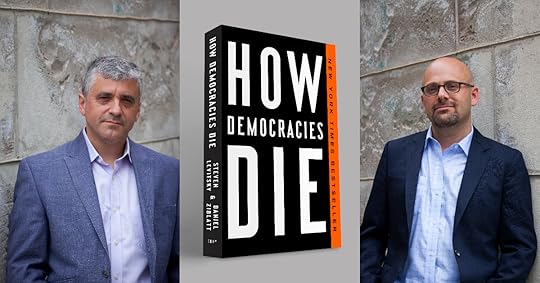
Authors Steven Levitsky & Daniel Ziblatt ask: "Are we living amidst the decline & fall of one of the world's oldest democracies?" The question was raised because a man with no experience in public office, little commitment to constitutional rights & clear authoritarian tendencies was elected president in 2016, not foreseeing that a person with such obvious liabilities could ever be reelected.
They advance the Criteria for an Autocrat: 1) Refusal to accept the legitimacy of an election; 2) Vilification of his opponents; 3) Encouragement of violence; and 4) Willingness to curtail civil liberties, the media and virtually anyone in opposition. Clearly, Donald Trump & autocrats in Turkey, Hungary, India & elsewhere met those criteria in 2018 as the book went to press.
It is commented that for generations "Americans have retained great faith in their constitution as the centerpiece of their belief in America as a beacon of hope, perhaps to the world."
There are however considerable liabilities with a document that is only 4 pages in length, contains few safeguards & can be interpreted in multiple ways. An example is the document's failure to define the limits of executive orders or the president's ability to act unilaterally.
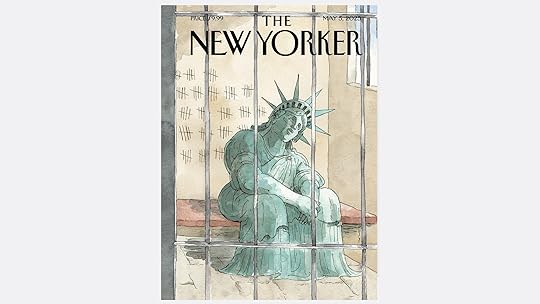
Historically, American democracy has remained secure due to a strong middle class, America's inherent wealth, a vibrant civil society & strong democratic norms. However, the authors point out that "citizens are often slow to realize that their democracy is being dismantled."
Traditionally, America's two most important norms have been mutual toleration & institutional forbearance, including a spirit of general bipartisan cooperation. In spite of that, recent polarization has served to destroy democratic norms, with many in one party viewing the other party as an existential threat to American values & fewer independent voters.
By 2000, neither party continued to function as an ideological "big tent", with liberal Republicans & conservative Democrats both fleeing their parties. While Democrats have become more diverse, Republicans have remained fairly homogeneous, focused on race & religion, especially as regards white, working class, Christian conservatives.
 In part, this is because Black enfranchisement & immigration have become such all-defining criteria within the two parties. As the country has become increasingly diverse, moving from 10% non-white in 1950 to 40+% non-white in 2020, these issues have transformed both parties.
Levitsky & Ziblatt declare that...
I close with a quote not from authors Levitsky & Ziblatt but from Hannah Arendt, an author who spoke & wrote about autocratic rule:
*Within my review is a photo image of authors Steven Levitsky & Daniel Ziblatt + 2 New Yorker magazine covers by Barry Blitt portraying America in the Age of Trump.
Authors Steven Levitsky & Daniel Ziblatt ask: "Are we living amidst the decline & fall of one of the world's oldest democracies?" The question was raised because a man with no experience in public office, little commitment to constitutional rights & clear authoritarian tendencies was elected president in 2016, not foreseeing that a person with such obvious liabilities could ever be reelected.
They advance the Criteria for an Autocrat: 1) Refusal to accept the legitimacy of an election; 2) Vilification of his opponents; 3) Encouragement of violence; and 4) Willingness to curtail civil liberties, the media and virtually anyone in opposition. Clearly, Donald Trump & autocrats in Turkey, Hungary, India & elsewhere met those criteria in 2018 as the book went to press.
It is commented that for generations "Americans have retained great faith in their constitution as the centerpiece of their belief in America as a beacon of hope, perhaps to the world."
There are however considerable liabilities with a document that is only 4 pages in length, contains few safeguards & can be interpreted in multiple ways. An example is the document's failure to define the limits of executive orders or the president's ability to act unilaterally.
Historically, American democracy has remained secure due to a strong middle class, America's inherent wealth, a vibrant civil society & strong democratic norms. However, the authors point out that "citizens are often slow to realize that their democracy is being dismantled."
Traditionally, America's two most important norms have been mutual toleration & institutional forbearance, including a spirit of general bipartisan cooperation. In spite of that, recent polarization has served to destroy democratic norms, with many in one party viewing the other party as an existential threat to American values & fewer independent voters.
By 2000, neither party continued to function as an ideological "big tent", with liberal Republicans & conservative Democrats both fleeing their parties. While Democrats have become more diverse, Republicans have remained fairly homogeneous, focused on race & religion, especially as regards white, working class, Christian conservatives.
In part, this is because Black enfranchisement & immigration have become such all-defining criteria within the two parties. As the country has become increasingly diverse, moving from 10% non-white in 1950 to 40+% non-white in 2020, these issues have transformed both parties.Levitsky & Ziblatt declare that...
Even if Trump doesn't dismantle democratic institutions, his norm-breaking is almost certain to corrode them. Tactics once considered abhorrent & inadmissible--lying, cheating, bullying--are now part of a politician's toolkit. Trump has lied with impunity and what was once seen as abnormal is now considered the norm.Ultimately, the authors caution against the Democrats copying Republican strategy but instead should "work to restore the norms of mutual toleration & forbearance." They should endeavor to "preserve rather than violate democratic norms, or America may elect a president even worse than Trump".
I close with a quote not from authors Levitsky & Ziblatt but from Hannah Arendt, an author who spoke & wrote about autocratic rule:
This constant lying is not aimed at making the people believe a lie but at ensuring that no one believes anything anymore. A people that can no longer distinguish between truth & lies cannot distinguish between good & evil. They become completely subjected to the rule of lies, deprived of the power to think & to judge. With such a people, you can do whatever you want.Note: There is much online with Harvard Professors Levitsky & Ziblatt updating their thoughts on Trump 2.0 and the further erosion of American democratic ideals. Nonetheless, I found How Democracies Die (2018) well worth reading.
*Within my review is a photo image of authors Steven Levitsky & Daniel Ziblatt + 2 New Yorker magazine covers by Barry Blitt portraying America in the Age of Trump.

February 18, 2018
This book is a sobering consideration of how democratic governments have, through subtle and even legal steps, evolved into authoritarian states. If American norms--political interaction not legislated but tacitly agreed upon--continue to be eroded we, too, could quickly find ourselves watching the last days of a democratic America.
The authors present the histories of countries that were democracies and became authoritarian, highlighting the strategies used by populist leaders to bring the system into their control. Later chapters consider the history of our political parties as gatekeepers as well as the source of conflict. A sad reality is that consensus has only occurred in America when the racist elements have been appeased.
And I am not just talking about slave owning states bulking up their political power by making slaves 3/5ths of a person, or the later repression of voting rights. As my readings in late 20th c political history have taught, the repression of African American, and the poor, is active to this day. I was a young adult when I heard our politicians call for 'law and order' and the end of 'welfare queens' and 'young bucks' drawing the dole. If after the mid-century Civil Rights protests we could not be above board with racism, it morphed into new language.
I was shocked not to have noticed before that recent anti-immigration movements are rooted in a desire to weaken the Democratic party, since most immigrants, along with people of color, vote Democratic. I knew it was overt racism, just missed that connection.
After leading readers through history the authors turn to today's political situation, evaluating the administration's tendency toward authoritarianism. As by the end of 2017, the system of checks and balances appear to be working. BUT, if the Republican party is complicit, the breakdown can happen here.
In the end, the authors offer how the Democratic party should respond to the crisis--not by imitating the Tea Party methods, or by giving up 'identity politics' and letting the disenfranchised flounder, but by committing to consensus politics, forming a broad coalition, and restoring the basic norms that worked in the past: mutual toleration and forbearance.
I think this is one of the most enlightening books I have read recently. I highly recommend it.
I received a free book through Blogging for Books in exchange for a fair and unbiased review.
The authors present the histories of countries that were democracies and became authoritarian, highlighting the strategies used by populist leaders to bring the system into their control. Later chapters consider the history of our political parties as gatekeepers as well as the source of conflict. A sad reality is that consensus has only occurred in America when the racist elements have been appeased.
And I am not just talking about slave owning states bulking up their political power by making slaves 3/5ths of a person, or the later repression of voting rights. As my readings in late 20th c political history have taught, the repression of African American, and the poor, is active to this day. I was a young adult when I heard our politicians call for 'law and order' and the end of 'welfare queens' and 'young bucks' drawing the dole. If after the mid-century Civil Rights protests we could not be above board with racism, it morphed into new language.
I was shocked not to have noticed before that recent anti-immigration movements are rooted in a desire to weaken the Democratic party, since most immigrants, along with people of color, vote Democratic. I knew it was overt racism, just missed that connection.
After leading readers through history the authors turn to today's political situation, evaluating the administration's tendency toward authoritarianism. As by the end of 2017, the system of checks and balances appear to be working. BUT, if the Republican party is complicit, the breakdown can happen here.
In the end, the authors offer how the Democratic party should respond to the crisis--not by imitating the Tea Party methods, or by giving up 'identity politics' and letting the disenfranchised flounder, but by committing to consensus politics, forming a broad coalition, and restoring the basic norms that worked in the past: mutual toleration and forbearance.
I think this is one of the most enlightening books I have read recently. I highly recommend it.
I received a free book through Blogging for Books in exchange for a fair and unbiased review.

March 25, 2018
How Democracies Die: What History Reveals About Our Future by Steven Levitsky and Daniel Ziblatt is an examination of the Donald Trump presidency in the United States, and its tendencies toward authoritarianism. The authors are both adept at examining Latin American politics and similar subjects in countries like Argentina, Peru, Ecuador and Brazil, and there analysis takes their skills in these study areas and applies them to the current administration in the United States. The authors use four behaviours of a would-be authoritarian, taken from years of study in this area. These four behaviours are:
1. Rejection or weak commitment to democratic norms: In this category they look at other authoritarian states from around the globe in recent years, including Russian, Peruvian and eastern European states and there leaders. This encompasses a rejection of democratic norms and an implementation of populist style policies to reduce democratic traditions, rework checks and balances, and/or enhance personal or executive power. This can be done both through illegal or illegitimate means, such as using military power, threats of lawsuits, dissolving political systems and so on - or through legitimate ones, such as packing courts and legislatures. The authors note that Trump has engaged in this area, by threatening to reject election results if they went against him in 2016. He also seems willing to try and change administrative and legislative policies through executive action or by threatening to remove or fire opponents.
2. Denial of legitimacy of political opponents: This is a tool used by those with authoritarian ideals to remove, cajole or silence opponents in the system. It can be done by attacking opponents through the media, or by utilizing rhetoric centered on violence to threaten political opponents. These scenarios have played out frequently in Latin America, but are also seen in Eastern Europe and other authoritarian states. This is an adept way to hamper ones opponents, threaten them, and potentially scare them off all in one, while also being popular with voters who dislike or reject current political systems or elites. Trumps frequent clashes with the media, his campaign slogan of "Lock her up!" as a rallying tactic, threats against staffer, and his frequent rhetoric against legitimate institutions were all unprecedented in modern American politics, and comfortably fit into this category of authoritarian behaviour.
3. Toleration or encouragement of violence: This one is pretty obvious. Authoritarian candidates are often fringe politicians, and threats or the utilization of violence are ways to remove political opponents, gather and rally support, and increase ones personal control. This can come in the form of coup attempts (such as in Venezuela under Chavez, or in Argentina, Chile, Brazil etc.) or through the use of violent rhetoric as a campaign tactic (seen in Orban's Hungary, for example, or in Turkey). Trump engaged in this tactic on his campaign trail, seemingly encouraging violence against protestors and those speaking there mind against his politics. This sort of behaviour is a direct threat to free speech, and can lead to advantageous situations for a would-be authoritarian to take advantage of or gain support from.
4. Readiness to curtail civil liberties of opponents, including the media: This one should be obvious as well. It is common for authoritarian rulers to take control of a nation by closing down opposition media outlets or stacking them with loyalists, threatening political opponents with jail time or removing them or exiling them somehow, and generally stamping out attempts at dissent against the regime. This has happened in many authoritarian regimes - look at Russia and many pre-1990's Latin American regimes for examples. Trump has frequently attacked the media, threatened lawsuits, fired political opponents, attempted to staff bureaucratic positions with loyalists, and so on.
The authors conclude that Trump has engaged in all four behaviour categories of an authoritarian leader. They stipulate that although these categories may be present, they do not necessarily show that the US has skewed authoritarian. The authors spend much of the book looking at ways these categories can be countered. Examples include uniting opposition regardless of bipartisan support, upholding the check and balances of the states, setting red lines within a political party against the authoritarian leader and so on. These examples are all present in the Trump administration, although the authors worry about the increasingly extremist views of each party in terms of their bipartisanism, and how this increasing divide weakens the political party system and threatens to sell democracy short in exchange for ideology. The authors also note that Trump is not the only President to ever have authoritarian tendencies in one form or another. From Obama's executive order spree, to Bush's Patriot Act, to Roosevelt and his attempts to push through major changes to the Constitution in favour of New Deal principles, these tendencies have always been present in the US. Other issues, such as restrictive voting laws becoming more popular in Republican states (strict voter ID laws etc.), filtering media bias, and other issues with a modern democracy are also discussed in some detail.
All in all, this book was a bit of a mixed bag for me. The authors argue that a democracy must remain vigilant against threats by authoritarian candidates, and gives good recent examples and comparisons of why from nations around the world, including Hungary, Ecuador, Peru, Venezuela and Poland. The focus on the Trump presidency is certainly timely, although the saturation of similar books and articles bellies the seemingly benign and chaotic nature of the Trump presidency. Trump seems more an anti-establishment candidate than an authoritarian one, and although his attempts at change seem authoritarian in behaviour, I personally feel it is less of a political calculation on his part to gain more power, than a querulous reaction to his lack of popularity and support. Far from being a danger to democracy, Trump is more a siren for growing bipartisan extremism in the United States, and the complete lack of middle ground between the US's two political parties. This is something the authors discuss in some detail, but do not fully elaborate on.
Another criticism I have of the book is its all-encompassing support for an expansion of Liberalism in the US. The authors seemingly advocate for what they call "gatekeeping" - the use of party insiders and kingmaker style politicians to screen candidates for behaviour and principles acceptable to the party, and not the voting public. Although this would reduce the mass populism seen in modern democracies, the reduction of the voting public's ability to choose a candidate is not necessarily democratic either, and can also lead to an erosion of democratic principles and institutions, not toward authoritarianism, but toward aristocracy or oligarchy. More democracy is certainly not always better, but fighting fire with fire can also be dangerous.
I am a bit critical of this book, suffice to say it has interesting ideas in it. The examination of authoritarian states globally and the behaviour of candidates with authoritarian tendencies in a democracy sliding away from its principles was the most interesting part. Examinations of Hungary, Poland and the destruction of Venezuela's democracy, or the expansion of President Fujimori's power in Peru in the 1990's were fascinating. Even some of the examinations of the changes in the US political landscape were interesting, if a bit "too soon" in my opinion. However, the political commentary was muddling. The advocation for countering authoritarianism through decreasing voter rights to choose candidates from outside the establishment was wonky. The rhetoric on Trump's political ambitions seems to give him a bit to much credit in my opinion. Far from a demagogue, he seems more like a failed populist, although things can certainly change. This was an interesting read for sure; I would definitely recommend it for readers voraciously devouring anything on the Trump presidency, and for those interested in a lighter read on political theory, but overall it lacks the depth and concise analysis that other books on authoritarianism in democratic systems possess.
1. Rejection or weak commitment to democratic norms: In this category they look at other authoritarian states from around the globe in recent years, including Russian, Peruvian and eastern European states and there leaders. This encompasses a rejection of democratic norms and an implementation of populist style policies to reduce democratic traditions, rework checks and balances, and/or enhance personal or executive power. This can be done both through illegal or illegitimate means, such as using military power, threats of lawsuits, dissolving political systems and so on - or through legitimate ones, such as packing courts and legislatures. The authors note that Trump has engaged in this area, by threatening to reject election results if they went against him in 2016. He also seems willing to try and change administrative and legislative policies through executive action or by threatening to remove or fire opponents.
2. Denial of legitimacy of political opponents: This is a tool used by those with authoritarian ideals to remove, cajole or silence opponents in the system. It can be done by attacking opponents through the media, or by utilizing rhetoric centered on violence to threaten political opponents. These scenarios have played out frequently in Latin America, but are also seen in Eastern Europe and other authoritarian states. This is an adept way to hamper ones opponents, threaten them, and potentially scare them off all in one, while also being popular with voters who dislike or reject current political systems or elites. Trumps frequent clashes with the media, his campaign slogan of "Lock her up!" as a rallying tactic, threats against staffer, and his frequent rhetoric against legitimate institutions were all unprecedented in modern American politics, and comfortably fit into this category of authoritarian behaviour.
3. Toleration or encouragement of violence: This one is pretty obvious. Authoritarian candidates are often fringe politicians, and threats or the utilization of violence are ways to remove political opponents, gather and rally support, and increase ones personal control. This can come in the form of coup attempts (such as in Venezuela under Chavez, or in Argentina, Chile, Brazil etc.) or through the use of violent rhetoric as a campaign tactic (seen in Orban's Hungary, for example, or in Turkey). Trump engaged in this tactic on his campaign trail, seemingly encouraging violence against protestors and those speaking there mind against his politics. This sort of behaviour is a direct threat to free speech, and can lead to advantageous situations for a would-be authoritarian to take advantage of or gain support from.
4. Readiness to curtail civil liberties of opponents, including the media: This one should be obvious as well. It is common for authoritarian rulers to take control of a nation by closing down opposition media outlets or stacking them with loyalists, threatening political opponents with jail time or removing them or exiling them somehow, and generally stamping out attempts at dissent against the regime. This has happened in many authoritarian regimes - look at Russia and many pre-1990's Latin American regimes for examples. Trump has frequently attacked the media, threatened lawsuits, fired political opponents, attempted to staff bureaucratic positions with loyalists, and so on.
The authors conclude that Trump has engaged in all four behaviour categories of an authoritarian leader. They stipulate that although these categories may be present, they do not necessarily show that the US has skewed authoritarian. The authors spend much of the book looking at ways these categories can be countered. Examples include uniting opposition regardless of bipartisan support, upholding the check and balances of the states, setting red lines within a political party against the authoritarian leader and so on. These examples are all present in the Trump administration, although the authors worry about the increasingly extremist views of each party in terms of their bipartisanism, and how this increasing divide weakens the political party system and threatens to sell democracy short in exchange for ideology. The authors also note that Trump is not the only President to ever have authoritarian tendencies in one form or another. From Obama's executive order spree, to Bush's Patriot Act, to Roosevelt and his attempts to push through major changes to the Constitution in favour of New Deal principles, these tendencies have always been present in the US. Other issues, such as restrictive voting laws becoming more popular in Republican states (strict voter ID laws etc.), filtering media bias, and other issues with a modern democracy are also discussed in some detail.
All in all, this book was a bit of a mixed bag for me. The authors argue that a democracy must remain vigilant against threats by authoritarian candidates, and gives good recent examples and comparisons of why from nations around the world, including Hungary, Ecuador, Peru, Venezuela and Poland. The focus on the Trump presidency is certainly timely, although the saturation of similar books and articles bellies the seemingly benign and chaotic nature of the Trump presidency. Trump seems more an anti-establishment candidate than an authoritarian one, and although his attempts at change seem authoritarian in behaviour, I personally feel it is less of a political calculation on his part to gain more power, than a querulous reaction to his lack of popularity and support. Far from being a danger to democracy, Trump is more a siren for growing bipartisan extremism in the United States, and the complete lack of middle ground between the US's two political parties. This is something the authors discuss in some detail, but do not fully elaborate on.
Another criticism I have of the book is its all-encompassing support for an expansion of Liberalism in the US. The authors seemingly advocate for what they call "gatekeeping" - the use of party insiders and kingmaker style politicians to screen candidates for behaviour and principles acceptable to the party, and not the voting public. Although this would reduce the mass populism seen in modern democracies, the reduction of the voting public's ability to choose a candidate is not necessarily democratic either, and can also lead to an erosion of democratic principles and institutions, not toward authoritarianism, but toward aristocracy or oligarchy. More democracy is certainly not always better, but fighting fire with fire can also be dangerous.
I am a bit critical of this book, suffice to say it has interesting ideas in it. The examination of authoritarian states globally and the behaviour of candidates with authoritarian tendencies in a democracy sliding away from its principles was the most interesting part. Examinations of Hungary, Poland and the destruction of Venezuela's democracy, or the expansion of President Fujimori's power in Peru in the 1990's were fascinating. Even some of the examinations of the changes in the US political landscape were interesting, if a bit "too soon" in my opinion. However, the political commentary was muddling. The advocation for countering authoritarianism through decreasing voter rights to choose candidates from outside the establishment was wonky. The rhetoric on Trump's political ambitions seems to give him a bit to much credit in my opinion. Far from a demagogue, he seems more like a failed populist, although things can certainly change. This was an interesting read for sure; I would definitely recommend it for readers voraciously devouring anything on the Trump presidency, and for those interested in a lighter read on political theory, but overall it lacks the depth and concise analysis that other books on authoritarianism in democratic systems possess.

February 28, 2018
This is the rare book where I liked their solutions section better than their descriptive section. At the end, they fight against those who say that the left needs to let go of its embrace of identity culture (i.e. embrace of multiculturalism). They say that would be a huge mistake and I agree. Basically, this book shows how other democracies aboard have fallen into autocracy (spoiler: there are more similarities between us and them than differences).
My one critique (or maybe it's just a question) is their insistence on preserving (or resurrecting) the role of gate-keepers. This is a tempting solution--bring back the party bosses and the smoke rooms and the strong electorate college protections that kept out the crazies in the past (like Ford and Lindberg and Wallace). They certainly failed to keep out Trump. But I am not sure we need more gatekeepers. Hillary did win the popular vote. Seems we might just have a half-way system that is neither Populist nor elitist but the worst of both worlds. In any case, it's a short and interesting read.
My one critique (or maybe it's just a question) is their insistence on preserving (or resurrecting) the role of gate-keepers. This is a tempting solution--bring back the party bosses and the smoke rooms and the strong electorate college protections that kept out the crazies in the past (like Ford and Lindberg and Wallace). They certainly failed to keep out Trump. But I am not sure we need more gatekeepers. Hillary did win the popular vote. Seems we might just have a half-way system that is neither Populist nor elitist but the worst of both worlds. In any case, it's a short and interesting read.

January 16, 2018
On the surface, this is a book about the internal contradictions of democracy and how those vulnerabilities can be exploited by those interested in authoritarian power with, in the case of the Republicans, a “white nationalist appeal.” It’s a valid assessment to about half of us, and they make a very strong historical and horrifying case in support of it. (think fascism, communism, and MAGA-ism)
Every coin, of course, has two sides. The failure or success of any political system, including democracy, will always be a matter of perspective. You say to-mah-to, I say to-may-to. One person’s democratic failure is someone else’s democratic validation, and there is little question as to which side of that perspective the authors come down on. “Moreover, America is no longer a democratic model.”
It struck me, as I read the book, that what the authors are ultimately arguing is that the coin of democracy, which they acknowledge as having two sides, should be kept very, very thin. The democratic failure they expertly portray, in other words, is a failure in moderation.
The need for moderation, the authors convincingly argue, was well understood by the Founding Fathers. That is why we have three branches of government, the rule of law, a dual-chambered legislative body that virtually ignores the concept of popular representation in one of its chambers (e.g., the U.S. Senate), and the Electoral College, which, as the authors note, was, in the beginning, even less democratic than it is today, because the delegates had virtually no obligation to behave as the voters instructed them to.
It is this political machinery, and the all-powerful two party system that grew out of it, that has, until now, according to the authors, kept political extremists at bay. Inexperienced outsiders like Henry Ford, George Wallace, and Huey Long may have made a lot of noise among the populists, but were kept at bay by the party bosses who, by implication, were protecting some higher standard of democratic ideals.
The “thin coin” argument, however, is always employed by the side of the coin that is out of favor, or, more specifically, out of power. It is, however, a semantic argument. Did democracy fail or did it finally succeed?
There is little question as to the authors’ political perspective on that question. “This all [the nomination of Trump] should have set off alarm bells. The primary process had failed in its gatekeeping role and allowed a man unfit for office to run as a mainstream party candidate.” The result: “President Trump’s is the least prodemocratic of any U.S. administration since Nixon’s. Moreover, America is no longer a democratic model.” The Republican objective: “…use the techniques of constitutional hardball to manufacture durable white electoral majorities.” To be accomplished, of course, through large scale electoral reengineering that includes massive deportations, abusive voter registration laws, etc.
The book is well researched and well written. It will, however, do little to bridge the current partisan divide. In the end, the “thin coin” argument is an argument in support of centrism. Is that, however, really what people on either side of the political aisle want? Both political parties, it seems, are internally fractured between centrists and the more extreme wings of each ideology.
I do agree with the authors’ assessment that, “When American democracy has worked, it has relied upon two norms that we often take for granted—mutual tolerance and institutional forbearance.” That is spot on and why I would agree with the authors when they argue, “In our view, the idea that Democrats should ‘fight like Republicans’ is misguided.” I don’t, however, support their conclusion, “Reducing [political] polarization requires that the Republican Party be reformed, if not refounded outright.” That’s another “thin coin” argument.
I personally don’t believe, moreover, that pushing politics back into the smoke-filled back rooms, in an effort to keep the outsiders at bay, is what anyone wants. My own sense is that things have changed. Technology, in short, has redefined the way we live, work, and learn, and doubling down on the old coin isn’t going to work. What we need, instead, is a new coin. We don’t need a to-may-to or a to-mah-to so much as we need something completely new and different.
Those of us who lived through half of the 20th Century or more know full well the perils and failure of fascism, communism, and authoritarianism. These, however, were manifestations of an either/or world. As technology integrates our global environment, our economies, and our societies, the either/or world that gives rise to the “thin coin” debate makes that debate less and less relevant. We need, instead, to think in terms of and/but. We need to think less in terms of limiting extremism of any variety and more in terms of how we create a more inclusive and just world.
Historians deal in historical facts and figures. The best historians, however, rise above those facts and figures to help us to better understand the context in which they came to be. In doing that they prepare us to make a more informed decision about the future.
While the authors, in this case, have painted a vivid historical picture that will appeal to all of the people who now feel they are looking in, myself included, they fail, in my view, to rise above the historical facts and figures to give us a viable vision for the future. That makes for a very interesting read, but not one on which to build an inclusive and prosperous America.
Every coin, of course, has two sides. The failure or success of any political system, including democracy, will always be a matter of perspective. You say to-mah-to, I say to-may-to. One person’s democratic failure is someone else’s democratic validation, and there is little question as to which side of that perspective the authors come down on. “Moreover, America is no longer a democratic model.”
It struck me, as I read the book, that what the authors are ultimately arguing is that the coin of democracy, which they acknowledge as having two sides, should be kept very, very thin. The democratic failure they expertly portray, in other words, is a failure in moderation.
The need for moderation, the authors convincingly argue, was well understood by the Founding Fathers. That is why we have three branches of government, the rule of law, a dual-chambered legislative body that virtually ignores the concept of popular representation in one of its chambers (e.g., the U.S. Senate), and the Electoral College, which, as the authors note, was, in the beginning, even less democratic than it is today, because the delegates had virtually no obligation to behave as the voters instructed them to.
It is this political machinery, and the all-powerful two party system that grew out of it, that has, until now, according to the authors, kept political extremists at bay. Inexperienced outsiders like Henry Ford, George Wallace, and Huey Long may have made a lot of noise among the populists, but were kept at bay by the party bosses who, by implication, were protecting some higher standard of democratic ideals.
The “thin coin” argument, however, is always employed by the side of the coin that is out of favor, or, more specifically, out of power. It is, however, a semantic argument. Did democracy fail or did it finally succeed?
There is little question as to the authors’ political perspective on that question. “This all [the nomination of Trump] should have set off alarm bells. The primary process had failed in its gatekeeping role and allowed a man unfit for office to run as a mainstream party candidate.” The result: “President Trump’s is the least prodemocratic of any U.S. administration since Nixon’s. Moreover, America is no longer a democratic model.” The Republican objective: “…use the techniques of constitutional hardball to manufacture durable white electoral majorities.” To be accomplished, of course, through large scale electoral reengineering that includes massive deportations, abusive voter registration laws, etc.
The book is well researched and well written. It will, however, do little to bridge the current partisan divide. In the end, the “thin coin” argument is an argument in support of centrism. Is that, however, really what people on either side of the political aisle want? Both political parties, it seems, are internally fractured between centrists and the more extreme wings of each ideology.
I do agree with the authors’ assessment that, “When American democracy has worked, it has relied upon two norms that we often take for granted—mutual tolerance and institutional forbearance.” That is spot on and why I would agree with the authors when they argue, “In our view, the idea that Democrats should ‘fight like Republicans’ is misguided.” I don’t, however, support their conclusion, “Reducing [political] polarization requires that the Republican Party be reformed, if not refounded outright.” That’s another “thin coin” argument.
I personally don’t believe, moreover, that pushing politics back into the smoke-filled back rooms, in an effort to keep the outsiders at bay, is what anyone wants. My own sense is that things have changed. Technology, in short, has redefined the way we live, work, and learn, and doubling down on the old coin isn’t going to work. What we need, instead, is a new coin. We don’t need a to-may-to or a to-mah-to so much as we need something completely new and different.
Those of us who lived through half of the 20th Century or more know full well the perils and failure of fascism, communism, and authoritarianism. These, however, were manifestations of an either/or world. As technology integrates our global environment, our economies, and our societies, the either/or world that gives rise to the “thin coin” debate makes that debate less and less relevant. We need, instead, to think in terms of and/but. We need to think less in terms of limiting extremism of any variety and more in terms of how we create a more inclusive and just world.
Historians deal in historical facts and figures. The best historians, however, rise above those facts and figures to help us to better understand the context in which they came to be. In doing that they prepare us to make a more informed decision about the future.
While the authors, in this case, have painted a vivid historical picture that will appeal to all of the people who now feel they are looking in, myself included, they fail, in my view, to rise above the historical facts and figures to give us a viable vision for the future. That makes for a very interesting read, but not one on which to build an inclusive and prosperous America.

November 16, 2019
Šita iš paskutiniu metu skaityto non-fictiono - tikrai viena geresnių. Iš pradžių daug nesitikėjau (supratau, kad pagrindas vis tiek bus JAV situacija, o tų antitrumpinių knygų jau biški man - kaip ne politologei ir specialiai nesidominčiai JAV padėtimi - daugoka, planuoju perskaityti "The Beautiful Poetry of Donald Trump" ir raukti su ta tema), tačiau lūkesčius pranoko.
Ji parašyta turint pamatinę prielaidą apie demokratijos vertę (kad tai geriausia visuomenės / valstybės santvarka); ta prielaida man visada buvo kaip ir savaime suprantama, taigi demokratijos kritika iš pradžių atrodė omg koks keistas dalykas, kaip plokščios Žemės teorija. Dabar nebeatrodo -- bet čia jau nukrypau. Šitoj knygoj kritikos nėra, remiamasi pamatine priešprieša demokratija vs. totalitarizmas (nors šiaip tai ne vienintelė įmanoma priešprieša gi) ir kalbama apie atvejus, kaip nuo XX a. pradžios įvairios šalys pasukdavo į totalitarizmą. Bendru vardikliu imama tai, apie ką skelbia ir knygos pijaras, - kaip į valdžią ateina būsimieji totalitarai / radikalai, kuriuos išrenka patys žmonės, demokratiškai balsuodami. Man atrodo, perspektyva įdomesnė, nei neseniai išverstam Albright "Fašizme", kur demokratija yra panacėja, o fašizmas randasi tik ten, kur silpsta demokratiniai procesai.
Buvo daug trivia, kurios nežinojau, nors istoriją ir politologijos įvadus kaip ir neblogai mokiausi, skaitydavau papildomai, bet vis tiek praskipinau:
1. Kaip, pvz, Hitleris atėjo į valdžią - aišku, kad jo partija laimėjo rinkimus, bet realiai kancleriu jį paskyrė "laikinai" metams ar porai - kažkoks pats valdžią norėjęs išlaikyti funkcionierius. Thnx a lot.
2. Kokia buvo Votergeito esmė - nors ir mokykloj mokėmės, ir filmų ne vieną mačiau, bet nesupratau, kas ten įvyko, galvojau kažkas kažką suklastojo. Pasirodo - paties einančio prezidento pareigas Nixono administracija šnipinėjo konkurentus. O kokiu tikslu? - kad išlaikytų valdžią...
3. Gražieji pavyzdžiai - kaip Belgijoj, Suomijoj ir Prancūzijoj vienijosi priešingos politinės jėgos, kad tik į valdžią neateitų radikalai. Skaitai ir net šiurpas pereina. Man regis, tokie sprendimai daromi turint ne vien tik į demokratiją orientuotą vertybių skalę, bet ir tikint kažkokiu pamatiniu gebėjimu susitarti - tik ten, kur kitos politinės pakraipos atstovas tau neatrodo automatiškai evil, rezgantis kažką tau už nugaros, toks, kurį reikia sunaikint. Žodžiu, ne LT scenarijus.
Apskritai skaitant daug kas atrodė nykiai pažįstama ir nestebino: kaip išrinkti į aukščiausius postus pareigūnai pasiskiria į svarbius postus draugelius, kaip perskirstomos apygardos, siekiant palankiai sau susiprogramuoti rinkimų rezultatus, kaip išrinkti į svarbiausius postus bando sau palankiai perdėlioti teisėjus, teismų sprendimus, patvarkyt neįtinkančią žiniasklaidą. O JAV politologai apie tai rašo su tokiu pasibaisėjimu - och, kaip griūna procesai! Tas ir juokinga, ir liūdna, kad juokinga.
Galbūt tokios knygos turėtų veikti kaip nors uždegančiai, skatinti imtis priemonių, sukilti! Mane tai paveikė apatiškai. Atrodo, lieka viena mintis - koks šūdas iš tikrųjų yra valdžia ir kaip nėr kur nuo jos dėtis.
Nors gal viltinga jau vien tai, kad galim bloguosiuose pavyzdžiuose atpažinti savo nykias realijas? Vis tiek, kas artikuliuota - tas suvokiama, tas galbūt pakeičiama. Nu labai norisi tikėti.
Geras skaitinys, ne iš feel good, bet ir ne iš doomsday serijos, o tai jau kažkaip savaime atrodo vertybė.
Ji parašyta turint pamatinę prielaidą apie demokratijos vertę (kad tai geriausia visuomenės / valstybės santvarka); ta prielaida man visada buvo kaip ir savaime suprantama, taigi demokratijos kritika iš pradžių atrodė omg koks keistas dalykas, kaip plokščios Žemės teorija. Dabar nebeatrodo -- bet čia jau nukrypau. Šitoj knygoj kritikos nėra, remiamasi pamatine priešprieša demokratija vs. totalitarizmas (nors šiaip tai ne vienintelė įmanoma priešprieša gi) ir kalbama apie atvejus, kaip nuo XX a. pradžios įvairios šalys pasukdavo į totalitarizmą. Bendru vardikliu imama tai, apie ką skelbia ir knygos pijaras, - kaip į valdžią ateina būsimieji totalitarai / radikalai, kuriuos išrenka patys žmonės, demokratiškai balsuodami. Man atrodo, perspektyva įdomesnė, nei neseniai išverstam Albright "Fašizme", kur demokratija yra panacėja, o fašizmas randasi tik ten, kur silpsta demokratiniai procesai.
Buvo daug trivia, kurios nežinojau, nors istoriją ir politologijos įvadus kaip ir neblogai mokiausi, skaitydavau papildomai, bet vis tiek praskipinau:
1. Kaip, pvz, Hitleris atėjo į valdžią - aišku, kad jo partija laimėjo rinkimus, bet realiai kancleriu jį paskyrė "laikinai" metams ar porai - kažkoks pats valdžią norėjęs išlaikyti funkcionierius. Thnx a lot.
2. Kokia buvo Votergeito esmė - nors ir mokykloj mokėmės, ir filmų ne vieną mačiau, bet nesupratau, kas ten įvyko, galvojau kažkas kažką suklastojo. Pasirodo - paties einančio prezidento pareigas Nixono administracija šnipinėjo konkurentus. O kokiu tikslu? - kad išlaikytų valdžią...
3. Gražieji pavyzdžiai - kaip Belgijoj, Suomijoj ir Prancūzijoj vienijosi priešingos politinės jėgos, kad tik į valdžią neateitų radikalai. Skaitai ir net šiurpas pereina. Man regis, tokie sprendimai daromi turint ne vien tik į demokratiją orientuotą vertybių skalę, bet ir tikint kažkokiu pamatiniu gebėjimu susitarti - tik ten, kur kitos politinės pakraipos atstovas tau neatrodo automatiškai evil, rezgantis kažką tau už nugaros, toks, kurį reikia sunaikint. Žodžiu, ne LT scenarijus.
Apskritai skaitant daug kas atrodė nykiai pažįstama ir nestebino: kaip išrinkti į aukščiausius postus pareigūnai pasiskiria į svarbius postus draugelius, kaip perskirstomos apygardos, siekiant palankiai sau susiprogramuoti rinkimų rezultatus, kaip išrinkti į svarbiausius postus bando sau palankiai perdėlioti teisėjus, teismų sprendimus, patvarkyt neįtinkančią žiniasklaidą. O JAV politologai apie tai rašo su tokiu pasibaisėjimu - och, kaip griūna procesai! Tas ir juokinga, ir liūdna, kad juokinga.
Galbūt tokios knygos turėtų veikti kaip nors uždegančiai, skatinti imtis priemonių, sukilti! Mane tai paveikė apatiškai. Atrodo, lieka viena mintis - koks šūdas iš tikrųjų yra valdžia ir kaip nėr kur nuo jos dėtis.
Nors gal viltinga jau vien tai, kad galim bloguosiuose pavyzdžiuose atpažinti savo nykias realijas? Vis tiek, kas artikuliuota - tas suvokiama, tas galbūt pakeičiama. Nu labai norisi tikėti.
Geras skaitinys, ne iš feel good, bet ir ne iš doomsday serijos, o tai jau kažkaip savaime atrodo vertybė.

June 30, 2020
“It is the line that forms on the right. It is the “don’t” in don’t shove. It is the hole in the stuffed shirt through which the sawdust slowly trickles; it is the dent in the high hat. Democracy is the recurrent suspicion that more than half of the people are right more than half of the time. It is the feeling of privacy in the voting booths, the feeling of communion in the libraries, the feeling of vitality everywhere. Democracy is a letter to the editor. Democracy is the score at the beginning of the ninth. It is an idea which hasn’t been disproved yet, a song the words of which have not gone bad. It’s the mustard on the hot dog and the cream in the rationed coffee. Democracy is a request from a War Board, in the middle of a morning in the middle of a war, wanting to know what democracy is.” ---E.B. White’s response to the question “What is Democracy?”, posed to him by the U.S. Federal Government’s Writers’ War Board
I don’t believe that our democracy (which, technically isn’t really a democracy, it’s a republic, but you get the idea) is dead or even dying, although I’m pretty sure I felt differently last year, before COVID-19 reared its ugly head and before George Floyd’s life was tragically snuffed out by Derek Chauvin’s knee. Indeed, the events of the past several months have been a mixture of horror, anger, and strange optimism.
The horror should be obvious, although an additional sense of confusion and disgust cropped up early when Americans (not all, to be sure) showed their egregious overly-developed sense of “You can’t tell me what to do” independence and entitlement when the government (at least those members of government who listen to doctors and scientists) told them it would be medically beneficial and just plain courteous to wear face masks in public. Holy shit, you would think the government was asking to take their guns away or offering free abortions in elementary schools. Face masks! this weirdly nutso minority (I hope) scream, I ain’t wearin’ no goddamned face masks, ‘cause this ain’t communist China and nobody can tell me what to wear! I ain’t doin’ it! It’s unconstitutional! And, besides, it’s hot and stuffy and does crazy things with my beard!
*(apologies to anybody who has a Southern accent or the awkwardly demeaning attempt at one like the one above.)
The anger came out of the blue, with Floyd’s ridiculously awful death and a clear-cut case of murder-by-psychotic-police-officer, which ramped up entire cities into protests (justifiable and rational and completely understandable). More anger erupted when our full-term abortion of a president immediately tweeted “[W]hen the looting starts, the shooting starts.” Needless to say, it wasn’t helpful. It wasn’t even original. (https://miami.cbslocal.com/2020/05/29...) Arguably, it was incitement of violence. Made all the more horrifying by the fact that it emanated from the president of the United States.
Which segues nicely into Steven Levitsky and Daniel Ziblatt’s 2018 book “How Democracies Die”, the perfect book to read during a global pandemic and mass rioting in major American cities. Oh, and a presidential election year, no less. Joy.
Levitsky-Ziblatt’s book has been criticized by some as being anti-Trump. Viciously so. And you know what? I’ve read it, and I disagree whole-heartedly, because simply writing the truth---that our president is a sleazy, fat-filled, jelly-donut-for-brains, tiny-penised, small-handed, clumsy, mouth-breathing, sociopathic, misogynistic, racist, anti-intellectual, annoying, ugly, perverted, toys-in-the-attic-crazy, douche-bag-licking, soulless, piece of shit asshole---isn’t being anti-Trump, it’s simply being honest. Saying that smoking tobacco is bad for your health doesn’t necessarily make one anti-smoking, it simply makes one pro-clean air and pro-health. Smokers may think you’re picking on them, but you’re really just speaking to truth.
That’s what Levitsky-Ziblatt are doing here. They’re not even saying that Trump is a vicious dictator, because he’s not. He’s simply a horrible president (and a deplorable human being) who is symptomatic of a breakdown in our democratic system that has been happening for decades. If Trump is anything, he is a potential precursor for someone to come along who will be even worse, assuming one can even imagine such a thing.
Trump’s blatant disregard for the niceties of civil society, his hatred of the truth (especially any truth that makes him look bad), his constant dismantling of the unspoken partisan rules of governance (what Levitsky-Ziblatt refer to as “the guardrails” of American democracy), his obvious narcissistic self-interest, and his increasingly uncomfortable tolerance of violence and bloodshed are all universal indicators of potential dictators. Every dictator in history, according to the authors, has exhibited these traits.
But what’s stopping Trump from becoming a full-fledged dictator is the system of checks and balances put in place by our constitution and the legislative and judicial branches counteracting the executive. Even this, though, is precarious and in danger of falling apart, and the authors have frighteningly described how this fragile system is slowly eroding.*
Still, the strange optimism and small sense of hope resides, especially if one has bravely stepped out of his or her cave in the past month or so. It has been refreshing to see so many of our neighbors with “Black Lives Matter” signs in their front yards. It has been heartening to hear news stories of Republicans (Mitch McConnell, no less, saying that “obviously we still have a long way to go”) finally admitting that race relations in this country are in need of repair. It has also been nice to see that our Supreme Court, in just the past week, has voted against Trump on important cases involving the LGBTQ community, immigration, and abortion rights.
Our democracy is working. Sure, it’s sputtering a bit and it’s making some weird noises, but it still drives. The current driver is seriously questionable, but we can all hope and pray that he will be replaced in November with a driver who has actually studied the traffic laws and doesn’t take dangerous detours down dead-end alleys.
*9/12/2025 addendum: Yeah, it's fallen apart...
I don’t believe that our democracy (which, technically isn’t really a democracy, it’s a republic, but you get the idea) is dead or even dying, although I’m pretty sure I felt differently last year, before COVID-19 reared its ugly head and before George Floyd’s life was tragically snuffed out by Derek Chauvin’s knee. Indeed, the events of the past several months have been a mixture of horror, anger, and strange optimism.
The horror should be obvious, although an additional sense of confusion and disgust cropped up early when Americans (not all, to be sure) showed their egregious overly-developed sense of “You can’t tell me what to do” independence and entitlement when the government (at least those members of government who listen to doctors and scientists) told them it would be medically beneficial and just plain courteous to wear face masks in public. Holy shit, you would think the government was asking to take their guns away or offering free abortions in elementary schools. Face masks! this weirdly nutso minority (I hope) scream, I ain’t wearin’ no goddamned face masks, ‘cause this ain’t communist China and nobody can tell me what to wear! I ain’t doin’ it! It’s unconstitutional! And, besides, it’s hot and stuffy and does crazy things with my beard!
*(apologies to anybody who has a Southern accent or the awkwardly demeaning attempt at one like the one above.)
The anger came out of the blue, with Floyd’s ridiculously awful death and a clear-cut case of murder-by-psychotic-police-officer, which ramped up entire cities into protests (justifiable and rational and completely understandable). More anger erupted when our full-term abortion of a president immediately tweeted “[W]hen the looting starts, the shooting starts.” Needless to say, it wasn’t helpful. It wasn’t even original. (https://miami.cbslocal.com/2020/05/29...) Arguably, it was incitement of violence. Made all the more horrifying by the fact that it emanated from the president of the United States.
Which segues nicely into Steven Levitsky and Daniel Ziblatt’s 2018 book “How Democracies Die”, the perfect book to read during a global pandemic and mass rioting in major American cities. Oh, and a presidential election year, no less. Joy.
Levitsky-Ziblatt’s book has been criticized by some as being anti-Trump. Viciously so. And you know what? I’ve read it, and I disagree whole-heartedly, because simply writing the truth---that our president is a sleazy, fat-filled, jelly-donut-for-brains, tiny-penised, small-handed, clumsy, mouth-breathing, sociopathic, misogynistic, racist, anti-intellectual, annoying, ugly, perverted, toys-in-the-attic-crazy, douche-bag-licking, soulless, piece of shit asshole---isn’t being anti-Trump, it’s simply being honest. Saying that smoking tobacco is bad for your health doesn’t necessarily make one anti-smoking, it simply makes one pro-clean air and pro-health. Smokers may think you’re picking on them, but you’re really just speaking to truth.
That’s what Levitsky-Ziblatt are doing here. They’re not even saying that Trump is a vicious dictator, because he’s not. He’s simply a horrible president (and a deplorable human being) who is symptomatic of a breakdown in our democratic system that has been happening for decades. If Trump is anything, he is a potential precursor for someone to come along who will be even worse, assuming one can even imagine such a thing.
Trump’s blatant disregard for the niceties of civil society, his hatred of the truth (especially any truth that makes him look bad), his constant dismantling of the unspoken partisan rules of governance (what Levitsky-Ziblatt refer to as “the guardrails” of American democracy), his obvious narcissistic self-interest, and his increasingly uncomfortable tolerance of violence and bloodshed are all universal indicators of potential dictators. Every dictator in history, according to the authors, has exhibited these traits.
But what’s stopping Trump from becoming a full-fledged dictator is the system of checks and balances put in place by our constitution and the legislative and judicial branches counteracting the executive. Even this, though, is precarious and in danger of falling apart, and the authors have frighteningly described how this fragile system is slowly eroding.*
Still, the strange optimism and small sense of hope resides, especially if one has bravely stepped out of his or her cave in the past month or so. It has been refreshing to see so many of our neighbors with “Black Lives Matter” signs in their front yards. It has been heartening to hear news stories of Republicans (Mitch McConnell, no less, saying that “obviously we still have a long way to go”) finally admitting that race relations in this country are in need of repair. It has also been nice to see that our Supreme Court, in just the past week, has voted against Trump on important cases involving the LGBTQ community, immigration, and abortion rights.
Our democracy is working. Sure, it’s sputtering a bit and it’s making some weird noises, but it still drives. The current driver is seriously questionable, but we can all hope and pray that he will be replaced in November with a driver who has actually studied the traffic laws and doesn’t take dangerous detours down dead-end alleys.
*9/12/2025 addendum: Yeah, it's fallen apart...

April 7, 2020
Democracies are fragile things. We wrap them in symbolism, swear fealty to them, hold parades and make speeches, and hanker back to the glories of Greece and Rome to give them historical legitimacy. We congratulate ourselves on the strength of our democratic institutions, and act like they are self-sustaining. But they are not. Even the most stable democracies can barely contain the chaos inherent within them, as multitudes of factions vie for power and resources. If that chaos is not contained it boils over, and no one’s life, liberty, or property are safe. By the last years of the Roman republic the political and economic systems had broken down entirely, and the Romans begged Caesar to replace the Republic with an empire, willing to give up their freedom in exchange for peace and order.
To maintain a democracy requires checks and balances, and forbearance toward one’s political opponents, accepting the fact that while you may disagree with them you believe that they nevertheless have the country’s best interests at heart. Not everyone is willing to play by those rules. Some people despise the give-and-take of politics, the compromises and back room deals. They want strong leaders who value order over liberty, and there are plenty of people willing to promise them just that.
The most dangerous person in a democracy is the demagogue, who subverts the state from within. In every society there are people whose lives are hard, who feel that their rightful success has been denied them. They are looking for someone to blame for their troubles, and leaders who will promise to raise them up while crushing their enemies. In a healthy democracy the demagogues can be contained and marginalized, but in a diseased one they sweep into power and destroy the very institutions that helped raise them up.
The lessons of history are sobering, with more defeats that victories. It is possible for leaders on the left and right to make temporary common cause in order to block the ascension of someone dangerous to the country, but that can only happen if they respect one another and trust them to act honorably. If the parties have come to see each other as enemies then one will decide they would rather support the demagogue and take their chances trying to control him rather than be seen doing anything jointly with the other party.
We are familiar with the big events of history. It is well known that the German politicians and industrialists were sure they could control Hitler, the doltish, bombastic Austrian upstart, and we all know how well that turned out. One of the benefits of a book like How Democracies Die, by Steven Levitsky and Daniel Ziblatt, is that it draws upon less familiar examples, thereby strengthening their arguments with case after case of historical precedents where democracies fell or survived. From their studies they have developed a set of conditions that indicate whether a democracy is in danger of being subverted. These are:
1) The party leader rejects the established rules of democracy. They attack laws and institutions and attempt to undermine the electoral process.
2) They deny the legitimacy of political opponents, accusing them of treason or criminal activity and insisting they should be jailed or otherwise silenced.
3) They are willing to use violence to attain their ends. They start by subtly encouraging it, then openly support it.
4) They try to shut down any opposition, whether from other parties, the media, or other critics. They dismiss the rights of others and are willing to suppress the civil liberties of anyone who disagrees with them.
If this list doesn’t make you uneasy about the political environment today, you haven’t been paying attention.
Healthy democracies also abide by unwritten but widely respected norms of behavior, which are mutual tolerance and institutional restraint. The first implies as certain cordiality and willingness to cooperate with members of other parties. The second allows existing government agencies and institutions to continue to operate without undue political influence.
In sick democracies these norms are abandoned. The parties see each other as bitter enemies and are either unwilling to cooperate or afraid that doing so will enrage the voters in their districts and leave them vulnerable to challengers even more extreme than they themselves. It also means that the party in power makes a concerted attempt to subvert the courts and other government agencies, packing them with their own partisans in an attempt to cement their hold on power. The book shows example after example of these norm violations, leading ultimately to coups, insurrections, or the establishment of complete control of government by one party, as has happened in recent years in Russia, Turkey, Poland, Hungary, and many other nations. One party rule is an incitement to corruption, including ensuring that election results always turn they way they want, so once in power none of these rulers is going to give it up without a fight.
In the United States the Republican party has been pushed so far to the right that they rule imperiously when in power and do everything they can to obstruct government when the Democrats are in power. Bringing sanity and decency back to Congress would require statesmen of greater courage, intelligence, and vision than any of today’s third-rate party hacks will ever possess. The state of the Union looks bad and may get worse. Donald Trump is a symptom of the problem, not its cause, and things may continue to spiral downward after him. Eventually voter suppression, court packing, political obstruction, inequality, and violence could result in the kind of dysfunctional system that caused the Romans to throw themselves upon Julius Caesar to save them from themselves. Sic transit another democracy.
To maintain a democracy requires checks and balances, and forbearance toward one’s political opponents, accepting the fact that while you may disagree with them you believe that they nevertheless have the country’s best interests at heart. Not everyone is willing to play by those rules. Some people despise the give-and-take of politics, the compromises and back room deals. They want strong leaders who value order over liberty, and there are plenty of people willing to promise them just that.
The most dangerous person in a democracy is the demagogue, who subverts the state from within. In every society there are people whose lives are hard, who feel that their rightful success has been denied them. They are looking for someone to blame for their troubles, and leaders who will promise to raise them up while crushing their enemies. In a healthy democracy the demagogues can be contained and marginalized, but in a diseased one they sweep into power and destroy the very institutions that helped raise them up.
The lessons of history are sobering, with more defeats that victories. It is possible for leaders on the left and right to make temporary common cause in order to block the ascension of someone dangerous to the country, but that can only happen if they respect one another and trust them to act honorably. If the parties have come to see each other as enemies then one will decide they would rather support the demagogue and take their chances trying to control him rather than be seen doing anything jointly with the other party.
We are familiar with the big events of history. It is well known that the German politicians and industrialists were sure they could control Hitler, the doltish, bombastic Austrian upstart, and we all know how well that turned out. One of the benefits of a book like How Democracies Die, by Steven Levitsky and Daniel Ziblatt, is that it draws upon less familiar examples, thereby strengthening their arguments with case after case of historical precedents where democracies fell or survived. From their studies they have developed a set of conditions that indicate whether a democracy is in danger of being subverted. These are:
1) The party leader rejects the established rules of democracy. They attack laws and institutions and attempt to undermine the electoral process.
2) They deny the legitimacy of political opponents, accusing them of treason or criminal activity and insisting they should be jailed or otherwise silenced.
3) They are willing to use violence to attain their ends. They start by subtly encouraging it, then openly support it.
4) They try to shut down any opposition, whether from other parties, the media, or other critics. They dismiss the rights of others and are willing to suppress the civil liberties of anyone who disagrees with them.
If this list doesn’t make you uneasy about the political environment today, you haven’t been paying attention.
Healthy democracies also abide by unwritten but widely respected norms of behavior, which are mutual tolerance and institutional restraint. The first implies as certain cordiality and willingness to cooperate with members of other parties. The second allows existing government agencies and institutions to continue to operate without undue political influence.
In sick democracies these norms are abandoned. The parties see each other as bitter enemies and are either unwilling to cooperate or afraid that doing so will enrage the voters in their districts and leave them vulnerable to challengers even more extreme than they themselves. It also means that the party in power makes a concerted attempt to subvert the courts and other government agencies, packing them with their own partisans in an attempt to cement their hold on power. The book shows example after example of these norm violations, leading ultimately to coups, insurrections, or the establishment of complete control of government by one party, as has happened in recent years in Russia, Turkey, Poland, Hungary, and many other nations. One party rule is an incitement to corruption, including ensuring that election results always turn they way they want, so once in power none of these rulers is going to give it up without a fight.
In the United States the Republican party has been pushed so far to the right that they rule imperiously when in power and do everything they can to obstruct government when the Democrats are in power. Bringing sanity and decency back to Congress would require statesmen of greater courage, intelligence, and vision than any of today’s third-rate party hacks will ever possess. The state of the Union looks bad and may get worse. Donald Trump is a symptom of the problem, not its cause, and things may continue to spiral downward after him. Eventually voter suppression, court packing, political obstruction, inequality, and violence could result in the kind of dysfunctional system that caused the Romans to throw themselves upon Julius Caesar to save them from themselves. Sic transit another democracy.

November 8, 2019
Fat fingered update. Nothing new added
4.8⭐ Covers much of the same ground as Madeleine Albright's 'Facism: A Warning' but in a more scholarly way; which is understandable given that the authors are both Harvard academics. While a good part of Albright's work is anecdotal, ie. based on her life experiences, Levitsky and Ziblatt stick with history and the previous research on the subject.
Based on that, they've come up with a "litmus test" of 4 warning signs that a leader is turning authoritarian: ignores the rules of democracy; denies the legitimacy of the elected opposition; encourages or condones violence and advocates restricting the civil rights of opponents, or the media (any of this sound familiar?) The authors argue the elected leaders most likely to exhibit authoritarian tendencies are usually populist "outsiders", not originally part of the traditional party system. The authors see political parties as the key gatekeepers or "filter" for preventing rogue fascists from gaining power. When they fail, as they did in Italy, Germany and Venezuela, to name three, very bad things happen.
While there are references to many nations and historical periods, the book is about the United States, today. And, of course, about Donald Trump. The authors describe America's previous flirtations with authoritarians like Huey Long, Joseph McCarthy and George Wallace. They talk about the "guardrails" of democracy in the U.S.-mutual toleration of opposing parties and viewpoints and institutional forbearance ie. you don't do things that are undemocratic, even if it's in your power to do so. They show how those guardrails can be weakened. They detail how proto-fascist leaders "capture the referees," ie. stack the courts and law enforcement agencies.
The authors' style is easily readable and while the information presented in the book is dense, it's never overwhelming and there are, really, only a few key points in it's argument. It also serves as a pretty good primer on the US presidential election system, providing clear and concise explanations of the electoral college, the primary system, superdelegates and similar arcane concepts.
The book's conclusion is interesting: it warns against hardball tactics to resist Trump, including impeachment, arguing that will only further America's polarization and possibly open the way for an even worse President down the road. It sees Trump as a product of a shrinking white majority, fearful of losing control. It argues only by new coalitions and consensus building, along with a reformed Republican party that eschews the "sugar high of populism, nativism and demagoguery" will democracy in America be strengthened and preserved.
Good luck with that, Yanks, and meanwhile, 'Read The Transcript...er, Book'. Also, read E.B.White's brief definition of democracy, in the last few pages of the book, it's worth the price of admission all by itself.
4.8⭐ Covers much of the same ground as Madeleine Albright's 'Facism: A Warning' but in a more scholarly way; which is understandable given that the authors are both Harvard academics. While a good part of Albright's work is anecdotal, ie. based on her life experiences, Levitsky and Ziblatt stick with history and the previous research on the subject.
Based on that, they've come up with a "litmus test" of 4 warning signs that a leader is turning authoritarian: ignores the rules of democracy; denies the legitimacy of the elected opposition; encourages or condones violence and advocates restricting the civil rights of opponents, or the media (any of this sound familiar?) The authors argue the elected leaders most likely to exhibit authoritarian tendencies are usually populist "outsiders", not originally part of the traditional party system. The authors see political parties as the key gatekeepers or "filter" for preventing rogue fascists from gaining power. When they fail, as they did in Italy, Germany and Venezuela, to name three, very bad things happen.
While there are references to many nations and historical periods, the book is about the United States, today. And, of course, about Donald Trump. The authors describe America's previous flirtations with authoritarians like Huey Long, Joseph McCarthy and George Wallace. They talk about the "guardrails" of democracy in the U.S.-mutual toleration of opposing parties and viewpoints and institutional forbearance ie. you don't do things that are undemocratic, even if it's in your power to do so. They show how those guardrails can be weakened. They detail how proto-fascist leaders "capture the referees," ie. stack the courts and law enforcement agencies.
The authors' style is easily readable and while the information presented in the book is dense, it's never overwhelming and there are, really, only a few key points in it's argument. It also serves as a pretty good primer on the US presidential election system, providing clear and concise explanations of the electoral college, the primary system, superdelegates and similar arcane concepts.
The book's conclusion is interesting: it warns against hardball tactics to resist Trump, including impeachment, arguing that will only further America's polarization and possibly open the way for an even worse President down the road. It sees Trump as a product of a shrinking white majority, fearful of losing control. It argues only by new coalitions and consensus building, along with a reformed Republican party that eschews the "sugar high of populism, nativism and demagoguery" will democracy in America be strengthened and preserved.
Good luck with that, Yanks, and meanwhile, 'Read The Transcript...er, Book'. Also, read E.B.White's brief definition of democracy, in the last few pages of the book, it's worth the price of admission all by itself.

September 6, 2025
God we're so fucked 🦅🇺🇸

January 21, 2021
S. Levitsky e D. Ziblatt são dois professores de Ciência Política em Harvard, especializados em Política Internacional e que se dedicam a estudar os vários caminhos na História em que as democracias foram sendo reduzidas a pó e deram lugar a regimes autocráticos/ditatoriais
Ao longo do livro, temos uma análise das várias ditaduras na História do mundo, principalmente na história recente. Temos vários exemplos tanto aqui na Europa como na América do Sul, sobretudo no século XX, que foi prolífero no aparecimento de regimes autoritários. Os autores abordam tanto governos que viraram ditaduras à direita como ditaduras à esquerda, não há aqui qualquer tipo de parcialidade política.
As democracias já não morrem de uma hora para a outra, já não morrem de uma forma espetacular, com um golpe de estado. Hoje em dia, as democracias morrem lentamente, de uma maneira quase imperceptível. Aliás, na maior parte dos casos, as democracias vão sendo erodidas aos poucos, em passos pouco visíveis. Continuam a existir partidos políticos e eleições, continua a haver uma Constituição mas já não há mais democracia. O eleito é sempre o mesmo.
Acima de tudo, é importante evitar que aspirantes a autoritários cheguem ao poder. O paradoxo aqui é que são os meios democráticos que permitem a sua erosão. Muitos dos ditadores chegaram ao poder através de eleições, convém não esquecer. "Uma das grandes ironias do modo como as democracias morrem é que a própria defesa da democracia é muitas vezes usada como pretexto para a sua subversão". Os candidatos a autocratas usam muitas vezes as crises económicas, os desastres naturais e, sobretudo, as ameaças à segurança para justificar medidas antidemocráticas.
Além disso, uma das coisas que sempre me despertou curiosidade: como é que Trump, Bolsonaro, André Ventura passam a vida a mentir e nada lhes acontece? Os autores aproveitam o que explicou Daniel Patrick Moyninhan: com a repetição constante do escândalo, o ser humano passa a habituar-se, ou seja, "baixa-se a fasquia" em relação aos comportamentos esperados. A utilização rotineira do insulto, da mentira e da intimidação ajuda a normalizar tais práticas. Chegamos a um estado em que já nada nos choca na política, e eu acho isso profundamente triste.
Contudo, o erro número mais importante não é cometido pelo povo, mas sim pelos partidos políticos. Os outsiders entram na política através dos partidos tradicionais, que acreditam que podem usar a popularidade destes para chegar ao poder e, uma vez aí, descartarem esses demagogos. E isso NUNCA acontece. Os autores chamam a isso 'aliança fatídica', já que muitos autocratas chegaram ao poder pelo mesmo caminho: de dentro, através de eleições ou de alianças com figuras políticas poderosas. Isolar extremistas populares exige coragem política, mas como é afirmado a certa altura neste livro "perder a democracia é muito pior do que perder uma eleição".
No último capítulo, fala-se de algo que eu gostava de ver mais abordado cá em Portugal: a importância das coligações no combate ao autoritarismo. Na minha opinião, é preciso criar uma prática da cooperação informal, é preciso que os líderes partidários da direita não tenham problema algum a apoiar uma medida proposta pela esquerda, por exemplo. Estamos num tempo em que é preciso unir forças para travar a ascensão de extremismos. É preciso não normalizar políticos que claramente tem tendência para comportamentos ditatoriais. Requer coragem, sim, porque ainda há muitos políticos que só vêem o poder e que querem ganhar. Mas, como já escrevi, perder uma democracia é muito pior do que perder uma eleição.
Com uma linguagem acessível e objetiva, é um livro actual, com contextualização e muitas fontes. Apesar de se focar na política dos Estados Unidos, podemos adaptar à nossa realidade e cada um pode tirar as suas próprias conclusões.
"Como morrem as democracias" ajuda-nos a detectar os sinais de quando a democracia pode estar em perigo de sobrevivência.
Ao longo do livro, temos uma análise das várias ditaduras na História do mundo, principalmente na história recente. Temos vários exemplos tanto aqui na Europa como na América do Sul, sobretudo no século XX, que foi prolífero no aparecimento de regimes autoritários. Os autores abordam tanto governos que viraram ditaduras à direita como ditaduras à esquerda, não há aqui qualquer tipo de parcialidade política.
As democracias já não morrem de uma hora para a outra, já não morrem de uma forma espetacular, com um golpe de estado. Hoje em dia, as democracias morrem lentamente, de uma maneira quase imperceptível. Aliás, na maior parte dos casos, as democracias vão sendo erodidas aos poucos, em passos pouco visíveis. Continuam a existir partidos políticos e eleições, continua a haver uma Constituição mas já não há mais democracia. O eleito é sempre o mesmo.
Acima de tudo, é importante evitar que aspirantes a autoritários cheguem ao poder. O paradoxo aqui é que são os meios democráticos que permitem a sua erosão. Muitos dos ditadores chegaram ao poder através de eleições, convém não esquecer. "Uma das grandes ironias do modo como as democracias morrem é que a própria defesa da democracia é muitas vezes usada como pretexto para a sua subversão". Os candidatos a autocratas usam muitas vezes as crises económicas, os desastres naturais e, sobretudo, as ameaças à segurança para justificar medidas antidemocráticas.
Além disso, uma das coisas que sempre me despertou curiosidade: como é que Trump, Bolsonaro, André Ventura passam a vida a mentir e nada lhes acontece? Os autores aproveitam o que explicou Daniel Patrick Moyninhan: com a repetição constante do escândalo, o ser humano passa a habituar-se, ou seja, "baixa-se a fasquia" em relação aos comportamentos esperados. A utilização rotineira do insulto, da mentira e da intimidação ajuda a normalizar tais práticas. Chegamos a um estado em que já nada nos choca na política, e eu acho isso profundamente triste.
Contudo, o erro número mais importante não é cometido pelo povo, mas sim pelos partidos políticos. Os outsiders entram na política através dos partidos tradicionais, que acreditam que podem usar a popularidade destes para chegar ao poder e, uma vez aí, descartarem esses demagogos. E isso NUNCA acontece. Os autores chamam a isso 'aliança fatídica', já que muitos autocratas chegaram ao poder pelo mesmo caminho: de dentro, através de eleições ou de alianças com figuras políticas poderosas. Isolar extremistas populares exige coragem política, mas como é afirmado a certa altura neste livro "perder a democracia é muito pior do que perder uma eleição".
No último capítulo, fala-se de algo que eu gostava de ver mais abordado cá em Portugal: a importância das coligações no combate ao autoritarismo. Na minha opinião, é preciso criar uma prática da cooperação informal, é preciso que os líderes partidários da direita não tenham problema algum a apoiar uma medida proposta pela esquerda, por exemplo. Estamos num tempo em que é preciso unir forças para travar a ascensão de extremismos. É preciso não normalizar políticos que claramente tem tendência para comportamentos ditatoriais. Requer coragem, sim, porque ainda há muitos políticos que só vêem o poder e que querem ganhar. Mas, como já escrevi, perder uma democracia é muito pior do que perder uma eleição.
Com uma linguagem acessível e objetiva, é um livro actual, com contextualização e muitas fontes. Apesar de se focar na política dos Estados Unidos, podemos adaptar à nossa realidade e cada um pode tirar as suas próprias conclusões.
"Como morrem as democracias" ajuda-nos a detectar os sinais de quando a democracia pode estar em perigo de sobrevivência.

February 17, 2023
Democracies are living and require air to breathe, according to authors Steven Levitsky and Daniel Ziblatt. This book seeks to explore how democracies can die if not given the proper elements for success. The authors present this in a cogent and thorough manner, looking not only to the United States in 2016, but also to a number of worldwide issues that have arisen over the years. The authors posit some interesting arguments that will leave the reader to think a little more about democracy and how easily (or subtlety) in can be snuffed out until there is nothing left. A must-read for those who enjoy history, politics, and exploring the world that has emerged of late.
While it would be easy to say that democracy is the lifeblood to all healthy countries, this is not the case. Some countries work well without democracy, though through the lens of those who love this form of government, it is utter failure. That being said, while democracy may be the best form of government—besides all others, as Churchill commented—it is precarious in its footing and can be easily toppled. Authors Steven Levitsky and Daniel Ziblatt explore this in a tome that is sure to open eyes to many of the issues that have befallen democratic forms of government over the last number of years.
The coup, or forceful takeover, would be the most common form of ‘death to democracy’ that could occur. Many would look to military take-over, where generals wrest control of the government away with guns, murder, and mayhem. While Levitsky and Ziblatt argue that this is true, it is not the only form of democratic death that takes place. Sure, violently taking control and suspending all forms of voting, elections, and consensus building is a means by which democracy dies, but it is also one that can end just as swiftly with another clash of swords or penetration of bullets. The authors seek to explore the more subtle means of taking over and letting democracy wither on the vine.
Levitsky and Ziblatt offer up a list of four main areas in which the death of democracies can occur without being blatantly violent or appear to be overthrowing the rule of law through military takeover:
1. Rejection of (or weak commitment to) democratic rules of the game,
2. Denial of the legitimacy of political opponents,
3. Toleration or encouragement of violence,
4. Readiness to curtail civil liberties of opponents, including media.
From there, the discussion goes through some of the more popular democratic takeovers of the 20th century, using the rubric. Analysis is both comprehensive and tied to strong examples to prove the cases, spanning different parts of the world, from Italy to the Philippines, to Chile, and even into the US in both the Reconstructionist and New Deal eras. Levitsky and Ziblatt do an amazing job to educate readers throughout, allowing them to see how the rubric fits in each case.
The authors would be remiss if they did not touch on the impetus for their book, the 2016 US presidential election and its aftermath. While I have never hidden my contempt for the less than democratic way in which Donald Trump served in the White House, the authors’ rubric helps to substantiate the claims. I will leave it to readers to explore the arguments, though few will likely be able to dodge the truth without pulling wool over their eyes. To counter this, I point to the aforementioned analysis of other (read: Democrat) examples of flagrant abuse of the democratic system. If only both sides could readily admit their own foibles, rather than play ostrich.
Democracy is surely a delicate system that must be nurtured in order to ensure its success. Steven Levitsky and Daniel Ziblatt work tirelessly in this piece to push those arguments effectively. Their chapters are clear and flow well, keeping the reader involved in the discussion without drowning them in minutiae. There are clear examples from all over the world and even multiple examples of US events on both sides of the aisle. While there will always be those who decry a lack of democracy, the rubric used to truly assess political shifts proves helpful and should not be dismissed as biased or solely there to poke holes at a single elected individual. With the 2024 US presidential election machine warming up, it is a great time to review these arguments before standing behind anyone who may not have the country’s best interests in mind, even if they veil it as a faux return to greatness.
Kudos, Messrs. Levitsky and Ziblatt, for this stellar book that compacts the arguments effectively. I will have to look for more of your writing soon to see what else I can enjoy.
Love/hate the review? An ever-growing collection of others appears at:
http://pecheyponderings.wordpress.com/
While it would be easy to say that democracy is the lifeblood to all healthy countries, this is not the case. Some countries work well without democracy, though through the lens of those who love this form of government, it is utter failure. That being said, while democracy may be the best form of government—besides all others, as Churchill commented—it is precarious in its footing and can be easily toppled. Authors Steven Levitsky and Daniel Ziblatt explore this in a tome that is sure to open eyes to many of the issues that have befallen democratic forms of government over the last number of years.
The coup, or forceful takeover, would be the most common form of ‘death to democracy’ that could occur. Many would look to military take-over, where generals wrest control of the government away with guns, murder, and mayhem. While Levitsky and Ziblatt argue that this is true, it is not the only form of democratic death that takes place. Sure, violently taking control and suspending all forms of voting, elections, and consensus building is a means by which democracy dies, but it is also one that can end just as swiftly with another clash of swords or penetration of bullets. The authors seek to explore the more subtle means of taking over and letting democracy wither on the vine.
Levitsky and Ziblatt offer up a list of four main areas in which the death of democracies can occur without being blatantly violent or appear to be overthrowing the rule of law through military takeover:
1. Rejection of (or weak commitment to) democratic rules of the game,
2. Denial of the legitimacy of political opponents,
3. Toleration or encouragement of violence,
4. Readiness to curtail civil liberties of opponents, including media.
From there, the discussion goes through some of the more popular democratic takeovers of the 20th century, using the rubric. Analysis is both comprehensive and tied to strong examples to prove the cases, spanning different parts of the world, from Italy to the Philippines, to Chile, and even into the US in both the Reconstructionist and New Deal eras. Levitsky and Ziblatt do an amazing job to educate readers throughout, allowing them to see how the rubric fits in each case.
The authors would be remiss if they did not touch on the impetus for their book, the 2016 US presidential election and its aftermath. While I have never hidden my contempt for the less than democratic way in which Donald Trump served in the White House, the authors’ rubric helps to substantiate the claims. I will leave it to readers to explore the arguments, though few will likely be able to dodge the truth without pulling wool over their eyes. To counter this, I point to the aforementioned analysis of other (read: Democrat) examples of flagrant abuse of the democratic system. If only both sides could readily admit their own foibles, rather than play ostrich.
Democracy is surely a delicate system that must be nurtured in order to ensure its success. Steven Levitsky and Daniel Ziblatt work tirelessly in this piece to push those arguments effectively. Their chapters are clear and flow well, keeping the reader involved in the discussion without drowning them in minutiae. There are clear examples from all over the world and even multiple examples of US events on both sides of the aisle. While there will always be those who decry a lack of democracy, the rubric used to truly assess political shifts proves helpful and should not be dismissed as biased or solely there to poke holes at a single elected individual. With the 2024 US presidential election machine warming up, it is a great time to review these arguments before standing behind anyone who may not have the country’s best interests in mind, even if they veil it as a faux return to greatness.
Kudos, Messrs. Levitsky and Ziblatt, for this stellar book that compacts the arguments effectively. I will have to look for more of your writing soon to see what else I can enjoy.
Love/hate the review? An ever-growing collection of others appears at:
http://pecheyponderings.wordpress.com/

January 16, 2022
Welcome to Democracy Endgame. To tell the truth, I am not loving it as much as the origin story and the Rise of Democracy series. Say what you will, I am just not vibing with this installment of the Democracy saga as much as some of the simpler ones where the good guys won. Call me simple if you like.
If we’re honest with ourselves, this latest Endgame sequel is a little derivative of some of the older installments. I mean the whole first half of this book is really going over the classic endgame script from the Venezuelan Chavez spinoff, the Hungarian Viktor Orbán spinoff, the Peruvian Alberto Fujimori twist, the old Argentine Juan Perón formula, and even the old southern Jim Crow black and white formula. And then the second half of the book is going over how this latest installment is trying in various ways to rip off the old scripts and formulas. Spoiler alert, the plot twist is that this time Democracy Endgame is happening in America.
Still, they know how to work the drama. This is one of the rare books that actually got better over the second half. Call me a sucker for drama, but I got sucked in and am sitting on the edge of my seat to see how this one shapes up. In a classic flashback, they show that Congress, the Presidency, and the Supreme Court used to exert as norms of governance mutual tolerance and institutional forbearance towards the other party, when they would hold back and they were not out to do-away with the other party by any means necessary. But in classic Western screenwriting, all of that is gone now. A lot of the townsfolk and citizens miss the not-too-distant democracy days, but they are mostly powerless to get Congress to bring it back. Still, I wouldn’t have minded an updated epilogue that talks about how there’s a new sheriff in town as President but his administration is still getting pushed up against the wall and struggling against the rules of Congress and the Supreme Court. The townsfolk even with the help of the new sheriff still may get overwhelmed and democracy in the town may still perish; talk about a cliffhanger. Their recommendations chapter was actually a nice section where they linked hard-lined immigration policy and escalating social inequality to the Republican reaction and made a case that anything that is to overcome the threat needs first to find a way to continue the embrace of minorities in the country and to find a way to address social and economic inequality. It might just be wishful thinking for the next installment though. At this point, I have trouble seeing how they are going to overcome everything they are up against. It’s tough watching those little guys getting crushed with social and economic inequality. Well, there is no easy way out, that’s for sure.
In any event, since I am already so deep in the series, I’ll be waiting for the sequel. A reboot, I hear, is highly unlikely; I was told that the publishers and the studios have zero interest. Hopefully, they don’t go down the derivative path and have it end the way those earlier endgame installments and spinoffs went down. If it does, I’ll be very disappointed. I’m holding out hope that in the next installment they throw in a real plot twist and things start to turn around. Too bad they can’t do those old dues ex machina tricks. Maybe they’ll get some new characters and actors. I guess I’ll have to keep tuning in and see how it turns out. Hopefully you do too. We can talk about it then in the comments and the DMs. Look forward to it. I’ll see you out there.
If we’re honest with ourselves, this latest Endgame sequel is a little derivative of some of the older installments. I mean the whole first half of this book is really going over the classic endgame script from the Venezuelan Chavez spinoff, the Hungarian Viktor Orbán spinoff, the Peruvian Alberto Fujimori twist, the old Argentine Juan Perón formula, and even the old southern Jim Crow black and white formula. And then the second half of the book is going over how this latest installment is trying in various ways to rip off the old scripts and formulas. Spoiler alert, the plot twist is that this time Democracy Endgame is happening in America.
Still, they know how to work the drama. This is one of the rare books that actually got better over the second half. Call me a sucker for drama, but I got sucked in and am sitting on the edge of my seat to see how this one shapes up. In a classic flashback, they show that Congress, the Presidency, and the Supreme Court used to exert as norms of governance mutual tolerance and institutional forbearance towards the other party, when they would hold back and they were not out to do-away with the other party by any means necessary. But in classic Western screenwriting, all of that is gone now. A lot of the townsfolk and citizens miss the not-too-distant democracy days, but they are mostly powerless to get Congress to bring it back. Still, I wouldn’t have minded an updated epilogue that talks about how there’s a new sheriff in town as President but his administration is still getting pushed up against the wall and struggling against the rules of Congress and the Supreme Court. The townsfolk even with the help of the new sheriff still may get overwhelmed and democracy in the town may still perish; talk about a cliffhanger. Their recommendations chapter was actually a nice section where they linked hard-lined immigration policy and escalating social inequality to the Republican reaction and made a case that anything that is to overcome the threat needs first to find a way to continue the embrace of minorities in the country and to find a way to address social and economic inequality. It might just be wishful thinking for the next installment though. At this point, I have trouble seeing how they are going to overcome everything they are up against. It’s tough watching those little guys getting crushed with social and economic inequality. Well, there is no easy way out, that’s for sure.
In any event, since I am already so deep in the series, I’ll be waiting for the sequel. A reboot, I hear, is highly unlikely; I was told that the publishers and the studios have zero interest. Hopefully, they don’t go down the derivative path and have it end the way those earlier endgame installments and spinoffs went down. If it does, I’ll be very disappointed. I’m holding out hope that in the next installment they throw in a real plot twist and things start to turn around. Too bad they can’t do those old dues ex machina tricks. Maybe they’ll get some new characters and actors. I guess I’ll have to keep tuning in and see how it turns out. Hopefully you do too. We can talk about it then in the comments and the DMs. Look forward to it. I’ll see you out there.

Currently Reading
May 18, 2026An excellent review of aspects of cybersecurity; part of my research fro a new novel I hope to write on the multiple and still unpredictable impacts of AI
September 28, 2020
This is an extremely depressing book. Professors Levitsky and Ziblatt make a very compelling case that democracy cannot indefinitely survive in a milieu in which large numbers of the citizens hate each other because of their politics and both sides are constantly probing the boundaries of what they can get away with in manipulating government institutions. The authors point to mutual respect and forbearance as the qualities that have gone out of American political life in the past few decades and suggest that a functioning democracy cannot long exist without them. This would appear to doom American democracy and the worst part is that few Americans seem to care if democracy disappears, as long as their side comes out on top.
The authors are very clear in assigning a cause to the decline in the cooperation and civility among political actors in recent decades. They see it primarily as a function of the Democrats becoming the "black" party and the Republicans the "white" party. I read an observation several years ago that, at some point, Israel will have to choose between being a Jewish state and a democratic state. While the Israelis are still struggling with that one, the authors suggest that the US may be in a similar position of either maintaining its democracy or continuing as a deeply racist society. Resolution of racial grievances would appear unlikely as long as one party refuses to admit that such grievances exist.
I used to think that demography would resolve this problem. Either the Republican Party would moderate some of its more dogmatic positions and become more inclusive, or it would become a regional minority party of marginal importance. Although demographic changes continue, the election, and subsequent deification, of Donald Trump by the Republicans seems to foreclose the possibility of a more diverse Republican Party in the near future. As a minority party with little chance of expanding its membership, the Republicans will see less and less utility in a majority-rules democracy.
My hope is that the Democrats will, as difficult as this will be, show some of the forbearance and tolerance that Levitsky and Ziblatt recommend towards the Republicans. Although this will put the Democrats at a political disadvantage in the short term, they and the country would be better off in the long run. Assisting to resolve the speaker impasse might be a good start.
I could also hope that Republicans show some of that forbearance and tolerance, but I think we all know that ship has sailed.
The authors are very clear in assigning a cause to the decline in the cooperation and civility among political actors in recent decades. They see it primarily as a function of the Democrats becoming the "black" party and the Republicans the "white" party. I read an observation several years ago that, at some point, Israel will have to choose between being a Jewish state and a democratic state. While the Israelis are still struggling with that one, the authors suggest that the US may be in a similar position of either maintaining its democracy or continuing as a deeply racist society. Resolution of racial grievances would appear unlikely as long as one party refuses to admit that such grievances exist.
I used to think that demography would resolve this problem. Either the Republican Party would moderate some of its more dogmatic positions and become more inclusive, or it would become a regional minority party of marginal importance. Although demographic changes continue, the election, and subsequent deification, of Donald Trump by the Republicans seems to foreclose the possibility of a more diverse Republican Party in the near future. As a minority party with little chance of expanding its membership, the Republicans will see less and less utility in a majority-rules democracy.
My hope is that the Democrats will, as difficult as this will be, show some of the forbearance and tolerance that Levitsky and Ziblatt recommend towards the Republicans. Although this will put the Democrats at a political disadvantage in the short term, they and the country would be better off in the long run. Assisting to resolve the speaker impasse might be a good start.
I could also hope that Republicans show some of that forbearance and tolerance, but I think we all know that ship has sailed.

May 5, 2020
Kolosali knyga. Kiekvienam, besidominčiam politika, istorija, visuomene. Kiekvienam, skaitančiam intelektualią ir išliekamąją vertę turinčią literatūrą.

March 30, 2019
I'll write a full review later, but damn this book is good. I literally have chills right now.
So much has happened since How Democracies Die was first published in 2018: Democrats took the House, voter suppression scandals broke in South Carolina and Georgia, and the Mueller investigation concluded. What would Levitsky and Ziblatt have to say about all of that? I desperately need a sequel, or at least an updated afterward to this book!
So much has happened since How Democracies Die was first published in 2018: Democrats took the House, voter suppression scandals broke in South Carolina and Georgia, and the Mueller investigation concluded. What would Levitsky and Ziblatt have to say about all of that? I desperately need a sequel, or at least an updated afterward to this book!

June 16, 2022
2,5⭐
Aspetos positivos do livro:
1. Aborda alguns aspetos sociológicos e políticos relacionados com as fragilidades das democracias e das suas respetivas instituições.
2. Explica, através de uma análise histórica de alguns países, como algumas democracias sucumbiram a regimes autoritários.
3. Lê-se muito bem, o livro tem uma escrita muito acessível, simples.
Aspetos menos positivos do livro:
1. É mais direcionado à situação política norte americana.
2. Os autores contradizem-se várias vezes. Uma dessas contradições diz respeito aos argumentos que apresentam respeitantes à defesa de um sistema democrático, sobretudo quando se referem, especificamente, à política norte americana e ao seu sistema de voto antes e depois da década de 70.
3. Morte lenta da democracia na Venezuela, a sério?!! Não me parece... Tomada de posse de Hugo Chávez = dissolução do congresso e eleição de uma nova assembleia constituinte ! A democracia foi de imediato assassinada a sangue frio, isso sim!
4. Julgo que "perdem muito tempo"a difamar o Trump, parecendo-me, deste modo, que o principal propósito deste livro não é propriamente explicar como as democracias"morrem".
Aspetos positivos do livro:
1. Aborda alguns aspetos sociológicos e políticos relacionados com as fragilidades das democracias e das suas respetivas instituições.
2. Explica, através de uma análise histórica de alguns países, como algumas democracias sucumbiram a regimes autoritários.
3. Lê-se muito bem, o livro tem uma escrita muito acessível, simples.
Aspetos menos positivos do livro:
1. É mais direcionado à situação política norte americana.
2. Os autores contradizem-se várias vezes. Uma dessas contradições diz respeito aos argumentos que apresentam respeitantes à defesa de um sistema democrático, sobretudo quando se referem, especificamente, à política norte americana e ao seu sistema de voto antes e depois da década de 70.
3. Morte lenta da democracia na Venezuela, a sério?!! Não me parece... Tomada de posse de Hugo Chávez = dissolução do congresso e eleição de uma nova assembleia constituinte ! A democracia foi de imediato assassinada a sangue frio, isso sim!
4. Julgo que "perdem muito tempo"a difamar o Trump, parecendo-me, deste modo, que o principal propósito deste livro não é propriamente explicar como as democracias"morrem".
Displaying 1 - 30 of 4,252 reviews