A provocative and furious book about race, culture, identity and what it means to be an inter-country adoptee in America
Julayne Lee was born in South Korea to a mother she never knew. When she was an infant, she was adopted by a white Christian family in Minnesota, where she was sent to grow up.
Not My White Savior is a memoir in poems, exploring what it is to be a transracial and inter-country adoptee, and what it means to grow up being constantly told how better your life is because you were rescued from your country of origin. Following Julayne Lee from Korea to Minnesota and finally to Los Angeles, Not My White Savior asks what does "better" mean? In which ways was the journey she went on better than what she would have otherwise experienced?
Not My White Savior is angry, brilliant, unapologetic, and unforgiving. A vicious ride of a book that is sure to spark discussion and debate.
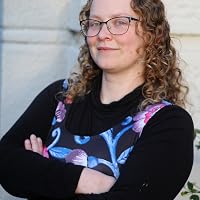
Julayne Lee is an overseas adopted Korean American poet, essayist, artivist, art curator and producer. Her debut collection of poems Not My White Savior (2018, Rare Bird) was on BookTrib’s list A Year of Memories: 15 New Memoirs We Can’t Wait to Read This Year and Bitch Media's Bitchreads: 15 Books Feminists Should Read in March. Not My White Savior was included in the 2018 Poets House Showcase in New York, their 26th annual exhibition of the nation’s poetry books and was also on Entropy's Best of 2018: Best Poetry Books & Poetry Collections. A Las Dos Brujas and VONA alum, Julayne's poetry and writing have been published in Cultural Weekly, Korean Quarterly, The Nervous Breakdown, Portside, Uri Shinmun, Zoom Info Korea, the South Korea Feminist Journal and elsewhere. Not My White Savior has been used in university Freshman Literature, Asian American Studies and Transracial Adoption courses. She's curated readings and hosted writing workshops for adopted people of color across the country. Co-founder of Adoptee Solidarity Korea – Los Angeles (ASK-LA), she also volunteered with the Adoptee Rights Campaign (ARC) to ensure citizenship for all adoptees. Julayne has read and spoken on adoption at universities and symposiums throughout the U.S. & Korea and has an MAEd from Hamline University. When she's not writing or attending a literary event, Julayne enjoys stand up paddleboarding (SUP), travel, films, Korean dramas, wine and cupcakes. To book Julayne at your university, artist, literary or community event, email julayne@julaynelee.com and find her on facebook / instagram @julayneelle
Reading Lee's poetry was cathartic, it simultaneously poured salt in a few wounds and offered a sense of relief to others - both of which are necessary for healing. While I'm not a Korean adoptee, there is some universality in the experience of transracial adoption, my experience. Lee's distinctly pointed anger, grief, and longing resonated with me deeply. She poignantly articulated the weight of emotions I've become exhausted of feeling. I could say so much more, but I'll leave it here. I know I will be revisiting this poetry collection again and again. Special recognition to: For My Mother Birthday Surprise! After I Left
I'm torn on Julayne Lee's Not My White Savior: A Memoir in Poems. She was born in South Korea and adopted by a White Christian family from Minnesota.
Lee was raised there until she moved to Los Angeles. Not My White Savior is about her journey finding out her heritage while being constantly told how fortunate she was to no longer be in South Korea.
On the one hand, Lee's poetry is tragic as details the sad fates from other Korean adoptees. Part V: A Holocaust of Children's Death Should Not Inspire Me is particular heartbreaking. It's a list of adopted Koreans who committed suicide.
However, on the other hand, I found Lee particularly whiny. These tragedies didn't seem like hers but others who have the right to feel that anger and indignation. It's akin of me writing about slavery like it happened to me. It made Lee's memoir disingenuous.
It's a shame because Lee can write. Her poetry is beautiful. However, it's not really a memoir.
I’m a bit on the fence with this one. It is billed as a memoir in poems. This does give one a sense of her experiences as an adopted child from Korea, but not really anything on specific events in her life. One thing that comes through very clearly is that Julayne Lee is angry - at her adoptive parents, adoptive country, the adoption agency, and her birth country. The poems lack imagery and any subtlety, but I enjoyed them for what they teach.
This book is extremely angry to the point of discomfort. But these stories need to be told and wounds healed. Lee is a Korean adoptee that suffered abuse and racism and is seeking healing. While I found her rough to read at times, her poems are sticking with me. Do not come to this expecting kindness or reconciliation. 4 stars.
I used to think of inter-country adoption in simple terms - “unwanted children” blessed with “better lives” in the West. Then I went to China and learned about some of the coercion if not outright confiscation involved in procuring infants during the country’s adoption boom.
Sadly, similar ugliness seems to have happened in Korea. Julayne Lee’s Not My White Savior, a memoir in poems, is about her own adoption into a white Christian family in Minnesota, and how she returned to Korea as an adult and continuously grapples with feelings of loss and alienation. And anger, so much anger. She touches on how the South Korean government failed its children, the lack of support for unwed mothers, the 200,000 infants sent abroad in an industry that lined so many pockets.
On a personal level, Lee clearly didn’t have a happy childhood. I have met transracial adoptive parents who are open, communicative and aware their children will have different life experiences - and other parents who are dismissive of their children’s struggles and push the “we saved you” narrative. Lee seems to have been raised by the latter, thus her more pessimistic views of inter-country adoption.
Still, whether an adoptee has supportive parents or not, we should be able to acknowledge there is gain AND loss when children are sent far from homelands, and that more than a few birth families were split against their wishes. Some of the best books and articles I’ve read uncovering troubling adoption practices are by white adoptive parents who wanted deeper understanding of how their children came to them. Basically, we need to stop with the “better life” narrative. It reeks of superiority, and people’s lives are far more nuanced.
Though I do struggle with poetry, I was riveted by Lee’s story. She is blunt and passionate, and I appreciate having another narrative of the transracial and inter-country adoptee experience.
Beautiful. Powerful. Heart breaking. Really makes you 🤯 about international adoption. As a different kind of adoptee (non international) it also made me think about the factors behind my own adoption and others like me.
It absolutely is an angry memoir- one in which Lee was adopted by a white family living in Minnesota from her native South Korea. And from her poetry memoir, it was not happy or pleasant. Her upbringing felt like she was being asked to forget a past (that she doesn't know much about) other than Korea's history but nothing of her birth family and then be thrust into a community and situation that she had little control over. It is dark but it also asks to take a look at adoptions of children from other countries-- how do family's adapt, share, or participate in their adopted child's culture, if at all? What macro and micro aggressions do white people use against Asians?
It's all explored here. It isn't fully developed in the sense that it's not a chronological retelling, instead it's the highlighted and formative experiences that Lee had that stand for who she is now while also (it seems) speaking for others in her situation.
The subject matter is serious stuff that isn't talked about and grappled with enough. It judges history and pushes for reckoning. Though called "a memoir in poems," it reads like a manifesto. Statements are mostly direct, with few images or layers to parse:
If these words are too angry too militant for you if they cause you discomfort and you squirm in your seat then I say they are not angry enough they are not militant enough until you cannot sleep at night and will take a stand against this injustice!
These lines are a rallying cry, and as such they work. But remove the line breaks and add standard punctuation, and you have rhetorical prose. To say it another way, this isn't art, but it is dynamic activism working for change.
These poems are raw, devastating, and angry. They’re an important history lesson on the complex factors involved in Korean-American adoption, full of rage against everything that should not be. Julayne Lee memorializes Korean-American adoptees whose lives were snuffed out by violence. She writes letters to her mothers—biological, foster, and adoptive. She blames Korea for giving up on 200,000 of its children. She details the racist, white, religious upbringing forced upon her. It must have taken a lot of courage to write about the less-than-favorable aspects of being a transracial adoptee, and I’m glad that Lee is giving these experiences a strong voice.
i enjoyed and appreciated the content of the poems themselves though i wasnt a massive fan of the construction of the poems as a whole. some did stand out to me (KADalicious, for my mother, relinquishment quiz among a few others) but generally i didnt really like lee's writing style. however, i do feel i learned more about a topic i have little knowledge about, and you could clearly feel lee's personal thoughts, feelings, and frustrations regarding her experience as a trans-racial adoptee in america.
A searing collection of poems as memoir, unpacking the complexities of identity building as an adoptee from Korea, airing out America’s dirty laundry and fraught history with Korea and Korean immigrants, and meditating on the ways trauma informs culture. Hold this collection as a memorial to Korean Americans and the victims of Inter Country Adoption, and as an eye opening example of what America has tried desperately to suppress.
This was an eye-opening book that will make you think deeply about the politics of transnational adoption, from the perspective of adoptees. I doubt that most people are aware of the layers of complexity behind issues of adoption.
It was sometimes painful to read this. As a person who hopes to adopt one day and I could not believe how ignorant I was to the feelings of adoptees. I definitely learned A LOT!
What a tough but absolutely essential set of poems about the effects of inter-country adoption. Julayne Lee has such a strong voice, and she’s not afraid to use it! I absolutely loved how much truth and honesty these poems gave. I’m so glad I read it!
These poems were raw and angry and so many of them rung true. There were ones that didn't apply to me, especially since I'm not Korean American or Korean. But there were others that spoke to something in my soul.
Excellent collection of poetry that illustrates the harms of unequal adoption (for lack of a specific term). I will be sharing this with History teachers to connect with cultural genocide and the Sixties Scoop.
Admittedly, I only read the first few poems in the collection, but I can't see myself finishing it. The poems seemed more like short prose than poetry, and while her experience needs to be shared, her poetry isn't for me.
Candid, honest, powerful, this poetry collection confronts the “better life” narrative associated with transracial adoption. Lee’s anger is palpable writing about the loss and trauma adoptees experience.
Whew, this is a tough one. All aboard the bitter train, count me in. This is raw and hateful and I loved it. I learned about the adoption of Korean children by westerners and how that wasn’t always a good thing.
I learned about the Korean adopted experience; it opened my eyes to the complexity of emotions and the dark history. Thank you for being vulnerable and sharing your story, Julayne!
I'm gonna need any white person leaving a critical review to have a seat and remember that this book wasn't written /for/ us. Our opinions aren't necessary here.
I almost DNF'ed this book and I'm so glad I didn't. I wasn't impressed with the first couple of poems but it got so much better afterwards. Definitely eye-opening on a situation I wasn't aware of.
14. A collection of poetry: Not My White Savior: A Memoir in Poems by Julayne Lee
List Progress: 20/30 (woo hoo!)
Through my efforts to read more poetry over the last few years, I have found my preferences tend towards the pointed and direct. I want poetry that has a concrete thing to say: a topic, a point of view, an intended audience. Not My White Savior: A Memoir in Poems by Julayne Lee is absolutely pointed. Lee has a lot to say about her upbringing, about being adopted from Korea at ten months old by a conservative white family in Minnesota. She has a lot to say, and she is angry. She writes about her conflicted identity as a transracial adoptee and how the system of adoption of Korean children by white American families is deeply threaded through with colonialism, racism and abuse. It is a topic I have not read much about before and Lee paints her story with a lot of passion. The form is occasionally a bit lacking, but the collection as a whole certainly packs a punch.
As not just a white person, but a white Minnesotan, I will always have a skewed perspective on poetry like this, and I did find myself wrestling with my emotional responses at first. My instinct was to give more credit and benefit of the doubt to Lee’s white adopters, but her response to her lived experience eventually settled in. She has devoted much of her adult life to bonding with other transracial adoptees and giving organizational support (she is the co-founder of Adoptee Solidarity Korea- LA) because of how deeply her experiences impacted her. Not My White Savior as a collection is as pointed as its title, and it has to be respected for that.
The poems are not particularly crafted or comprehensive as individual pieces. Perhaps it was a side effect of me reading the collection over the course of two days, but I could not envision plucking a single poem out of the piece any more than I would pluck a single chapter out of a novel. But as a whole, they paint a rich picture.
Lee has a particular voice that certainly will not resonate with everyone, and there were points where she lost me, but I am still very glad that I read this and that I had some of my own reactions challenged. While clearly a lot of pain went into the production of these poems, the results are impressive.