

What do you think?

L S LOWRY
144 pages, Paperback
First published January 1, 1987
Ratings & Reviews
Friends & Following
Create a free account to discover what your friends think of this book!
Community Reviews
Displaying 1 - 4 of 4 reviews

September 11, 2026
A few years ago I visited the town of Berwick-upon-Tweed, which lies in the very northeast corner of England a couple of miles from the Scottish border. L.S. Lowry used to visit the town, painted a number of scenes there, and Berwick now features a “Lowry Trail” where you can visit the various locations he painted, looking at the scenes as they are now. I quite enjoyed my walk along the Trail, so made a note to read up on Lowry.
He was one of Britain’s most popular 20th century artists, though that in itself tends to generate a degree of snootiness from critics. Born in 1887, he enrolled at the Manchester School of Art in 1905. Initially influenced by impressionism, he quickly developed his own distinctive style, becoming a painter of scenes from the industrial towns of England.
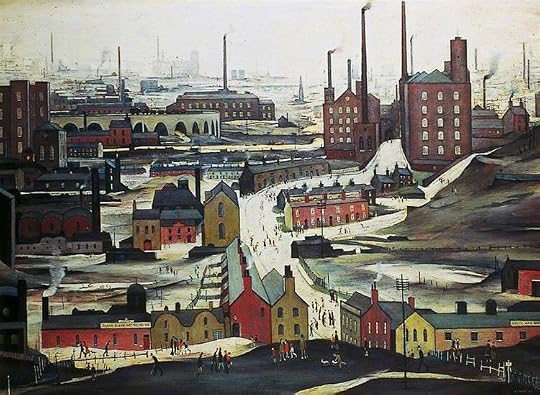
"Industrial Landscape (Ashton-under-Lyme)"
In this period his paintings became known for how humans were shown as “matchstick people.”
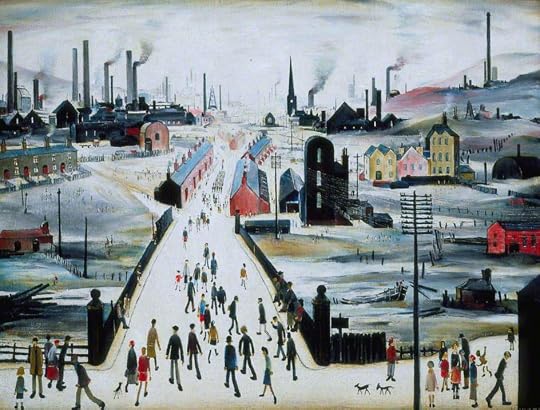
"The Canal Bridge"
In later life he tried to move away from painting industrial scenes. He was tired of the subject matter and in any case Britain was de-industrialising. The north of England was no longer a landscape of factories with smoke-belching chimneys. Lowry is quoted in the book as jokingly saying his work was done “but the blighters keep asking for more.” To some extent he moved into portraits and minimalist seascapes. His portraits almost invariably feature faces staring directly out of the canvas.
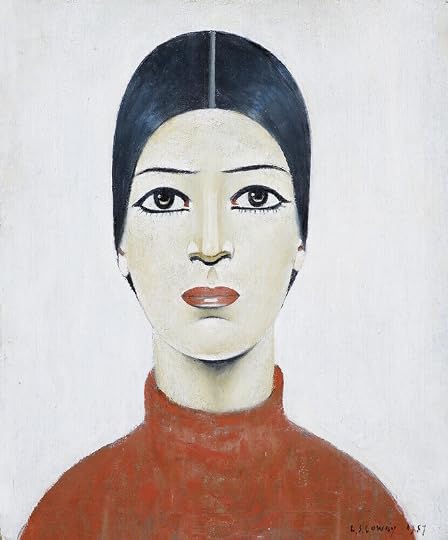
"Portrait of Ann"
The book consists of 5 short essays, by different authors. The entire thing is only 144 pages and much of it is taken up with reproductions of his work, so it’s a very quick read. The paintings are great to look at. My favourite essay is the third one, from 1966, where Lowry described his own life. He was self-consciously a lonely person. Lowry didn’t smoke, didn’t drink, never married and said in the interview “I’ve never even had a girl.” He spent almost all of his time alone, although people who did know him said he was pleasant and entertaining company. I had the impression he found it difficult to connect with others on a deeper level. He never went abroad, although he did travel a lot within Great Britain.
He left his mark with his painting though.
The rating is a bit generous given how short the book is, but it’s a good introduction to Lowry and his work.
He was one of Britain’s most popular 20th century artists, though that in itself tends to generate a degree of snootiness from critics. Born in 1887, he enrolled at the Manchester School of Art in 1905. Initially influenced by impressionism, he quickly developed his own distinctive style, becoming a painter of scenes from the industrial towns of England.
"Industrial Landscape (Ashton-under-Lyme)"
In this period his paintings became known for how humans were shown as “matchstick people.”
"The Canal Bridge"
In later life he tried to move away from painting industrial scenes. He was tired of the subject matter and in any case Britain was de-industrialising. The north of England was no longer a landscape of factories with smoke-belching chimneys. Lowry is quoted in the book as jokingly saying his work was done “but the blighters keep asking for more.” To some extent he moved into portraits and minimalist seascapes. His portraits almost invariably feature faces staring directly out of the canvas.
"Portrait of Ann"
The book consists of 5 short essays, by different authors. The entire thing is only 144 pages and much of it is taken up with reproductions of his work, so it’s a very quick read. The paintings are great to look at. My favourite essay is the third one, from 1966, where Lowry described his own life. He was self-consciously a lonely person. Lowry didn’t smoke, didn’t drink, never married and said in the interview “I’ve never even had a girl.” He spent almost all of his time alone, although people who did know him said he was pleasant and entertaining company. I had the impression he found it difficult to connect with others on a deeper level. He never went abroad, although he did travel a lot within Great Britain.
He left his mark with his painting though.
The rating is a bit generous given how short the book is, but it’s a good introduction to Lowry and his work.

March 14, 2026
I became interested in Lowry after seeing the movie "Mrs Lowry and Son" starring Timothy Spall recently. I hunted down this book from the library to learn more about this remarkable man and his work.
The book has beautiful pictures of Lowry's work and essays by various art world notable people about Lowry's work and life.
What strikes me is his obsession with his work and his profound loneliness. It seems like Lowry had very little in his life other than painting. He admitted in his later years that he'd "never had a woman" which seems to mean he died a virgin. He worked at his art for literal decades before getting any kind of recognition or financial reward for it. I guess it proves the old saying that you can be happy and well adjusted or you can make great art but not both.
Lowry's art and life is likely to haunt me for many years. I suspect that this will not the be the last book I read on the subject but it's a very good introduction. Highly recommended.
The book has beautiful pictures of Lowry's work and essays by various art world notable people about Lowry's work and life.
What strikes me is his obsession with his work and his profound loneliness. It seems like Lowry had very little in his life other than painting. He admitted in his later years that he'd "never had a woman" which seems to mean he died a virgin. He worked at his art for literal decades before getting any kind of recognition or financial reward for it. I guess it proves the old saying that you can be happy and well adjusted or you can make great art but not both.
Lowry's art and life is likely to haunt me for many years. I suspect that this will not the be the last book I read on the subject but it's a very good introduction. Highly recommended.

September 29, 2019
During an interview about the new film about Lowry, I learnt that he had used many different styles, not just the "little stick people" most people think of when they hear Lowry. I thought I would see if the library had anything about him, and they had this. So glad to have borrowed and read this book.

March 7, 2016
كتاب جميل جداً في منتصف الطريق بين سيرة موجزة و معرض لأعمال الفنان لاوري. أعتقد انه من مالممكن ان أقرأ المزيد عن الفنان لأنه بدا لي و كأنه عاش في كوكب خاص بهلم يكن له اشقاء، لم يخالط الجيران، لم يتزوج، لم يكن له أصدقاء مقربون، لم يكن يحب الخروج (الا للرسم)، اشتغل فقط لكي يتعيش، استمر بمسيرته الفنيه على الرغم من الرفض التام من كل المهتمين بالرسم سواء نقاد او اساتذة او عامة الجمهور. حصل على النجاح و التقدير في وقت متأخر من حياته و لم يهتم بتاتا الا بان النجاح قد يعني انه لن يضطر للخروج للعمل و سيسمح له حينها بالمزيد من العزلة الاختيارية
لم يستخدم في لوحاته اكثر من اربعة او خمسة الوان و تبدو مقنعة جداً و لا اعتقد ان المتلقي سيشعر بالفرق. لم يبد اي اهتمام او تأثر بالمدارس الفنية المعاصرة الا اثناء دراسته للفن فقط ليجيد الصنعة ثم ليرسم ما يريد و ليذهب النقاد ...حيث يريدون
أكثر ما عجبني في الكتاب /فن الرسام، هو انه يرى الجموع أكثر الاشياء وحدة.
لم يستخدم في لوحاته اكثر من اربعة او خمسة الوان و تبدو مقنعة جداً و لا اعتقد ان المتلقي سيشعر بالفرق. لم يبد اي اهتمام او تأثر بالمدارس الفنية المعاصرة الا اثناء دراسته للفن فقط ليجيد الصنعة ثم ليرسم ما يريد و ليذهب النقاد ...حيث يريدون
أكثر ما عجبني في الكتاب /فن الرسام، هو انه يرى الجموع أكثر الاشياء وحدة.
Displaying 1 - 4 of 4 reviews