

What do you think?
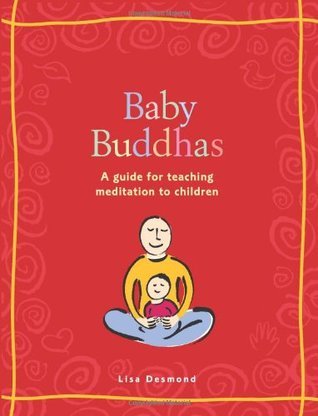
Baby Buddhas: A Guide for Teaching Meditation to Children
Baby Buddhas: A Guide for Teaching Meditation to Children is the first book to show parents and educators how to teach meditation to preschool-age children. Through irresistible photos and easy-to-follow text, Lisa Desmond clearly explains her copyrighted method of teaching meditation to children 18 months to three years old. Baby Buddhas also highlights the benefits of meditation for parents and children and shows how to incorporate meditation into family life. Part One, "Creating Your Space," explains how to create a simple meditation space in the home or school and explains the importance of sound, posture, and breathing. In Part Two, "Adult Meditations," adults learn three meditations to give them an opportunity to learn and meditate on their own before teaching children. Part Three, "Children's Meditations," includes 10 meditations suitable for children, organized from simplest to most complex. The children's meditations include the "Sunshine Meditation," in which the child learns to breathe in a "sunshine ball of light" full of love. The "Om Meditation" helps children calm themselves and feel love, even when their parents are away. All the children's meditations use repetition and simple words and images that children can easily understand. Parents who have used Lisa's techniques marvel at how their children have become calmer and more focused since they started meditating. With Baby Buddhas parents and educators can give the children in their care a gift that will last a lifetime.
- GenresParentingNonfiction
144 pages, Paperback
First published August 1, 2004
Ratings & Reviews
Friends & Following
Create a free account to discover what your friends think of this book!
Community Reviews
Displaying 1 - 9 of 9 reviews

July 28, 2019
This didn't bring joy.
Read
March 30, 2024“Use this meditation to teach a child who has hit to open his hands for loving touch. Use to teach a child who is overactive to use his feet or her feet to walk in a loving way. Use [this meditation] to teach a child to a spoken unkindly to open his or her throat for loving words. I hand the crystal to a child if the child’s love gets ‘stuck’ during the day, and the child holds it until he or she is ‘unstuck’ (p 123).”
‘Breathe in love.
Breathe out sadness.
Breathe in joy.
Breathe out madness.
Breathe in peace.
Breathe out badness.
All the sadness, madness, and badness changes to bright white sparkles of love.’
‘Breathe in love.
Breathe out sadness.
Breathe in joy.
Breathe out madness.
Breathe in peace.
Breathe out badness.
All the sadness, madness, and badness changes to bright white sparkles of love.’

November 6, 2012
If you're interested in teaching meditation to children as young as 18 months, this is a good place to start. All the books I'd found previously didn't have anything on kids younger than 8 or 9 years, which was disappointing since I didn't want to wait that long to start.
I'm finding parts 1 and 2 most useful. These provide general guidelines for teaching meditation. Part 3 covers a bunch of specific meditations and provides useful suggestions for when meditation might be useful and how it might be used. Religious belief isn't as overt in this book as in others, and it's relatively easy to adapt or remove as necessary. The mindfulness components seem to have the most benefit if you are looking to incorporate meditation as a routine practice after the kids get older.
For me, the specific meditations are slightly less useful than the rest of the book. Some of the meditations are too lively for my tastes; just because you're working with kids doesn't mean you have to be a spazz. Some of the language in the meditations feels hokey and dumbed down (I never talk to my kids this way).
I'm finding parts 1 and 2 most useful. These provide general guidelines for teaching meditation. Part 3 covers a bunch of specific meditations and provides useful suggestions for when meditation might be useful and how it might be used. Religious belief isn't as overt in this book as in others, and it's relatively easy to adapt or remove as necessary. The mindfulness components seem to have the most benefit if you are looking to incorporate meditation as a routine practice after the kids get older.
For me, the specific meditations are slightly less useful than the rest of the book. Some of the meditations are too lively for my tastes; just because you're working with kids doesn't mean you have to be a spazz. Some of the language in the meditations feels hokey and dumbed down (I never talk to my kids this way).

June 16, 2008
this was a great book. i little out there, but i plan to try some of her activites with my kids. we already have a tibetan bowl that cory makes music with, and a mediatation chime, so i'm going to try and teach my kids how to slow down and re-center when things get to be too much. i hope they can have more stress management skills than i ever learned.

September 6, 2008
I have a feeling I'll be referring to this book often. I have been wondering how to introduce my daughters to meditation practice, and I think this approach will work well. The meditations are simple, short, and geared toward the toddler/young child temperment.

November 17, 2010
I am excited to try meditation with my girls. This book gave me a lot of practical ideas for meditating with small children. the meditations got pretty repetitive towards the end but I learned a good pattern for developing my own meditation.

July 26, 2009
Helpful ideas for helping children learn to meditate.

August 20, 2014
Lovely ideas for adults and families, adaptable to many situations and beliefs.

Want to Read
October 17, 2007I have this, but as usual its on the nightstand in "queue" to be read!
Displaying 1 - 9 of 9 reviews