

What do you think?
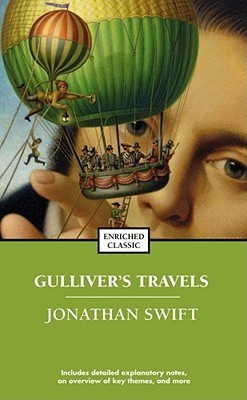
Gulliver's Travels and ''A Modest Proposal''
Enduring Literature Illuminated by Practical Scholarship
By turns a children's fantasy and a social satire for adults, Gulliver's Travels is one of the most popular adventure tales of all time. "A Modest Proposal," also an imaginative, enduring work, is political lampoonery at its finest.
This Enriched Classic Edition includes:
A concise introduction that gives readers important background information
A chronology of the author's life and work
A timeline of significant events that provides the book's historical context
An outline of key themes and plot points to help readers form their own interpretations
Detailed explanatory notes
Critical analysis, including contemporary and modern perspectives on the work
Discussion questions to promote lively classroom and book group interaction
A list of recommended related books and films to broaden the reader's experience
Enriched Classics offer readers affordable editions of great works of literature enhanced by helpful notes and insightful commentary. The scholarship provided in Enriched Classics enables readers to appreciate, understand, and enjoy the world's finest books to their full potential.
Series edited by Cynthia Brantley Johnson
416 pages, Mass Market Paperback
First published July 26, 2005
About the author
Jonathan Swift
4,948 books2,291 followersJonathan Swift was an Anglo-Irish satirist, author, essayist, political pamphleteer (first for the Whigs, then for the Tories), poet, and Anglican cleric who became Dean of St Patrick's Cathedral, Dublin, hence his common sobriquet, "Dean Swift".
Swift is remembered for works such as A Tale of a Tub (1704), An Argument Against Abolishing Christianity (1712), Gulliver's Travels (1726), and A Modest Proposal (1729). He is regarded by the Encyclopædia Britannica as the foremost prose satirist in the English language. He originally published all of his works under pseudonyms—such as Lemuel Gulliver, Isaac Bickerstaff, M.B. Drapier—or anonymously. He was a master of two styles of satire, the Horatian and Juvenalian styles.
His deadpan, ironic writing style, particularly in A Modest Proposal, has led to such satire being subsequently termed "Swiftian".
Swift is remembered for works such as A Tale of a Tub (1704), An Argument Against Abolishing Christianity (1712), Gulliver's Travels (1726), and A Modest Proposal (1729). He is regarded by the Encyclopædia Britannica as the foremost prose satirist in the English language. He originally published all of his works under pseudonyms—such as Lemuel Gulliver, Isaac Bickerstaff, M.B. Drapier—or anonymously. He was a master of two styles of satire, the Horatian and Juvenalian styles.
His deadpan, ironic writing style, particularly in A Modest Proposal, has led to such satire being subsequently termed "Swiftian".
Ratings & Reviews
Friends & Following
Create a free account to discover what your friends think of this book!
Community Reviews
Displaying 1 - 30 of 76 reviews

December 12, 2018
Swift is a fan-freaking-tastic satirical writer. A Modest Proposal was hilarious, so long as you understand it is indeed a satire. Gulliver's Travels is also satirical, and I found it fun tying the satire back to what was going on in politics when Swift wrote this. Even if you don't understand how the piece is satirical, you can still gather the themes and lessons throughout. Worth a read for sure!

September 13, 2025
Gulliver’s Travels by Jonathan Swift
Classic, yes but just 7 out of 10 for this pretentious reader
- Is there any novel more famous than Gulliver’s Travels
- I doubt it
These are notes that do not refer to style, objective merits, historical context and all the other literary aspects.
For a professional opinion a reader is way better off searching for an appreciated critic and skip these amateur scribbling.
For what is worth, once in a while curiosities attract our attention, be they cats that adopt baby ducks or amateur opinions on…Gulliver.
We all know about the shipwreck and the ordeal of the giant- in the first part- trapped by the Lilliputians.
I was curious to see what effect this story will produce on me after so many years and what it looks like in a different form.
Mindset makes a tremendous difference.
When I approach a book thinking it will be a disappointment, it is most of the time, even if it is acclaimed as a masterpiece.
Gulliver is not in the same position, for I know that it was included in the list of best 100 books ever written.
So it is not a flimsy creation, even if I would not place it among my favorite 100 books and would not take it on an island.
This is mainly because I thought of it as a children’s book and not really worth the attention of an adult…well, educated grown up in any case.
This proves how superficial a judgment call can be
First of all, there are symbols in the book and references to major themes and important subjects of the day.
If I remember correctly, Swift has transported some of the issues of his time into the lands and disputes that take place in The Travels.
Second of all, there are passages that are inappropriate for children, with more than erotic flavor and perhaps even pornographic.
Maybe it is just my sick imagination or a bad memory, but I think that when Gulliver was visiting the giants he was kind of abused.
- Or was he quite happy with the treatment received?
The adaptation that I heard this morning does not delve into that Paternal Guidance or adult material.
But what I recall is that Gulliver had a giant companion that he played with him in a sexually explicit manner.
She would be charged with harassment in the world of today.
And it does come back to me- Gulliver was not pleased with being moved over the nearly naked (?) body of a woman.
As a giant, the smells of the lady were appropriately huge and disturbing.
The same happened with her features- breasts were not pleasant, attractive female attributes, but hills.
Small pimples were like disgusting extra organs or limbs, the whole was more of a monstrosity than enticing partner.
I wonder how my macaws see me- as a giant freak?
Classic, yes but just 7 out of 10 for this pretentious reader
- Is there any novel more famous than Gulliver’s Travels
- I doubt it
These are notes that do not refer to style, objective merits, historical context and all the other literary aspects.
For a professional opinion a reader is way better off searching for an appreciated critic and skip these amateur scribbling.
For what is worth, once in a while curiosities attract our attention, be they cats that adopt baby ducks or amateur opinions on…Gulliver.
We all know about the shipwreck and the ordeal of the giant- in the first part- trapped by the Lilliputians.
I was curious to see what effect this story will produce on me after so many years and what it looks like in a different form.
Mindset makes a tremendous difference.
When I approach a book thinking it will be a disappointment, it is most of the time, even if it is acclaimed as a masterpiece.
Gulliver is not in the same position, for I know that it was included in the list of best 100 books ever written.
So it is not a flimsy creation, even if I would not place it among my favorite 100 books and would not take it on an island.
This is mainly because I thought of it as a children’s book and not really worth the attention of an adult…well, educated grown up in any case.
This proves how superficial a judgment call can be
First of all, there are symbols in the book and references to major themes and important subjects of the day.
If I remember correctly, Swift has transported some of the issues of his time into the lands and disputes that take place in The Travels.
Second of all, there are passages that are inappropriate for children, with more than erotic flavor and perhaps even pornographic.
Maybe it is just my sick imagination or a bad memory, but I think that when Gulliver was visiting the giants he was kind of abused.
- Or was he quite happy with the treatment received?
The adaptation that I heard this morning does not delve into that Paternal Guidance or adult material.
But what I recall is that Gulliver had a giant companion that he played with him in a sexually explicit manner.
She would be charged with harassment in the world of today.
And it does come back to me- Gulliver was not pleased with being moved over the nearly naked (?) body of a woman.
As a giant, the smells of the lady were appropriately huge and disturbing.
The same happened with her features- breasts were not pleasant, attractive female attributes, but hills.
Small pimples were like disgusting extra organs or limbs, the whole was more of a monstrosity than enticing partner.
I wonder how my macaws see me- as a giant freak?
January 28, 2019
Just couldn't get into it
January 1, 2009
I really had to read this about three times to get the whole political underscore and social commentary. When you're 8 years old, it just seems like a fun fairytale, but reading it multiple times in high school and college, it struck different chords each time. It's actually a pretty smart critique on life dressed up in an interesting bunch of journeys to different lands.
A Modest Proposal, was hilarious, in my opinion. Reading it once as-is and then again keeping in mind the satirical nature of the piece was pretty amusing. Who says old English literature has to be boring?
A Modest Proposal, was hilarious, in my opinion. Reading it once as-is and then again keeping in mind the satirical nature of the piece was pretty amusing. Who says old English literature has to be boring?

February 6, 2008
Two masterpieces that had me believing I could become a satirist in no time. Many newspapers had to endure my letters of which none were printed. (But I can't put the blame on Swift for making it look so easy.)

November 19, 2015
در یوم بیست و پنش شهر نوامبر سنهٔ دو هزار و پانزده، قرائتیده شد، ریویو تا ساعاتی بلکم هم ایامی دگر
و من اللح طوفیغ
و من اللح طوفیغ
May 17, 2023
I knew Jonathan Swift is famous for his satire. I remember reading an essay of his suggesting that the people of England eat their children to decrease the population. Gulliver's Travels was even stranger. We've all heard about Lilliput, but there were other countries equally odd that he visits in this book. This novel was as tedious as tedious can be. That's why it took me forever to finish it. I love classics, but this isn't one I would even recommend let alone keep. I will say his stay with the intelligent horses and his commentary were spot on. Humans can be foolish and behave irrationally, but there is still a lot of good in everyone. I did like his comments on the excesses of government which even in this century we see a lot of.

August 27, 2026
Often considered a children’s novel, Jonathan Swift’s deeply satirical masterpiece actually delivers a biting critique of human nature and 18th-century society. While the archaic prose requires some patience, the witty world-building and complex characters remain incredibly rewarding. The episodic narrative is highly compelling, even if the repetitive structure drags occasionally in the later voyages. Swift’s imagination was astonishingly ahead of its time, predicting technological concepts and forms of transport that wouldn't be realised for centuries. Overall, it is a fast-paced, fascinating, and timeless exploration of the human condition that deserves a spot on every classic lover's shelf.
October 11, 2022
I truly tried to enjoy this book numerous times and each reading brought more pain and suffering to my brain. The main character is easy to dislike, his attitude towards the people and things he encounters only cements his feelings of superiority- even when proven that he isn’t as grand as he originally thought.
I understand the sarcastic messages, but they come off as pompous rather than humorous… I strongly disliked this book. I had to fight with myself to finish it, and that has never happened to me before. 2 stars instead of 1 star because it seems cruel to score that low based off my personal preference for writing styles.
I understand the sarcastic messages, but they come off as pompous rather than humorous… I strongly disliked this book. I had to fight with myself to finish it, and that has never happened to me before. 2 stars instead of 1 star because it seems cruel to score that low based off my personal preference for writing styles.

August 13, 2025
This story was all over the place, in both good and bad ways. The good is that the protagonist goes on incredibly unique adventures in lands that the author was very inventive with, but the bad is that there were so many trips in one book. The writing was quite meandering and tedious for a lot of it, which lowered my enjoyment significantly, but I gave 3 stars because it was very interesting to imagine these alternate societies that the author came up with.

November 30, 2025
Brilliantly observed commentary on human nature in the form of comedic fantasy.
Every one of Gulliver’s encounters shows what illogical and immoral creatures we human beings are. Mark Twain must surely have loved Swift. I’m not sure whether George Carlin ever read Swift, but he certainly was, to some extent, cut from the same cloth.
If heaven existed, I would hope it would provide a place sto sit and listen to those three in conversation.
Every one of Gulliver’s encounters shows what illogical and immoral creatures we human beings are. Mark Twain must surely have loved Swift. I’m not sure whether George Carlin ever read Swift, but he certainly was, to some extent, cut from the same cloth.
If heaven existed, I would hope it would provide a place sto sit and listen to those three in conversation.
April 4, 2023
The novel belonging to Augustan age (18th century) is a masterpiece of Menippean satire. The novel is written in simple words and in commons form but the the hidden ironic writing style is wroth appreciation. Travel adventures of Lemuel Gulliver is worth reading once,

May 18, 2023
I'm not a friend of satires. Meh. I thought that I had read it before. Most of the book I thought I hadn't, but the last section was familiar. It's a classic and I can see why, but I wasn't into it.
A Modest Proposal was hilarious, if you can keep in mind that it's a satire.
A Modest Proposal was hilarious, if you can keep in mind that it's a satire.

May 26, 2023
Entretenida obra archiconocida en donde nos relata las distintas islas que conoció Gulliver en su famosos viajes.
Primero nos relata sus aventuras en la isla de los liliputienses, pequeños personajes de unos 15 centímetros de altura estimo, que creo que no es necesario recordar.
Después llegará a la isla de los gigantes, llamados si no recuerdo mal brobdingnagianos, en donde fue rescatado por una familia labradora y la hija de esta familia lo llevará a la ciudad en donde será presentado a los reyes, siendo la Reina su especial protectora.
Seguidamente conocerá la isla de Laputa. Una isla que flota en el aire. Aquí nos cuenta cómo viven su habitantes y nos relata también a otros habilitantes de otras islas con las que los de Laputa tienen relación y vasallaje.
Por último nos narra sus aventuras en la isla de los caballos, llamados houyhnhnms. Animales inteligentes que hablan entre ellos. Gulliver consigue aprender su idioma y se queda prendado con la forma de ver el mundo de los caballos, hasta tal punto que no desea irse de la isla, aunque al final, por distintas circunstacias tiene que partir. En esta isla los caballos tienen animales de servidumbre que son exactamente iguales a los humanos, pero llenos de pelo y con garras en las manos y pies. Son seres salvajes y agresivos, llamados yahoo (al parecer se baraja la posibilidad de que el buscador yahoo se inspirara al tomar su nombre en estos personajes). Estos yahoo son usados como sirvientes pues no son más que bestias que no tienen entendimiento. De hecho Gulliver es tomado siempre como un yahoo pero con cierto grado de raciocinio y con capacidad para aprender el idioma de los caballos.
La obra se lee muy bien y es muy entretenida. Me ha llamado la atención las páginas finales en la que nos dice que los yahoo de Europa "...desembarcan para robar y saquear; encuentran un pueblo sencillo, que los recibe con amabilidad; toman de él formal posesión en nombre de su rey;... asesinan a dos o tres docenas de indígenas; se llevan por la fuerza una pareja como muestra... se envían barcos a la primera oportunidad; se expulsan o se destruyen a los naturales; se tortura a sus príncipes para obligarlos a declarar dónde tienen su oro; se concede plena autorización para todo acto de inhumanidad y lascivia... Y esta execrable cuadrilla de carniceros, empleada en esta piadosa expedición, es una colonia moderna, enviada para convertir y civilizar a un pueblo idólatra y bárbaro." Los párrafos están copiados literal del libro. Lo primero que una piensa es que es una clara referencia a los españoles, ya que la leyenda negra nos ha presentado como esos seres sanguinarios. Pero por otro lado, al no hacer referencia a ninguna nación en concreto, puedes pensar que se refiere al hombre europeo en general o incluso a una crítica a Inglaterra. Pero luego viene la confirmación de que efectivamente, se refiere a España de forma sibilina, pues nos dice en otros párrafos posteriores y absolutamente memorables, lo siguiente:
"Pero reconozco que esta descripción en ningún modo se refiere a la nación británica, que puede servir de ejemplo a todo el mundo por su sabiduría, cuidado y justicia en establecer colonias; sus liberales consignaciones para el progreso de la religión y la cultura; su elección de pastores devotos y capaces para propagar el cristianismo; su precaución de poblar las provincias con gentes de vida y conservación moderadas, enviada de la madre patria; su riguroso celo en la administración de justicia, designación para el ministerio civil, en todas y cada parte de sus colonias, funcionarios de la mayor competencia, totalmente inaccesibles a la corrupción, y, por coronarlo todo, su tino para enviar a los más vigilantes y virtuosos gobernadores, que no tienen más aspiración que la felicidad de los pueblos que dirigen y el honor del rey su señor."
Cuando leí esto me quedé que no supe si echarme a reir o a llorar. Me pareció tan brutal que no sabía si era en serio o era una hipérbole irónica sobre Inglaterra. Y aún hoy sigo sin estar seguro de que no sea una crítica sarcástica de los británicos, porque si no fuera así me parece que no tiene nombre lo que escribe este hombre sobre los británicos. Pero es posible que sea así. Ya dije arriba que la leyenda negra, que los españoles nos empeñamos en creer, ha sido un ejercicio de propaganda espectacular y que ha conseguido humillar a España hasta la fecha de hoy.
No quero dejar de recordar que cuando Gulliver describe a los caballos cómo son algunas cosas de su nación, llega a explicar cómo son los abogados. Y la verdad es que los pone de vuelta y media. Gente que solo mira para ellos, que no le interesa la justicia ni el bien ni el mal, que desde niños aprenden las leyes y su especial vocabulario cuyo único objetivo es desviar la atención de la verdad para conseguir que la falsedad triunfe con el objeto de llenarse los bolsillos. Y una cantidad más de epítetos que no favorecen en nada a los abogados. Me acordé de Paula y me imagino que no le haría mucha gracia esta descripción, aunque a mi me resultó simpática.
en fin, pero fuera de esta anécdota, la obra se lee muy bien y es muy entretenida. Todo un clásico.
Primero nos relata sus aventuras en la isla de los liliputienses, pequeños personajes de unos 15 centímetros de altura estimo, que creo que no es necesario recordar.
Después llegará a la isla de los gigantes, llamados si no recuerdo mal brobdingnagianos, en donde fue rescatado por una familia labradora y la hija de esta familia lo llevará a la ciudad en donde será presentado a los reyes, siendo la Reina su especial protectora.
Seguidamente conocerá la isla de Laputa. Una isla que flota en el aire. Aquí nos cuenta cómo viven su habitantes y nos relata también a otros habilitantes de otras islas con las que los de Laputa tienen relación y vasallaje.
Por último nos narra sus aventuras en la isla de los caballos, llamados houyhnhnms. Animales inteligentes que hablan entre ellos. Gulliver consigue aprender su idioma y se queda prendado con la forma de ver el mundo de los caballos, hasta tal punto que no desea irse de la isla, aunque al final, por distintas circunstacias tiene que partir. En esta isla los caballos tienen animales de servidumbre que son exactamente iguales a los humanos, pero llenos de pelo y con garras en las manos y pies. Son seres salvajes y agresivos, llamados yahoo (al parecer se baraja la posibilidad de que el buscador yahoo se inspirara al tomar su nombre en estos personajes). Estos yahoo son usados como sirvientes pues no son más que bestias que no tienen entendimiento. De hecho Gulliver es tomado siempre como un yahoo pero con cierto grado de raciocinio y con capacidad para aprender el idioma de los caballos.
La obra se lee muy bien y es muy entretenida. Me ha llamado la atención las páginas finales en la que nos dice que los yahoo de Europa "...desembarcan para robar y saquear; encuentran un pueblo sencillo, que los recibe con amabilidad; toman de él formal posesión en nombre de su rey;... asesinan a dos o tres docenas de indígenas; se llevan por la fuerza una pareja como muestra... se envían barcos a la primera oportunidad; se expulsan o se destruyen a los naturales; se tortura a sus príncipes para obligarlos a declarar dónde tienen su oro; se concede plena autorización para todo acto de inhumanidad y lascivia... Y esta execrable cuadrilla de carniceros, empleada en esta piadosa expedición, es una colonia moderna, enviada para convertir y civilizar a un pueblo idólatra y bárbaro." Los párrafos están copiados literal del libro. Lo primero que una piensa es que es una clara referencia a los españoles, ya que la leyenda negra nos ha presentado como esos seres sanguinarios. Pero por otro lado, al no hacer referencia a ninguna nación en concreto, puedes pensar que se refiere al hombre europeo en general o incluso a una crítica a Inglaterra. Pero luego viene la confirmación de que efectivamente, se refiere a España de forma sibilina, pues nos dice en otros párrafos posteriores y absolutamente memorables, lo siguiente:
"Pero reconozco que esta descripción en ningún modo se refiere a la nación británica, que puede servir de ejemplo a todo el mundo por su sabiduría, cuidado y justicia en establecer colonias; sus liberales consignaciones para el progreso de la religión y la cultura; su elección de pastores devotos y capaces para propagar el cristianismo; su precaución de poblar las provincias con gentes de vida y conservación moderadas, enviada de la madre patria; su riguroso celo en la administración de justicia, designación para el ministerio civil, en todas y cada parte de sus colonias, funcionarios de la mayor competencia, totalmente inaccesibles a la corrupción, y, por coronarlo todo, su tino para enviar a los más vigilantes y virtuosos gobernadores, que no tienen más aspiración que la felicidad de los pueblos que dirigen y el honor del rey su señor."
Cuando leí esto me quedé que no supe si echarme a reir o a llorar. Me pareció tan brutal que no sabía si era en serio o era una hipérbole irónica sobre Inglaterra. Y aún hoy sigo sin estar seguro de que no sea una crítica sarcástica de los británicos, porque si no fuera así me parece que no tiene nombre lo que escribe este hombre sobre los británicos. Pero es posible que sea así. Ya dije arriba que la leyenda negra, que los españoles nos empeñamos en creer, ha sido un ejercicio de propaganda espectacular y que ha conseguido humillar a España hasta la fecha de hoy.
No quero dejar de recordar que cuando Gulliver describe a los caballos cómo son algunas cosas de su nación, llega a explicar cómo son los abogados. Y la verdad es que los pone de vuelta y media. Gente que solo mira para ellos, que no le interesa la justicia ni el bien ni el mal, que desde niños aprenden las leyes y su especial vocabulario cuyo único objetivo es desviar la atención de la verdad para conseguir que la falsedad triunfe con el objeto de llenarse los bolsillos. Y una cantidad más de epítetos que no favorecen en nada a los abogados. Me acordé de Paula y me imagino que no le haría mucha gracia esta descripción, aunque a mi me resultó simpática.
en fin, pero fuera de esta anécdota, la obra se lee muy bien y es muy entretenida. Todo un clásico.
This entire review has been hidden because of spoilers.

December 18, 2017
This book is SO much more than Lilliput. I'm glad I read the entire book, rather than relying on Disney's version.

September 13, 2021
you are not the funnyman that you think yourself to be sir. the only thing you succeeded in was just irating me from beyond the grave.
October 14, 2021
Make sure you want to spend a while figuring things out before you open this book, elizabethan language a bit tedious.

February 12, 2022
He big, no he small
October 26, 2022
One of the strangest stories I have ever come across. I wouldn't really recommend it unless you like very weird satire, and horses...

December 27, 2022
Excellent book
May 24, 2023
One of the best novels of all time.

August 9, 2024
Thoroughly entertained

Read
December 8, 2024What a strange fella
March 30, 2025
Read for professor lobell’s restoration and 18th century lit class
April 20, 2025
Hayal gücünü gelistirici guzel bir kitap

October 1, 2025
A second reading. This time to teach.
December 24, 2025
eng 200 — the english literary tradition

October 4, 2020
Swift was a wonderful satyrical writer. A Modest Proposal is my favorite essay of all time and pairing it with G. T. Was really smart as I think you get a better picture of Swifts philosophy by reading both. G. T. is one of those wonderful novels that can be read simply for the enjoyment of the story but also has a rich background of social commentary.

March 12, 2017
Jonathan Swift, a través de Los viajes de Gulliver, nos presenta una visión muy negativa de la humanidad. Escrita a la manera de los libros de viaje de la época (Swift aquí también satiriza su monótono estilo), la novela nos es presentada como la relación que escribe el marinero inglés Lemuel Gulliver de sus viajes a varios países fantásticos(Lilliput, Brobdignag, Balnibardi, Luggnagg, Glubbdubdrib, Japón, Laputa y el país de los Houyhnhnms).
Estos países, y su disimilitud con Europa, son para Gulliver el pretexto perfecto para comparar los usos de su país con los que encuentra en sus heterodoxos viajes. Uno de las consecuencias de este tipo de narración es que el lector no puede evitar analizar su propia idiosincrasia a la luz de las descritas en los capítulos del libro. Éste es un ejercicio sumamente interesante ya que pone en entredicho la validez de nuestras instituciones, costumbres, y yendo un poco más allá, incluso nuestro sentido común.
Swift exhibe una visión muy aguda y un análisis muy claro de los defectos de nuestra civilización. En lo personal, la distopía que más me resultó interesante, fue la de la isla flotante Laputa. Se trata de un país cuyos habitantes solo valoran el conocimiento abstracto y desprecian el valor práctico de las cosas y conocimientos. Estos seres desconocen a tal grado la fantasía y la imaginación que en su lengua no hay palabra para designarlas y sus vidas están plagadas de minuciosas discusiones sobre la actualidad política y preocupaciones sobre los que puede salir mal en el futuro.
Estos países, y su disimilitud con Europa, son para Gulliver el pretexto perfecto para comparar los usos de su país con los que encuentra en sus heterodoxos viajes. Uno de las consecuencias de este tipo de narración es que el lector no puede evitar analizar su propia idiosincrasia a la luz de las descritas en los capítulos del libro. Éste es un ejercicio sumamente interesante ya que pone en entredicho la validez de nuestras instituciones, costumbres, y yendo un poco más allá, incluso nuestro sentido común.
Swift exhibe una visión muy aguda y un análisis muy claro de los defectos de nuestra civilización. En lo personal, la distopía que más me resultó interesante, fue la de la isla flotante Laputa. Se trata de un país cuyos habitantes solo valoran el conocimiento abstracto y desprecian el valor práctico de las cosas y conocimientos. Estos seres desconocen a tal grado la fantasía y la imaginación que en su lengua no hay palabra para designarlas y sus vidas están plagadas de minuciosas discusiones sobre la actualidad política y preocupaciones sobre los que puede salir mal en el futuro.

July 9, 2009
Eh...I picked up Gulliver's Travels because I brought back from Christmas holiday (my parents' home and residence for many of my books) with the intention of diving right into it in January. Obviously, the intention has gone stale as it is now July.
Gulliver's travels reminds me of Twain's Innocents Abroad. Both are travel narratives and not really "novels" in the traditional sense--if at all. Swift and Twain's works are also united by their satirical intentions, though I must admit that much of the satire laced throughout Gulliver's Travels was lost on me. And it also sort of reminded me of "The Odyssey" by Homer--I don't know if this is a comparison most would agree with--but the way each of Gulliver's journeys evolves reminds me of "The Odyssey" where Odysseus is faced with certain tasks in an effort to prevent his return home.
"Gulliver's Travels" is divided into four parts; each part details a separate journey from Gulliver.
I believe this book has merit, but was bored at some parts--and without a study guide--fear that much of the book's original intention/effects was lost on me.
Gulliver's travels reminds me of Twain's Innocents Abroad. Both are travel narratives and not really "novels" in the traditional sense--if at all. Swift and Twain's works are also united by their satirical intentions, though I must admit that much of the satire laced throughout Gulliver's Travels was lost on me. And it also sort of reminded me of "The Odyssey" by Homer--I don't know if this is a comparison most would agree with--but the way each of Gulliver's journeys evolves reminds me of "The Odyssey" where Odysseus is faced with certain tasks in an effort to prevent his return home.
"Gulliver's Travels" is divided into four parts; each part details a separate journey from Gulliver.
I believe this book has merit, but was bored at some parts--and without a study guide--fear that much of the book's original intention/effects was lost on me.
Displaying 1 - 30 of 76 reviews