

What do you think?
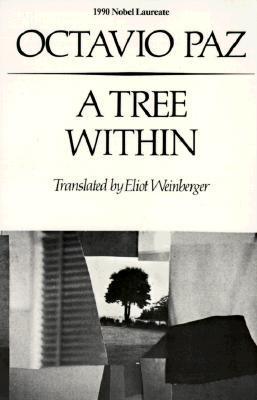
A Tree Within
A Tree Within ( Arbol Adentro ), the first collection of new poems by the great Mexican author Octavio Paz since his Return ( Vuelta ) of 1975, was originally published as the final section of The Collected Poems of Octavio Paz, 1957-1987 . Among these later poems is a series of works dedicated to such artists as Miró, Balthus, Duchamp, Rauschenberg, Tapies, Alechinsky, Monet, and Matta, as well as a number of epigrammatic and Chinese-like lyrics. Two remarkable long poems ––”I Speak of the City,” a Whitmanesque apocalyptic evocation of the contemporary urban nightmare, and “Letter of Testimony,” a meditation on love and death––are emblematic of the mature poet in a prophetic voice.
164 pages, Paperback
First published November 1, 1988
About the author
Octavio Paz
559 books1,480 followersOctavio Paz Lozano was a Mexican writer, poet, and diplomat, and the winner of the 1982 Neustadt International Prize for Literature and the 1990 Nobel Prize for Literature ("for impassioned writing with wide horizons, characterized by sensuous intelligence and humanistic integrity.")
Ratings & Reviews
Friends & Following
Create a free account to discover what your friends think of this book!
Community Reviews
Displaying 1 - 28 of 28 reviews

October 6, 2024
‘Foliage of murmurs, crickets insomniac in the sleeping grass, the stars are swimming in a pool of frogs, summer collects its pitchers in the sky, with invisible hands the air opens a door. Your forehead's the terrace the moon prefers.’ — from ‘Pillars’
‘Pulse-beat of last light: fifteen beleaguered minutes Claude Monet watches from a boat. The sky immerses itself in the water, the water drowns, the poplar is an opal thrust: this world is not solid. Between being and non-being the grass wavers, the elements become lighter, outlines shade over, glimmers, reflections, reverberations, flashes of forms and presences, image mist, eclipse: what I see, we are: mirages.’ — from ‘Four Poplars’
‘Not a preface, you deserve an epic poem, a serialised adventure novel. The critics may say what they like : you are not in the least like dyspeptic Kafka or aneamic Beckett. You come from a poem by Ariosto, you go out in one of Gomez de Ia Serna's grotesque stories. You're a fairy tale a grandmother tells, an inscription on a fallen stone, a drawing and a name on a wall. You're the wolf that fought for a thousand years and now carries the moon in its hand through the endless corridor of winter to the plaza of May : the pear has blossomed and in its shade the circle of men drink a liquor distilled from the sun. The wind stops to listen to them and repeats that sound in the hills. In the meantime you've slipped off with the moon. You're a wolf and a boy and a hundred years old. Your laughter celebrates the world and says Yes—’ — from 'Impreface'
July 15, 2021
The doors of the year open,
like the doors of language,
onto the unknown.
Last night you said:
tomorrow
we must draw signs,
sketch a landscape, hatch a plot
on the unfolded page
of paper and the day.
Tomorrow we must invent,
anew,
the reality of this world.
When I opened my eyes it was too late.
For a second of a second
I felt like the Aztec
on the rock-strewn peak,
watching
the cracks of horizons
for the uncertain return of time.
No, the year came back.
It filled the room,
and my glances could almost touch it.
Time, without our help,
had arranged
in the same order as yesterday,
the houses on the empty street,
the snow on the houses,
the silence of the snow.
You were beside me,
still sleeping.
The day had invented you,
but you hadn't yet accepted
your day's invention,
nor mine.
You were still in another day.
You were beside me,
and I saw you, like the snow,
asleep among the appearances.
Time, without our help,
invents houses, streets, trees,
sleeping women.
When you open your eyes
we'll walk, anew,
among the hours and their inventions,
and lingering among the appearances
we'll testify to time and its conjugations.
We'll open the doors of this day,
and go into the unknown.

July 2, 2019
At times poetry is the vertigo of bodies and the vertigo of speech and
the vertigo of death;
the walk with eyes closed along the edge of the cliff, and the verbena
in submarine gardens;
the laughter that sets fire to rules and the holy commandments;
the descent of parachuting words onto the sands of the page;
the despair that boards a paper boat and crosses,
for forty nights and forty days, the night-sorrow sea and the daysorrow
desert;
the idolatry of the self and the desecration of the self and the dissipation
of the self;
the beheading of epithets, the burial of mirrors;
the recollection of pronouns freshly cut in the garden of Epicurus, and
the garden of Netzahualcoyotl;
the flute solo on the terrace of memory and the dance of flames in the
cave of thought ;
the migrations o f millions o f verbs, wings and claws, seeds and hands ;
the nouns, bony and full of roots, planted on the waves of language;
the love unseen and the love unheard and the love unsaid : the love in
love.
Syllables seeds.
*
I am a man : little do I last
and the night is enormous.
But I look up :
the stars write.
Unknowing I understand :
I too am written,
and at this very moment
someone spells me out.
*
to remember that a waterfall is a girl coming down the stairs dying of
laughter,
to see the sun and its planets swinging on the trapeze of the horizon,
to learn to see so that things will see us and come and go through our
seeing,
living alphabets that send out roots, shoot up, bud, flower, fly off, scatter,
fall.
the vertigo of death;
the walk with eyes closed along the edge of the cliff, and the verbena
in submarine gardens;
the laughter that sets fire to rules and the holy commandments;
the descent of parachuting words onto the sands of the page;
the despair that boards a paper boat and crosses,
for forty nights and forty days, the night-sorrow sea and the daysorrow
desert;
the idolatry of the self and the desecration of the self and the dissipation
of the self;
the beheading of epithets, the burial of mirrors;
the recollection of pronouns freshly cut in the garden of Epicurus, and
the garden of Netzahualcoyotl;
the flute solo on the terrace of memory and the dance of flames in the
cave of thought ;
the migrations o f millions o f verbs, wings and claws, seeds and hands ;
the nouns, bony and full of roots, planted on the waves of language;
the love unseen and the love unheard and the love unsaid : the love in
love.
Syllables seeds.
*
I am a man : little do I last
and the night is enormous.
But I look up :
the stars write.
Unknowing I understand :
I too am written,
and at this very moment
someone spells me out.
*
to remember that a waterfall is a girl coming down the stairs dying of
laughter,
to see the sun and its planets swinging on the trapeze of the horizon,
to learn to see so that things will see us and come and go through our
seeing,
living alphabets that send out roots, shoot up, bud, flower, fly off, scatter,
fall.

January 12, 2008
Paz can get very repetitive with his imagery, and his contradictory diction can be off-putting, but his best poems , like "Quartet", "Before the Beginning", and "I speak of the City" are truly outstanding and use a palette of a few striking images in evocative ways. The translations by Elizabeth Bishop are very good, but Weinberger does a very good job rendering the cadence as best he can.

August 3, 2025
“A veces la poesía es el vértigo de los cuerpos y el vértigo de la dicha y el vértigo de la muerte [...] el amor a lo nunca visto y el amor a lo nunca oído y el amor a lo nunca dicho: el amor al amor.”

April 6, 2014
This book can not just be read, but reread. This Nobel prize winning poet engaged in the world and did not sit on the sidelines. He was a member of the Mexican Diplomatic Service until the 1969 Tlatelolco massacre of, by some counts, up to 300 students by the Mexican Government. He quit and formed a magazine critical of the government called Vuelta. He also was an early proponent of Sor Juana.
This book stands up to continuous scrutiny with his surrealism making symbols that paint his personal and political struggles.
His long and lyrical, "I Speak of the City", can come across as both a laundry list of immense images and a meditation on how cities unite, divide and define us.
A few lines: "I speak of the public history, and of our secret history, yours and mine...I speak of the forest of stone, the desert of prophets, the ant-heap of souls, the congregation of tribes, the house of mirrors, the labyrinth of echoes,"
He has some hommages to other poets like Basho, Alberto Lacerdo and to other poems. His, "Homage and desecrations" is a self described sonnet of sonnets! They are divided 8/6;4/4/6;4/4/3/3; and other schemes.
He goes heavy political with "Although it is Night", taking on the romantic communism of his fellow poets with the repressive reality of Solzhenitsyn and Stalin. He writes, "While I am reading in Mexico City, what time is it in Moscow? It's late, it's always late, in history it is always night, always the wrong time."
If you like this I recommend one of the many comprehensive anthologies.A Tree WithinThe Collected Poems, 1957-1987
This book stands up to continuous scrutiny with his surrealism making symbols that paint his personal and political struggles.
His long and lyrical, "I Speak of the City", can come across as both a laundry list of immense images and a meditation on how cities unite, divide and define us.
A few lines: "I speak of the public history, and of our secret history, yours and mine...I speak of the forest of stone, the desert of prophets, the ant-heap of souls, the congregation of tribes, the house of mirrors, the labyrinth of echoes,"
He has some hommages to other poets like Basho, Alberto Lacerdo and to other poems. His, "Homage and desecrations" is a self described sonnet of sonnets! They are divided 8/6;4/4/6;4/4/3/3; and other schemes.
He goes heavy political with "Although it is Night", taking on the romantic communism of his fellow poets with the repressive reality of Solzhenitsyn and Stalin. He writes, "While I am reading in Mexico City, what time is it in Moscow? It's late, it's always late, in history it is always night, always the wrong time."
If you like this I recommend one of the many comprehensive anthologies.A Tree WithinThe Collected Poems, 1957-1987

October 14, 2017
"Às vezes, a poesia é a vertigem dos corpos e a
vertigem da sorte e a vertigem da morte;
o passeio, de olhos cerrados, à borda do
despenhadeiro
e a verbena nos jardins submarinos;
o riso que incendeia preceitos e santos
mandamentos;
a descida das palavras paraquedadas sobre os
areais da página;
o desespero que embarca num barco de papel e
atravessa,
durante quarenta noites e quarenta dias, o mar da
angústia nocturna e o pedregal da angústia diurna;
a idolatria do eu e a execração do eu e a
dissipação do eu;
o degolar dos epítetos, o enterro dos espelhos;
a compilação dos pronomes acabados de cortar no
jardim de Epicuro e no de Netzahualcoyotl;
o solo da flauta no terraço da memória e o baile
de chamas na cave do pensamento;
as migrações de miríades de verbos, asas e garras,
sementes e mãos;
os substantivos ósseos e cheios de raízes, plantados
nas ondulações da linguagem;
o amor do nunca visto e o amor do nunca ouvido
e o amor do nunca dito: o amor do amor.
Sílabas sementes."
vertigem da sorte e a vertigem da morte;
o passeio, de olhos cerrados, à borda do
despenhadeiro
e a verbena nos jardins submarinos;
o riso que incendeia preceitos e santos
mandamentos;
a descida das palavras paraquedadas sobre os
areais da página;
o desespero que embarca num barco de papel e
atravessa,
durante quarenta noites e quarenta dias, o mar da
angústia nocturna e o pedregal da angústia diurna;
a idolatria do eu e a execração do eu e a
dissipação do eu;
o degolar dos epítetos, o enterro dos espelhos;
a compilação dos pronomes acabados de cortar no
jardim de Epicuro e no de Netzahualcoyotl;
o solo da flauta no terraço da memória e o baile
de chamas na cave do pensamento;
as migrações de miríades de verbos, asas e garras,
sementes e mãos;
os substantivos ósseos e cheios de raízes, plantados
nas ondulações da linguagem;
o amor do nunca visto e o amor do nunca ouvido
e o amor do nunca dito: o amor do amor.
Sílabas sementes."
August 12, 2010
It's so wildly familiar

September 19, 2022
"Amor es una palabra equívoca,
como todas.
No es palabra,
dijo el Fundador:
es visión,
comienzo y corona
de la escala de la contemplación
—y el florentino:
es un accidente
—y el otro:
no es la virtud
pero nace de aquello que es la perfección
—y los otros:
una fiebre, una dolencia,
un combate, un frenesí, un estupor,
una quimera.
El deseo lo inventa,
lo avivan ayunos y laceraciones,
los celos lo espolean,
la costumbre lo mata.
Un don,
una condena.
Furia, beatitud.
Es un nudo: vida y muerte.
Una llaga
que es rosa de resurrección.
Es una palabra:
al decirla, nos dice."
como todas.
No es palabra,
dijo el Fundador:
es visión,
comienzo y corona
de la escala de la contemplación
—y el florentino:
es un accidente
—y el otro:
no es la virtud
pero nace de aquello que es la perfección
—y los otros:
una fiebre, una dolencia,
un combate, un frenesí, un estupor,
una quimera.
El deseo lo inventa,
lo avivan ayunos y laceraciones,
los celos lo espolean,
la costumbre lo mata.
Un don,
una condena.
Furia, beatitud.
Es un nudo: vida y muerte.
Una llaga
que es rosa de resurrección.
Es una palabra:
al decirla, nos dice."

June 24, 2023
Nobel Prize in Literature 1990.
The last poems of Paz are obviously masterpieces, especially the last section "A Tree Within". Earlier on there was a nice surprise in his poem "Basho An", which is an ode to the 14th century Japanese haiku poet Basho and which itself is composed of haikus.
The last poems of Paz are obviously masterpieces, especially the last section "A Tree Within". Earlier on there was a nice surprise in his poem "Basho An", which is an ode to the 14th century Japanese haiku poet Basho and which itself is composed of haikus.
December 1, 2025
"No hay sentido: hay piedad, hay ironía
hay el pronombre que se transfigura:
yo soy tu yo, verdad de la escritura".
"Ya es tarde, siempre es tarde,
siempre en la historia es noche y es deshora".
hay el pronombre que se transfigura:
yo soy tu yo, verdad de la escritura".
"Ya es tarde, siempre es tarde,
siempre en la historia es noche y es deshora".
August 4, 2024
You spread out beneath my eyes,
a land of dunes-ocher, bright.
The wind in search of water stopped,
a land of heartbeats and fountains.
Vast as the night you fit
in the hollow of my hand.
Later, the motionless hurling down,
within and without ourselves.
With my eyes I ate darkness,
drank the water of time. I drank night.
Then I touched the body of a music
heard with the tips of my fingers.
Dark boats, together,
moored in the shadows,
our bodies reclined.
Our souls, unlashed,
lamps afloat
in the water of night.
In the end you opened your eyes.
You saw yourself seen by my eyes,
and from my eyes you saw yourself:
falling like a fruit on the grass,
like a stone in the pond,
you fell into yourself.
A tide rose within me,
with a weightless fist I beat
at the door of your lids:
my death wanted to meet you,
my death wanted to meet itself.
I was buried in your eyes.
a land of dunes-ocher, bright.
The wind in search of water stopped,
a land of heartbeats and fountains.
Vast as the night you fit
in the hollow of my hand.
Later, the motionless hurling down,
within and without ourselves.
With my eyes I ate darkness,
drank the water of time. I drank night.
Then I touched the body of a music
heard with the tips of my fingers.
Dark boats, together,
moored in the shadows,
our bodies reclined.
Our souls, unlashed,
lamps afloat
in the water of night.
In the end you opened your eyes.
You saw yourself seen by my eyes,
and from my eyes you saw yourself:
falling like a fruit on the grass,
like a stone in the pond,
you fell into yourself.
A tide rose within me,
with a weightless fist I beat
at the door of your lids:
my death wanted to meet you,
my death wanted to meet itself.
I was buried in your eyes.

January 3, 2013
It's nearly impossible for me to review poetry. I feel insufficiently well-informed to comment on anything beyond my own feelings. I can't compare the poems to other poets or place them in a literary frame of reference. But I can say that I very much enjoyed reading these poems and found the images evocative and beautiful. I read these immediately after reading love sonnets by Pablo Neruda, and I think I liked the Neruda poems more than these, but I have no reason to thinkn that these two poets should be compared other than that they are both Nobel prize winners and both write in Spanish and I happened to read the two books around the same time.

December 2, 2020
Al final de esta colección de poemas, Paz incluye unas notas que los explican. Estas últimas me parecieron infinitamente mejores que los primeros, los cuales suelen repetir formulas, conceptos y usan figuras trilladas. Es decir, Paz es mucho mejor ensayista que poeta y ya entiendo porque Bolaño boicoteaba sus lecturas poéticas.
November 26, 2012
Este libro es, más que sempiterno, infinito. Su palabra descansa entre las olas de los dos océanos: el de la realidad pasada, y la futura. Da para vivir muchas vidas la enseñanza de estos versos. Al menos, para vivir bien una. Amén.
August 30, 2007
... شاعر از زمان می گذرد، از آینه می گذرد ، مرگ از شاعر حذر می کند،
November 29, 2007
...Because you will feel really stupid if you read this all the way front to back. In either language, this poetry is as bland as pancake batter. Blah.
June 30, 2013
I never stop reading this book.
May 21, 2016
Eyes of shadow water,
eyes of well water,
eyes of dream water.
eyes of well water,
eyes of dream water.

September 27, 2017
El Tavo Peace sí la rifa.
Hay poemas-hallazgos muy buenos en este libro;
la refutación de los espejos es sublime.
Hay poemas-hallazgos muy buenos en este libro;
la refutación de los espejos es sublime.

May 29, 2013
Powerful and inspiring. Left feeling fortified and less futile.

September 23, 2026
One of the small group of Latin American authors that entered North American literature before my time, these poems are autobiographical and give an idea of the 'chosen' status he blended with among artists and that whole 'lets make surrealism instead of war' clique he belonged to. You can still, even in this later collection, sense that the poet is trying to save lives. The desire the world through a mutual recognition of human potential and creativity is still alive and well, and this is one of the teachers from the time just before I was concieved, this was on the endcaps of the late 80s. I have always liked his way of switching between epic historical description and loose, mystic nature saturation, which is kind of a thing you find with others. Paz is Mexican I believe, and may be exhibiting that dodge and parry flavor in their writing, of being comfortable switching from absurd, dreamlike, and deadly serious. They give their children skull shaped sugar candy for crying out loud! How is that not two things at one time? This group / generation enjoyed casual philosophy, saw itself as responsible for imagining a better society, its strategy for handling prejudice wasn't about talking about it, so much as being super loud about liking each other's contributions. Being omni-cosmo, solid with others. A kind of political historian, note that Paz reserves this for some famous males also crowned by the moment, and it's a very typical pre-boomer lineup. I strongly feel this does not mean these men's work was worthy to be discussed, but i think we're coming to realize that there is so much work, and so many people working, that discussing it has become a less easy to filter reality. It's wonderful, it is a success, and it has also changed the rules as people can't be in the know, unless they're industry I guess, not in the same way. So it is a taste of many things, including the cold war, these men were chosen to represent their countries in an international affair of cooperation. The poems smell a little of old dreams, there is a high regard for humanity that is not so in fashion at the moment. Not overall, these are the last whiffs of perfume from the party after the Woe-Wars ended, but before the Berlin Wall fell. And of course, this kind of cooperation of creative minds led in a half century into grotesque amounts of wealth for art collectors. These lean, conflict and closet grizzled minds are the faberge eggs of culture today, though today is a day where the authors do not fare quite as well. You do have to have a kind of education to follow the conversation, something not just anyone can understand. This is a meditation flavored group, a spiritual scented book, from a matured career.
Paz is thinking a little about nature, about the men he's met, and his fame, but he just isn't a very vain man. he hungers to understand the throes of history and keep hold of the beauty of life alongside all the bad memories. He doesn't crave the attention, but he wants the authority of knowing these things. An enjoyable collection of poems. They are parallel translations too, so it is a wonderful book for learning a little Mexican Spanish, the one I grew up hearing on the playground.
This wasn't a favorite of Paz fans I'm told who wanted more historic arc, and here we have most of his musings dwelling on nature, color, sound and awareness and so on.
My favorite selection is probably "A Fable of Joan Miro":
"Miro was a mirage with seven hands
[..]
with the sixth he created a woman by mixing night and water, music and electricity,
with the seventh he erased everything he had made, and started all over again."
Paz is thinking a little about nature, about the men he's met, and his fame, but he just isn't a very vain man. he hungers to understand the throes of history and keep hold of the beauty of life alongside all the bad memories. He doesn't crave the attention, but he wants the authority of knowing these things. An enjoyable collection of poems. They are parallel translations too, so it is a wonderful book for learning a little Mexican Spanish, the one I grew up hearing on the playground.
This wasn't a favorite of Paz fans I'm told who wanted more historic arc, and here we have most of his musings dwelling on nature, color, sound and awareness and so on.
My favorite selection is probably "A Fable of Joan Miro":
"Miro was a mirage with seven hands
[..]
with the sixth he created a woman by mixing night and water, music and electricity,
with the seventh he erased everything he had made, and started all over again."
August 11, 2019
Favorite Poems:
Proem
Between what I see and what I say
This side
Between going and staying
I speak of the city
To talk
Preparatory exercise
Place
The house of glances
Letter of testimony
Entre Irse y Quedarse
Entre irse y quedarse duda el dia,
enamorado de su transparencia
La tarde circular es ya bahia:
en su quieto vaiven se mece el mundo.
Todo es visible y todo es elusivo,
todo esta cerca y todo es intocable.
Los papeles, el libro, el vaso, el lapiz
reposan a la sombra de sus nombres.
Latir del tiemp que en mir sien repite
la misma terca silabe de sange.
La luz hace del muro indiferente
un espectral teatre de reflejos
En el centro de un ojo me descubro;
no me mira, me miro en su mirada.
Se disipa el instante. Sin moverme,
yo me quedo y me voy: soy una pausa.
Between Going and Staying
Between going and staying the day wavers,
in love with it's own transparency.
The circular afternoon is now a bay
where the world in stillness rocks.
All is visible and all elusive,
all is near and can't be touched.
Paper, book, pencil, glass,
rest in the shade of their names.
Time throbbing in my temples repeats,
the same unchanging syllable of blood.
The light turns the indifferent wall,
into a ghostly theater of reflections.
I find myself in the middle of an eye,
watching myself in its blank stare.
The moment scatters. Motionless,
I stay and go: I am a pause.
Proem
Between what I see and what I say
This side
Between going and staying
I speak of the city
To talk
Preparatory exercise
Place
The house of glances
Letter of testimony
Entre Irse y Quedarse
Entre irse y quedarse duda el dia,
enamorado de su transparencia
La tarde circular es ya bahia:
en su quieto vaiven se mece el mundo.
Todo es visible y todo es elusivo,
todo esta cerca y todo es intocable.
Los papeles, el libro, el vaso, el lapiz
reposan a la sombra de sus nombres.
Latir del tiemp que en mir sien repite
la misma terca silabe de sange.
La luz hace del muro indiferente
un espectral teatre de reflejos
En el centro de un ojo me descubro;
no me mira, me miro en su mirada.
Se disipa el instante. Sin moverme,
yo me quedo y me voy: soy una pausa.
Between Going and Staying
Between going and staying the day wavers,
in love with it's own transparency.
The circular afternoon is now a bay
where the world in stillness rocks.
All is visible and all elusive,
all is near and can't be touched.
Paper, book, pencil, glass,
rest in the shade of their names.
Time throbbing in my temples repeats,
the same unchanging syllable of blood.
The light turns the indifferent wall,
into a ghostly theater of reflections.
I find myself in the middle of an eye,
watching myself in its blank stare.
The moment scatters. Motionless,
I stay and go: I am a pause.

November 26, 2020
Es el primer libro de poesía que leo de Paz, el cacique cultural de México. Primero leí el libro con aparente interés hasta que realmente me comenzó a envolver en sus imágenes, que honestamente son muy pobres cuando las comparó con otros poetas de su calibre. Por otro lado me parece que su poesía es muy intelectual, muy pensada, casi artificial. Sin embargo, no miento cuando digo que disfruté varios poemas que algún día releeré.
December 7, 2025
"Entre lo que veo y digo, entre lo que digo y callo, entre lo que callo y sueño, entre lo que sueño y olvido, la poesía".
Finalmente pude leer este poemario después de postergarlo demasiado, debo decir que Paz no se me hace tan intelectual o incluso rebuscado como muchos lo hacen ver, pero de que tiene talento, lo tiene.
Finalmente pude leer este poemario después de postergarlo demasiado, debo decir que Paz no se me hace tan intelectual o incluso rebuscado como muchos lo hacen ver, pero de que tiene talento, lo tiene.
September 9, 2023
pourquoi traduire le titre par l'arbre parle plutôt que l'arbre intérieur comme l'original ?
December 30, 2023
Temo que nada se compare con lo que sentí al leer Hablo de la ciudad por primera vez.
August 7, 2024
The city is painted by Paz’s emptiness.
Displaying 1 - 28 of 28 reviews