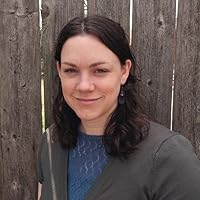
This is the story of the intense despair and spiritual emptiness that threatened Catherine Marshall's marriage, her health, and her life--and of the devastating discovery that ultimately brought her peace through a new and greater appreciation of God's love and will.
Marshall was born in Johnson City, Tennessee. She was the daughter of the Reverend John Ambrose Wood and Leonora Whitaker Wood. From the age of nine until her graduation from high school, Marshall was raised in Keyser, West Virginia, where her father served as pastor of a Presbyterian church from 1924 to 1942.
While a junior at Agnes Scott College, she met Peter Marshall, marrying him in 1936. The couple moved to Washington, DC, where her husband served as pastor of the New York Avenue Presbyterian Church and Chaplain of the United States Senate.
In 1940, Marshall contracted tuberculosis, for which at that time there was no antibiotic treatment. She spent nearly three years recovering from the illness. Her husband died in 1949 of a heart attack, leaving her to care for their 9-year-old son, Peter John Marshall. He later also became a minister and author.
Marshall wrote a biography of her husband, A Man Called Peter, published in 1951. It became a nationwide success and was adapted as a film of the same name, released in 1955. Her success encouraged her to keep writing.
Marshall wrote or edited more than 30 books, which have sold over 16 million copies.[citation needed] They include edited collections of Peter Marshall's sermons and prayers, and her own inspirational writings. Her most successful books were A Man Called Peter (1951); and her novel, Christy (1967), which was inspired by the story of her mother's time in the mountains teaching the impoverished children of Appalachia. Christy was adapted as a CBS television series, starring Kellie Martin, beginning in 1994.
In 1959, Marshall married Leonard LeSourd, who was the editor of Guideposts Magazine for 28 years. Together they founded a book imprint, Chosen Books. They had three children, Linda, Chester and Jeffery.
Marshall died on March 18, 1983 at the age of 68. She was buried alongside her first husband.
Why I decided to read this book: I decided to read this book after having seen the film A Man Called Peter, about Catherine Marshall's husband. I have been a fan of Catherine Marshall's for a long time and had wanted to see the film for a long time but this was the first time I had a chance to see it. After watching the film, I looked at the comments on the Internet Movie Data Base and saw a comment about the book Light in My Darkest Night to the effect that Catherine Marshall discussed her life after her husband's death and her decision to remarry.
About the book: This book was published after Catherine Marshall's death by her second husband, Leonard LeSourd. It is based on her writings and journals with background information provided by her husband.
Plot summary: The main focus of the book is the summer of 1971 and the spiritual crisis Catherine Marshall went through surrounding the death of her infant granddaughter. When her third granddaughter was born with serious medical issues, and in light of the fact that her first grandchild died shortly after birth, Catherine believed that the Lord was calling her to pray for her grandchild and that if she and her friends did so, the Lord would prevent the child from dying. She called on several of her Christian friends to take part in a four-day retreat to pray for the child. Her friends felt the retreat was a time of great spiritual growth and blessing and God even used one of them to heal an unrelated child, but her grandchild was apparently unaffected. After six weeks, the child died. Catherine had difficulty understanding why she had felt so strongly that the child would be healed if they prayed for her but it didn't happen. The apparent failure also brought some doubts to the surface about her marriage situation. In addition a book project she had been working on for some time fell through. Catherine was plunged into a depression for a time but finally came to accept what happened.
The book describes what happened during the retreat in great detail. One thing that I enjoyed about the book was that it discussed the issue of Catherine marrying a divorced man (Leonard LeSourd) following her husband's death. I had always wondered about that. Though Catherine felt at the time that the marriage was God's will, she had some reservations about it and apparently never felt completely at peace. Though she had a happy marriage, there was constant friction with her three stepchildren, in addition to some problems with Peter Jr. By contrast Leonard never seemed to have any doubts. It was interesting to see Catherine described from her husband's perspective and I think it helps to flesh out her personality. She appears to be a very decisive person who believes greatly in what she is doing, but possibly a little overly critical when people don't meet her standards. I enjoyed hearing a little bit more about what happened to her after A Man Called Peter, and this was a story that I had not heard before.
One reason that the description of the friends who met with her was interesting was that they include some prominent Christian figures. The friends who met with her on the retreat, in addition to herself and her husband, were her son Peter and his wife Edith (the child's parents); John and Elizabeth Sherrill; Jamie Buckingham, roving editor for Guideposts; Virginia Lively; Charles Hotchkiss, an episcopal priest, and his wife Linda; Bob Slosser, an editor of the New York Times, and his wife Gloria; Scott and Nedra Ross; Pam Gordon, wife of Arthur Gordon, a Guideposts associate; and her stepdaughter Linda LeSourd, totalling 16 people.
I found the book helpful and appreciate the candor of many of the sections. So often, Christan writers feel they can only reveal the times they've had faith and it "worked out."
I read Catherine Marshall's novels a long time ago and loved them. This book was actually written after her death to tell of her struggle through a difficult time in her life - when a grandbaby died. It was pulled together from the recollections of others as well as her own journals. It really wasn't what I expected - and I didn't like her anger at God and some of her thought processes...but it is what she went through and was interesting from that perspective. When she wrote briefly of this dark time in other books she wrote, she barely mentioned it - so you have to wonder how she would have felt about being "exposed" in this way.
I think this is an important topic for Christians to investigate. I'm not comfortable with Catherine Marshall's empasise on works. Though the books was easy to read her theology worried me a little. The last three chapters were my favorite part of the book, where Marshall shares hymns and poems that spoke to her soul.
I did not like this book at all. I thought Catherine Marshall substituded dreams and whims for God's Word. I saw her as mentally and emotionally unstable. This book was a waste of my time. I read one third of the book and I will not waste more of my time by reading anymore.
Though I am not religious, this is a book that touched me with real people’s lives and experiences, and most importantly, how each of them came through the darkest days of their lives. I gave respect to that.
One star short - the reason is since this book is not based on Catherine Marshall’s own will to be published. It was published after her death. To which I don’t quite agree with.
A very real and raw journey through Catherine's darkest moments. I don't want to rate such a personal testimony, but I think we can all draw encouragement from the struggles and lessons God gives to others. This particular collection of life lessons and hardships was painful at times, but can also show us that none of us are perfect, even those spiritual leaders we respect, but that God guides, heals, and restores as we bring our struggles to Him.
This book is unique compared to Catherine Marshall's other books; this one was published after her death, a collaborative effort from her husband, Len LeSourd, who uses written/recorded material from Catherine herself, and other viewpoints are collected from friends and family. Several people wrote this book together; each person is heard from individually. (I did have to stay on my toes to keep up with who was talking, and to not cross the viewpoints.)
Herein we find that the famed Catherine Marshall had her share of troubles, including the ups and downs of hearing God's voice. She put her full strength into a prayer project for her grandbaby's life. When the situation didn't pan out as she had set it forth in her mind, Catherine spun into depression and a bleak period of life. Haven't we all found ourselves in a similar position at some point? (Most likely when we've been relying on human thinking too much, instead of God's.)
At one point she uses the phrase "Faith overcomes fear" -- several times a day she has to tell herself that phrase just to get through. Catherine, while a Godly woman, was just like the rest of us... And I rather like that phrase she chose. That's one I'm going to remember for a day when I might need it.
What she missed seeing during this tough family time was the miraculous ways that God was shining His light for all to see. What amazing stories! The Almighty's plan wasn't done Catherine's way -- but His way. That's a lesson I can takeaway something from.
"Healing is truly a divine mystery.... Healing remains in the hands of the One who triumphed over man's sin and sicknesses on the cross..." - Peter John Marshall
If you're familiar with Catherine's other writings, or perhaps with Peter Marshall's story, you'll want to read this one too. If you need a good book that covers topics such as grief, loss, prayer, miracles, healing or even silence from our Heavenly Father... you may find what you need here.
"We can wallow in misery, separated from God. Or we can tell Him, 'I need Your presence in my life more than I need understanding. I choose You, Lord.'" - Catherine Marshall
Catherine Marshall wrote this after the death of her second grandchild, a child she thought, because of her Faith in God, would be healed. This is the painful journey of keeping one's Faith even when God does things that we don't understand at the time they happen. I read this in search of comfort after the death of my mother, and it did help somewhat.
Someone from my church gave this to me to read. Catherine Marshall is a good Christian writer with some salient points, but just like Job, I can't get out what is "good" from the point of view of the person (or people) who actually die.
This was published after Catherine's death, using notes and other people's recollections; Catherine's personality traits of being quite demanding and critical are evident throughout the book. The difficulties that sent Catherine into a depression are understandable and have the potential of being of some benefit to specific readers but that benefit is lost in the danger of some of her views.
Her extreme interest in a mystic seems contrary to the Catherine that appeared in A Man Called Peter and could be quite confusing to some readers. Catherine's behavior and thought patterns in this book centered around her trusting God to do what she wanted based on thoughts she interpreted to be from Him. She took any possible questioning as a lack of faith, instead of an attempt to discover His will and pray for His will. The reader that gets to the end will see that Catherine does eventually sort of realize that God is in control and His plans cannot be thwarted by us sinners, but she still feels the need to fall back on works to feel her prayers are answered. While this read might be helpful to see that we are all flawed, for the less mature Christian the majority of the discussion could be quite confusing and unsettling.
I thoroughly enjoyed this book. I loved how it’s a collection of Catherine’s journals and conversations as well as pieces from friends and family at the time of each moment. It was really amazing to hear the different perspectives of the over arching narrative. This book is dedicated to the events in catherine’s left during her second marriage to Len that culminated into what is refereed to as the dark night of the soul. You see the wrestling and challenges of Cathrine to remain faithful to Jesus and follow after Him admits various personal and family strains. Her ultimate dark night of the soul is over God’s healing power and how she felt God told her He would heal her granddaughter. It’s a powerful struggle I believe many believers walk through and none may be as raw as Catherine in documenting her experiences, wrestlings, and ultimately God’s faithful promise over it all. I could barely put this book down and finished it so quickly.
After Catherine’s six week old granddaughter dies, Catherine sinks into a deep mire of depression and rebellion. The family had waged intense intercession believing that Amy Catherine would be healed. The fact that God didn’t heal her as they wanted led to a lot of questioning. This is a frank and honest summary of the events leading up to the event, the mire and the ultimate recovery. This has been sitting on my shelf for years with no inclination to read it. Recently I felt prompted that this was the time. I'm glad I did. Although I'm not in the sort of spiritual battle that is described here, it spoke to some situations and to some ways that I react.