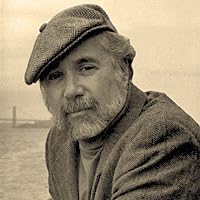
My goodness, what a fine writer, an excellent historian, and a gifted poet of our language!
Vernon Parrington is one of America's greatest historians but, as one who wrote in the early 20th century and was a firm supporter of Progressivism, who has fallen out of favor with the more recent crop of historians.
After reading this first volume (the first of three, the last incomplete because of his early death, totally in all about 1,300 pages), I am not sure why he has been largely forgotten.
There are some people for whom language as fluidity and enshrined color and cadence seem to have come with the gift of their birth, and Parrington is one of these. Therefore, despite its considerable length, and small -- though readable -- type -- I moved easily from page to page, marveling all the while at his remarkable research and at the rich, largely sympathetic portraits conveyed therein on many of our ancestors.
The "colonial mind" -- let alone the entire period until just before the American revolution -- had been of little interest to me when I was a college and graduate student. Filled with the passions and seeming "newness" of the 1960s, I was much more interested in matters closer to our own time, into those things that shaped the momentous state of our "now."
As I have marched through the decades myself, however, I have become more curious about, and open to, the more distant past.
One of the most valuable contributions of Parrington's book for me was how much even the earliest religious-motivated colonists contributed to America's "democratic spirit," something about which I hadn't appreciated before when I thought of the Pilgrim's, the pervasive Calvinistic tradition of the early settlers, and their seemingly "uptight" codes of righteousness and punishment.
While those things are true, Parrington stresses how much inherent "democracy" was present nonetheless for, rigid as some of these earliest of settlers might have been about standards of mores, they were all Reformers who were rebelling against the Church of England. Even though they might strive to create their own "established religions" here in the New World -- and to look askance at threatening "other" views of religion -- this effort to be unique, to re-create a "pure" religion, was highly individualistic in its ethos. Coupled with the fact that all Reformers since Luther made a knowledge of the Bible essential, in contrast to the then-Church of Rome in which the Bible was "interpreted" through the preaching and instruction of bishops and priests, this helped make the new country a land of literate readers and those who believed in their right to interpret the Bible on their own.
For the next 150 years, these religious congregations of rebellion themselves continued to fragment, precisely because some dissented from their beliefs and chose -- or initiated -- other religious practices. Again, the "thinking for one's self" process in action. At the same time, the scattered local and country governments the colonists established were highly democratic, in function if not entirely in theory. Yes they were part of the British Empire and, therefore, subject to the King and Parliament, but because they were 3,000 miles away from the home country (at a time of non-rapid communication) and separated from each other true home-rule was practiced everywhere. Communities had to decide everything for themselves, and each member took on both individual and shared responsibilities according to his or her abilities. It was this conjoined spirit of democratic individualism that coalesced into eventual rebellion against the mother country in the 1760s and 1770s, but only after many (if not most) of the colonists became convinced that the intent of the Crown was to take away from them those very liberties they had been enjoying for a century and a half.
The second rich contribution of Parrington for me was his discussion of just how internally divisive the French Revolution turned out to be in the United States! The degrees of dissension, the language used by one side against the other, and the bitter denunciations of those with whom one disagreed reminded me a lot of our own time. Yes, the early Americans of the late 18th century could be good "ladies and gentlemen," but they could also be slashingly vicious in their words and writings about those with whom they disagreed.
As students of American history know, even the initial presidency of George Washington began to dissolve into partisan disagreements, ones not entirely removed from the essence of our own time. Many, like Jefferson, feared that the Federalists -- the early champions of the Constitution -- now in power were working to undermine some of the freedoms and independence of the people. Some of these Federalists thought that the "democratic stain" had gone too far after the passage of the Constitution; and they were particularly alarmed as the course of the French Revolution became steadily more violent.
What persons like Jefferson and Paine saw as the just uprising of the people against their oppressors, Federalists viewed with horror as the despoilment of tradition and the looting of a once-proud civilization. Even as the more democratically inclined people praised the course of the Revolution -- at least until the events of Thermidor -- the Federalists condemned it.
Not surprisingly, this was a period when there were growing tensions -- again! -- between England and Republican France into which the young United States was in danger of being drawn. The Federalists took the side of the British, while Jefferson and his followers favored France.
Whew! Sound and fury, indeed!
What Parrington is doing is not writing "history" as such but, rather, working to reveal the minds and sentiments of early Americans through the first two centuries of colonists coming to -- and living in -- what would become the United States of America. So he does fill in the intervening and connecting information that locates the reader in historical time, but his primary focus is on the thinking and character of those who played important roles during those first two centuries.
Many of their names will likely be as unfamiliar to you as they were to me, but I found them all interesting. Even the stiff-backed Puritan theologians had a lot to say, even today, and if their rigidities blinded them to some things their high moral concerns spoke to still relevant others.
Parrington renders each person fairly and meaningfully, usually giving us generous portions from their own writings so that we can "hear" the man or woman about whom he is speaking.
I suppose this is not a book for the general reader, but if you have an interest in early American history, Parrington would be a very good place to start.
He received a Pulitzer for this first volume in the mid-20s and was well into completing his third volume when he died unexpectedly in 1929. Too bad for a number of reasons! I would have liked to have read more of and from him.
This is the third time I have reread this book over the past 35 years. Each time I learn something new. Also, it is pleasant to read something that was written at a time when the word "liberal" was not an insult but just a synonym for "broadminded".
The author, in this volume, analyses the writings of important American thinkers from 1620 to 1800. It is refreshing to see that once upon a time, many American leaders sweated blood, studied and agonized before expounding their opinions to the community. Even those I found repugnant, like the theocratic leaders of colonial Massachusetts, who banished, whipped and occasionally hanged those who dared to think for themselves in the matter of religion, struggled, in their way, to do what they believed god willed. At a time when our current leaders can barely utter a coherent sentence or cogent thought, it is pleasant to dip back into a time when quite the opposite was the norm.
If you can find a copy of this book, grab it and spend some time with it.
I often walked the Parrington Oval while a student at the University of Oklahoma. And I remember the photo that hung in Dale Hall of OU's former head football coach who was a Pulitzer Prize winning historian. This is the book that won Vernon Parrington the prize in 1928.
Parrington has a strong position in favor of the Jeffersonian philosophy--agrarian, egalitarian, and democratic--and opposed to the Puritans, Tories, and Federalists. So it was interesting to read his takes on various thinkers. He was a big fan of Roger Williams and Benjamin Franklin and deeply critical of John Winthrop and the Mathers. He thought Jonathan Edwards had great ability which was squandered on his Calvinism. Hamilton he thought of great ability and very successful at achieving his goals of establishing the national economy, but he thought Hamilton completely wrong about what direction America should head and that we were still saddled with problems he had created. Strangely, he writes the only vigorous defense of Philip Freneau I've ever read.
Parrington has blind spots. He lauds Jefferson, though we now have a far more critical view of Jefferson, especially his hypocrisy.
But Parrington is a fun read. He is eloquent and witty with his descriptions of all these thinkers and movements. I enjoyed getting a perspective very different from my own.
The very thing that made this book so valuable to me was the very thing that made it so tedious to me - and that was the amount of individuals it discussed. The very thing that made me appreciate this author so much was the very thing that numbed my mind a bit to what he was saying - and that was he was so smooth in his delivery that it seemed the true relevance of some of the characters slid right by me. However, I consider this book an important staple of my colonial history reading and one that is an invaluable reference resource. The most engaging parts of this book for me were when Parrington discussed the Federalists versus the Democrats and when he introduced Philip Freneau. I was partial to Freneau's story because he was one of America's first poets that never was - that is, his poetic energy was poured into revolutionary matters as opposed to being poured into the art of poetry. I couldn't help but fixate on the possibility of what he might have been in the way of an American based counterpart to the great European based poets of the eighteenth century. Though I can point out faults with this book, I can't give it less than five stars. It's too solid in more important ways to be given anything less.
If one is going to read just one book on American history, this should be it. Parrington is a humanitarian. He is a political being and doesn't hide it. His focus is on people and their ideas, rather than events. For me this is the way it should be.
Parrington's writing is eloquent. He has strong opinions and expresses them openly. He is in favor of political democracy as understood in the second half of the 18th century. He is on the side of Sam Adams, Thomas Paine and Thomas Jefferson. He digs deeply into areas we would not usually think to look and comes up with an interesting personality deserving of our attention. I consider him to be a worthy companion and wish there were more like him.
The democrats and egalitarians are all heroes, federalists and loyalists are villains. However, in a way reminiscent of John Jay Chapman's Garrison, the language is forceful and attractive (if, at times, hyperbolic) despite this by now quite stale bias. I had hoped as well for a more sophisticated examination of the intersection between ideology and literature (the subject of my senior thesis). For Parrington, literature only figures as polemic. Possibly the next volume will be better. As intellectual history it is actually quite good; the product of a comprehensive and searching mind.
Somewhat interesting to the historian in me, but in 3 volumes covering seemingly countless pages I found it a bit long for my short attention span! I expected more from a Pulitzer Prize winner and was somewhat put off by a dated writing style (it was composed in the late 20's with the last incomplete volume published posthumously). Unless you are a huge history buff with a Jeffersonian bent and with a lot of time on your hands, you may want to avoid this one.