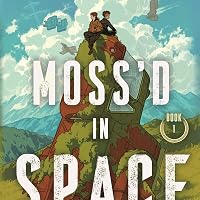
Children of the Star trilogy, Book Two. Once Noren gained admission to the City where technology was hidden, he thought he had discovered how to make metal and Machines available to everyone and end the rule of the Scholars. But he soon learned it was not as simple as he had believed. Was it right to let people go on believing in the promises of a Prophecy that might not come true after all?
Sylvia Engdahl is the author of eleven science fiction novels, six of which, including the Newbery Honor book Enchantress from the Stars, are YA books also enjoyed by many adults. Although she is best known as an author for Young Adults, her most recent novels, the Founders of Maclairn duology (Stewards of the Flame and Promise of the Flame) and the Captain of Estel trilogy (Defender of the Flame,Herald of the Flame, and Envoy of the Flame) are adult science fiction and are not appropriate for readers below high school age. For FAQs about them and more, visit her website.
She has also written a nonfiction book, The Planet-Girded Suns: Our Forebears' Firm Belief in Inhabited Exoplanets, of which updated and expanded paperback and ebook editions were published in 2012, and three collections of her essays. Most of the nonfiction books listed under her name were edited, rather than written, by her as a freelance editor of anthologies for high schools.
Engdahl says, "I never listed more than a few of the books I read here and now the list is so outdated that i have removed all but a very few that are still among my favorites, plus ebooks I produced for my mother and for my friend Shirley Rousseau Murphy. For current lists of good books on the subjects I care about, please visit the Opinion section of my website."
This book dealt with Noren's new philosophical struggles in his new phase of life: epistemic angst as he realized that humanity's knowledge was not as absolute as he'd hoped, and existential angst about his research and whether it could actually help humanity or was just causing people further harm.
As with the previous book, this book was pretty simple as far as plot and characters went; not too much happened, and I think there were less than 10 characters who actually had names. Once again, most of the text consisted of philosophical musings: either Noren's own internal musings, or his philosophical discussions with other characters.
But unlike the previous book, which I found pretty simple in its philosophical conclusions and implications, this one seemed quite profound to me, and very relevant to my own personal philosophical struggles. I could tell what conclusions it was heading towards, but it was nonetheless nice to read the process of Noren figuring it out and arriving at the conclusions himself. I was genuinely surprised at how powerful this book was, and how much I was emotionally moved by it; I suspect I will be adding it to my personal canon of stories that I return to over and over again when thinking about these issues.
Existential angst. Oy! Engdahl, as usual, deals with thoughtful, philosophical, and deeply important issues. However, I just couldn't wait for Noren to figure it out already. For goodness sakes, he was stuck for about 150 pages. Of course, I'm not the target audience at 39 so maybe this is just right for a 12-year-old.
This was pretty good, a bit too much existential angst but still an absorbing read. I kept wanting someone to give the guy some philosophy books. I choose to attribute the rather frustrating characterization of the one major female character to the aforementioned existential angst and the main character's confusion, but it was still rather exasperating.
I didn't read these books as a kid, and I would have totally adored This Star Shall Abide. I'm less sure how exactly I would have felt about this one. I think I would have been a bit out of patience with it even as a kid, but would have sill enjoyed it. So I do kind of wish I'd have known about them then.
"Beyond the Tomorrow Mountains" was not published in the UK during the 70s as the publisher apparently didn't deem it necessary to bring out the sequel to "Heritage of the Star" (UK edition of This Star Shall Abide). Needless to say it was only when I got access to the internet in the late 90s that I even realised there was a sequel (or actually *two* sequels). In 2000 I found out that there was a compilation of all three books coming out so I finally managed to read the sequels!
Anyway, I think that my opinion of The Tomorrow Mountains suffers a bit from me not having read it as a teen. Part of the amazingness of Heritage of the Star was the trials that Noren was put through, and as a teen I could certainly empathise with his emotional turmoil.
In "Beyond the Tomorrow Mountains", Noren is in turmoil yet again, this time over what he sees to be the impossibilities of actually fulfilling the Prophecy and bringing humanity back into a technological age. There's lots of angst and then a semi-suicidal action
So I did enjoy the book, but it didn't take me on the emotional rollercoaster that the first did, and it wasn't adult enough to satisfy me intellectually in the way that the "Doors of the Universe" has done. But it was still wonderfulto find out what happened to Noren and his society. Hence three stars.
Noren, whose rebellion against the priestly theocracy earned him access to the knowledge controlled by the Scholar caste in This Star Shall Abide, this time faces a more subtle crisis in this sequel due to his unwillingness to put complete faith in the principal symbol revered by the scholars (the Mother Star). As Noren learns more about the origin of his people and the reasons why they are forced to try to survive on a hostile alien planet, he also comes to realize that the rationale for the existence of the scholarly elite (who live in their enclosed city and enjoy technological advantages which are denied the people outside) is seriously jeopardized by their failure to make a specific scientific breakthrough upon which the fulfillment of the Prophecy regarding the Mother Star hangs. The seemingly naive faith of other scholars and technicians is repugnant to Noren, until he experiences certain crises firsthand and is moved by the belief of others who have achieved a more comprehensive vision of reality than he has, despite not possessing Noren’s advanced scientific knowledge and analytical skills. Noren thus eventually comes to understand the true meaning of the symbolism of the Mother Star, and this frees him from self-imposed mental bondage. Like the first volume, much of the fascination of this story lies in the author’s ability to create a convincing complex society with a tragic history and an uncertain future that depends entirely on its skills in coping with a harsh and poisonous environment. Some readers have complained that Beyond the Tomorrow Mountains is tedious in its lack of action and preoccupation with philosophical and personal existential questions, but this criticism is perhaps not entirely fair. Quite a lot of action does actually take place throughout the book, especially toward the end, although admittedly the plot is not action-oriented. I think that to enjoy this book, readers should have first finished This Star Shall Abide, and also be interested in fiction which focuses on introspective themes and the inner growth of principal characters. There is a third book in the series, The Doors of The Universe, which was written about ten years after the first two, and was added because the author felt that the principal premise for the first two stories had been compromised by scientific developments in the real world of which she had not originally been aware.
To provide an idea of the general flavor of the story, I am including some pertinent quotations from it:
“I—I’ve oversimplified things, I guess.” “Sometimes one must in order to keep one’s balance.”
If scientists didn’t know how to do something, then they had no real proof that it could ever be done.
“There can never be anything wrong in a person’s wanting to know more than he knows, or be more than he has been; the Law specifies only that those who do choose that course can never go back.”
Without proof, how could anyone be deeply convinced?
People who want what they don’t have progress faster than those who are satisfied.
You’ve got too independent a mind to want protection from the perils to which skepticism can lead—and you also have youth. That’s a dangerous combination. Yet if salvation of the world lay solely in old men’s caution, why would young people be born?”
You’re not being reasonable,” he insisted. “Faith? What is that but to be content with ignorance?
Always he had trusted in the existence of truth that was firm and absolute. He had searched for it unceasingly, and had supposed he was on his way to finding it. Yet if all was illusion, if the uncertainty he’d found so dismaying involved not only human survival but the very nature of things, then he had no more of an anchor to true reality than to the planet from which he was adrift. He could not even depend on the workings of his own mind.
For the first time since learning the truth about the Mother Star, it occurred to Noren to ask not how things happened, but why.
What sort of a universe was it where such barriers prevailed? Were all human races isolated, condemned to perpetual ignorance of the rest? Did others, too, rise to greatness and then, through senseless, futile tragedy, die out, like grain shoots crushed beneath the hoofs of work-beasts loosed into a field?
All his life Noren had questioned, but never so deeply as this; he had never encountered problems that seemed to make less and less sense as he continued to ponder them. He had assumed that the City held all the answers.
There are no answers, his mind kept repeating. The City does not contain all truth, and if it does not, is there any real truth to be found? How can there be sense to such a universe? How can these others live in it?
Brave? thought Noren. Was it brave to pretend that some mystical spirit, a mere symbol, would offer answers that rational effort could not uncover? It struck him as far more courageous to admit that one’s life had been built upon delusion.
There’s always risk in human affairs. We can never know exactly what the future will bring; we know only that things cannot and will not remain the same.
If people can’t go forward they go backward; they don’t stand still.
I’m a realist. As I told Talyra once, faith is nothing more than being content with ignorance.”
Life was what mattered . . . life, and truth, which were one and the same . . . and they need not be understood to remain valid.
If we die expecting to live, we’ll be none the worse for it; but if we stop living because we expect to die, we’ll have thrown away our own lives.”
The questions you framed are unanswerable, and to be terrified by that is a sign not of weakness but of strength. A weak person wouldn’t have opened his mind to such terror.
“They do,” Stefred said gently. “The fact that neither you nor any other human being can obtain all the answers doesn’t mean they don’t exist, any more than the fact that we can’t see all the stars in the universe means those stars aren’t there.”
Not all truth can be expressed in scientific terms.
6/2011 Not as good as the first book, This Star Shall Abide. Unfortunately the author spends the first 25% of the book intertwining a week story with a review of the material from first book to enable Beyond the Tomorrow to be a stand-alone volume. The rest of the book revolves around the main character’s questions about faith, not religious faith but faith in something beyond science (faith in humanity perhaps). This sequel was essentially a single-idea book, an idea it seems the author didn’t feel she fully examine in the first book. The third book (which I don’t plan to read) was written years later because a scientific breakthrough gave the author another idea to add to the original work. I need more than one idea books to sustain my interest.
Ok, admittedly this is more a 3.5 than a 4 for me, but I couldn't bear to just give it three stars. Noren gets bogged down in existential angst for the vast majority of this book and I wanted someone to give him a swift kick in the behind for most of it. I was satisfied with how it all worked out, though, and I think I am looking forward to the final book in the series (although I'm going to take a longer break between them this time).
Full disclosure: I didn't love this book as much as a four-star rating might otherwise indicate. But with Engdahl, I feel the need to adjust my rating curve in deference to the psychology behind Noren's character. Much more than the first book, which seemed strangely predictable...perhaps because the trope was one that was repeated since its writing, this book is a very introspective look at Noren's continued evolution from a wide-eyed child into a man willing to accept the burden of his duty to humanity.
I've often felt that amongst the books I've read there hadn't been many that made truly made think and in some ways, reconsider, my own drives and thoughts. But over the course of this book, we are exposed to Noren's seemingly immature snits and his motivation behind them. So, as Noren himself comes to terms with his own inner emotions, we the readers are almost brought along on this maturation as well.
Again, there's not a whole lot plot-wise which is worth discussing because the book is by-and-large a introspective one. And since I am reading these for pleasure, I think I was hoping for more along those lines. But this book is a good read, it's just not intended for those wanting a story of Noren discovering a breakthrough to help save humanity.
This is part two of the series that begins with This Star Shall Abide.
I have to say that I find the basic premise of this series a bit odd. Surely the ancestors of the colonists must have known for some time that their star was going to nova? Why couldn't they have made better provision beforehand? This is not the sort of thing that generally comes on with no warning.
And frankly, the whole history of the colony planet seems to me to have been a study in mismanagement. Did they have no capacity to develop plastics? Glasses? Ceramics? Composite materials? How did it happen that their technology is so dependent on metals? And why did it remain so?
People who don't even have non-wooden HOE HANDLES are likely to be in trouble down the road, no matter what resolution they come up with to their current problems.
Book 2 of 3 in a series at least semi-connected to Enchantress from the Stars and Far Side of Evil. Basically a lot of talking and brow-beating but a surprisingly quick read anyway. This series is certainly more philosophical than the typical sf book. And touches on all the big topics - right and wrong, hypocrisy, religion, evolution of societies, the survival of humankind. All I can say is - it's too bad that this series has not had a bigger impact. 4 of 5.
I really liked this book. Yes, Noren had a lot of problems that I found unreasonable, but I really liked the solutions and everything. Children of the Star; Beyond the Tomorrow Mountains is simply very well written, and I'm already enjoying Doors of the Universe.