

What do you think?
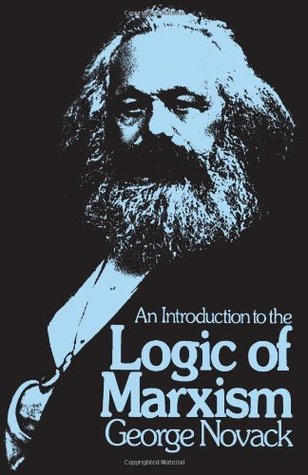
An Introduction to the Logic of Marxism
Marxism is dialectical, Novack explains. It considers all phenomena in their development, in their transition from one state to another. And it is materialist, explaining the world as matter in motion that exists prior to and independently of human consciousness.
136 pages, Paperback
First published December 1, 1969
About the author
George Novack
47 books24 followersLeftist political activist and Marxist theoretician.
He attended Harvard University, earning a B.A. in 1926, and an M.A. in 1927. He was on a successful track in the publishing business, when the beginning of the Great Depression radicalized him. He joined the Trotskyist Communist League of America in 1933 and was a member of the National Committee of the Socialist Workers Party (SWP) from 1940 to 1973.
In 1937-40 Novack served as the secretary of the American Committee for the Defence of Leon Trotsky. This body initiated the celebrated 1937 Dewey Commission that inquired into the charges made against Trotsky in the Moscow show trials, and found the Moscow trials to have been a complete frame-up.
George Novack was not one of the 18 SWP leaders imprisoned in World War II under the Smith Act, but he played a major role in the defense campaign.
Novack produced a number of books on various aspects of Marxism: An Introduction to the Logic of Marxism, America's Revolutionary Heritage, Democracy and Revolution, Empiricism and Its Evolution, Humanism and Socialism, The Origins of Materialism, Polemics in Marxist Philosophy, Revolutionary Dynamics of Women's Liberation, and Understanding History, Marxist Essays.
He attended Harvard University, earning a B.A. in 1926, and an M.A. in 1927. He was on a successful track in the publishing business, when the beginning of the Great Depression radicalized him. He joined the Trotskyist Communist League of America in 1933 and was a member of the National Committee of the Socialist Workers Party (SWP) from 1940 to 1973.
In 1937-40 Novack served as the secretary of the American Committee for the Defence of Leon Trotsky. This body initiated the celebrated 1937 Dewey Commission that inquired into the charges made against Trotsky in the Moscow show trials, and found the Moscow trials to have been a complete frame-up.
George Novack was not one of the 18 SWP leaders imprisoned in World War II under the Smith Act, but he played a major role in the defense campaign.
Novack produced a number of books on various aspects of Marxism: An Introduction to the Logic of Marxism, America's Revolutionary Heritage, Democracy and Revolution, Empiricism and Its Evolution, Humanism and Socialism, The Origins of Materialism, Polemics in Marxist Philosophy, Revolutionary Dynamics of Women's Liberation, and Understanding History, Marxist Essays.
Ratings & Reviews
Friends & Following
Create a free account to discover what your friends think of this book!
Community Reviews
Displaying 1 - 18 of 18 reviews

February 1, 2022
The eighth #book I finished in 2022: the U.S. Trotskyist leader George Novack gave a series of lectures on dialectical logic in 1942. They are gathered in this short book, expanding on Trotsky's contributions to the debates that led to the split of the Socialist Workers Party in 1939-40. A minority of the SWP could not comprehend how the workers' state that emerged from the October Revolution had so thoroughly degenerated under Stalin. They declared that the Soviet Union must be some completely new thing. Trotsky explained how the nature of the Soviet Union could only be understood as an expression of contradictions: between the ruling bureaucratic caste and the masses, between imperialism and the proletariat, etc. In other words, dialectical and not formal logic was necessary. In these lectures, Novack expanded on the points Trotsky was making.
Many leftists today claim "dialectics" is nothing more than a buzzword, or even a thought-stopping cliché. Novack offers a simple presentation of how dialectics emerged out of German bourgeois philosophy, and in turned formed the basis for revolutionary socialism. Novack lacks Trotsky's literary skills, but he is able to go into some detail about the history of philosophy in a way that is accessible for workers.
The only thing that concerns me a bit is how Novack, in a few sentences, presents different tactical debates in the SWP as "a struggle between formalists and dialecticians." Dialectics offers a method for solving political problems, not ready-made answers. The term "dialectics" can be invoked as a lazy answer to end debate. "Why do you think we should support the bourgeois government of Mexico, comrade?" "You have to see things dialectically!" I imagine this argumentative technique had not yet emerged in Novack's time, or else he would have included a warning against it. After all: Declaring that one's own positions are always "dialectical," whatever they may be, is a great example of formal logic. #bookstagram
Many leftists today claim "dialectics" is nothing more than a buzzword, or even a thought-stopping cliché. Novack offers a simple presentation of how dialectics emerged out of German bourgeois philosophy, and in turned formed the basis for revolutionary socialism. Novack lacks Trotsky's literary skills, but he is able to go into some detail about the history of philosophy in a way that is accessible for workers.
The only thing that concerns me a bit is how Novack, in a few sentences, presents different tactical debates in the SWP as "a struggle between formalists and dialecticians." Dialectics offers a method for solving political problems, not ready-made answers. The term "dialectics" can be invoked as a lazy answer to end debate. "Why do you think we should support the bourgeois government of Mexico, comrade?" "You have to see things dialectically!" I imagine this argumentative technique had not yet emerged in Novack's time, or else he would have included a warning against it. After all: Declaring that one's own positions are always "dialectical," whatever they may be, is a great example of formal logic. #bookstagram

January 2, 2011
I never write reviews. I shall, briefly, for this book.
This is the first book - among the many I've tried - that actually made Hegel, the Dialectic, and Historical Materialism, ascertainable - even to the total layman - and intriguing. For once in my life I found myself actually wanting to read about these subjects, over and above all other activities I could be engaged in. Instead of begrudgingly slugging through Hegelian flapdoodle, coming out the other end of the book having learned nothing, and wasted hours.
George Novack is a laudable author for his capability in making such abstruse philosophical subjects comprehensible. I know of no other authors that meet him in this capability. Furthermore, the book is said to be a series of lectures he gave to workers, and I'd imagine they left the lectures as enlightened as I.
One caveat though, the book was written several decades ago, and is filled with radical jargon that may turn the reader off at first. The first few pages read like straight Marxist propaganda, if one can swallow this, even chuckle a bit at it, the rest of the book will be quite rewarding.
Now, on to more Novack!
This is the first book - among the many I've tried - that actually made Hegel, the Dialectic, and Historical Materialism, ascertainable - even to the total layman - and intriguing. For once in my life I found myself actually wanting to read about these subjects, over and above all other activities I could be engaged in. Instead of begrudgingly slugging through Hegelian flapdoodle, coming out the other end of the book having learned nothing, and wasted hours.
George Novack is a laudable author for his capability in making such abstruse philosophical subjects comprehensible. I know of no other authors that meet him in this capability. Furthermore, the book is said to be a series of lectures he gave to workers, and I'd imagine they left the lectures as enlightened as I.
One caveat though, the book was written several decades ago, and is filled with radical jargon that may turn the reader off at first. The first few pages read like straight Marxist propaganda, if one can swallow this, even chuckle a bit at it, the rest of the book will be quite rewarding.
Now, on to more Novack!

February 13, 2022
Lo más sorprendente del libro es que consigue que la dialéctica de Hegel (y el materialismo dialéctico) parezcan fáciles de entender y, sobre todo, útiles como método de análisis de la historia, de la naturaleza, de la sociedad, de la lucha de clases o de nuestra cotidianidad.
El último capítulo, que utiliza el ejemplo concreto de John, un trabajador industrial, para explicar cómo aplicar el método dialéctico en la comprensión de la lucha de clases partiendo de su experiencia laboral individual y colectiva, le pone la guinda del pastel a la explicación que Novack construye a lo largo del libro.
El último capítulo, que utiliza el ejemplo concreto de John, un trabajador industrial, para explicar cómo aplicar el método dialéctico en la comprensión de la lucha de clases partiendo de su experiencia laboral individual y colectiva, le pone la guinda del pastel a la explicación que Novack construye a lo largo del libro.

July 20, 2025
I've read a few of these condensations of a subset of Marxist thought, and ended up liking this one the most. It frames dialectics in opposition to formal logic, although it barely is able to give a positive definition of dialectics without a lot of handy waving. I do wish that the socio-history behind the "innovation" of dialectics was exposed further.
The lectures also begin with bashing groups of "formalists" (adherents, or dogmatic believers of formal logic in the Aristotelian, and perhaps later - the Fregean sense), which of course was never a coherent group of people, but "formalist" here is used as a pejorative category to describe certain movements or orientations of thought. This false categorization strikes me as merely an act of polemicization, rather than a considered move. This form of polemicization is seen in the later (last couple of) chapters in the book.
The lectures also begin with bashing groups of "formalists" (adherents, or dogmatic believers of formal logic in the Aristotelian, and perhaps later - the Fregean sense), which of course was never a coherent group of people, but "formalist" here is used as a pejorative category to describe certain movements or orientations of thought. This false categorization strikes me as merely an act of polemicization, rather than a considered move. This form of polemicization is seen in the later (last couple of) chapters in the book.

September 24, 2019
The story of what this book is really about starts on page 142—about ten pages left in the book—reading the story of John, the worker. His ascension from wage-working know-nothing, to a member of the proletariat, to conscious of his plight as a member of the proletariat, to class-conscious worker, to full-on communist/socialist worker fighting for his rights and the rights of others against the oppressive capitalist system running our world, is what this is all about.
Novack’s ability to breakdown dialectics, Hegel, and Marxism’s relationship to it and fit within it and maturation of it, is tremendous as it is digestible. But when you’ve met and understood John, then you’ve be acquainted, or reacquainted, with the purpose of this all. Read the book, y’all.
Novack’s ability to breakdown dialectics, Hegel, and Marxism’s relationship to it and fit within it and maturation of it, is tremendous as it is digestible. But when you’ve met and understood John, then you’ve be acquainted, or reacquainted, with the purpose of this all. Read the book, y’all.
November 3, 2024
A useful introduction to dialectical materialism. Novack starts with pointing out the limits of formal logic - the logical categories that are still taught in schools and universities - and then explains the revolutionary significance of Hegel's dialectics, and the subsequent revolutionary development of dialectics by Marx and Engels. The book explains the crucial link between dialectical thinking and revolutionary socialist consciousness and action. This is done with a minimum of jargon and in a way that I think is accessible to people new to these topics - in stark contrast to the vast bulk of philosophical writing that comes out of the universities these days.

October 6, 2020
Excelente estudo da lógica e do processo histórico que levou à criação metodológica do pensamento marxista. Não é, no entanto, um livro introdutório: o material tem caráter um pouco mais avançado, tendo em vista certo conhecimento da obra de Hegel e do pensamento marxiano.
June 14, 2021
Pretty sweet (and essential)

November 6, 2023
Simple introduction to dialectics.

Read
January 23, 2024I wish this went into more depth on the categories of dialectical logic, but it's definitely an excellent starting point for a study of dialectics.
October 31, 2024
very good history of logic prior to hegelian and marxist dialectical logic. also very good explaining such a complicated scientific system
December 28, 2024
Great intro to dialectical logic

January 30, 2025
Filosofía para la vida. Práctico y elocuente.
May 2, 2026
It took me like ten years, but I finally got around to finishing this. Pretty decent overview of formal logic vs dialectical materialism

June 22, 2026
This little book, of nine lectures given to the Socialist Workers Party in 1942, is still to this day the best introduction to dialectical materialism and the philosophy of Marxism.

February 13, 2020
A great introduction to the Marxist worldview, written clearly and using everyday examples to illuminate a chaenging subject.
My notes/underlinings:
http://marxistupdate.blogspot.com/sea...
My notes/underlinings:
http://marxistupdate.blogspot.com/sea...

June 30, 2023
Dialectics: The Logic of Change
As George Novack writes in one of his prefaces, this book is based on lectures “originally given in New York City during 1942 shortly after the opposition headed by James Burnham and Max Shachtman had split from the Socialist Workers Party. During that inner-party controversy, Burnham had denied the validity of dialectical logic while Shachtman questioned its usefulness in solving sociological and political problems.”
“In the last year of his life Trotsky conducted a sharp polemic, recorded in In Defense Of Marxism: Against The Petty Bourgeois Opposition against these anti-dialecticians. He urged the party members, especially the youth, to spurn the skepticism regarding dialectics inculcated by the pragmatists and logical positivists and to undertake serious study of the theoretical method of scientific socialism.”
When I studied Marx in college, something few have the chance to do today, I had a professor who was of the opinion that dialectics was merely a form inherited from Hegel and had nothing to do with the content of Marxism. Other people who called themselves Marxists at the time argued that dialectics applied to history and politics, but not to nature. Novack answered this in an essay “Is Nature Dialectical?” included in his book Polemics in Marxist Philosophy.
I have always thought that nature and modern science’s understanding of it provides the easiest way to understand dialectics. Formal logic starts with the idea that A always equals A. This is useful for many purposes, but what about evolution, where A may be changing into B? What about nuclear physics, where all kinds of changes formerly thought impossible are now known not to be?
Other books by Novack that help explain the Marxist method are Labor, Nature, and the Evolution of Humanity: The Long View of History, ‘Understanding History,’ ‘The Origins of Materialism,’ ‘Empiricism and Its Evolution.’
As George Novack writes in one of his prefaces, this book is based on lectures “originally given in New York City during 1942 shortly after the opposition headed by James Burnham and Max Shachtman had split from the Socialist Workers Party. During that inner-party controversy, Burnham had denied the validity of dialectical logic while Shachtman questioned its usefulness in solving sociological and political problems.”
“In the last year of his life Trotsky conducted a sharp polemic, recorded in In Defense Of Marxism: Against The Petty Bourgeois Opposition against these anti-dialecticians. He urged the party members, especially the youth, to spurn the skepticism regarding dialectics inculcated by the pragmatists and logical positivists and to undertake serious study of the theoretical method of scientific socialism.”
When I studied Marx in college, something few have the chance to do today, I had a professor who was of the opinion that dialectics was merely a form inherited from Hegel and had nothing to do with the content of Marxism. Other people who called themselves Marxists at the time argued that dialectics applied to history and politics, but not to nature. Novack answered this in an essay “Is Nature Dialectical?” included in his book Polemics in Marxist Philosophy.
I have always thought that nature and modern science’s understanding of it provides the easiest way to understand dialectics. Formal logic starts with the idea that A always equals A. This is useful for many purposes, but what about evolution, where A may be changing into B? What about nuclear physics, where all kinds of changes formerly thought impossible are now known not to be?
Other books by Novack that help explain the Marxist method are Labor, Nature, and the Evolution of Humanity: The Long View of History, ‘Understanding History,’ ‘The Origins of Materialism,’ ‘Empiricism and Its Evolution.’
June 11, 2007
i can't finish it...i don't know why. other books tempt me, this one is just so dry. i dunno. i'll finish it somedayy
Displaying 1 - 18 of 18 reviews