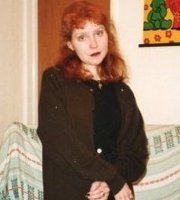
Diana Mosley was one of the most fascinating and controversial figures of recent times. For some, she was a cult; for many, anathema. Born in 1910 Diana was the most beautiful and the cleverest of the six Mitford sisters. She was eighteen when she married Bryan Guinness, of the brewing dynasty, by whom she had two sons. After four years, she left him for the fascist leader, Oswald Mosley, and set herself up as Mosley's mistress - a course of action that horrified her family and scandalised society. In 1933 she took her sister Unity to Germany; soon both had met the new German leader, Adolf Hitler. Diana became so close to him that when she and Mosley married in 1936 the ceremony took place in the Goebbels drawing room and Hitler was guest of honour. She continued to visit Hitler until a month before the outbreak of war; and afterwards, for many, years, refused to believe in the reality of the Holocaust. This gripping book is a portrait of both an extraordinary individual and the strange, terrible world of political extremism in the 1930s.
Born in 1927, Anne de Courcy is a well-known writer, journalist and book reviewer. In the 1970s she was Woman’s Editor on the London Evening News until its demise in 1980, when she joined the Evening Standard as a columnist and feature-writer. In 1982 she joined the Daily Mail as a feature writer, with a special interest in historical subjects, leaving in 2003 to concentrate on books, on which she has talked widely both here and in the United States.
A critically-acclaimed and best-selling author, she believes that as well as telling the story of its subject’s life, a biography should depict the social history of the period, since so much of action and behaviour is governed not simply by obvious financial, social and physical conditions but also by underlying, often unspoken, contemporary attitudes, assumptions, standards and moral codes.
Anne is on the committee of the Biographers’ Club; and a past judge of their annual Prize. Her recent biographies, all of which have been serialised, include THE VICEROY’S DAUGHTERS, DIANA MOSLEY and DEBS AT WAR and SNOWDON; THE BIOGRAPHY, written with the agreement and co-operation of the Earl of Snowdon. Based on Anne’s book, a Channel 4 documentary “Snowdon and Margaret: Inside a Royal Marriage”, was broadcast.
Anne was a judge for the recent Biography section of the Costa Award in 2013, and is also one of the judges on the final selection panel judging the best of all the genres.
Diana Mosley, one of the beautiful sisters in the eccentric Mitford family, was a controversial woman in 20th Century England. She was married at age 18 to Bryan Guinness, a sweet generous man who loved her, and they had two sons. Backed by the Guinness fortune, she entertained lavishly and enjoyed traveling. In 1932 she was attracted to Sir Oswald Mosley, the anti-Semitic leader of the British Union of Fascists. The married womanizer was confident, virile, and charismatic, and Diana left her husband for Mosley. Mosley was a disciple of Mussolini who provided financial support for the Fascist movement in England. Mosley felt that every political campaign needed a scapegoat, and the Jews filled that role.
During the interwar years, Diana's sister Unity Mitford became obsessed with Adolf Hitler, and then introduced Diana to the German leader. Diana found him very charming and intelligent, and they became good friends. Hitler arranged the secret marriage of Mosley and Diana at the home of the Goebbels in 1936.
After World War II broke out, both Diana and Mosley were detailed and jailed because of their association with Hitler. They left behind their two young sons during more than three years of detention in a cold, dirty jail. After the war Mosley tried to get back into politics, but was unable to win a seat in Parliament.
Diana seemed to feel an obsessive love for Mosley. In spite of his philandering, his poor parenting of his children, and his domineering, self-centered personality, Diana was infatuated. She was attracted to strong, charismatic men, and overlooked Mosley's faults. The wealthy couple--with huge houses, cars, and servants--seemed to have little regard for those that had suffered during the war. Diana would never totally believe the full extent of the Holocaust.
Anne de Courcy tries to paint a balanced picture of Diana Mosley. She could be warm, witty, and charming in social situations, but her politics were terrible. After Diana died at age 92, the author summed up her life: "It was the end of a long life that had dazzled, outraged, horrified, charmed, shocked, beguiled, and appalled."
I found this account interesting and pretty even-handed, but I have trouble with the author's insistence that Diana was "the most intelligent" of the Mitford women. I find that hard to believe, even if one accepts the premise that her loathsome political (and personal) views were more or less completely due to her blind loyalty/"love" for Oswald Mosley (who seems a dreadful hate-mongerer as well as a horrible husband and father). I also cannot find that either Diana or Mosley did one single thing for the public good, ever. Further, had she not happened to have looks that pleased, I doubt she would have ever had much personal appeal, not nearly so much as Nancy or Jessica, who had more in the way of true intelligence, vivacity, and wit--and were certainly far more accomplished, and, unlike Diana, made some positive impact on the world and its people.
Really it becomes more and more clear what a total twit Diana was.
I started this somewhat reluctantly, being interested in the notorious Mitford family and thinking that Diana was going to be the most boring of them all, and assumed De Courcy was going to write a lightweight, gossipy book. It turned out to be a heavyweight book about the history of the British fascist movement, the intellectual life and society of the period, and of course the Mitfords. It's a Pulitzer Prize-level work in its scope and thoroughness. It's also plain to me that De Courcy has been squandering her talents by writing about debutantes and husband-hunting when she had the ability to be a more profound writer.
De Courcy portrays Diana as something of a hollow vessel who was Mosley's doormat, and other reviewers have complained that they don't get a sense of what Diana was like from this work. Diana was very willful, but there didn't seem to be much else there. She was not a complex personality. Oswald Mosley eventually admitted that he had squandered his life, but Diana never faced up to that realization. It's a very good work about a woman who ruined her life by being attracted to political extremism and who became mentally imprisoned by it. The book is a fascinating examination about the UK during this time period.
Having previously read Mary S. Lovell's offering on "The Mitford Girls" I was left interested enough to read more about them all. So I started with probably the most famous of them all, Diana. The book takes us from the Mitford childhood to marriage into the Guinness family where she had 2 sons with Bryan Guinness and then to her relationship with Mosley. The book is well written if quite matter of fact. I came about from the book disliking both Oswald Mosley and Diana Mosley even more than I did before I began this particular book. Oswald Mosley (OM from now on) comes across as both politically and personally repulsive, he treated his first wife Crimmie as badly as he could and I feel sure contributed to her death. His eldest child (with Crimmie) was a girl who he showed no interest in purely because she was female. He also did all he could to use and abuse the money the Crimmie's children had left them. He was a serial womanizer yet Diana Mitford was totally besotted by him. She left Bryan Guinness ( who everyone agrees was a lovely man) for Mitford at quite a young age and remained married to him for some forty five years or so. Her political views were like his anti semitic and in every way fascist. She was like her sister Unity besotted by Hitler and the Third Reich. She became close friend with Magda Gobbels and was married to Mosley in Germany. So it is really no wonder at the outbreak of war the British Government locked her away in HMP Holloway. While OM was doing his time in HMP Brixton.
The book does a very good job of getting to grips with what conditions where like in wartime prisons and how much Diana missed her son's (two by Bryan Guinness and two by OM) The book also does a very good job of explaining the Mosley's life after the war. Personally for me I found their life of being able to do no real work, travel and buy houses in London, the home counties, Paris and Ireland detached them from a sense of the lives the working class led. Diana Mosley was an very intelligent woman and very beautiful but I came away not liking her one little bit. There is lots of people in this book her sons, Mosleys children, their children, her sisters and her very loyal mother among others. If you are in any way interested in the Mitford's or the Mosley's this is a book you should read.
Diana Mosley, wife of the fascist leader Sir Oswald Mosley and one of the 'celebrated' Mitford sisters, generally regarded as the most beautiful, is given fair treatment by Anne De Courcy. The Author clearly liked the person while disliking her politics, or at least considering it very misguided.
The book is mostly interesting because Diana was at the heart of Sir Oswald's attempt to create a British variant of continental fascism and because she knew and liked Hitler (though not as cringingly as her sister Unity), moving in the highest Nazi circles in the 1930s.
The interest extends to her wartime incarceration and the way the British Establishment (of which she was very much a part) tried to deal with the threat of people speaking their mind in a liberal society and yet potentially 'Quislings' had the German planned invasion of 1940 succeeded.
Other than this period of interest that covers the twenties and early thirties of a woman who lived to her early nineties, the book tells us a lot about the gilded world of the wealthy English upper middle classes but is otherwise a foot note to British social and political history.
It is this early period that fascinates, not as rubber-necking for insights into Adolf and his circle, but because what she thought and what she did offers us a more complicated and curious narrative about mid-twentieth century British politics. Most will find it hard to come to terms with.
The facts are that fascism was never going to take root in the UK, that Mosley was a narcissist blind to political reality and that (as Overy has suggested) an eventual imperial struggle between rising Germany looking eastwards and the older British Empire was always on the cards.
The given narrative is overladen with good versus evil moral judgements that filtered across from the interwar British Left into the national consciousness and became justified by war and victory. Yet there were always alternative mental maps. Diana Mosley had one, the pacifists another.
What is clear from the evidence in the book (notably the transcript of her October 1940 meeting with the Government Advisory Committee deciding on her continued incarceration) is that Diana was intelligent, strong-willed and articulate. We may disagree with her but she was not stupid.
We should step back a bit and look at the situation in the late 1930s and consider that there would be no knowledge of two very different types of atrocity that would emerge in the early 1940s - atrocities that arise out of the fact of all-out war and atrocities based on ideology.
Even today we find it hard to differentiate the two but they are distinct. Both progress in stages, becoming worse in the first case with resistance or desperation (as we are seeing in Ukraine) and in the second by the very nature of the ideology (Nazi antisemitism or Bolshevism).
The key to the Mosley view of the world lies not in expecting them to have foresight but in seeing democracy to have failed (an argument beginning to reappear today) because the leaderships of the West failed to deal with poverty and joblessness. It explains Mosley's shift from Labour to fascism.
Diana was independently minded, horrified by the condition of the British people but unable to escape the racial and imperialistic mind-set of her class and generation. There is a fascinating assessment of Churchill in the October 1940 meeting from an insider from the same social set.
To her and her ilk, the task was to unify a nation to create jobs fit for heroes (hence her instinctive support for the authoritarian Lloyd George) where war could be avoided through strength and where the empire could be exploited by the homeland because, bluntly, white Britain was superior.
These views are so alien to our early twenty-first century world view that they are simply dismissed as evil or stupid but they were only an ironically more moral (in the strict meaning of the word) version of general attitudes even if those general attitudes were already changing.
The targeting of the Jews was probably the most stupid mistake of the British fascists (a mistake Mussolini did not make until the end) because it cut across an instinctive British tolerance, admiration of Jewish achievement and a powerful lobby.
Similarly, the racial idea (actually far from dominant in pre-war British fascist thinking) was based on bad science while its economic corporatism (taken from Italian fascism) cut across every English instinct for economic freedom except on the Left. The Left wanted something much tougher.
Fascism simply got nowhere. Yet listen to Diana's words and not all is wrong. She and Mosley were right that war would see the collapse of the British Empire and great power status and probably that an accommodation with Hitler over Danzig would have bought time for rearmament.
They saw themselves not so much as pro-German (though they were) as pro-Western and pro-British where British interests lay in preserving Britain's economic and military ability to remain a Great Power in partnership with other strong European nations.
The obvious corollary (ended by American and Soviet domination of the post-war world) was that Europe should maintain hegemony over the world and exploit it to advance it. It should be no surprise to find post-war Oswald Mosley becoming a strong pro-European.
In other words, although I personally disagree with the world view, it was a cogent world view that did not necessitate extermination camps (though I suspect it would have necessitated an authoritarian police structure of some kind).
It also not only did not necessitate war from a British perspective, athough one suspects the reality would have been one of constant colonial wars to maintain control of resources and the abandonment of any moral principle surrounding Germany's and Italy's eastward expansions.
Yes, it was wrong-headed at so many levels but it was not entirely stupid and it should not be treated as stupid which leads to the interesting question of how a liberal State (albeit at war) could justify the imprisonment without trial of a woman, separating her from her small children.
The British Government's approach to the problem of the Mosleys is an object lesson in fear and, in part, loss of moral principle. The initial incarceration was panicked but comprehensible - after all, the Nazis used prominent fascists in Europe to create puppet governments.
These puppet governments would gain the administrative support of the standing civil service (often with the implicit support of governments-in-exile) in order to keep the State functioning. But governments-in-exile were assuming that liberation might eventually come.
If Britain fell, the puppet governments would (if they had not been so incompetent) eventually have become 'independent' governments under de facto Berlin influence and control. Keeping Mosley and his consort under control was mission-critical especially if resistance had to move north.
Similarly, the appalling conditions under which Diana Mosley and other fascist women and wives were kept in Holloway for many many months might not be justified in a perfect world but everyone was living a hard life with constant bombing and food shortages.
Finally British tyranny was always one helluva lot less vicious in every way from what a dissident could expect in Germany or the USSR with no attempts at forced labour, torture or cruelty (although keeping a mother from her young child comes damned close).
But complaints about 'whataboutism' are the last refuge of the modern scoundrel because you should judge a situation by what you claim to be your standards and not by the behaviour of foreign barbarians. In this respect, the British State comes out quite badly.
The Government had allowed itself to be ruled by the Leftist mob long after the danger of a puppet government had passed and it took far too long to recognise that the war was supposed to be about freedom of expression and speech.
The blot (albeit a small one) reminds one of the later treatment of Turing in that a national security state was allowed to emerge that moved away from a material and immediate threat (a puppet government during an invasion threat) to an attempt at ideological control.
In some ways the British people were played in the late 1930s by elite groups just as they were in 1914 and are being today over Ukraine - this is normal. The winning narrative probably did reflect mass opinion by September 1939 but it was not always informed opinion. Just as today.
At the end of the day, the UK went to war ill-prepared perhaps because it did so too soon and the result saw tens of thousands of civilian and military British deaths, existential risk to the nation, the loss of a Great Power status and an empire and a permanent junior role to Washington.
Perhaps this (as the current narrative insists) was a 'price worth paying' just as 13% inflation, rising interest rates, massive energy bills, two years of possible recession and a collapse of living standards for the poorest are allegedly a 'price worth paying' over Ukraine.
But these decisions over what is a 'price worth paying' are always made by surprisingly closed elites (politicians, security apparat, special interests, the media, activists). These elites rarely actually pay much of that price. They dump that problem on their voters and the poor and the young.
We need the freedom to be able to explore all possible narratives with the fullest possible information before rolling in with any prevailing elite narrative. One hopes that the current neo-Cold War does not have dissidents like Mr. Galloway eventually banged up.
I have moved far on from the book which is a good read with plenty for fans of both Downton Abbey (the upper class life style) and mid-twentieth century British history. De Courcy recreates a milieu and a personality with consummate skill.
And my conclusion? Much the same as De Courcy's. Despite her views and her flaws, I found myself liking Diana (although not her narcissistic husband) without changing my position on her views as mostly (though not entirely) wrong-headed.
What came across most was the need to engage with these views and not just dismiss them as 'fascist' as a term of insult. It is necessary to ask why they emerged when they did, on what information and which parts were sound and which were not.
Much of what she and Mosley believed is utterly irrelevant to day. Their views depended entirely on 'facts' that have ceased to exist - pre-Keynesian economics, an empire, 'successful' corporatist fascist experiments in Europe, indirect rule by an aristocratic elite, racial ideology.
The empire (at least 'ours') is gone, economic decisions are neoliberal and global, the fascist experiments collapsed into chaos and incompetence, the aristocrats have mostly (not entirely) been replaced with careerists and technocrats and the culture wars privilege race and gender.
What remains? Not much. The Europeanism has resulted in a shambles with the chancelleries of Europe dancing to Washington's tune. A false claim of antisemitism in the UK destroyed the last socialist challenge to the system. Jewish influence, for good or ill, has never been stronger.
The Mosleys may prove to be right in the end about the need for some economic planning but they shared that with the defunct socialists and wartime government. They were probably more right that we dare admit about mass immigration but we are not allowed to say so.
What remains is a memory, not a nostalgic one, of another way of seeing the world at a particular point in history that the British people rejected and almost certainly rightly so. And perhaps a slight bad taste in the mouth not so much at the fascism but at the needless panic about it.
So long as we never stop asking ourselves whether the price dumped on us by elites is worth paying or not we should be fine. We may come up with the same answer as our masters but it should be our answer and not theirs.
Anne de Courcy did a hell of a job writing this book. Detailed and very well written, I was most impressed with the fact that she did not try and justify some of Diana (Mitford) Mosley's more ridiculous and short-sighted political ideas and life choices. I have been fascinated with the Mitford's for a long time - especially the stories about their childhood, their strange made-up language and the funny nicknames they gave each other - so I was eager to read this biography to understand more about Diana's fascism and her infamous friendship with Hitler. Usually when I read a biography, I finish the book with some kind of sympathy or affection for the subject in question. Not so here. Instead, I came away with the conclusion that the Mitford's - while still fascinating - were collectively disfunctional and Diana played a large part in that disfunction. As de Courcy frequently points out in the book, it is disturbing that the intelligent and by all other accounts independent Diana was so blindly devoted to the British fascist leader Oswald Mosley that she sacrificed family relations and friendships and ended up exiling herself from her home in Britain all in the name of love for him. While I believe in true love and I respect people who have strong spousal relationships I thought it a little pathetic that Diana - who survived her husband by 23 years - spent the last quarter century of her life lamenting the fact that he had died and also wishing for her own death. I agree with de Courcy's summation of Diana's life, which she describes in the final paragraph of her book: "it was the end of a long life that had dazzled, outraged, horrified, charmed, shocked, beguiled and appalled." I experienced this same mix of emotions while reading the book and applaud de Courcy's immense effort of researching and writing it.
I greatly enjoyed this biography of one of history’s more controversial figures, despite some problems with sources and context. The “Mitford sisters” remain a perennial source of fascination for biography readers, having produced a remarkable number of biographies for a group of women who, with one exception (Nancy), left relatively little mark on the world. Diana comes from this group, but the interest in her generates mostly from her devotion to her husband, Sir Oswald Mosley, and his party, the British Union (of Fascists). Upper-crust British women are not known for being rough-and-tumble street fighters or crude racists, and therein lies the interest.
De Courcy had access to Diana in her declining years and interviewed her extensively. This is not, however, an “authorized biography,” and Diana insisted it not be published before her death. She had objected strenuously to her son-in-law’s biography of Mosley, and this book is, if anything, more critical and disapproving of him as a person, although it achieves some level of sympathy with Diana, if not her politics. My suspicion is that she would have been pretty upset by it, precisely because of her dogged loyalty to the man she loved and who, some might argue, ruined her life.
De Courcy traces Diana’s life, from her upbringing in an aristocratic but poor family, through her marriage to Bryan Guinness, heir to the Guinness Beer fortune, through her meeting Mosley and beginning a passionate affair that led to her divorce and eventual marriage to a man her family thoroughly disapproved of (at least at first). It also traces her political development, from naïve, vaguely leftist “Lloyd George liberal” to devoted believer in The Leader to eventual Holocaust denier and unrepentant fascist. She was visible in politics due to her proximity to Mosley, although not herself a rabble-rouser. More significant was her eventual closeness to Hitler, who thought of Mosley as a man he could work with on the British scene, and enjoyed being with the young and beautiful Mitford sisters (Unity Mitford was closer to him, having lived in Germany throughout the late 1930s). She and Mosley were secretly married in Germany, at a ceremony with Hitler present, and she was involved in conducting secret negotiations for radio broadcasting stations located on the continent just before the war. For this reason as well as general public sentiment, she and her husband were locked up for most of the war, and the imprisonment only hardened her views and made her see herself as a martyr to her cause. De Courcy covers the later years of her life, after the war, as Mosley made various efforts to revive the Union Movement and after, as she devoted herself to scathing replies to any criticism of him.
I mentioned that there were some problems. De Courcy does use Diana’s evidence carefully, and had access to many relevant documents about her life, which she obviously read meticulously and critically. She also appears to have a wide knowledge of the British literary and social circles in which Diana moved. Her knowledge of German history and the sources she used to learn about it are more problematic. She makes some really odd errors, some of which (stating that Hitler was born on April 21, for example) should have been caught by an editor. More troubling is when she claims that Hitler had “consulted the mystic Gurdjieff” in a chapter which only mentions David Fraser’s biography of Erwin Rommel as a source. Not only does Fraser not make that claim, I have not seen it in any of the literature on Hitler and the occult, from Nicholas Goodricke-Clark to David Suster. She really shows off her ignorance of German history on pages 153-154, in which she states “Streicher had been a loyal worker from the inception of the Nazi Party – his membership number was 2 (Hitler’s was 7).” It would take a while to break down the inaccuracies of this claim, but Streicher only joined the NSDAP after being convinced to merge his own, separate völkisch party with it, and Hitler’s original party member number was 555 – he negotiated the number 7 retroactively after a spat in which he briefly resigned. I have no idea where she got the idea that Streicher held #2, but if he did it must also have been a similar retroactive arrangement.
Such errors will bother specialists in German history, but they do not detract from the overall thrust of her narrative. And in spite of her obvious liking for Diana, she gives more information about the duplicity of Mosley, and the brutality of his party, than other sources I have read. He often comes out seeming like a noble, honest man who simply made a political error, but in De Courcy’s version he is a cad, a liar, and a deliberate stirrer of the worst instincts of his followers, wholeheartedly including antisemitism. It is not hard to imagine, despite his protestations to the opposite, him becoming a full-throated Quisling after a successful Nazi invasion. Diana, too, comes off as pretty terrible politically, although one wonders how fair it is that the public always seems to have hated her more than Sir Oswald. I can’t help but see it as part of the socialized misogyny always targeted at divorced women and “mistresses,” an expression of sexual insecurities and double standards. In short, this book gives us plenty to think about and is well worth the time.
The story of Diana Mosley's life is the stuff of a rich novel -- and this is how it reads in the very capable hands of Anne de Courcy. This is one of the most entertaining and evocative biographies I have read lately.
Her evident deep affection for her subject makes this a very sympathetic, even partial account. Anne de Courcy treats both Diana and Oswald Mosley with respect and tenderness, perhaps more than they deserve -- and this may be the only weakness of the book, because a little moral judgment would help the reader form a better picture of two people who were not only glamorous and brilliant in their way, but also selfish, vain and arrogant, as well as almost incredibly wrong-headed about politics.
It will be hard for many readers to sympathize with the wartime sufferings of the Mosleys in prison during a period in which millions were robbed, tortured, starved and murdered by the Nazis in hellish concentration camps under a program which both Mosleys endorsed.
Not really any new news for the seasoned Mitford reviewer. I had hoped to get more insight into quite how Diana could on the one hand have (in her own telling) developed an interest in politics on empathetic grounds for the plight of “the working man” but could not then use this empathy to condemn the holocaust. Not quite clear even after reading, although it does seem her relationship with Mosley was very controlling and she had to subsume herself totally. She couldn’t renounce any of it
This was the first book I’ve read completely focused on Diana Mosley, and it was very thorough. As usual, the subject of the book elicited both fascination and disgust in equal measures. The book took awhile to get through, and so I believe it is time to take a break from my borderline unhealthy interest in the Mitford family and maybe read a few fiction books!
A carefully researched and balanced account of the life of the most beautiful Mitford sister. Diana Mosley was highly intelligent with many admirable characteristics, but she held deeply disturbing political views and made many questionable decisions during her long life.
I knew something about the British Union of Fascists and their leader Oswald Mosley, but I first heard about Diana Mosley from QI: Stephen 'Talking of those strange women on Desert Island Discs, did you ever hear Diana Mosley?'
Ronni 'Now she liked a bit of Wagner.'
Stephen 'She did like Wagner, I'm very . . . but she . . . she liked Hitler and--'
Rory 'That’s right.'
Stephen '--and, erm, met him many times. She said, [as Mosley] "Well, what people don’t understand is . . . is . . . is how funny he was. He was very funny. You know, his eyes were quite blue. Oh, yes. Oh, yes, they were quite blue." '
Ronni 'It makes it all all right, doesn’t it, really?'
Stephen ' "Quite blue. Once seen, never forgotten." Well, that’s all right, then! Diana Mosley was a Mitford girl, of course, and then married Oswald Mosley, the fascist. I met her and she said to me, "Of course, you never knew Hitler, did you?" [laughs] A extraordinary . . . extraordinary thing to say.'
This book covers Diana's whole life, including her friendship with Hitler, in some detail. Much of it is interesting and it is written in an easy, engaging style, but it is curiously lacking in detail about Diana herself. We are told that she was beautiful (and there are photographs which show her at several ages throughout her life), but also that she was intelligent, well-educated and kind, for which no evidence is produced. We get a good sense of what Diana's life was like, what she did, where she lived, conditions during her wartime internment and so on, but little sense of what she was like. Anne de Courcy makes it clear that Diana never lost her admiration for Hitler, but she fudges the politics somewhat by suggesting that Diana was 'tending Mosley's flame', when Mosley himself was nowhere near as close to Hitler as Diana or several of her family. Mosley agreed with Nazi and Fascist politics, including the repellent anti-Semitic ones, but did not like Hitler himself (his international links were more with Mussolini's Italy). He did not think Britain and its Empire should be involved in the war, but once in it he wanted the Allies to win it (and this became the official BUF/BU line). Diana, on the other hand, celebrated German victories, kept a photograph of Hitler beside her bed and failed to see why this attitude might be considered treasonous. Even the other fascist Mitfords adopted a less enthusiastic attitude: Unity shot herself when war was declared because the prospect appalled her, Tom joined up and fought against the Japanese (although he wanted to avoid fighting against Germany), others decamped to remote houses and kept out of it all, only Lady Redesdale might have shared some of her daughter's passion. The Mitfords are an unusual family in their fondness for totalitarianism (even Jessica 'the communist' was a follower of Stalin rather than Marxist ideology; she broke with the Communist Party over Khruschev's policy of de-Stalinization), but their well-mannered arrogance and self-assurance is not unusual for their time and class. What singles Diana out from her family, class and times is her continuing adherence to Hitler and the Nazi cause, and I know or understand very little more about that now than I did before reading the book.
Competently researched and written, no doubt, but morally bankrupt, treating its Fascist subject as though she were an ordinary celebrity, like Liz Taylor or somebody. What in Mitford's psychology and in that of her famous husband and sister, drove them to Fascism? The book offers no insight. A great deal of time and energy is spent on depicting the Mosleys' ordeal in prison, but none is spent reminding us of the ordeal of millions in concentration camps on the continent, which would very much put things in perspective, don't you think? And a great deal of energy is spent putting to rest decades-old rumors about the Mosley's posh conditions in jail. Fair enough, but that seems a curious area in which to place all your emphasis, to put it mildly. When the hated Mosleys are let out of jail, they leave during cover of the night, in the word of the author "as though they had committed some deep, dark crime". They HAD! They were traitors whose mission was to create a Fascist England! But that obvious point seems lost on the starry-eyed author, who seems as smitten with Hitler and his movement as Diana and Unity Mitford were. I'd only recommend this book if I knew there were no other books about Mosley and the Mitfords but there are several, of course, so I won't.
An interesting and deeply conflicting read on the life of an intelligent, compelling, deeply flawed person. One of the more enlightening bits for me was the personal affection that Mosley continued to express for her friend Adolph Hitler; although she acknowledged the horrors that became known later, her personal fondness for him provides a view rarely seen of a person who has become a symbol of evil. But who was still a person, and one whose personality was winning enough to lead millions astray. It was also quite shocking to acknowledge that quite a few people in Britain (and the US) were arrested and detained for years, not for any crime committed but because of their political beliefs of nationality. This should be anathema in a free society (and indeed was objected to by many in the govt), but it was done in part to placate public opinion. A good reminder to those who go about saying "so and so should be locked up" without worrying if they broke an actual law. As for Sir Oswald Mosley, he came across to me as a arrogant swine and truly appalling parent, particularly in terms of money. With his constant philandering I am surprised he was never attacked by a jealous husband or ex!
I have been fascinated by the Mitfords for some time, although the more I read about them, the more I am reminded that I would have hated most of them in person. Diana particularly has always been for very many people a hugely controversial figure. However controversial she was, she was also fascinating. As a Mitford alone she would be fascinating, but add in 1930's extremism, Hitler the drama of war, imprisonment, and a 45 year marriage to an infamous politician such as Oswald Mosley, and you get a biography that is really compelling. Many Mitford expoits in this books were familiar to me as I had read about them in other books, not that I minded reading about them again. This was the first time I had read so much about Diana, her obsession with Hitler and his policies, her marriage to Mosley, and their imprisonment during the war, under a new hastily written amendment to the emergency powers Bill, was fantastically readable and hard to put down at times.
This entire review has been hidden because of spoilers.
I really loved reading another book about these extraordinary Mitford gals! The more I read about this family the more I want to know . They were all fascinating among all the elite crowds of Europe and the US too. The whole family were very unique in their views and behaviors . I do. It think a person would be bored reading about a family that socialized with Hitler, Mucillinni , Stalin and others in history that were of many views.
I knew some about Diana Mosley, having read a book about the Mitford sisters several years ago. Here, she is the main focus, and it's impossible to like her at all. Repugnant is the word that I think describes her best. Truly, she was an example of someone who possessed great physical beauty, but was ugly inside.
Diana Mitford Nee Mosley. Yeah, she was like "Fascism, why not?" But a riveting life. Riveting. Her sister Unity Mitford (that was her name, hand to God) tried to kill herself when Hitler did, ended up just making herself basically retarded. Can't make this stuff up.
Oh what an amazing, intricate woman! Diana's in love with the premier British fascist of the 1930s. He clearly doesn't deserve her love. She clings to his doctrines even when he has half abandoned them. Incredible story, and this author has facts that earlier biographers didn't yet know.
An excellent book, immensely readable. All the more intriguing because its subject was so very unpleasant in so many ways. The author is also v perceptive about Diana's husband Oswald, who looms so large in the life and the book.
Diana Mosley is the riveting tell-all biography of one of the most intriguing, enigmatic and controversial women of the twentieth century, written with her exclusive cooperation and based upon hundreds of hours of taped interviews and unprecedented access to her private papers, letters and diaries. Lady Mosley's only stipulation was that the book not be published until after her death. Society darling Diana Mosley, born June 10, 1910, was by general consent the most beautiful and the cleverest of the six Mitford sisters. She was eighteen when she married Bryan Guinness, of the brewing dynasty, with whom she had two sons. After four years, she left him for the leader of the British Union of Fascists, Sir Oswald Mosley, an admirer of Mussolini and a notorious womanizer. It was a course of action that horrified her family and scandalized society. In 1933 Diana took her sister Unity to Germany, where both met the new German leader, Adolf Hitler. Diana became so close to him that when she and Mosley married in 1936, the ceremony took place in the Goebbels' drawing room with Hitler as the guest of honor. She would continue to visit Hitler until a month before the outbreak of World War II, and afterwards she refused to believe in the horrors of the Holocaust. During the war the Mosleys' association with Hitler led them to be arrested and detained for three and a half years. After, they rebuilt their lives in exile, entertaining and being entertained by pre-war friends and new associates, including the Windsors. Attempts by Oswald Mosley to enter mainstream politics failed abjectly; for him at least, the message of the real world finally got through. His death devastated Diana, after their almost fifty years together. Her loyalty to him remained unquestioning, his political beliefs as sacred in death as in life. Anne de Courcy's gripping biography reveals the mesmerizing life of a woman whose fateful choices shocked her family, friends and fellow countrymen while she remained unbowed. This is a unique window on a world and a life that are no more but are still gripping fifty years later. Fascinating and well written. Kristi & Abby Tabby
A very interesting book. Both an examination of the interesting Mitford family, who were split between fascists and antifascists/communists and the political career and life of British fascist leader Oswald Mosley as well as the relationship of Diana and Mosley. Diana was a personal friend of the German leader and some of his closest associates just before WW2. She also married, secretly, the leader of the British fascists, Mosley, in Germany with the help of Goebbels. During the war she was "confined" with other British fascists without being convicted yet the conditons were abysmal. This book was written with Diana's cooperation and there are many glowing statements about Diana that seem dictated. Overall it is reltaively supportive of Diana - one gets the impression that she couldn't behave differently, that Oswald Mosely was just flawed rather than rotten to the core, that both were very talented. My impression: Diana and her sisters and parent belonged to "if I want it it's right" school of though. They were beautiful and talented and had zero ability to admit mistakes. Mosley had a deformity and I wonder what his childhood was like to have affected his extremely callous and domineering approach to other people. He was better in many ways- taller, more fit, a better speaker, but then he spread hate and used violence but expected to be elected. He "saw" the fall of the British empire but was he really going to save it? It's interesting that the Mitfords were close to Churchill's son, less interesting that they were friends of the pro German former King, Edward VIII. They lived their life after the war in Ireland and France but not Germany.
Diana Mosley: Mitford Beauty, British Fascist, Hitler's Angel is an interesting book. Mosely married Bryan Guinness, the brewery heir, at age 18. After having two children with Guinness, she left him for Sir Oswald Mosley, a philanderer beyond belief. Mosley was known as "the Leader" in the UK because he created the fascist movement.
I was shocked at the large amount of infidelity by men and women; many of their spouses knew of their indiscretions. Perhaps it was because divorce was scandalous or more likely, it was the character of the people involved. Remorse, morality, self-reflection, and accountability are not present in the people in this book.
A biased and sympathetic book about someone who had a small heart and revered the evil men in her life. The author tries to make you feel bad for her, though no need as she had all the money and safety wealth can buy. Willingly ignorant about life and the important things. Why would someone try to glorify her?
Diana Mosley 's life was so interesting, you almost forget her strong attachment to evil, or her inability to see Hitler as he truly was. A very honest and well written biography.
What a book this was, about British history during the two world wars, the class system and the men and women who made headlines during those years. This was the 3rd book I have read by this author and I was pleased with the style and clarity she brought to these historical people.
You want to love her but your distaste of some deeply held convictions pull you back. A great history from a different set of eyes. I am not sure Diana would have liked this view but it is life.