

What do you think?
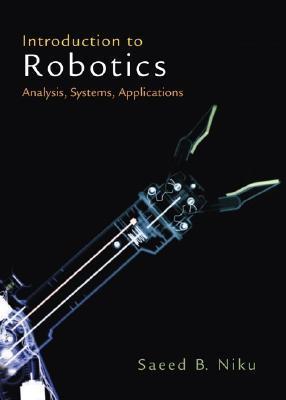
Introduction to Robotics: Analysis, Systems, Applications
This books serves as an introduction to robotics analysis, the systems and sub-systems that constitute robots and robotic systems, and robotics applications. All of the fundamentals of robotics are covered—robotics analysis; including kinematics, kinetics and force control, and trajectory planning of robots; its sub-systems such as actuators, sensors, and vision systems; as well as robotics applications. Introduction to Robotics also includes many subjects related to mechatronics, microprocessor actuator control, integration of sensors, vision systems, and fuzzy logic. For practicing mechanical engineers, electronic and electric engineers, computer engineers, and engineering technologists who would like to learn about robotics.
- GenresEngineeringTextbooks
349 pages, Hardcover
First published January 1, 2001
About the author
Saeed B. Niku
5 books4 followersNiku is a Professor at the Mechanical Engineering Department of Cal Poly State University, San Luis Obispo.
His research interests include:
- Mechanics
- Machine Design
- Biomechanics
- Robotics
- Creativity
- Design for the Disabled
His research interests include:
- Mechanics
- Machine Design
- Biomechanics
- Robotics
- Creativity
- Design for the Disabled
Ratings & Reviews
Friends & Following
Create a free account to discover what your friends think of this book!
Community Reviews
Displaying 1 - 1 of 1 review

September 12, 2013
Selected topics from this book formed a part of my graduate introductory course in Robotics. I read the following chapters:
Chapter 1: Fundamentals
Chapter 2: Robot Kinematics: Position Analysis
Chapter 3: Differential Motions and Velocities
Chapter 5: Trajectory Planning
Chapter 6: Actuators
Chapter 7: Sensors
Needless to say, Robotics is a math-intensive subject. If you have a good grasp over the basics of matrices, vectors and cartesian/ cylindrical/ spherical coordinate systems; you'll find the derivations and explanations much easier. Overall, the concepts are treated quite fairly with relevant examples and practice problems.
Chapter 1: Fundamentals
Chapter 2: Robot Kinematics: Position Analysis
Chapter 3: Differential Motions and Velocities
Chapter 5: Trajectory Planning
Chapter 6: Actuators
Chapter 7: Sensors
Needless to say, Robotics is a math-intensive subject. If you have a good grasp over the basics of matrices, vectors and cartesian/ cylindrical/ spherical coordinate systems; you'll find the derivations and explanations much easier. Overall, the concepts are treated quite fairly with relevant examples and practice problems.
Displaying 1 - 1 of 1 review