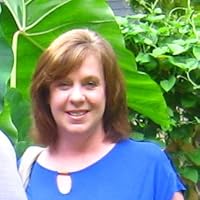
Marion Dane Bauer is the author of more than one hundred books for young people, ranging from novelty and picture books through early readers, both fiction and nonfiction, books on writing, and middle-grade and young-adult novels. She has won numerous awards, including several Minnesota Book Awards, a Jane Addams Peace Association Award for RAIN OF FIRE, an American Library Association Newbery Honor Award for ON MY HONOR, a number of state children's choice awards and the Kerlan Award from the University of Minnesota for the body of her work.
She is also the editor of and a contributor to the ground-breaking collection of gay and lesbian short stories, Am I Blue? Coming Out from the Silence.
Marion was one of the founding faculty and the first Faculty Chair for the Master of Fine Arts in Writing for Children and Young Adults program at Vermont College of Fine Arts. Her writing guide, the American Library Association Notable WHAT'S YOUR STORY? A YOUNG PERSON'S GUIDE TO WRITING FICTION, is used by writers of all ages. Her books have been translated into more than a dozen different languages.
She has six grandchildren and lives in St. Paul, Minnesota, with her partner and a cavalier King Charles spaniel, Dawn.
------------------------------------- INTERVIEW WITH MARION DANE BAUER -------------------------------------
Q. What brought you to a career as a writer?
A. I seem to have been born with my head full of stories. For almost as far back as I can remember, I used most of my unoccupied moments--even in school when I was supposed to be doing other "more important" things--to make up stories in my head. I sometimes got a notation on my report card that said, "Marion dreams." It was not a compliment. But while the stories I wove occupied my mind in a very satisfying way, they were so complex that I never thought of trying to write them down. I wouldn't have known where to begin. So though I did all kinds of writing through my teen and early adult years--letters, journals, essays, poetry--I didn't begin to gather the craft I needed to write stories until I was in my early thirties. That was also when my last excuse for not taking the time to sit down to do the writing I'd so long wanted to do started first grade.
Q. And why write for young people?
A. Because I get my creative energy in examining young lives, young issues. Most people, when they enter adulthood, leave childhood behind, by which I mean that they forget most of what they know about themselves as children. Of course, the ghosts of childhood still inhabit them, but they deal with them in other forms--problems with parental authority turn into problems with bosses, for instance--and don't keep reaching back to the original source to try to fix it, to make everything come out differently than it did the first time. Most children's writers, I suspect, are fixers. We return, again and again, usually under the cover of made-up characters, to work things through. I don't know that our childhoods are necessarily more painful than most. Every childhood has pain it, because life has pain in it at every stage. The difference is that we are compelled to keep returning to the source.
Q. You write for a wide range of ages. Do you write from a different place in writing for preschoolers than for young adolescents?
A. In a picture book or board book, I'm always writing from the womb of the family, a place that--while it might be intruded upon by fears, for instance--is still, ultimately, safe and nurturing. That's what my own early childhood was like, so it's easy for me to return to those feelings and to recreate them. When I write for older readers, I'm writing from a very different experience. My early adolescence, especially, was a time of deep alienation, mostly from my peers but in some ways from my family as well. And so I write my older stories out of that pain, that longing for connection. A story has to have a problem at its core. No struggle
A great educational book for your children of all ages. My 5 yr old loved it as well as my 3 yr old twins. Lots of good information with beautiful pictures that will help keep children engaged. We got this to go along with our Niagra Falls lesson. Lots of good information in this to reinforce stuff the kids have already learned. A great addition to any children's library.
"Annie Taylor, a 63-year-old teacher, was the first to go over the Falls in a barrel. She said afterward, "No one ought ever to do that again."
This would be a great book to prepare young readers for a visit to the falls, beginning with their formation during glacial times and continuing through the times of stunts and tourists. I wish the pictures were a bit more dramatic to convey even a tiny taste of the overwhelming, sublime experience of witnessing the falls -- they seem too peaceful and tame here.
Summary: This 'Ready to Read' text is an easy read to show elements in informational writing. Even though the facts are presented in cartoon fashion, the information is still reliable.
Focus: Informational Features to Use for Writing Mini Lesson
Author's Choice: The book shows authors that they can present their information in different ways. Informational texts don't have to be so cut and dry. Students see they can add cartoons and humor to the text.
Explanation/Vocabulary: In this text, the author explains words the reader needs to know. It's a good lesson for new writers who may want to share their 'knowledge' of words with younger readers.
In just a few short, easy to read pages, I learned more about Niagara Falls than I did in my history classes growing up. This book is educational as it takes you on a journey of the history of national monument. Discover how the Falls were made and the history that surrounds them. It provides even more facts in the back of the book too. I would recommend this book for first and second graders as it has simple sentences, familiar words and phrases as well as word repetition.
I was at Niagara Falls a month ago! On my boat trip, we were given red plastic poncho (notice the cover is yellow..that is another tour company LOL) This is a great, easy, well illustrated beginning readers bout Niagara Falls ... It references the story Chris Van Allsburg wrote "Queen of the Falls" and how it is now illegal to do any stunts, or dares over the falls. If you live... it is huge fine!! Crazy! Powerful! WHOA!
This was an OK introduction to Niagara Falls, but I disagree that it is a level 1 easy reader. "Niagara" itself isn't necessarily easy for a new reader and there were more than a few other words that were relatively difficult. Only 'glacier' had its phonetic spelling included, although I think several others could/should have. There may have been too much speak of the daredevils as well.
MCL. I thought it was interesting that the first person to go over Niagara Falls in a barrel was a lady and that a man walked across the Falls on a tightrope carrying his manager.