Essential reading for parents today. Offering us the tools to become wiser, more relaxed parents – and the inspiration to speak out, act according to our values, show humility, and set the kind of example that will make a real difference in our children's lives.
What happens to Queen Bees and Wannabes when they grow up?
Even the most well-adjusted moms and dads can experience peer pressure and conflicts with other adults that make them act like they're back in seventh grade. In Queen Bee Moms & Kingpin Dads, Rosalind Wiseman gives us the tools to handle difficult situations involving teachers and other parents with grace. Reassuring, funny, and unfailingly honest, Wiseman reveals:
Why PTA meetings and Back-to-School nights tap into parents' deepest insecurities. How to recognize the archetypal moms and dads—from Caveman Dad to Hovercraft Mom. How and when to step in and step out of your child's conflicts with other children, parents, teachers, or coaches. How to interpret the code phrases other parents use to avoid (or provoke) confrontation. Why too many well-meaning dads sit on the sidelines, and how vital it is that they step up to the plate. What to do and say when the playing field becomes an arena for people to bully and dominate other kids and adults. How to have respectful yet honest conversations with other parents about sex and drugs when your values are in conflict. How the way you handle parties, risky behavior, and academic performance affects your child. How unspoken assumptions about race, religion, and other hot-button subjects sabotage parents' ability to work together. Queen Bee Moms & Kingpin Dads is filled with the kind of true stories that made Wiseman's New York Times bestselling book Queen Bees & Wannabes impossible to put down. There are tales of hardworking parents with whom any of us can identify, along with tales of outrageously bad parents—the kind we all have to reckon with. For instance, what do you do when parents donate a large sum of money to a school and their child is promptly transferred into the honors program–while your son with better grades doesn't make the cut? What about the mother who helps her daughter compose poison-pen e-mails to yours? And what do you say to the parent-coach who screams at your child when the team is losing? Wiseman offers practical advice on avoiding the most common parenting "land mines" and useful scripts to help you navigate difficult but necessary conversations.
Queen Bee Moms & Kingpin Dads is essential reading for parents today. It offers us the tools to become wiser, more relaxed parents – and the inspiration to speak out, act according to our values, show humility, and set the kind of example that will make a real difference in our children's lives.
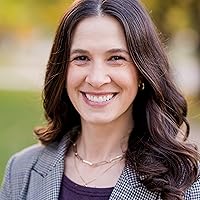
Rosalind's career began because she noticed the same pattern underneath very different human problems: a teenager feeling alienated from friends, a parent and child caught in a power struggle they couldn't get out of, a work team derailed because people couldn't say what they knew to be true. The situations looked nothing alike, but the cause was almost always the same. Predictable social patterns created seemingly intractable power struggles and feelings of disrespect that trapped people in miscommunication, resentment, judgments and disengagement.
That is why dignity, the recognition of every person's inherent worth, is the foundation of her approach. This work is not a soft skill. Dignity allows people to exist without fear of being ignored, humiliated, or dismissed. And when we lead from dignity, conversations change, conflict de-escalates, and accountability becomes possible.
Rosalind is the best-selling author of nine books, including the New York Times bestsellers Queen Bees and Wannabes—the inspiration for the Mean Girls movie and musical franchise—and Masterminds & Wingmen, named Best Parenting Book by Books for a Better Life. She contributed to David Yeager's 2024 best-selling book 10 to 25: The Science of Motivating Young People: A Groundbreaking Approach to Leading the Next Generation—And Making Your Own Life Easier, and is now working on a book to be published by St. Martin's Press in 2028.
She speaks throughout the world in educational institutions, government, and non-profit organizations, and served as a senior leadership consultant at the US State Department's Office of Overseas Schools from 2020-2026.
She has been interviewed by, profiled in, or written for The New York Times, The London Times, The Atlantic, The Chicago Tribune, The Washington Post, USA Today, NPR affiliates throughout the country, and many others.
Audiences she has presented to include South by Southwest, Microsoft, UBS, The Royal Society for the Arts, the Association for the Advancement of International Education, the United States Justice Department, the Library of Congress, the United States Department of State, the Game Developers Conference, the American Association of School Administrators, and the White House many times across administrations.
Rosalind has an honorary doctorate from Occidental College and is a board member of the Johnson Depression Center at Anschutz Medical Campus.
She is a native of Washington, D.C., a daughter, sister, wife, and mother of two young men, and lives in Boulder, Colorado, and Valencia, Spain.
I might not be in the best position to evaluate a book such as Queen Bee Moms and Kingpin Dads. After all, I’m a fairly oblivious person, the kind who is largely unaware of people’s positions in the social pecking order, the kind who frequently fails to observe the superficial things that are of importance to most people—that is, the kind of person who, in college, didn’t notice my college roommate had died her hair red until she pointed out the fact to me two days later. (Does that make me a “Socially Challenged Mom”?) I’m the kind of mom who doesn’t get involved in parenting politics and who doesn’t feel a pressing need to “advocate” for my child. (Does that make me an “Invisible Mom”? ) Often I send my husband to Back to School Night while I stay home with the kids. I’m not privy to the playgroup circuit, since I just open the door and let my kids find playmates on the streets or by knocking on doors. (Does that make me a “Benign Neglect Mom”?) All this musing over which of Wiseman’s categories most applies to me leads me to the real reason I’m not in the best position to evaluate this book: I simply don’t believe in the efficacy of putting complex human beings into social categories.
While I do see some truth in her caricatures, on the whole, I don’t find such categorization to be particularly helpful or accurate. Only about the first third of the book seems to be dedicated to this exercise, however; the rest is concerned with giving parents scripts so they can “advocate” for their children and teach their children to “advocate” for themselves. Since I probably lean most heavily toward the “Invisible Mom” category (I'm using her categories after all!), I tend to shy away from making my children's lives a cause, so most of this information did not seem particularly useful to me.
The scripts seemed unrealistic to me. I just don’t see myself using most of them in the parenting years to come. The coach yelled at you and made you feel bad on the field when you fumbled? Yeah, he’s a COACH. That’s what they do. What’s that? You ended up doing most of the work on a group project? Yeah, that's life – the competent people drag the weight of the incompetent people, who then get equal (or sometimes even more) credit. What? You got a bad grade? Work harder next time, or take an easier class, or resolve on going to a less prestigious college. It won’t prevent you from earning a living. There are also scripts I can use when I have conflicts with other parents, but thus far I’ve never yet experienced any of the specific parent-parent conflicts Wiseman describes.
I particularly enjoyed the section of the book where she told me what’s wrong with me as an annoying white person. She reminded me that I have to make sure my children realize that prejudice is all around them, even though they currently don’t realize it or think much about differences in color, ethnicity, or religion. My kids may be comfortable living colorblind lives, playing tag and make believe with their black, Jewish, Asian, and Muslim friends without a care in the world, but I need to make sure they feel keenly aware of the fact that these friends are not white Christians and therefore may be unjustly arrested or harassed at any moment.
The one chapter that was most applicable to me personally was on the subject of birthdays. Wiseman threw bar/bat mitzvahs into that chapter too with a passing reference to confirmations, although she overlooked quinceañeras. The birthday conundrum is a pressing one. Do you invite the whole class despite the potential expense, or do you invite just a few kids and hurt some feelings? What about neighborhood and church friends on top of school friends? What happened to the family-only cake and ice cream birthday celebration anyway? Why does every birthday party seem to occur in some public venue and involve some costly activity? But she didn’t delve deeply into my concerns, which are primarily financial. How expensive a gift should you get birthday kids, considering my kid is going to ten parties a year on average? Is there a cheaper way to do these parties without your kid feeling left out as the only kid in town without a party that includes a large number of friends? At what age do kids stop having parties?
Overall, this book just wasn’t for me. I’m not living this life she describes, or, if I am, I’m so oblivious of the fact as to be unreachable. Although these cliques were more apparent to me in high school, even then, I didn’t really feel such categories were accurate. How does one draw group lines, really, when the blonde cheerleader is a valedictorian and one of the star football players is also the star of the school musical? Perhaps I see the world in boxes, but I don’t see quite so many boxes as Wiseman does. Perhaps I witness the occasional social conflict, but I don’t perceive my world to be a parental warzone. The last couple of chapters, on sex, alcohol, drugs, and college applications, I merely skimmed, because those days still seem a long way off to me. Perhaps I will revisit those pages in five years.
Ummm... Well, honestly, I thought it started strong. Just like the last book, she had a scenario that was true enough to bring up pretty strong feelings of recognition and relief. She opens with: Back to School Night. But from there... I dunno.
My first objection is how much of the book was lifted 100% from Queen Bees and Wannabes.
I did like her contention that we should all be advocates for human dignity. Period. We should try to stand up when we see someone doing something wrong (good luck with that one), and we should treat all people with basic respect. We should also recognize our own shortcomings and try to correct them.
My second objection is how easy she makes things out to be in her scripts. The fact that kids retaliate is mentioned, but W seems to think that by speaking up for herself, a victim will no longer be a victim. I'm not sure about that... I can also see how speaking up could actually make things harder on the target. Revenge and retribution are as motivating as random cruelty, I think.
Still, W offers a view of a different path. That's worth something.
AS usual, some of the stereotypes were overly simplistic.
I liked how she talked a bit about the dynamic of working parents and stay at home parents. This is one of the first times I've read about how (mostly) women who have left the workforce to care for their children have a need to be involved and get validation from efforts outside the home. This is a societal problem, but it is often something overlooked, ignored, or hidden in plain sight by the (mostly) women dealing with it.
The feelings of stay-at-home dads were new to me. I'd always assumed that they were pretty confident and it was a surprise to read that they felt judged by other parents. I guess my own gender bias was such that I figured men were beyond that kind of insecurity. Then again, if they are no longer working, they, too, are no longer receiving the external validation of professional employment.
The quotes from sources were pretty interesting. Nice technique that paralleled the structure of Queen Bees & Wannabes.
I guess I got a few things out of this book. Not a total waste of time, but not as good as I'd hoped.
Most of this rang true to me, and I liked that the author gave plenty of space to recounting incidents in people's own words rather than as paraphrases.
Minus one star for mentioning almost nothing about gay teenagers and absolutely nothing about bisexual or transgender teenagers. This book came out in 2006--there were plenty of gay-straight alliances at schools by then.
One of my favorite parts of the book (I'm paraphrasing here):
HOW TO TELL IF YOUR KIDS HAD A PARTY WHILE YOU WERE OUT OF TOWN
* Every wastebasket in the house is empty.
* Your lawn has far more cigarette butts than usual.
* The house stinks of air freshener.
* The carpets have been vacuumed so recently that you can still see the vacuum-cleaner marks.
* There are lots of bottles in the outdoor trash (or, if your kid is smart, there are lots of bottles in the outdoor trash of whichever neighbor your child most dislikes).
Read this book well in advance before I would need the author’s advice — to learn what my husband and I will be up against when our child begins school. All these parent categories that are described appear to take themselves way too seriously.
Where is the category for parents who are confident in themselves to know who they are/are not, and how they don’t lose sleep at night if they don’t know anyone at parent orientation or if someone doesn’t talk to them at the event? The type of parent who volunteers their time for the PTA, and if not appreciated, walks away no hard feelings and feels like they just won their barely existent free time back? Their loss, my gain!! The parent that doesn’t feel the need to sugar coat to a point beyond recognition and can get a good laugh from what comes from the spice of life? Most days I’m holding it together with sticks and duct tape, racing through the day doing the best I possibly can — I’m in no way eager to brag about what’s happening with my life. Frankly, I don’t have the time to curate a story to bore my fellow busy parent. Where are those parents? They are my tribe.
There are some mothers/fathers that are very anxious and are going through some very hard times when there children are going to school. One comment in particular, the one below is the exact reason why this book was written. Although her review was very well thought out and she explained herself beautifully I feel like she lacked compassion for people like myself who may not be as strong emotionally as she says she is. I hope she can look at the book and learn from it that there are people in the world that do feel this way. I too am oblivious most of the time. I have a busy life as well. But for some reason my anxiety level shoots through the roof when I have to get involved with anything to do with my children's school. I think Rosalnd Wiseman was just trying to help people like myself by using categories and analyzing and breaking apart why there are the mothers who feel the need to be popular "again" or the wannabes. Or the mothers like myself who thought my children's friends would have had some nice parents attached to them and every now and then we can get together for a play date or family BBQ. But thats not the case. Although I am completely satisfied with my social life I feel guilty that when I try to make a play date for my children and there's that biAtch of a mother who says she's busy yet has play dates with everyone else. Because of who I AM its hard for me to not take it personally. I have heard that I am to pretty...or to young (I am older then I look)...or to shy....or I look like a snob. Instead of getting to know me I am judged. I find myself judging everyone else now because they are judging me. Its just an uncomfortable situation all the way around and if there weren't as many parents that feel the way I do, the book would not have been written. I think the book is bittersweet. It's honest and it tells you what kind of mother you are. Look at it as a learning experience. If your the Queens BEE realize you may be hurting someone with your actions and if your the invisible mom...she explains why you may be feeling that way. Its not mean't to upset people, its written to help someone like myself who may not see that I may causing my own problem. It may be my own insecurity. If the Queen bee doesn't talk to me its her own issue, it really has nothing to do with me. Its like a self help book and I recommend it to anyone who who is going through it and thinks they are alone.
I had been meaning to read Wiseman's "Queen Bees and Wannabees" but never got to it; when I saw that there was a sequel, I thought I'd check that out instead. I suspect I might have found this book somewhat redundant had I already read the prequel. Basically, Wiseman asserts that the same social "types" that pervade childhood exist in adulthood amongst parents in particular -- queen bees, sidekicks, floaters, "bankers" of gossip, etc. -- and that these parents are capable of making your and your child's life miserable. If anything go wrong, their child will never be at fault and yours will be left holding the bag. Wiseman offers suggestions for how to confront these parents and decode their messages, and encourages you to self-reflect on which of these parents you might be and whether you might need to rethink your position.
The concept was interesting but the book was a bit tedious and preachy at times. The taxonomy of parent types was long and convoluted and at the same time, simplistic in some respects. I don't think everyone neatly fits these categories, and some categories appeared to be clearly "wrong" while others were "right." When Wiseman spoke about decoding parent messages, nearly all of them translated to some form of "I'm a better parent than you are" which I can't imagine is always the case. Some of Wiseman's suggestions for scripts to use when confronting parents sounded awfully annoying and self-righteous to my ears; although I'd like to think I'd be receptive if a parent had some valid criticism for something I did, this approach seemed off-putting to me. Finally, while Wiseman described a world which I'm sure exists, it (thankfully) is not mine, although she'd probably say I'm in denial. Not that there are no queen bees or sidekicks where I am, but as someone who doesn't live in a wealthy suburb or center my social life around my kids' school, much of what she said didn't feel personally relevant.
This book also falls into that gray area between well-researched and highly anecdotal. There were no footnotes; Wiseman seemed to base her conclusions on multiple focus groups conducted with parents and on formal and informal discussions. I suppose it's a step up from "me and my friends say," but it's still not empirical research and I think her conclusions might have been stated with more humility and tentativeness.
Queen Bee Moms & Kingpin Dads is about dealing with the people you'll encounter once your child bursts forth from the womb. The book distinguishes different personality types, labeling them as Queen Bees (the perfect PTA/"my child is perfect because I'm perfect" Mom,) the Side-kicks, the Floaters,the Wanna-be's and the Invisibles. The labels feel authentic and accurate, and are instantly recognizable to anyone who's ever attended high school and had to deal with cliques, popularity, and trying to find your "social place."
Since it is unlikely a true "Queen Bee" would actually stoop to reading this book, Wise spends most of her time focusing on how to handle situations that may arise with a "Queen Bee" type. One scenario she uses is that of a PTA-Queen Bee bullying someone into taking on much more work than that person can handle. Wise provides dialog and an explanation, successfully illustrating how to say no without causing offense. What I liked about this book is that it takes you from pre-school to college entry, so you can see how the process works at different stages of your childs academic life. She also makes sure Dad is included, and offers great advice for men facing similar situations.
The books true strength lies with Wise's honesty, and her ability to bridge the gap between the Queen Bee's and the Invisibles. If more people followed her common-sense approach, perhaps the modern PTA meeting would feel less like a middle-school lunchroom foodfight, and more like something done to actually improve our children's schools.
Interesting at points, but also partly eyeroll-inducing, like when it goes on for 30 pages about kids' parties, including 7 pages (7 entire pages!) under the subheading "Problem: Your Child Doesn't Want to Invite an Old Friend to a Party." Makes the Benign Neglect method seem all the more appealing.
This makes no sense. The author is not able to get their point across. They write this with the time heartbeats at the varsity cheerleading table in the high school lunch room, an d the reader is trying to know why they aren't with that table. It feels like the plot of means girls. If someone has a flow chart or a Venn diagram to go along with this title.
Additionally, without getting too personal, I wanted to read this for some tips and social cues that psychology sometimes explains. I'm unable to understand what and how to navigate teachers, coaches, counselors, school staff, and neighborhood from this work, which is more creative fiction than nonfiction.
I've been touting Rosalind Wiseman's advice ever since I devoured the excellent Queen Bees and Wannabees, and this book is another fast favorite. Wiseman's main point is that being a good parent isn't just about how you interact with your kid, it's also about how you interact with the other grown ups in your kid's life. She gives concrete advice, and in some cases writes you a script with what to say. Wiseman thinks kids are safer and healthier when parents work together as a community, something that doesn't happen automatically in this day and age, and I finished this book motivated to help foster that community in my area.
3.5 Stars Actually. This is a good book for handling the many difficulties that come along with different parenting scenarios as one’s children reach middle school and beyond. At times I found the book so harsh in its depiction of parents and even children that I found it difficult to read and had to set it aside for awhile. But the frank way the author suggests communicating and the bravery for standing up for both one’s child and even one’s values as a parent/family make it an important read. The book was written in 2006, so I gave it less stars - it could use a social media update!
The school parenting world seems really politically complicated in the US. Hope that it isn’t like that here in the Oceania Région. Got a lot of good advise on how we could work with other parents in school to raise our children. Also learned what is appropriate for the western community and how their social circle is most probably like. Will keep all of these in mind as my children grows up to attend more senior years of school.
This book is even more of its time than the other book I read by the same author. It still manages to catalog the infamous Karen, although not by that name. It was a good field guide to the world of adults for me, even if I didn’t manage to spot my mom in there. An interesting read, and I wish there was less relevance to today’s adult world. After all, high school never ends.
I really appreciated how the author approached different issues and offered suggestions. Most of the interactions revolved around our children's problems and how to interact with other adults when our children are having issues. While helpful, I would've liked more content advising how to handle issues with other adults when children aren't involved.
This was a good read! I asked a friend who is a parent about something regarding the parent social world and she recommended this one – it’s by the author of the book Mean Girls is based on. It’s direct, realistic, and asks parents to consider and center their values. It was published in 2006, so I think a more recent book would be helpful in other ways, but I found this useful as a teacher.
2020 Edit: Reread this again now that my kids are entering school, and I have had the pleasure of experiencing the dreaded PTO cliques and parent committees. Still think I will end up getting more out of it once my oldest enters middle school; what I really wish was tackled more was the "Intro" into parent world, which is just briefly skimmed over. The elementary years are really where it all starts - once a kid enters middle and high school, the cliques are well established and it's harder to navigate the waters, as many of these parents have known each other for years at this point.
_________________________________
I've read this book three times - once as a teenager when it first came out, then again a few years later as a student in a psychology class, and now, as a parent. Each time it made for an interesting read, but I took out different parts that were relevant to me at the time, and found myself agreeing and disagreeing with things from each perspective. Regardless of what perspective you are reading this from, whether you're a teen, parent, student, or educator, I'm sure you will find this an easy read that you can grab something from. It doesn't weigh the reader down with complex psychological terms and controlled studies, but instead presents the information in a straight forward manner with anecdotes from real people that will sound like your average parents and teachers you'd run into in your own community. You might even read part of it and be surprised you didn't write it yourself.
In general, Wiseman does a good job of providing different viewpoints without saying that one way is superior to the other, unlike other parenting books. I also appreciated her assessment of parental cliques, which is really what I picked this book up for this time around. Even though my children are small, and this book seems to mainly focus on parents of middle and high schoolers, I've still noticed parent cliques even at the toddler and preschool level.
There are some issues that I believe Wiseman is a little too touchy on - some of the "decoding" she does I found myself highly disagreeing with. For example, the question of "Where are you going to college?" decoded as some hidden agenda to humiliate people and assert their own kid's superiority. Tone is always important. I can't tell you how many times I was asked this as a senior in high school by others simply as a form of small talk. Similar to "How about those Red Sox?" when you live near Boston and don't know what else to talk about with a stranger, questions about college to a high school senior are usually a friend's parent's way of trying to come up with something to talk about to a teenager or parent that they barely know. Sometimes, it IS just an innocent attempt at small talk; really pay attention to the tone and body language before jumping down someone's throat and assuming it's meant to be a hidden insult.
Overall a solid book that I would recommend for teens to understand where their parents are coming from, and educators and parents to understand each other and work together.
Wiseman's book that focuses on adults instead of kids includes a lot of helpful information. My main problem with the book was the lack of focus. It is hard to tell whether the book is about personality types, interactions between adults, or parenting instruction. I know the three topics are related and affect how we progress with our kids through their development. Somehow the book seem scattered.
The author starts the book with a discussion of culture and character. I like her description of character- "Our true character, individually and collectively, is revealed in the moments when the need to belong comes at the cost of what we believe in and what we know is right." Her definition of culture- "Everything we 'know' about the way the world works but have never been taught.
Throughout the book Wiseman shows how individuals, based on the roles they take in social groups, are affected by cultural expectations. Individuals with strong character and self worth are willing to be cultural rule breakers. They don't follow silly social rules "just because".
Wiseman includes descriptions of roles women and men take on (Queen bee, sidekick, wannabes, outsiders, kingpins, reformed, floaters, etc). The descriptions fit the names.
Much of the book discusses interactions parents have with their kids, other parents, teachers, coaches, other kids, school administration. The descriptions of tough situations and possible solutions are very helpful. There are many examples of horrible parent behavior. After a while, it felt like I was reading a tabloid instead of a book. The examples were entertaining, but there were too many.
The chapter on parent volunteering and PTA was most useful to me. It included information about the perception that PTA is a clique and often excludes large groups of parents.
Overall- the book is useful and fairly easy to read.
This is shelved near the author's other book Queen Bees and Wannabees, and since I was picking up the one, I went ahead and got this one too. Right now we're going through a lot of drama with middle school girls, and I thought I'd get some good reminders and tips to coach my daughter through some of the rough spots. However, after attending a mothers' meeting at her school, it occurred to me that the mean girls had to learn their behavior from somewhere and wasn't that interesting that their mothers were just as cliquey? You think that once you get past the age of 40 you won't have to deal with high-school type behavior, but guess what, for some people it never stops. This book is an attempt to categorize parents into behavior groups, and tries to find ways for you to navigate this tricky territory without making life worse for your kid at a time when things are hard enough. It was helpful in some aspects, but then I think a little naive in other aspects. Most problems between middle schoolers are not the kinds you can fit into neat categories, nor map out specific plans of action to fix them.
While first tempted to chuckle along at all of "those parents" the author profiles, I quickly realized I needed to turn the mirror on myself and determine which profile I could be considered. I'm still not 100% sure which one I am-- which makes me worry that I need to gain more self-awareness--and I'm also hopeful that my trusted circle of friends will call me out when/if I cross the line into crazy parent land. I appreciated her advice to be courageous and speak out when something is amiss, even if it doesn't seem like our business. The author reminded me that parents need to work together and remember we are all on the same side--the side of building strong communities. It takes a lot of courage and confidence to not worry about what other people think of you--especially if it is doing the right, though likely unpopular, thing.
The book was a helpful look ahead at some of the pressure we and our children will face in the years to come. I also appreciated her examples of how to have difficult conversations. My hope is that I can be courageous and love my children, their friends, and other parents well. And I've come to realize that I love them best by letting them learn.
I did not read Wiseman's first book as I am raising just boys, but I saw this book and thought it might be insightful in understanding why other parents behave the way they do. I think what I most appreciated about this book was understanding why fathers tend to not get involved in disputes between families and let the mothers handle all the issues involving their children's relationships with other children.
Mostly the book was a conflict resolution book re-packaged for parents. But there were some gems buried in there -- actual examples of issues that might arise and how to handle them, with realistic scripts of how a phone conversation or "confrontation" with another parent might be played out. The focus tended to be more on issues that would arise among older children (5th grade and above), which is a bit ahead of where my children are right now. I think I will keep this book in my library for future reference. Ten years from now this might be the best book I ever read!
It was okay, not remotely as good as Queen Bees and Wannabes. She assumes you've already become familiar with the content of her first two books and cites them without giving any further information, so if you haven't read her other work it's significantly less useful. She bemoans the lack of parental involvement from dads and the paucity of parental advice targeted at and consumed by them, and then proceeds to give only cursory attention. She's a little to eager to put people in simplistic boxes. The amount of attention to the problems specific to upper-middle-class Jewish families is disproportionate to the actual number of upper-middle-class Jewish families.