

What do you think?
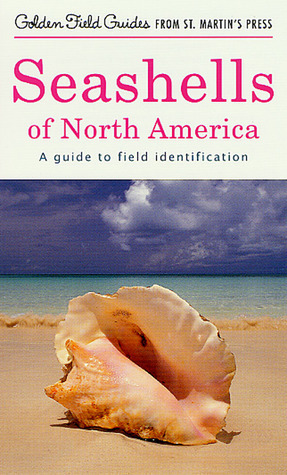
Seashells of North America: A Guide to Field Identification
Scoop up plentiful Cockles on Eastern beaches. Spy a fabulous Emperor Helmet in Southern Florida. Find a Red Chiton on the Pacific shore. The coasts of North America yield a wondrous variety of shells, from the majestic Conch to tiny Bittium. This beautifully illustrated guide helps both the novice and experienced shell hunter distinguish between similar varieties and find the glorious specimens that become a collection's prize. -Native varieties and important introduced species
-Expert tips on cleaning and preservation
-Common and scientific names
-Convenient measuring rules...and more!!
-Expert tips on cleaning and preservation
-Common and scientific names
-Convenient measuring rules...and more!!
280 pages, Paperback
First published June 1, 1968
About the author
R. Tucker Abbott
65 booksRobert Tucker Abbott was an American conchologist and malacologist. He was the author of more than 30 books on malacology, which were translated into many languages.
Abbott was one of the most prominent conchologists of the 20th century. He brought conchology to the public with his works, including most notably: American Seashells, 1974, Seashells of the World, 1962, and The Kingdom of the Seashell, 1972. He was an active member of the American Malacological Union and Conchologists of America.
During World War II, Abbott was first a Navy bomber pilot, and later worked for the Medical Research Unit doing research on schistosomiasis. He documented the life cycle of the schistosome in the Oncomelania, a small brown freshwater snail, which he studied in the rice fields of the Yangtze valley.
He married Mary M. Sisler on February 18, 1946. She was also a malacologist.
After World War II, Abbott worked at the National Museum of Natural History, Smithsonian Institution (1944–1954) as Assistant Curator and Associate Curator of the Department of Mollusks. During this time, he earned his Master's and Ph.D. at George Washington University and wrote the first edition of American Seashells.
He then went to the Academy of Natural Sciences in Philadelphia (1954–1969). He was chair of the Department of Mollusks, and held the Pilsbry Chair of Malacology. During that time he went on a number of shelling expeditions to the Indo-Pacific region. He also started his own journal, "Indo-Pacific Mollusca". He also was an active editor on "The Nautilus"
In 1969, Abbott accepted the DuPont Chair of Malacology at the Delaware Museum of Natural History. He also headed the Department of Mollusks, and was Assistant Director. In 1971 he became editor-in-chief of The Nautilus.
Abbott was the Founding Director of The Bailey-Matthews Shell Museum on Sanibel Island. He died from pulmonary disease in 1995, two weeks before the museum opened. He is buried in Arlington National Cemetery.
http://en.wikipedia.org/wiki/R._Tucke...
Abbott was one of the most prominent conchologists of the 20th century. He brought conchology to the public with his works, including most notably: American Seashells, 1974, Seashells of the World, 1962, and The Kingdom of the Seashell, 1972. He was an active member of the American Malacological Union and Conchologists of America.
During World War II, Abbott was first a Navy bomber pilot, and later worked for the Medical Research Unit doing research on schistosomiasis. He documented the life cycle of the schistosome in the Oncomelania, a small brown freshwater snail, which he studied in the rice fields of the Yangtze valley.
He married Mary M. Sisler on February 18, 1946. She was also a malacologist.
After World War II, Abbott worked at the National Museum of Natural History, Smithsonian Institution (1944–1954) as Assistant Curator and Associate Curator of the Department of Mollusks. During this time, he earned his Master's and Ph.D. at George Washington University and wrote the first edition of American Seashells.
He then went to the Academy of Natural Sciences in Philadelphia (1954–1969). He was chair of the Department of Mollusks, and held the Pilsbry Chair of Malacology. During that time he went on a number of shelling expeditions to the Indo-Pacific region. He also started his own journal, "Indo-Pacific Mollusca". He also was an active editor on "The Nautilus"
In 1969, Abbott accepted the DuPont Chair of Malacology at the Delaware Museum of Natural History. He also headed the Department of Mollusks, and was Assistant Director. In 1971 he became editor-in-chief of The Nautilus.
Abbott was the Founding Director of The Bailey-Matthews Shell Museum on Sanibel Island. He died from pulmonary disease in 1995, two weeks before the museum opened. He is buried in Arlington National Cemetery.
http://en.wikipedia.org/wiki/R._Tucke...
Ratings & Reviews
Friends & Following
Create a free account to discover what your friends think of this book!
Community Reviews
Displaying 1 - 7 of 7 reviews

March 31, 2012
This is one of the most gorgeous books I own. Reading it is like sneaking around a land-grant university's marine biology building at two in the morning in the year 1964.

November 15, 2017
Great for a shell collector! Organized by seashore. Pictures and short descriptions on the shells you may find in those areas. Also includes fun activities to do with shells or at the shore.
April 8, 2026
snai l and more

February 14, 2011
Used for shell poems submission for KNOW magazine. Didn't actually use this one much. Nice images. Check out again if I need to.

June 26, 2013
I already have a similar field guide and will now have to compare both to see which one gets ditched.

January 17, 2016
This is part of the Golden Field Guide series and contains descriptions to help identify the common shells found in North America. The color illustrations for each species described are excellent!
March 29, 2017
It was good, just wish there were more facts. It had really good images and it really explains the size of each shell!
Displaying 1 - 7 of 7 reviews