

What do you think?
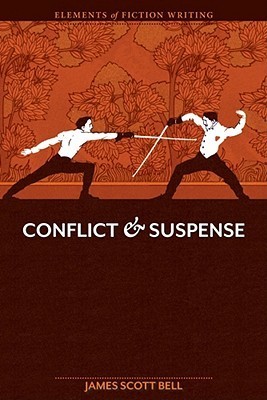
Elements of Fiction Writing
Conflict and Suspense
Conflict pulls readers into a story and suspense carries them along until its conclusion. Expert author of over 15 thrillers, James Scott Bell offers proven techniques that help writers craft fiction that their readers won?t be able to put down. Learn how to believably weave conflict and suspense into a story, how to pace your story and keep the pressure on throughout, and how to bring it all to a gripping conclusion.
273 pages, Paperback
First published December 15, 2011
About the author
James Scott Bell
133 books1,062 followersJim is a former trial lawyer who now writes and speaks full time. He is the bestselling author of Try Dying, No Legal Grounds, Presumed Guilty, Glimpses of Paradise, Breach of Promise and several other thrillers. He is a winner of the Christy Award for Excellence in Inspirational Fiction, and was a fiction columnist for Writers Digest magazine. He has written two books in the Writers' Digest series, Write Great Fiction: Plot & Structure and Revision & Self-Editing.
Jim has taught writing at Pepperdine University and numerous writers conferences. He attended the University of California, Santa Barbara where he studied writing with Raymond Carver.
Series:
* Shannon Saga (with Tracie Peterson)
* The Trials of Kit Shannon
* Ty Buchanan
Jim has taught writing at Pepperdine University and numerous writers conferences. He attended the University of California, Santa Barbara where he studied writing with Raymond Carver.
Series:
* Shannon Saga (with Tracie Peterson)
* The Trials of Kit Shannon
* Ty Buchanan
Ratings & Reviews
Friends & Following
Create a free account to discover what your friends think of this book!
Community Reviews
Displaying 1 - 30 of 136 reviews

October 9, 2014
Another one for the keeper shelf from JSB. It includes some of the same concepts as Plot & Structure and Revision & Self-Editing (like the LOCK system and the character grid), but puts them in the context of increasing suspense and intensifying conflict. If you're trying to diagnose or avoid pacing problems in your novel, there are a lot of excellent considerations here.

Read
August 10, 2016This book is just GREAT!
Easy to read, loads of samples, straight to the point...
You'll get lots of practical advice for what you are looking for if you want to improve your current draft.
Easy to read, loads of samples, straight to the point...
You'll get lots of practical advice for what you are looking for if you want to improve your current draft.

May 24, 2017
Livro muito bom com muitas ferramentas práticas para adicionar conflito e suspense pelo seu livro, desde o planejamento da história.
O autor define todos os conceitos de maneira clara e didática. Você aprende a pensar em ideias para histórias já imbuídas de conflito, personagens com traços que geram tensão, como iniciar o livro com conflito, estrutura para suspense e tensão, manter o 2º ato em movimento com cenas e sequências fortes, fortalecer descrições para fazerem "trabalho duplo", criar subtramas que se conectam com a trama principal, usar flashbacks melhores, diálogos, e váaaarias outras técnicas.
Um dos meus favoritos.
O autor define todos os conceitos de maneira clara e didática. Você aprende a pensar em ideias para histórias já imbuídas de conflito, personagens com traços que geram tensão, como iniciar o livro com conflito, estrutura para suspense e tensão, manter o 2º ato em movimento com cenas e sequências fortes, fortalecer descrições para fazerem "trabalho duplo", criar subtramas que se conectam com a trama principal, usar flashbacks melhores, diálogos, e váaaarias outras técnicas.
Um dos meus favoritos.

January 14, 2012
Well worth your time and money if you want to improve as a writer. I just stole this from the book (because I agree with it completely) "Getting the words down is what makes a disciplined writer. Getting them down with the craft working for you is what makes a professional writer."
Highly recommended.
Highly recommended.

August 23, 2017
Haven't quite finished this. Not sure want to. Mostly obvious, tired advice by an author who touts his own lackluster writing. So far 2 or 3 things have seemed interesting/useful. Certainly not worth my time or money. Maybe if I finish and the second half is amazing, I'll update the review. Otherwise I don't plan to read any more by this author. Craft or fiction.
May 25, 2022
Bell's work in the field of writing guides is routinely marked by a self-important voice and tendency to reference his own novels and writing systems ad nauseum. This is not the first book of his to which I have subjected myself, and given his share in the oligopoly of this genre, it is unlikely it will be the last.

December 6, 2020
I can tell that the author of this book is more than likely a thriller writer. Examples are also pretty much just murder mysteries or other thriller novels, which isn’t very helpful for me.

January 1, 2023
One of my favorite books on the craft of storytelling

August 6, 2024
Abandoned after 43% read.
You'd think a book about writing would be full of good writing. This one isn't.
The author uses a lot of excerpts and summaries to illustrate his points. In doing so, he includes spoilers for a large swath of books and movies, many in the adventure/thriller category.
He also excerpts his own fiction writing... if his writing was worth including, that would be fine. Maybe a little presumptuous, but fine. Except, his writing is terrible... super cringey.
The book is way too long for the topic.
The e-book contains a lot of typos.
There is some profanity.
You'd think a book about writing would be full of good writing. This one isn't.
The author uses a lot of excerpts and summaries to illustrate his points. In doing so, he includes spoilers for a large swath of books and movies, many in the adventure/thriller category.
He also excerpts his own fiction writing... if his writing was worth including, that would be fine. Maybe a little presumptuous, but fine. Except, his writing is terrible... super cringey.
The book is way too long for the topic.
The e-book contains a lot of typos.
There is some profanity.
May 17, 2022
Even better than his Plot & Structure book! I’m definitely going to back and refer to this one when writing. I also need to order some of his other books.

August 4, 2014
I picked this book up on a whim. I just signed up for the 30-day free trial of Amazon's new Kindle Unlimited, and I snagged a bunch of books that had been languishing on my wish list, and this was one of the ten that made it from my list to my Kindle.
So, first of all, confession time. I added the book to my wish list based on the cover and a misunderstanding of the title. The cover shows a couple of chaps slashing at one another in a fencing display. The title also uses the word "conflict" and my mind jumped to "how to write fight scenes". Stupid brain.
This book has nothing to do with actual physical confrontation. It's about how to add conflict, drama, mystery and suspense in your writing through sentence structure, word choice, imaginative verbs, body language, appropriate use of cliff hangers, etc. And it's not just a 35 page "wham bam thank you ma'am" sort of writing book. It's 274 pages of detailed discussion on how to keep people turning the pages of your book. Many examples are utilized, and even though Mr. Bell has a tendency to reach for cinema examples (along with many literary examples), I don't mind so much because he also discusses the decisions directors like Alfred Hitchcock made in designing scenes in their movies, how they turned the mundane into something different and exciting.
And before you turn away because you think this book is only useful for those writing thriller or horror novels, stop and reconsider. Conflict, tension, uncertainty... these are elements needed in all styles of writing. That means you romance writers. You too chick lit, folks. What keeps us reading is wondering what is going to happen to the characters we've become invested in. You want to add interest to a boring scene where two friends meet for coffee? This book will explain what you're doing wrong and how to fix it. Turn that scene of boring, domestic, every day monotony into one that gets people's imaginations working.
I was quite enamored of what I read, and bookmarked several sections to go back to and read as a reference or refresher. And once I was done I realized that another of his books, "Write Great Fiction - Plot & Structure" is the manual for my writing class I'm signed up for the fall semester at college. For once, I may actually enjoy reading my college textbook!
Highly recommended.
So, first of all, confession time. I added the book to my wish list based on the cover and a misunderstanding of the title. The cover shows a couple of chaps slashing at one another in a fencing display. The title also uses the word "conflict" and my mind jumped to "how to write fight scenes". Stupid brain.
This book has nothing to do with actual physical confrontation. It's about how to add conflict, drama, mystery and suspense in your writing through sentence structure, word choice, imaginative verbs, body language, appropriate use of cliff hangers, etc. And it's not just a 35 page "wham bam thank you ma'am" sort of writing book. It's 274 pages of detailed discussion on how to keep people turning the pages of your book. Many examples are utilized, and even though Mr. Bell has a tendency to reach for cinema examples (along with many literary examples), I don't mind so much because he also discusses the decisions directors like Alfred Hitchcock made in designing scenes in their movies, how they turned the mundane into something different and exciting.
And before you turn away because you think this book is only useful for those writing thriller or horror novels, stop and reconsider. Conflict, tension, uncertainty... these are elements needed in all styles of writing. That means you romance writers. You too chick lit, folks. What keeps us reading is wondering what is going to happen to the characters we've become invested in. You want to add interest to a boring scene where two friends meet for coffee? This book will explain what you're doing wrong and how to fix it. Turn that scene of boring, domestic, every day monotony into one that gets people's imaginations working.
I was quite enamored of what I read, and bookmarked several sections to go back to and read as a reference or refresher. And once I was done I realized that another of his books, "Write Great Fiction - Plot & Structure" is the manual for my writing class I'm signed up for the fall semester at college. For once, I may actually enjoy reading my college textbook!
Highly recommended.

March 27, 2012
Fantastic book. I love writing conflict into my stories. Frankly, it's the spice that keeps them going like the Energizer Bunny. People accuse me of torturing my characters, and this books gives me affirmation I'm doing it right.
James Scott Bell tells it like it is, with humor and great examples. It's nice to know when I get to my cliffhanger in my current novel, it's okay to hang my antagonist over the edge and drag my reader with him.
If you're a published author or aspiring writer, this is a wonderful reference. Frankly, it's the best of any how-to book I've purchased.
James Scott Bell tells it like it is, with humor and great examples. It's nice to know when I get to my cliffhanger in my current novel, it's okay to hang my antagonist over the edge and drag my reader with him.
If you're a published author or aspiring writer, this is a wonderful reference. Frankly, it's the best of any how-to book I've purchased.

April 5, 2013
Chockfull of brilliant pointers. What struck me as I kept reading advice like "Ramp up the tension!" "Tighten it some more!" "Make bad things happen!" "Make worse things happen!" "Make your hero work harder!"--is how much more we'd enjoy our roles in God's story if we remembered that our best writing advice comes from observing the conflict and suspense in the best story ever told--this one. Ours.

October 31, 2012
Every book about writing that I've read gives me something; inspiration, direction, focus, or just the urge to sit down and write. So I'm tempted to give this 4 stars, but the annoyance of constant typos and missing words or letters is enough to drive that back down. I enjoyed this book, and it did give me some good ideas, although it is a bit smug and self-satisfied.

September 13, 2018
As with nearly every James Scott Bell writing book I’ve read, this one was excellent! On topic, with relevant examples from well-known books and movies, clear explanations and actionable items. Personally, I found that many of the suggestions were things I’d already discovered through trial and error, but there were new ideas I hadn’t considered yet. Great for beginner writers, but also a useful refresher/checklist for more experienced writers.

January 7, 2024
Lots of good wisdom in here for folks that wanna write books or just want to tell more engaging stories, whatever that might look like.
February 1, 2021
I didn't read the chapters to this book in order, because some of it was familiar to me from John Truby's "Anatomy of a Story." However, the book provided tips I hadn't heard previously and outlined exactly how to maximize suspense in every moment of each scene. The advice I have implemented so far has made the difference between proof readers and readers saying 'this is great' to 'this is amazing'. It has also made writing slightly more challenging and fun - I feel like I have a puzzle and I need to figure out where each piece best fits. It is very satisfying to reach that point! Now to finish a book... damn. James Scott's writing is succinct and enjoyable as well. I would highly recommend this book if you feel your writing needs more of the 'wow' factor.

January 4, 2013
I took a quick break from my reading and other jobs to zip through this little book, and I'm so glad I did. I'm mostly self-taught in writing and plotting, and I do recommend the approach I took--learning by observance of plots you like--but this filled in the gaps I had and gave me a simpler understanding of the process.
My only criticism of this enormously helpful book (which I am so looking forward to putting into practice) is that while some of the author's advice would apply to any writer in any genre or any time, some of it is based upon a modernist understanding of story which authors like Jane Austen, Sir Walter Scott, JRR Tolkien, or Evelyn Waugh could and did easily ignore. But anyone who reads those or other authors attentively should be able to see where they diverge with this book.
Thanks, Mr Bell.
My only criticism of this enormously helpful book (which I am so looking forward to putting into practice) is that while some of the author's advice would apply to any writer in any genre or any time, some of it is based upon a modernist understanding of story which authors like Jane Austen, Sir Walter Scott, JRR Tolkien, or Evelyn Waugh could and did easily ignore. But anyone who reads those or other authors attentively should be able to see where they diverge with this book.
Thanks, Mr Bell.

November 7, 2013
I tend not to read a lot of craft books, except if I am having a problem in a story. I recently read Bell's book because my latest action/espionage plot seems to just plod along. I needed to up the stakes and hit the gas in the pacing. Bell provides an excellent technical review on structure in relationship to conflict. I highly recommend it.

November 20, 2015
If there's anything an author should know about creating conflict and suspense in their stories that isn't in this book, I'll be shocked. It's extremely thorough. It's also geared to be very helpful, with many clear steps to adding and increasing the tension in your writing. I plan to go through this book page by page and try everything when I'm ready to revise.
Highly recommended.
Highly recommended.

March 13, 2016
Este libro me ha impactado y dado vuelta. Es un libro con teoría, pero en esencia práctico y centrado. Se convirtió automáticamente en mi biblia de escritor y si bien lo tenía en versión digital, me lo compré en formato físico para poder subrayar y anotar.
No me casaré de decirlo: es un libro soberbio, indispensable si te interesa el tema.
No me casaré de decirlo: es un libro soberbio, indispensable si te interesa el tema.

April 15, 2015
For a writer trying to hone my craft I found this book practical and insightful. Most of the stuff I knew, but it helps to have the information refreshed. This book is written in an engaging, optimistic style. A must read.

May 1, 2012
Marvellous, comprehensive, practical exploration of exactly what the title denotes: conflict AND suspense.

August 5, 2012
Do not write your thriller/genre novel until you have read what James Scott Bell has to say. An essential "how to" book for the library.
March 4, 2014
This is an exceptional book for writers, covering conflict and suspense fully, but with so much more thrown in.

June 1, 2014
James Scott Bell writes great craft books for writers of fiction. If there is one tool a writer needs in their tool box, it's CONFLICT. This is a great book for clear examples and how-to.
Read
May 18, 2025**Elements of Fiction Writing: Conflict and Suspense** by James Scott Bell is a practical and focused guide that teaches writers how to craft compelling tension, raise stakes, and keep readers engaged from the first page to the last. The book explores the mechanics of plot, pacing, and emotional intensity, offering strategies to inject conflict and maintain suspense across all genres of fiction.
Key concepts and actionable ideas:
* Understand the central role of conflict:
* Conflict drives plot, reveals character, and creates momentum.
* It should exist in every scene—internal, interpersonal, or situational.
* Develop a strong story question:
* Introduce a compelling question early that readers want answered.
* The question must have emotional stakes and delayed resolution to maintain suspense.
* Raise the stakes continuously:
* Escalate tension by increasing risks, deepening consequences, or tightening timeframes.
* Use physical danger, moral dilemmas, or emotional loss to make conflict more intense.
* Structure for suspense:
* Use scene and sequel format: scenes show goal-conflict-outcome; sequels show reaction-dilemma-decision.
* Alternate action with reflection to control pacing and deepen engagement.
* Create memorable antagonists:
* Antagonists should be as strong and well-developed as protagonists.
* Make them believable, motivated, and capable of challenging the hero at every turn.
* Use the “death overhanging” principle:
* All great suspense involves the threat of some kind of death—physical, professional, psychological, or relational.
* Keep that threat looming to create urgency.
* Employ micro-tension in every paragraph:
* Even in low-action scenes, use subtext, unresolved emotions, or hidden agendas to keep readers hooked.
* Dialogue, internal monologue, and body language are powerful tools for this.
* Use cliffhangers and hooks:
* End chapters with unanswered questions, reversals, or sudden revelations.
* Begin scenes with action, mystery, or emotional imbalance to pull the reader in.
* Create conflict in relationships:
* Conflict doesn’t require violence—use misunderstandings, secrets, jealousy, and power struggles.
* Even allies can (and should) disagree under stress.
* Make character choices meaningful:
* Put characters in situations where they must make hard choices with no easy answers.
* The greater the cost of the decision, the higher the tension.
* Plan twists and reversals:
* Readers should be surprised, not confused.
* Plant subtle clues that pay off in unexpected but logical ways.
* Manage pace and rhythm:
* Use shorter sentences and paragraphs to speed up action.
* Use longer passages for introspection or to slow down and build mood.
This book offers a blueprint for building fiction that keeps readers turning pages. By mastering conflict and suspense, writers can deepen emotional impact, sharpen narrative focus, and craft stories that resonate long after the final page.
Key concepts and actionable ideas:
* Understand the central role of conflict:
* Conflict drives plot, reveals character, and creates momentum.
* It should exist in every scene—internal, interpersonal, or situational.
* Develop a strong story question:
* Introduce a compelling question early that readers want answered.
* The question must have emotional stakes and delayed resolution to maintain suspense.
* Raise the stakes continuously:
* Escalate tension by increasing risks, deepening consequences, or tightening timeframes.
* Use physical danger, moral dilemmas, or emotional loss to make conflict more intense.
* Structure for suspense:
* Use scene and sequel format: scenes show goal-conflict-outcome; sequels show reaction-dilemma-decision.
* Alternate action with reflection to control pacing and deepen engagement.
* Create memorable antagonists:
* Antagonists should be as strong and well-developed as protagonists.
* Make them believable, motivated, and capable of challenging the hero at every turn.
* Use the “death overhanging” principle:
* All great suspense involves the threat of some kind of death—physical, professional, psychological, or relational.
* Keep that threat looming to create urgency.
* Employ micro-tension in every paragraph:
* Even in low-action scenes, use subtext, unresolved emotions, or hidden agendas to keep readers hooked.
* Dialogue, internal monologue, and body language are powerful tools for this.
* Use cliffhangers and hooks:
* End chapters with unanswered questions, reversals, or sudden revelations.
* Begin scenes with action, mystery, or emotional imbalance to pull the reader in.
* Create conflict in relationships:
* Conflict doesn’t require violence—use misunderstandings, secrets, jealousy, and power struggles.
* Even allies can (and should) disagree under stress.
* Make character choices meaningful:
* Put characters in situations where they must make hard choices with no easy answers.
* The greater the cost of the decision, the higher the tension.
* Plan twists and reversals:
* Readers should be surprised, not confused.
* Plant subtle clues that pay off in unexpected but logical ways.
* Manage pace and rhythm:
* Use shorter sentences and paragraphs to speed up action.
* Use longer passages for introspection or to slow down and build mood.
This book offers a blueprint for building fiction that keeps readers turning pages. By mastering conflict and suspense, writers can deepen emotional impact, sharpen narrative focus, and craft stories that resonate long after the final page.

September 22, 2018
So, admittedly, a lot of what he shares is available from other sources online free of charge. But, the convenience of having it all neatly together in one place, complete with quality examples from books and movies that demonstrate his point is worth the cost of the book. Mr. Bell did a great job of breaking down building conflict and suspense into fiction well, from the beginning foundational work of picking a location and creating characters to the final clean up work when the rough draft is done. And what I most appreciate is that he doesn't merely tell me what I should do, but why I should work toward it and how the book will be better with it. This is an excellent resource for any writer.

April 27, 2018
This is the first book I have read by this author and it was quite engaging. The contents were true to the title of the book. I liked how Bell used LOCK to integrate his teachings and examples. In reviewing some works of other authors, Bell was clever in highlighting confrontations of the characters, then carrying readers to the brink to create suspense, leaving them hanging by suggesting readers to pick the respective book to find out what happened. Bell emphasizes that characters should experience conflict whether it be internal or overt if a writer is going to avoid having his work fall flat.

December 20, 2024
This might be the best book on writing that I've ever found. While I don't always connect with the way that Bell words things, the content of this book is invaluable. His main assertion (that relevant conflict is what always drives a story forward) has helped me to become a much better writer, and to completely rethink what makes great stories. He approaches both the basics of storytelling, and dives deep in a way that should challenge every budding author.
If you're a writer at any skill level, you should read this one immediately!
If you're a writer at any skill level, you should read this one immediately!
Displaying 1 - 30 of 136 reviews