

What do you think?
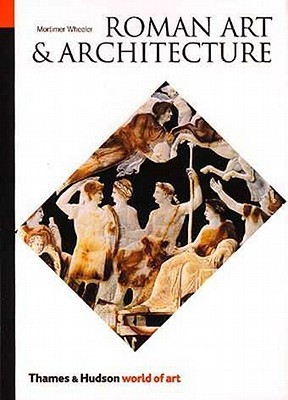
Roman Art and Architecture
"A survey as spirited as it is far-ranging."― The Times Literary Supplement Sir Mortimer Wheeler describes the architecture and town planning, the sculpture and painting, the silverware, glass, pottery and the other rich artistic achievements of the era. 215 Illustrations, 60 in color
252 pages, Paperback
First published December 1, 1964
Ratings & Reviews
Friends & Following
Create a free account to discover what your friends think of this book!
Community Reviews
Displaying 1 - 13 of 13 reviews

April 21, 2020
Dated but still useful and readable overview of Roman art and architecture. He makes some assumptions that art historians and classicists now would not make (I hope!), such as seeing the absence of full perspective in art as a failure on the part of Roman artists and craftspeople or the tendency to see the influence of eastern art and aesthetics on Roman work as a kind of decline or corruption rather than a useful or enriching hybridization. But it's probably unfair to blame a scholar of his period and training for making assumptions that would have struck few at the time as objectionable.

August 16, 2026
Extremely informative - an excellent overview of the trends and phases of Roman art and architecture up to the fall of the West. I also appreciated Wheeler’s hot takes on scholarly work that preceded him. His prose is often over the top and overly ornamental, which makes it even more enjoyable when he’s firing off shots toward his predecessors.
June 8, 2019
How delightfully overwritten. "Almost riotously ornate."

June 2, 2025
I love the way Wheeler, 20th century British archaeologist, makes the ancient art & architecture animate -
“The sacred and the secular meet in dusty juxtaposition”
“Quiet demarcation of civic pride”
“An architecture of utility and quiet dignity”
This is the closest thing we had to a textbook in Classics and I cherished it. no less for being very hard to get your paws on a copy.
“The sacred and the secular meet in dusty juxtaposition”
“Quiet demarcation of civic pride”
“An architecture of utility and quiet dignity”
This is the closest thing we had to a textbook in Classics and I cherished it. no less for being very hard to get your paws on a copy.

March 19, 2021
Good if a bit dry: recommended to anyone seriously interested in Roman history, both Republican and Imperial.

January 31, 2023
Richly illustrated, but sadly rather fragmentary.

October 18, 2024
Good breadth of Roman Architecture to further pique my interest. I may look towards domestic Architecture next.
June 20, 2022
Overwritten with some dated claims, but overall a good, brief overview of the major movements and materials of Roman art. Has a good focus on contact between “Rome-proper” and the fringes of the empire in the east and with the Celts in the North.
April 10, 2021
This book constitutes a summary, pleasant introduction to its subject, written not to overawe readers ignorant of its topics but equally not to speak down to them.
The book occasionally wants for a more systematic approach, It is reasonable to desire, for instance, having been told of certain exemplars of the second and fourth Pompeian style, that the first and third might at least be mentioned, but that is not so. More seriously, after saying that the interior of the Pantheon is “one of man’s rare masterpieces”, Wheeler could reasonably be expected to describe it in some detail; instead, he passes on to bath-buildings with an abruptness that is as “thoroughly uncomfortable” as the disharmony between portico and rotunda in that famous temple.
Nevertheless, such breeziness contributes to the conversation style of the book; after reading it, one could easily imagine having Wheeler as an erudite and entertaining dinner guest. His thesis that Rome’s aesthetic achievements deserve respect as being different in kind, not inferior in degree, to those more renowned from Greece is convincingly put while never dominating the factual basis of the book. Overall, it is an excellent read.
The book occasionally wants for a more systematic approach, It is reasonable to desire, for instance, having been told of certain exemplars of the second and fourth Pompeian style, that the first and third might at least be mentioned, but that is not so. More seriously, after saying that the interior of the Pantheon is “one of man’s rare masterpieces”, Wheeler could reasonably be expected to describe it in some detail; instead, he passes on to bath-buildings with an abruptness that is as “thoroughly uncomfortable” as the disharmony between portico and rotunda in that famous temple.
Nevertheless, such breeziness contributes to the conversation style of the book; after reading it, one could easily imagine having Wheeler as an erudite and entertaining dinner guest. His thesis that Rome’s aesthetic achievements deserve respect as being different in kind, not inferior in degree, to those more renowned from Greece is convincingly put while never dominating the factual basis of the book. Overall, it is an excellent read.

July 30, 2011
Good resource material.

May 13, 2014
For those that love this time period (and I do), this book is a must read.


September 16, 2018
Required reading for one of my ancient art classes in college.
Review: Useful resource for study. I enjoyed this.
Review: Useful resource for study. I enjoyed this.
Displaying 1 - 13 of 13 reviews