Editing…A Blessing or a Chore?
My first opportunity to work with an editor was a real eye opener.
Lori Graham and Susan Yates of The Wild Rose Press worked with me on two manuscripts. Susan had Zakia and the Cowboy and Lori had Love on the Rocks, and wow, did I learn a lot from those two ladies. Unfortunately, my books didn’t meet their qualifications for publishing, but it was a terrific learning experience for me.
POV, yep, point of view…my characters were all over the place, back and forth so much that a reader couldn’t possibly grasp any depth or insight into the main characters. That was my biggest mistake and I learned how to overcome the need to bounce around between the characters. (Something some of my favorite authors do, btw.) Anyway, POV changes, also called head hopping, can be distracting to a reader. It’s important to remain in one character’s POV for an entire scene or at least 750 words. (So I’ve been told.)
I write in third person point of view as explained in this excerpt taken from the following site. http://www.learner.org/interactives/literature/read/pov2.html.
“In the 3rd person POV the narrator does not participate in the action of the story as one of the characters, but lets us know exactly how the characters feel. We learn about the characters through this outside voice.”
If you are in the hero’s POV, you don’t know what the other person is thinking, seeing, feeling, etc. You can assume, but you don’t know
Example of abrupt POV switch. We are in his POV to start.
“Come, let’s go,” he commanded as, taking her hand, he almost pulled her across the room. If he didn’t get her out of there, now, they’d never make it to his dinner party.
Blushing, she managed to mumble a quick ‘thank you’ before being ushered out the door and into the waiting vehicle. What was it about this man that had her running hot one minute, with just a look, and stone cold the next with his abrupt change of stature or voice?
And another thing I learned the hard way…floating body parts. lol
“His eyes roamed the room.” Yes, we know what the author means, but eyes do not jump out and roam the room at will. Better to say: His gaze roamed the room.
“Her hand reached for the kettle.” Has her hand become unattached? No, and again, we know what the author is saying although the picture these words paint is kind of eerie. Better to say: She reached for the kettle.
Suffice it to say, sometimes keeping it simple is better. Always remember, an editor is there to make your work stronger, more sale-able. I approach edits with joy as the end product is one I feel proud to release. If you have questions or comments, please list them in the comments and I’ll do my best to answer.
In the meantime, happy reading and writing! :)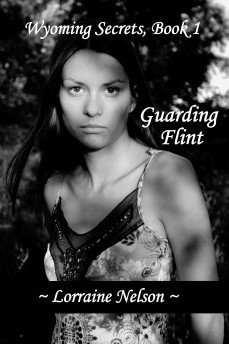
Oh, I almost forgot, Guarding Flint is still on sale at the preorder price of $2.99 for a limited time.
Just click on the cover or the link below and you’re there.