
About Our U.S. Alexa Ranking

Some diligent readers may notice that little badge over in the right-hand column atop this blog's search engine (which I created all by myself and which nobody apparently uses but me).
What is Alexa....
Well, in as few words as possible, it offers insights into a website's popularity. You can visit the site, paste an http address and seen an estimate of its ranking, in both the U.S. and the world.
In as many words as possible -- we'll let the Alexa folks tell you in their own words:
Alexa's traffic estimates are based on data from our global traffic panel, which is a sample of millions of Internet users using one of over 25,000 different browser extensions. In addition, we gather much of our traffic data from direct sources in the form of sites that have chosen to install the Alexa script on their site and certify their metrics. However, site owners can always choose to keep their certified metrics private.
Our global traffic rank is a measure of how a website is doing relative to all other sites on the web over the past 3 months. The rank is calculated using a proprietary methodology that combines a site's estimated average of daily unique visitors and its estimated number of pageviews over the past 3 months. We provide a similar country-specific ranking, which is a measurement of how a website ranks in a particular country relative to other sites over the past month.
So while our ranking of around 106,000 may not seem that big a deal, think for a moment about how many websites exist in the U.S. and are launched on a daily basis. Many millions, if not a billion.
And know that our ranking is actually much higher, as I have not signed on to any of Alexa's plans. I know the ranking is higher because the site's estimates for our daily unique visitors is woefully lower than the actual numbers as per Google Analytics.
Also, as a fun game—and for fellow bloggers out there always on the lookout for cool stuff, download this free Alex browser extension. Then, any website you visit you can see a chunk of key data about its traffic and other benchmarks.
This is probably the first thing I have ever written for this blog that is not related to the mob.
I only hope you folks can get used to it because I may start writing about tertiary topics from time to time.
As many of you already know, I am by nature a loudmouth and my interests are wide and varied—and somewhat esoteric, ranging from my personal hero, Vladimir Nabokov, the greatest fiction writer who ever lived, to the Eastern front of World War II, where the Wehrmacht invaded Russia and some of the largest tank battles in the history of modern warfare took place.
 Nabokov
Of course we Americans don't know our history and I daresay that most of you WWII buffs know all about D-Day, the Normandy landings, etc. but nothing of the Eastern front, where about 75% of Hitler's war machine was fighting first a war of conquest, then one of retreat.
Hitler's greatest general there was Erich von Manstein.
Of all his Field Marshals, Hitler actually both admired and feared Manstein, who was a strategic and logistical genius, which Hitler was not. Manstein also was exceptionally popular among the rank-and-file soldiers, as well as the officer corps.
(Interestingly, Hitler and his gang of paladins are usually referred to as "gangsters," something I may explore more fully in a future post.)
Hitler "retired" Manstein (who was not afraid to speak up when he thought his Fuehrer wrong) in 1942, which probably saved Manstein's life.
Manstein was the architect of Hitler's invasion of France and the so-called "low countries."
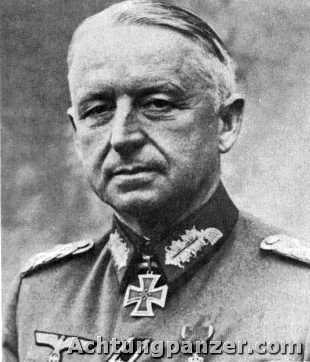 Erich von Manstein
Anticipating the Allies expectation that the Wehrmacht's major thrust to the West would occur through the Netherlands (basically the Allied commanders thought the German army would use the same strategy to invade to the West used in World War I -- and in fact, the old WWI strategy was the only one on the drawing board. Then Manstein got to work -- uninvited, he crafted a strategy that brought Rommel and his tanks to the sea so fast, it scared the hell out of the rest of the Western world. Today, we do not appreciate how close Hitler came to world domination.)
Manstein devised an innovative tactic—later dubbed the Sichelschnitt ("sickle cut")—involving a sweep through the Ardennes—a region of extensive forests, rough terrain, rolling hills and ridges, and also later the site of the well-known Battle of the Bulge—followed by a swift drive to the English Channel that cut off the French and Allied armies in Belgium and Flanders.
Manstein's memoirs, Lost Victories: The War Memoirs of Hitler's Most Brilliant General, make for great reading for World War II buffs and those interested in the strategic planning of large-scale land battles using conventional arms.
For those of you loyal readers who have read this far a treat: my next story will involve a story about something that happened in Florida involving the Gambino crime family and John Gotti.
"Mikie Scars" promised me the story—and this week I have to pester him for the details....


No comments have been added yet.


