
SPEED KILLS...OR DOES IT? How to Write Fast(er) without Going Bonkers
by Ruth Harris
As the Romans said (and the Olympics borrowed for its motto): Citius, Altius, Fortius. Or, as we say: "Faster, Higher, Stronger."
Sometimes publishing seems to be an Olympic event or at least it feels that way.
Vroom. Vroom. Everyone wants to write faster. To publish more books. To keep up with/get ahead of the competition. To be a Jackie Stewart of the keyboard. A Dale Earnhardt of word count.
But, hang on, you might say. It's not a sprint. It's a marathon and marathons take time.
Or, you might have other objections:
1) I care about my work and I care about my readers. I want to share my best possible efforts and "the best" doesn't come easily or quickly.
You're right, but what we're talking about here is getting a draft written fast, not about the finished product.
2) I don't want to publish any book before it's ready and editing and revising take time.
See above.
3) I've taken part in NaNoWriMo so I can show you proof positive that anything I write fast is garbage.
So what? No one except you ever has to see it. Ever hear of that amazing process known as "fixing it later?"
4) If I write fast, won't I add to the "tsunami of crap?"
Yes, of course, you certainly can, but "crap," like beauty, lies in the eye of the beholder. Lots of people who write what you or I or Maxwell Perkins might consider crap are enjoying writing it, publishing it, making readers happy and making money in the process.
In addition, allow me to remind you that writing slowly and agonizingly can also result in crap. Pretentious crap. Boring crap. Unreadable crap.
Besides, there are all the obvious upsides to writing fast.
Your productivity soars. Where there were two books, there are now four. Duh.You get into the zone, that magic place where writing goes so effortlessly you don’t know where the twists, turns and brilliant dialogue is coming from.You outrun the inner scold, that mahatma of negativity that rains on your parade and tells you you're not good enough, not talented enough, that you're a phony and a faker.You don't give yourself time to censor or second-guess yourself.You avoid wasting time by obsessing over whether your hero should be blond, brunette or a power-baldy à la Bruce Willis. You can always figure out the details later and, more often than not, as the character engages and develops, hair color (or lack of hair) will become obvious.Writing fast increases your chances of gaining access to your sub-conscious or what Stephen King calls "the boys downstairs." Those "boys"—or girls if you're of the female persuasion—are the source of creativity. They are the ones who come up with the unexpected (even to the writer!) plot twist and dazzling solution to a problem you thought unsolvable.Watching the words and the pages pile up, you give yourself the gift of a sense of accomplishment. Where there was nothing, there is now something and the fact that there's "something" where once there was nothing builds confidence.Writing fast frees you from the endless, soul-numbing editing-revising trap.Last of all, writing fast is a sensible approach in these days of self-publishing because new books help sell old books. Just ask Joe Konrath or Dean Wesley Smith who writes about writing at pulp speed.
Before we get into (sane) ways to increase your speed, it's important to understand why you aren't writing as productively as you'd like to.
1) Are you really slow or are you yourself putting the brakes on? Are you slowing yourself down by listening to the no voices in your head? That prune-faced seventh grade teacher? That parent for whom nothing was ever good enough?
Psychologist Leslie Becker-Phelps offers a practical approach to deflecting self-criticism based on cognitive behavioral therapy. She tells how to turn self-criticism into compassionate self-awareness that will help free you from the trap you create for yourself.
2) Do you allow the perfect to become the enemy of the good?
Do you plod along, spending hours searching for the "perfect" word or trying to write the "perfect" sentence, paragraph, first sentence, last sentence? Are you getting nowhere? And not fast?
This thorough guide explains the roots of perfectionism and lays out a concrete guide toward taming the runaway perfectionist that's getting in your way.
Just remember: your book has to be good. It doesn't have to be perfect. In fact, it can’t be perfect because nothing is perfect or even can be. Fact of life, just like the birds and bees, (but not as much fun).
3) ID your working style: steady, spurt, sprint.
Sprinters can't (and shouldn't) expect to keep up a killer place all day long. Sprints are short races for a reason. No one can go full steam ahead hour after hour after hour.Spurt workers tend to write in extremely productive bursts. They also need a few days off to regroup and catch up with themselves between intense writing sessions.Steady writers work at an even pace. A hundred words a day or a thousand words a day every day, those words add up.Once you ID your working style, you will have an idea of how many words/how much speed you should realistically expect from yourself but, before you start, you need to have some idea of what you're going to write.
4) Face to face with the “O” word.
No way to escape it, but if you want to write fast you have to Do It. You know exactly what I mean, it’s the writer's version of The Big O. Outline.
In order to write fast, even pantsers need a road map. An outline does not have to be that godawful clunker from grade school with Roman numerals and tiered indents.
An outline can be as simple as a hand-written list or a scribbled synopsis. Or it can be a version of any one or more of the following ways of getting your ideas down and wrangling them into some kind of usable shape:
A logline or one of its relatives. Anne's tips on writing the dreaded synopsis...and its little friends: the hook, logline, and pitch will start you off on the right track.The elevator pitch. Author Kayelle Allen offers a fill-in-the-blanks template.The blurb you write before you write the book. Joanna Penn's tips on how to write a back cover blurb are practical and inspiring.A genre cheat sheet so you know what your readers expect and can make sure to keep on track.Here are 6 different outline templates you can apply to romance, scifi, fantasy, literary fiction and any other genre you can think of.Libbie Hawker's popular guide to outlining for pantsers: Take Off Your Pants. Libby's outlining technique applies to any genre and will help you improve your writing speed.Bestselling author of the Costa series, David Hewson explains his method of outlining novel-length fiction and tells how he brainstorms story and storyline possibilities.Scapple (Mac only. $14.99 with FREE trial) is a simple app perfect for brainstorming and making connections between any or all of the kinds of ideas (plot, character, setting, incident) you will need to write a book. If you've ever scribbled down ideas all over a piece of paper and drawn lines between related thoughts, then you already know what Scapple does.How to Write a Book in Three Days: Lessons from sword-and-sorcery master, Michael Moorcock, is inspiring and practical.Rachel Aaron's How I Went From Writing 2,000 Words a Day to 10,000 Words a Day is another source of inspiration and down-to-earth advice.5,000 Words Per Hour: Write Faster, Write Smarter has helped many writers up their speed. The author, Chris Fox, has also created an app (Mac only) to accompany the book.Roni Loren always thought of herself as a Slow Writer but deadlines compelled her to change her ways. She was surprised by the impressive increase in her speed and blogged about what she learned here.
Now that you're feeling inspired and have prepared yourself to write, it’s time to start.
Coffee (or Red Bull) works for some. Loud music for others. Vivaldi's The Seasons for still others.An external deadline can help: a contract (if only with yourself) or even a promise to someone else—including the dog who is in need of a walk.Setting a word target, a time target, a scene target adds focus in the form of an achievable goal. Do you respond better to the kiss or the whip? If the first, promise yourself a Dove Bar at the end of your just-get-it-down writing session. If the whip, then no dessert for you tonight unless you get your quota filled! Shut the door, turn off the phone, quash the internet, go to full-screen mode, do whatever you have to do to get the job done. Adapt Nora Roberts' approach: you will permit interruptions only in the case of “blood or fire.”
In your new world of Writing Fast, there are a number of possible outcomes:
Might be much better than you think and just needs a light edit. Yay! Treasure the moment because you get to feel you're better than you think and that faster doesn't mean crappier.Might be pretty good but needs a careful edit. OK, editing is part of the job of being a writer so get on with it.Might be dull, drab and needs major, butt-in-chair revision. That’s OK, too, because revision is also part of the job.The aaargh! draft: So what you wrote is real crapola and needs a four-corners rewrite? Don’t let that get you down and don’t forget: It ain’t the writing it’s the rewriting. Professionals know it and the aaargh! draft is the perfect case in point.Even worse than the aaargh draft is draft so putrid it threatens the integrity of the time-space continuum. We've all been there, done that and it's why keyboards come with delete buttons. Just because you wrote it doesn’t mean you have to publish it or even that anyone else has to see it. See if there's anything you can learn (or steal), then trash the d*mn thing and move on.Saving best for last: OMG! Did I write that? It's just about the best feeling a writer can have and, when you write fast, you outrun your insecurities and second guesses, your tendency to "fix" and fiddle, you're also raising the odds of the OMG!-Did-I-write-that? outcome.
Now that you are writing fast(er) and at a speed that feels sane to you, stand up and take a bow.
As the Romans used to say: Accipe rosas, relinque spinas.
Accept the roses, leave the thorns.
What about you Scriveners? Are you a fast writer like Ruth, or are you a sloooooow writer like me (Anne)? Ruth wrote this post partly to help me with my sluggish writing skills. Do you find you can write faster with an outline of sorts? Or are you like me and write a careful outline and then completely ignore it? Have you tried any of these tips to get you up to speed?
BOOKS OF THE WEEK
We have two FREE books to offer you this week!
Ruth Harris's New York Times bestseller Love and Money is FREE!
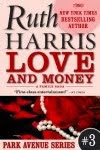
Amazon US, Amazon UK,
Nook, Kobo, iBooks, Google Play.
"Richly plotted and racing to a shocking climax, this glittering novel is first-class entertainment." --New York Times
"Sophisticated and entertaining. I couldn't stop reading." --Rona Jaffe, author of The Best Of Everything
Also FREE: Michael Harris's Gripping Memoir
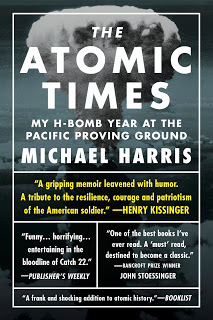
Kindle | Nook | Kobo | iBooks | GooglePlay
Catch-22 with radiation! Area 51 meets Dr. Strangelove!
"A gripping memoir leavened by humor, loyalty and pride of accomplishment. A tribute to the resilience, courage and patriotism of the American soldier." —Henry Kissinger
OPPORTUNITY ALERTS
BARTLEBY SNOPES CONTEST $10 FOR UNLIMITED ENTRIES. Compose a short story entirely of dialogue. Must be under 2,000 words. Your entry cannot use any narration (this includes tag lines such as he said, she said, etc.). These are the only rules. 5 finalists will also appear in Issue 15 of the magazine. Last year they awarded $2,380 in prize money. Deadline September 15.
Glimmer Train Short Story Award for New Writers Entry Fee $15. A prize of $1,500, publication in Glimmer Train Stories, and 20 copies of the prize issue is given quarterly for a short story by a writer whose fiction has not been published in a print publication with a circulation over 5,000. Using the online submission system, submit a story of 1,200 to 12,000 words. Deadline August 31.
Creative Nonfiction magazine is seeking new essays for an upcoming issue dedicated to MARRIAGE. TRUE STORIES about marriage from any POV: happy spouses, ex-fiancees, wedding planners, divorce attorneys, whoever. Up to 4000 words. $20 Entry fee. $1000 first prize. Deadline: August 31.
CRAZYHORSE SHORT-SHORT FICTION AWARD $15 Entry fee. $1,000 and publication. Three runners-up. All entries considered for publication. Submit one to three short-shorts of up to 500 words each. Deadline July 31.
DIABOLICAL PLOTS NO FEE. A new online journal that publishes original fiction, one story per month. Genres: science fiction, fantasy, horror (everything must have speculative element, even horror). 2000 word limit. Pays .06 cents/word. Deadline July 31.
As the Romans said (and the Olympics borrowed for its motto): Citius, Altius, Fortius. Or, as we say: "Faster, Higher, Stronger."
Sometimes publishing seems to be an Olympic event or at least it feels that way.
Vroom. Vroom. Everyone wants to write faster. To publish more books. To keep up with/get ahead of the competition. To be a Jackie Stewart of the keyboard. A Dale Earnhardt of word count.
But, hang on, you might say. It's not a sprint. It's a marathon and marathons take time.
Or, you might have other objections:
1) I care about my work and I care about my readers. I want to share my best possible efforts and "the best" doesn't come easily or quickly.
You're right, but what we're talking about here is getting a draft written fast, not about the finished product.
2) I don't want to publish any book before it's ready and editing and revising take time.
See above.
3) I've taken part in NaNoWriMo so I can show you proof positive that anything I write fast is garbage.
So what? No one except you ever has to see it. Ever hear of that amazing process known as "fixing it later?"
4) If I write fast, won't I add to the "tsunami of crap?"
Yes, of course, you certainly can, but "crap," like beauty, lies in the eye of the beholder. Lots of people who write what you or I or Maxwell Perkins might consider crap are enjoying writing it, publishing it, making readers happy and making money in the process.
In addition, allow me to remind you that writing slowly and agonizingly can also result in crap. Pretentious crap. Boring crap. Unreadable crap.
Besides, there are all the obvious upsides to writing fast.
Your productivity soars. Where there were two books, there are now four. Duh.You get into the zone, that magic place where writing goes so effortlessly you don’t know where the twists, turns and brilliant dialogue is coming from.You outrun the inner scold, that mahatma of negativity that rains on your parade and tells you you're not good enough, not talented enough, that you're a phony and a faker.You don't give yourself time to censor or second-guess yourself.You avoid wasting time by obsessing over whether your hero should be blond, brunette or a power-baldy à la Bruce Willis. You can always figure out the details later and, more often than not, as the character engages and develops, hair color (or lack of hair) will become obvious.Writing fast increases your chances of gaining access to your sub-conscious or what Stephen King calls "the boys downstairs." Those "boys"—or girls if you're of the female persuasion—are the source of creativity. They are the ones who come up with the unexpected (even to the writer!) plot twist and dazzling solution to a problem you thought unsolvable.Watching the words and the pages pile up, you give yourself the gift of a sense of accomplishment. Where there was nothing, there is now something and the fact that there's "something" where once there was nothing builds confidence.Writing fast frees you from the endless, soul-numbing editing-revising trap.Last of all, writing fast is a sensible approach in these days of self-publishing because new books help sell old books. Just ask Joe Konrath or Dean Wesley Smith who writes about writing at pulp speed.
Before we get into (sane) ways to increase your speed, it's important to understand why you aren't writing as productively as you'd like to.
1) Are you really slow or are you yourself putting the brakes on? Are you slowing yourself down by listening to the no voices in your head? That prune-faced seventh grade teacher? That parent for whom nothing was ever good enough?
Psychologist Leslie Becker-Phelps offers a practical approach to deflecting self-criticism based on cognitive behavioral therapy. She tells how to turn self-criticism into compassionate self-awareness that will help free you from the trap you create for yourself.
2) Do you allow the perfect to become the enemy of the good?
Do you plod along, spending hours searching for the "perfect" word or trying to write the "perfect" sentence, paragraph, first sentence, last sentence? Are you getting nowhere? And not fast?
This thorough guide explains the roots of perfectionism and lays out a concrete guide toward taming the runaway perfectionist that's getting in your way.
Just remember: your book has to be good. It doesn't have to be perfect. In fact, it can’t be perfect because nothing is perfect or even can be. Fact of life, just like the birds and bees, (but not as much fun).
3) ID your working style: steady, spurt, sprint.
Sprinters can't (and shouldn't) expect to keep up a killer place all day long. Sprints are short races for a reason. No one can go full steam ahead hour after hour after hour.Spurt workers tend to write in extremely productive bursts. They also need a few days off to regroup and catch up with themselves between intense writing sessions.Steady writers work at an even pace. A hundred words a day or a thousand words a day every day, those words add up.Once you ID your working style, you will have an idea of how many words/how much speed you should realistically expect from yourself but, before you start, you need to have some idea of what you're going to write.
4) Face to face with the “O” word.
No way to escape it, but if you want to write fast you have to Do It. You know exactly what I mean, it’s the writer's version of The Big O. Outline.
In order to write fast, even pantsers need a road map. An outline does not have to be that godawful clunker from grade school with Roman numerals and tiered indents.
An outline can be as simple as a hand-written list or a scribbled synopsis. Or it can be a version of any one or more of the following ways of getting your ideas down and wrangling them into some kind of usable shape:
A logline or one of its relatives. Anne's tips on writing the dreaded synopsis...and its little friends: the hook, logline, and pitch will start you off on the right track.The elevator pitch. Author Kayelle Allen offers a fill-in-the-blanks template.The blurb you write before you write the book. Joanna Penn's tips on how to write a back cover blurb are practical and inspiring.A genre cheat sheet so you know what your readers expect and can make sure to keep on track.Here are 6 different outline templates you can apply to romance, scifi, fantasy, literary fiction and any other genre you can think of.Libbie Hawker's popular guide to outlining for pantsers: Take Off Your Pants. Libby's outlining technique applies to any genre and will help you improve your writing speed.Bestselling author of the Costa series, David Hewson explains his method of outlining novel-length fiction and tells how he brainstorms story and storyline possibilities.Scapple (Mac only. $14.99 with FREE trial) is a simple app perfect for brainstorming and making connections between any or all of the kinds of ideas (plot, character, setting, incident) you will need to write a book. If you've ever scribbled down ideas all over a piece of paper and drawn lines between related thoughts, then you already know what Scapple does.How to Write a Book in Three Days: Lessons from sword-and-sorcery master, Michael Moorcock, is inspiring and practical.Rachel Aaron's How I Went From Writing 2,000 Words a Day to 10,000 Words a Day is another source of inspiration and down-to-earth advice.5,000 Words Per Hour: Write Faster, Write Smarter has helped many writers up their speed. The author, Chris Fox, has also created an app (Mac only) to accompany the book.Roni Loren always thought of herself as a Slow Writer but deadlines compelled her to change her ways. She was surprised by the impressive increase in her speed and blogged about what she learned here.
Now that you're feeling inspired and have prepared yourself to write, it’s time to start.
Coffee (or Red Bull) works for some. Loud music for others. Vivaldi's The Seasons for still others.An external deadline can help: a contract (if only with yourself) or even a promise to someone else—including the dog who is in need of a walk.Setting a word target, a time target, a scene target adds focus in the form of an achievable goal. Do you respond better to the kiss or the whip? If the first, promise yourself a Dove Bar at the end of your just-get-it-down writing session. If the whip, then no dessert for you tonight unless you get your quota filled! Shut the door, turn off the phone, quash the internet, go to full-screen mode, do whatever you have to do to get the job done. Adapt Nora Roberts' approach: you will permit interruptions only in the case of “blood or fire.”
In your new world of Writing Fast, there are a number of possible outcomes:
Might be much better than you think and just needs a light edit. Yay! Treasure the moment because you get to feel you're better than you think and that faster doesn't mean crappier.Might be pretty good but needs a careful edit. OK, editing is part of the job of being a writer so get on with it.Might be dull, drab and needs major, butt-in-chair revision. That’s OK, too, because revision is also part of the job.The aaargh! draft: So what you wrote is real crapola and needs a four-corners rewrite? Don’t let that get you down and don’t forget: It ain’t the writing it’s the rewriting. Professionals know it and the aaargh! draft is the perfect case in point.Even worse than the aaargh draft is draft so putrid it threatens the integrity of the time-space continuum. We've all been there, done that and it's why keyboards come with delete buttons. Just because you wrote it doesn’t mean you have to publish it or even that anyone else has to see it. See if there's anything you can learn (or steal), then trash the d*mn thing and move on.Saving best for last: OMG! Did I write that? It's just about the best feeling a writer can have and, when you write fast, you outrun your insecurities and second guesses, your tendency to "fix" and fiddle, you're also raising the odds of the OMG!-Did-I-write-that? outcome.
Now that you are writing fast(er) and at a speed that feels sane to you, stand up and take a bow.
As the Romans used to say: Accipe rosas, relinque spinas.
Accept the roses, leave the thorns.
What about you Scriveners? Are you a fast writer like Ruth, or are you a sloooooow writer like me (Anne)? Ruth wrote this post partly to help me with my sluggish writing skills. Do you find you can write faster with an outline of sorts? Or are you like me and write a careful outline and then completely ignore it? Have you tried any of these tips to get you up to speed?
BOOKS OF THE WEEK
We have two FREE books to offer you this week!
Ruth Harris's New York Times bestseller Love and Money is FREE!
Amazon US, Amazon UK,
Nook, Kobo, iBooks, Google Play.
"Richly plotted and racing to a shocking climax, this glittering novel is first-class entertainment." --New York Times
"Sophisticated and entertaining. I couldn't stop reading." --Rona Jaffe, author of The Best Of Everything
Also FREE: Michael Harris's Gripping Memoir
Kindle | Nook | Kobo | iBooks | GooglePlay
Catch-22 with radiation! Area 51 meets Dr. Strangelove!
"A gripping memoir leavened by humor, loyalty and pride of accomplishment. A tribute to the resilience, courage and patriotism of the American soldier." —Henry Kissinger
OPPORTUNITY ALERTS
BARTLEBY SNOPES CONTEST $10 FOR UNLIMITED ENTRIES. Compose a short story entirely of dialogue. Must be under 2,000 words. Your entry cannot use any narration (this includes tag lines such as he said, she said, etc.). These are the only rules. 5 finalists will also appear in Issue 15 of the magazine. Last year they awarded $2,380 in prize money. Deadline September 15.
Glimmer Train Short Story Award for New Writers Entry Fee $15. A prize of $1,500, publication in Glimmer Train Stories, and 20 copies of the prize issue is given quarterly for a short story by a writer whose fiction has not been published in a print publication with a circulation over 5,000. Using the online submission system, submit a story of 1,200 to 12,000 words. Deadline August 31.
Creative Nonfiction magazine is seeking new essays for an upcoming issue dedicated to MARRIAGE. TRUE STORIES about marriage from any POV: happy spouses, ex-fiancees, wedding planners, divorce attorneys, whoever. Up to 4000 words. $20 Entry fee. $1000 first prize. Deadline: August 31.
CRAZYHORSE SHORT-SHORT FICTION AWARD $15 Entry fee. $1,000 and publication. Three runners-up. All entries considered for publication. Submit one to three short-shorts of up to 500 words each. Deadline July 31.
DIABOLICAL PLOTS NO FEE. A new online journal that publishes original fiction, one story per month. Genres: science fiction, fantasy, horror (everything must have speculative element, even horror). 2000 word limit. Pays .06 cents/word. Deadline July 31.


No comments have been added yet.


