The History of Science Fiction Part 12: 1960 –1969 — Books
This is post #12 of 12 in the series “The History Of Science Fiction”
We finally reach the 1960s in my exploration of science fiction and again due to the amount of activity I will be splitting this decade up to cover different media, starting here with books.
Beyond Pulp
By the 1960s the pulp magazines that had supported the genre and surfaced so many authors were largely gone. Science Fiction magazines had transitioned to a digest format but there were far fewer of them, around 6 in the US during the decade. They continued to publish significant stories (including the first publication of Dune as Dune World in Analog) but paperback novels were now the primary format for science fiction and fantasy stories.
Though at this point the output was predominantly science fiction. Fantasy had not yet had it's big boom and while there were a number of notable novels, the quantity is extremely small when compared to those on the science fiction side of the fence.
A New Wave Arrives
 During the early 1960s and continuing into the 1970s there was a radical shift in science fiction. While previously the emphasis for sci-fi stories had been action, adventure and science (some of it accurate, some not) this New Wave of science fiction de-emphasized the hard science and took a much greater interest in politics, sociology and all sorts of soft science.
The New Wave also encouraged a greater amount of experimentation and more emphasis on literary merit, though I will leave it as an exercise to the reader to define what literary merit actually is. There's no doubt though that this marked a major change for the genre as well as introducing new voices like Ursula K. Le Guin and Samuel R. Delany.
While some like Michael Moorcock championed this new style other more established writers were much less enthusiastic about it. Inevitably yet another round of genre bickering resulted as fans campaigned for their preferred style. The resulting fiction may not have been universally good but the increased diversity of science fiction writing clearly benefitted the genre as a whole.
The Old Guard
Arthur C. Clarke only published three major science fiction works in this decade. The first was the Hugo nominated A Fall of Moondust (1961) which is essentially a disaster story set on the moon in which tourists "sailing" across a lunar sea find themselves trapped beneath the lunar dust.
He also released Tales of Ten Worlds (1962) a collection of his short stories and 2001: A Space Odyssey (1968) which was both an expansion of his previous short story The Sentinel and a novelization of the Kubrick movie.
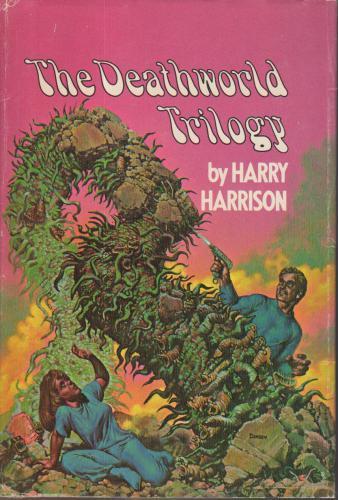 The 1960s were a very busy decade for Harry Harrison as much of his previously serialized work was gathered together and published.
Deathworld (1960) launched his Deathworld series of books. The stories are set on the planet Pyrrus which is the deadliest world ever colonized by humans.
The Stainless Steel Rat (1961) was the start of another long running series, this one featuring James Bolivar "Slippery Jim" diGriz a con-man and thief in what is essentially a succession of heist and caper stories with an SF setting.
Bill, the Galactic Hero (1965) was, yet another, series those most of the later books were not written by Harrison himself. This time taking a much more satirical tone
Make Room! Make Room! (1966) is significant not for spawning sequels, but rather for being inspiration for the movie classic Soylent Green (1973) though it was a loose adaptation. The book is set in the "distant" future of 1999 and depicts a world with a population of 7 billion where resources are strained, infrastructure is crumbling and overcrowding is everywhere.
Genre stalwart Clifford Simak adapted to the changing times with comparative ease, simply moving his magazine output to book form and publishing almost a novel a year, several of which picked up Hugo or Nebula nominations. His work continued in a similar vein to previously and falls firmly in the more traditional SF camp.
The Way Station (1964) brings the Cold War to space and centers on a Civil War veteran chosen by aliens to administer a way station for interplanetary travel.
All Flesh is Grass (1965) - The town of Millville is trapped in a bubble by an alien hive-race of purple flowers.
Goblin Reservation (1968) — In the future Earth has a Time University where it is possible to slip through time and investigate the truth about past events by bringing people forward to interview them. Peter Maxwell forced to investigate his own murder to find out who or what wanted him dead.
 The period of the 60s and 70s is sometimes referred to as Robert Heinlein's middle period. He moved beyond the pulp stories and juveniles into more complex and sophisticated work but these were not nearly so experimental as his last few novels.
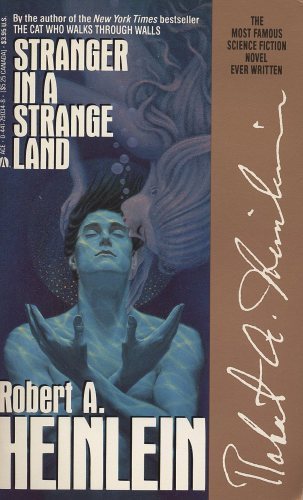
Stranger in a Strange Land (1961) is one of Heinlein's most influential works and was at one point claimed to be the most famous science fiction novel ever written. The story is that of a human, Valentine Michael Smith, raised on Mars by Martians and how he adapts to moving to earth and dealing with human culture. It tackles religion, monogamy and other major social pillars.
The Moon is a Harsh Mistress (1966) is set in 2075 when there are multiple underground colonies on the Moon. Echoing previous colonizations the majority of the colonist population is made up of political exiles and criminals or their descendants. It tells the story of a war for independence and has a very strong libertarian tone.
Glory Road (1963) is something a little bit different for Heinlein being the first full length fantasy novel he wrote. Later work of his would increasingly mix science fiction and fantasy.
Literary SF
The 1961 Hugo Awarding winning A Canticle for Leibowitz (1960) by Walter M. Miller is one of the classics of the science fiction genre as well as being one of the relatively small number that have broken free of the genre to widespread literary acclaim. Set after a nuclear war, the story covers thousands of years showing how an order of Catholic Monks take on the mission of preserving scientific knowledge until civilization is ready for it.
The science fiction genre that I and probably most of the people reading this are familiar with is heavily dominated by US and British authors. Stanislaw Lem is a notable exception to that rule. His novel Solaris has been made into a movie three times. The book was originally published in 1961 though it didn't reach the English speaking audience for some years.
Human scientists in a research station probe the oceanic surface of the planet Solaris and discover that they are themselves being studied by the planet which is sentient. The planet is able to manifest and force the scientists to confront their secret guilts.Solaris looks at the nature of human memory and the limitations of cross species communication.
 The 1960s were a defining decade for Kurt Vonnegut's science fiction. Cat's Cradle (1963), his fourth novel, touches on religion, technology and science giving us a fictional inventor of the atomic bomb who also invented a chemical capable of freezing the planet. his children are frantically searching the planet to find it before it is used.
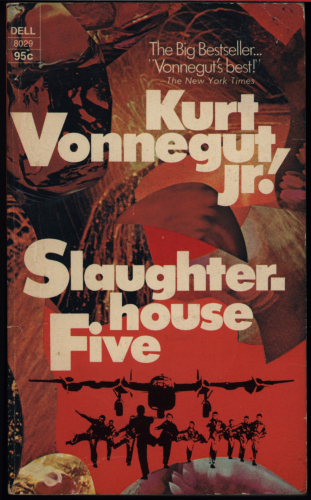
Slaughterhouse Five (1969) is also satirical in tone but this time drew on Vonnegut's experience of the firebombing of Dresden. The protagonist is Billy Pilgrim, a man who believes he has been in an alien zoo and that he is experiencing time travel.
Dystopian novels seem to have been particularly popular on the more literary end of Science Fiction during the 60s. For example A Clockwork Orange (1962) by Anthony Burgess is set in a near future England where gangs of youths engage in extreme violence. The book remains highly regarded though it is probably better known for the Stanley Kubrick film adaptation these days.
While Flowers for Algernon was originally published as a short story in 1958, Daniel Keyes expanded it and released it as a novel in 1966 after which it won a Nebula Award. The story is told as a series of progress reports by the first person to have an experimental surgery performed to enhance their intelligence.
New Wave
While some of the New Wave were brand new voices, there were also a number of established authors who either already fitted into the broad New Wave banner or whose style significantly changed from their earlier works.
Brian Aldiss published a considerable amount of fiction during the 1960s. Publication dates are a little confused given the name changes and other edits that often happened between UK and US editions. Of note however are:
Hothouse (1962) (published in the US in abridged form as The Long Afternoon of Earth ) which is a collection of 5 previously serialized novelettes in which the Earth now has one side constantly facing the sun and as a result plants have adapted to fit all the ecological niches and have driven most animal life to extinction.
Greybeard (1964) in which decades after a nuclear bomb tests conducted in Earth's orbit, the population has become sterile and is aging.
Report on Probability A (1968) a story inspired by the Heisenberg uncertainty principle in which everything is observation within observation.
J. G. Ballard's novels in the 1960s shared a fascination with the end of the world The Drowned World (1962), The Burning World (1964) and The Crystal World (1966) form a trilogy of sorts exploring three different ways in which the world might end and perhaps more importantly how people might react to it.
Published in 1965, the 1966 Hugo Award winning Dune by Frank Herbert is one of the landmark books of science fiction. Set in a far future where feudal families control planets it is a story of politics, religion and ecology as factions attempt to wrest control of the planet Arakis, the only source of melange the most valuable substance in the universe.
Dune is of note for several reasons. Firstly the level of world building is well beyond what had previously been seen in science fiction. Secondly as a harbinger of so called soft science fiction (with less emphasis on technological sciences) it was in may ways the totem of the New Wave. And finally it was able to break out of the SF ghetto to be recognized on a literary level.
Philip K. Dick's writing in many ways defies characterization but he can be broadly placed in the New Wave category even though some of his work precedes it. Dick's writing is primarily focussed on identity and what is or is not real rather than on the science.
The Man in the High Castle (1962) is an alternate history where Germany and Japan occupy the United States after winning World War II. However, in a book within the book, a novelist writes about an alternate world where America had won the war.
Dr. Bloodmoney, or How We Got Along After the Bomb (1965) has a protagonist seeking psychotherapy to handle his guilt over accidentally causing a global nuclear disaster
The Three Stigmata of Palmer Eldritch (1965) takes place in a dystopian 21st century future where humans have colonized all the habitable planets and again Dick uses science fiction to explore what is reality.
Do Androids Dream of Electric Sheep (1968) is now best known as the story which BladeRunner was adapted from. But while the plot outline of a bounty hunter who has to "retire" several escaped androids is the same the story itself is radically different. As always Dick is very interested in the question of what it means to be human. In this book empathy is intrinsically associated with humanity, but the story forces the reader to question that assumption.
Roger Zelazny apparently did not care for the New Wave appellation, but never the less his work is generally considered to be part of it. He is best known for his Chronicles of Amber but published several science fiction works prior to that.
Lord of Light (1968) is an interesting combination of fantasy and science fiction featuring a world Hindu and Buddhist mythology but western protagonists.
Creatures of Light and Dark (1969) is a unique story set in the far future where some humans have godlike powers. There's a distinct Egyptian theming. However it was apparently written as something of a writing exercise, done in the present tense with one chapter done as a poem while the final chapter is the script of a play.
Samuel R. Delany is one of the authors most closely associated with the New Wave. He published novels from the 1960s onwards and often touched on themes of sexuality, memory and language. Like others in the New Wave he used science fiction more as a background to explore his themes rather than a method of presenting scientific concepts. Of particular note amongst his output in the 60s are:
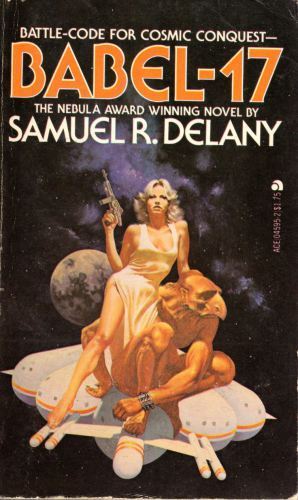
Babel-17 (1966) in which one side of an interstellar war manages to weaponize language. Merely learning the language Babel-17 changes your perception and thought making you a traitor.
The Einstein Intersection (1967) is an exploration both of myths and how people who are different struggle to deal with the dominant culture. In it a member of an alien race who have
Nova (1968) is a space opera in a future where cyborg technology is universal but making decisions involves using tarot cards. Power in the galaxy is split between two factions and a captain from one faction gathers a crew in a bid to permanently shift the power balance.
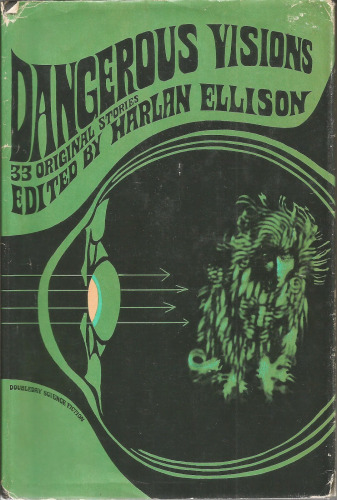 Harlan Ellison was already an established science fiction writer by the 1960s. He produced relatively few novels, but a much larger body of short fiction work. However his association with the New Wave is primarily fueled by his editing of the short story anthology Dangerous Visions (1966). The anthology contained stories from numerous science fiction luminaries and Ellison encouraged them to push the previously established boundaries of science fiction. As a result the anthology is often considered the defining book of the New Wave movement. Looking at his own work however, there are some publications of note:
"Repent, Harlequin!" Said the Ticktockman (1965) a short story set in a dystopian future where time itself is regulated. Being late is a crime.
I Have No Mouth, and I Must Scream (1967) is a post-apocalyptic short story where a computer torments five human beings as revenge for its own tortured existence.
A Boy and His Dog (1969) — a novella (later turned into a film) telling the story of Vic and his telepathic dog who survive together in a post-apocalyptic world.
Another key figure in the New Wave movement was Michael Moorcock, as much through his role as Editor of New Worlds magazine, from 1964 to 1971, as through his own fiction. Perhaps the most notable of his own output during this time was The History of the Runestaff and his first Elric novels.
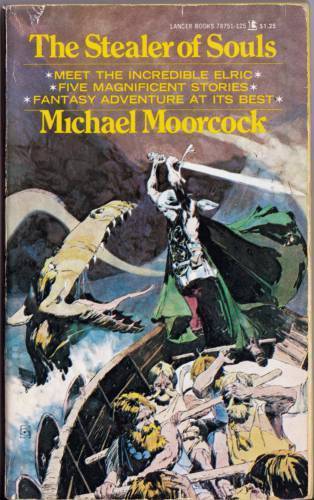 The History of the Runestaff consisted of four books The Jewel In The Skull (1967), The Mad God's Amulet (1968), The Sword of the Dawn (1968) and The Runestaff (1969). These told the story of Dorian Hawkmoon (in later stories revealed as an aspect of the Eternal Champion) in his battle against the mad empire of Granbretan. The stories were a blend of science fantasy with a gothic twist.
During the same period Moorcock published two Elric novels, The Stealer of Souls (1963) and Stormbringer (1965) which contained several previously published novellas. Though these versions were significantly revised and republished at a later date.
Ursula K. Le Guin may well be the most influential female writer in science fiction to date. While she started writing in the 1950s it wasn't until the 1960s that her work became regularly published. During this time period the majority of her novels were part of the Hainish Cycle which was a series of science fiction stories all set in a world where civilizations of human beings on nearby stars were contacting each other for the first time and setting up diplomatic relationships, all under the guidance of Hain, the oldest of human worlds.
Le Guin published the first four novels in this cycle during the 1960s, of which the best known is The Left Hand of Darkness:
Rocannon's World (1966)
Planet of Exile (1966)
City of Illusions (1967)
The Left Hand of Darkness (1969)
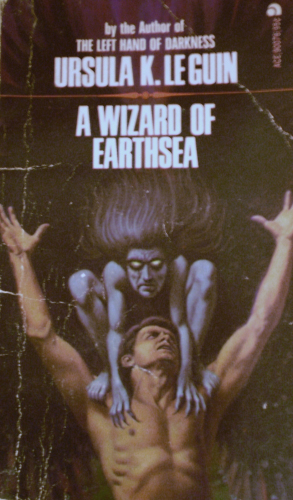 In addition to her science fiction stories, Le Guin also wrote A Wizard of Earthsea (1968) which was the first of several fantasy stories set in the world of Earthsea. While there were many familiar fantasy elements at play this was fantasy with a culture radically different to the usual pseudo-medieval european setting.
Anne McCaffrey is not generally grouped with the New Wave, but her work has at least as much in common with them as it does with older science fiction. She classified herself as a science fiction writer, but much of her work had fantasy elements in play. She released several significant works during the 1960s, one of their distinctive features being strong female protagonists:
Restoree (1967) — the story of a young woman who survives being abducted by aliens and finds a new life on another planet.
Dragonflight (1968) was the first of her extremely popular and long running Dragonriders of Pern series featuring genetically adapted "dragons" who fought off Thread which rain down from the sky causing destruction where they touch.
The Ship Who Sang (1969) — about a cyborg, a human and a spaceship.
Decision at Doona (1969) — In which two civilizations attempt to colonize the same planet. However what they both thought to be nomadic natives are actually more technologically advanced than either of them.
Fantasy
Fantasy and science fiction are genres that have been entwined since the very beginning. Portions of fandom continue to argue bitterly about which story should have which particular appellation. It's not something I spend a lot of time worrying about, but the history of Fantasy does relate to the history of science fiction. While there was flat out fantasy material being published, a significant portion of the fantasy books produced during this time were children's fantasy, which had a particularly strong base in the UK.
Andre Norton's Witch World (1963) was the first in a long running series from the author that has been described as both science fiction and fantasy. It tells the story of a former soldier who, needing to escape, finds himself transported to a world where magic is used and finds himself leading a guerrilla rebellion.
Jack Vance was an extremely prolific author who wrote in several genres, but perhaps his biggest legacy was the Dying Earth series. The second book of which, The Eyes of the Overworld (1966) was a fix up of 5 short stories published in magazines the previous year. While The Dying Earth doesn't get the attention that Moorcock and Tolkien's fantasy worlds do, it has been hugely influential in the genre.
Fritz Leiber released several novels in his Fafhrd and the Gray Mouser series during the 1960s. Swords in the Mist (1968) and Swords Against Wizardry (1968) were collections of previously published short stories (mostly also from the 60s) while The Swords of Lankhmar (1968) was a full novel expanded from the 1961 novella Scylla's Daughter. The stories remain defining examples of the sword and sorcery genre and are still frequently aped by modern writers.
Lloyd Alexander published all four of his Chronicles of Prydain during the 1960s. The five novels in the series were childrens fantasy books following the protagonist Taran from childhood to adulthood. The books are heavily inspired by Welsh mythology.
The Book of Three (1964)
The Black Cauldron (1965)
The Castle of Llyr (1966)
Taran Wanderer (1967)
The High King (1968)
Over Sea, Under Stone (1965) was the first book in The Dark is Rising children's fantasy series by Susan Cooper. The story is primarily a mystery with fantasy overtones and takes full advantage of its Cornish setting.
Author Alan Garner published several children's fantasy novels throughout the decade. They had a theme of modern day (for the time) children being drawn into a darker magical world
The Weirdstone of Brisingamen (1960)
The Moon of Gomrath (1963)
Elidor (1965)
The Owl Service (1967)
Peter S. Beagle's The Last Unicorn (1968) was yet another children's fantasy book. This time following the tale of a unicorn who believes she is the last of her kind and tries to find out what happened to the others.
Ray Bradbury's Something Wicked This Way Comes (1962) could also be broadly categorized as a children's fantasy novel given that it's protagonist is a 13 year old boy. But the story of a traveling carnival run by a malevolent individual who tricks people into binding themselves to him in return for their secret desire, is a much darker story.
Three Hearts and Three Lions (1961) by Poul Anderson draws from many European fables to construct its secondary world. But the story itself covers very familiar territory for the time.
The post The History of Science Fiction Part 12: 1960 –1969 — Books appeared first on eoghann.com.