
The Sound of Poetry
The Sound of Poetry
This is mainly to express my opinions on free verse. A bit like Free Jazz, after its invention by French poets Gustave Kahn and Jules Lafrogue, though, if one counts translation (which in this case I am inclined not to), some argue its real origin goes back to Wycliffe in the Fourteenth Century, when it became popular through the works Whitman and Ginsberg, its revolutionary potential was immediately apparent. Yet, with revolution, also comes the risk of anarchy. In a literary scene that was trying to come to terms with an inconsistent and fragmented world, none less than Ezra Pound dedicated time and his genius to reining in free verse, to the point that, as his most famous disciple stated, 'No verse is free' if the Poet 'wants to do a good job.' Although revolutions are sometimes necessary and often rich in creative opportunities, they also have the awkward tendency of making two mistakes, namely, pushing development into a narrow, blinkered dimension, and wasting the lessons of the past, seen more as an enemy than an interlocutor. By doing so, they are prone to replacing an old mantra for a new one; so, the French Revolution replaced the absolute power of the King with that of the republic, the October Revolution swapped Tzars with Party Leaders, and free verse promoted obsequious deference towards idealism over obsequious deference towards structure. We have seen anarchy in Poetry, though admittedly not whole-pervasive, the very face of Nihilism has been staring at us from behind the mask (yes, it's a reference to Shelley) for some time, and this is evident in how nowadays we find it hard to explain what Poetry is. When things fall apart, recent concepts and definitions are the first to slough off the body of culture, and what we are left with as parameters are the often simpler and less easily assailable ancient ones, thus, digging deep into the many ideas of what Poetry is I have encountered in my life, I shall go back to the oldest I can recall: Poetry is an exceptional use of language. The corollary is ironic when we look at some use of free verse nowadays: whilst Arthur Rimbaud had already experimented prosaic layout of Poetry, which was exceptional at the time, free verse per se is quickly self-exhaustive and self-defeating; if the exceptionality only lies in dividing sentences or grouping words into lines, that is not exceptional any more, and has not been for a very long time. Imagery, we can argue, may be seen as very common in Poetry, yet under careful scrutiny, imagery alone cannot be at the root of what we define as poetry, as it is present in prose as well, so, what percentage of imagery (I am being sarcastic) does a text need to cross the barrier between the two?
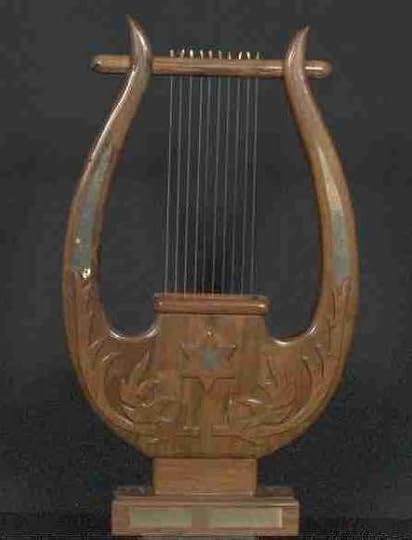
Thus, I see myself again going back to Classical Mythology... We all know that the Muses are nine, do we not? Well, not exactly; originally, the Muses were three, Melete, the Muse of practice, Mneme, the Muse of memory and Aeode, the Muse of song. The assignment of discrete disciplines to the Muse is only fully ascertained in Roman Mythology and what I find interesting in the original three Muses is that the first two are dedicated to the skills any artist has to master: practice, of course, goes without saying, though we may wish to remember that in its etymology, the word includes the meaning of 'repeating' and 'contriving', which need models and antecedents for their own execution; memory is, in my view to be read as both a backward and forward movement in time, meaning that Art is innately a memory (even if of a split second before), and also needs to remember itself, I shall add, and is created in the service of future memory; the last one, Aeode, tells us a very important message which goes to the very heart of Poetry: Music and Poetry are the same thing but expressed via different means. This is, of course, corroborated by the oral origin of Poetry, but what I would wish to focus on are the consequences of this.
Poetry to be such needs to have a musical quality, this is exactly where Pound arrived with his work on free verse, and finds Leibniz agreeing with Milton when the former says that 'Music is counting without knowing,' and the latter that it 'consists only in apt numbers, fit quantity of syllables'. Of course, fit does not need to mean 'standard', but suited to the expressive intention. Chopping sentences as if they were cabbages is not Poetry, unless the result is aleatory, in which case, I would think that the reader is the Poet, not the writer.
Going back to my political metaphor, anarchy can only exist if everybody starts with the principle that with freedom comes responsibility, though I have reservations about whether the syntactic structure of this sentence matches the aetiology of an ethical system, thus, with free verse, which in poetic terms we can regard as great, comes great responsibility. This adds a moral dimension that poets cannot ignore: assuming we have all paid our tributes to Melete and practised to refine our skills not disregarding the lessons of our fore-parents, and assuming we have done it so thoroughly that their memory lives in our words, we then have the privilege of choice, and freedom of choice. Thus, if free verse is used as an expressive choice, implying that the poet preferred one, or more, or all the lines of a poem to be 'free' from meter, it is still within the dialogue with Poesy, yet if the use of free verse simply comes from oblivion of meter, we abdicate the title of poets.
I will close this post with a gripe against the educational postulate that says that all students are, for lack of a better word, stupid, and has stopped, out of ideological reasons and obtusity, teaching the old mnemonic on meter and feet, 'Content iamb...' No, I will not finish it, as this has been handed down orally for centuries, and for a reason; because in the very learning of the basic tools of Poetry we remind ourselves that Poetry is, primarily, sound.


No comments have been added yet.


