
Tell Me a Story
 (Excerpted from an earlier entry)
The popularity of storytelling festivals continues to increase nationwide. In 1973, the first "National Storytelling Festival" was established in Jonesborough, Tennessee. It was estimated that 60 people attended. Currently, attendance averages approximately 12,000. Similar festivals take place across the country every year. In this age of the internet and cell phones, e-mail and text messaging, what accounts for the ongoing interest in–and the power of the story?
More and more we're becoming an isolated society. Ironically, the very technology that at first seemed as though it might work to bring individuals closer together is, in reality, leading to more solitary lifestyles. But the art of the story, both oral and written, is the great unifier, the magnet that attracts and draws a community together. More effective still than television or movies, a good story–told by a good storyteller–can hold a room filled with preschoolers or adults captive. Whereas the act of watching a story unfold tends to be a more solitary experience, listening to a story almost demands a communal audience.
The importance of the story has been recognized by the Irish for centuries. The Seanchai–the Storyteller–has always held a high place of dignity and esteem in Ireland. Often the storyteller and the poet were the same person, his craft entitling him to great privilege and ownership of property, a seat at the same table with kings and princes–even a voice in significant decisions. (It almost makes a writer long for the "good old days," doesn't it?)
With the coming of Christianity to Ireland, the stories took on a stronger moral tone, but churchmen still fostered the story, still honored the teller of the story. The narrative skill and prominence survived the Viking invasions and the decline of the Irish language, and the storytellers retained the respect of their countrymen, although by the nineteenth century the common people had replaced the wealthy and privileged as their patrons. With the decline of the Irish language throughout most of the country, much of the craft of oral storytelling–at least the gesture, the nuance, the personality, faded. Yet some went in search of the remote fishing villages of the west and south of Ireland to hunt out those who could pass on at least a part of the tradition.
Much effort was put into reviving and restoring the old traditions and tales, and to this day the written word and theater in Ireland owe a great deal to the wandering seanchai of forgotten centuries. The Irish still value story and still revere their storytellers. Scarcely a place–whether rock or town or hill or valley–exists in Ireland that doesn't have a tale attached to it ... and have you ever met an Irish person at a loss for words?
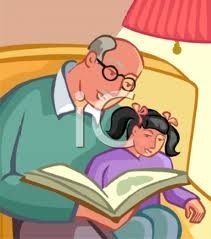
Storytelling has been around almost from the beginning of time, as long as speech itself. Some say it's an art form that will never be lost, so crucial is it to the heart and soul of human nature, to the survival of world culture and civilization. If you think about it, so long as a parent sits down with a child on his lap and says, "Once upon a time ... " or a pastor turns to his congregation and says, "Let me tell you a story ..." or a grandparent lingers at the dinner table and says, "I can remember when ..." the story will survive.
And so will the seanchai.
Doing my part ....
BJ


B.J. Hoff's Blog

- B.J. Hoff's profile
- 146 followers

